Tom Miller

Is China riding for a fall?

From our UK edition

The West gets China wrong. Spectator readers know the country as a vampire state feasting on foreign intellectual property and spewing out phony economic data in its thirst for wealth and power. It certainly is these things – but it also isn’t. It is more complex, and telling only half the story is ultimately self-defeating. While there is plenty to appal us about modern China, there is also much that we can learn from it. In Breakneck, Dan Wang reveals both sides of the ledger. ‘Too many outsiders see only the enrichment or the repression,’ he complains. His ‘big idea’ is that China is an engineering state, building at breakneck speed, whereas the United States is a ‘lawyerly society’ that has forgotten how to get stuff done.
What’s next for Taiwan?

From our UK edition

When Portuguese traders sailed past a verdant, mountainous land on the fringe of the Chinese empire in the mid-16th century, they named it Ihla Formosa – ‘beautiful island’. But Kangxi, the third emperor of the Manchu Qing Dynasty, was less impressed when his naval forces captured it in 1683, scoffing: ‘Taiwan is no bigger than a ball of mud. We gain nothing by possessing it, and it would be no loss if we did not acquire it.’ Beautiful or not, Taiwan was a pirates’ lair, inhabited by tattooed head-hunters and best left alone. Yet the Qing clung on to Taiwan for two centuries, with Chinese settlers gradually displacing the indigenous Austronesian population.

Battle of Ideas – is China in decline?

From our UK edition

95 min listen

Is China in decline? I was born in China in the 90s, and growing up it felt like the future was always going to be brighter. My parents were wealthier, more educated, better travelled than their parents, and it seemed assured that my generation would only have even better life chances. But in the 2020s, China’s economic growth has slowed down. Some of the once-bright spots in its economy, like real estate, are in slow motion meltdown. In the last couple of years foreign direct investment into the country has been falling at a record pace. The youth unemployment rate from this summer shows that just under a fifth of people under 24 are jobless.

Sticky, slithery, squelchy, smacky: the authentic Chinese food experience

From our UK edition

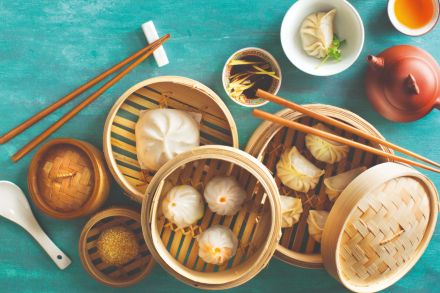
During the early days of the pandemic, a video clip of a Chinese celebrity slurping bat soup went viral – no matter that it was taken from a travel show filmed in 2016 on Palau, a Pacific island some 2,000 miles from the Huanan wet market in Wuhan, and regardless of the fact that the Chinese don’t like munching on bats in any case. Wuhan was Covid ground zero, and filthy Chinese eating habits were to blame. In Invitation to a Banquet, Fuchsia Dunlop sets out to skewer misconceptions about what she calls ‘the world’s most sophisticated gastronomic culture’. This contention may surprise foreigners brought up on sweet-and-sour pork balls doused in Day-Glo red syrup, but it is a convincing one. I have yet to meet anyone who has spent more than a year or two in China who disagrees.

We love you, Uncle Xi!

From our UK edition

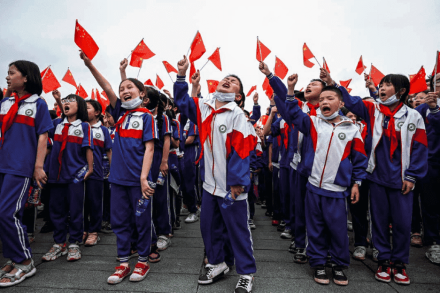
In 2015, I had lunch with an old chum of Xi Jinping. He described how China’s most powerful leader since Chairman Mao was born into the Communist party’s ‘red aristocracy’ but had to toughen up fast when his father was jailed in the Cultural Revolution. The young Xi briefly became a street hoodlum who swore like a trooper, smoked like a chimney and drank like a fish. He survived by turning ‘redder than red’, climbing the party ladder from a branch secretary in a lowly village all the way up to the top job in Beijing. ‘I am fond of Xi, but he is isolated from his old friends and there is a danger of emperor syndrome,’ the friend warned me. ‘I think Xi will want to rule for 20 years.

Will China become Afghanistan’s new sponsor?

From our UK edition

36 min listen

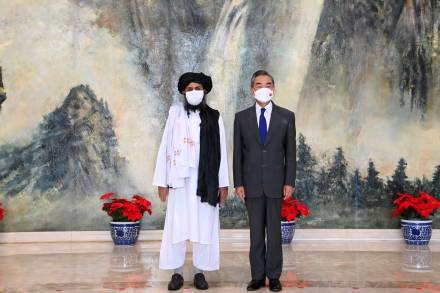
Last month, the Chinese Foreign Minister Wang Yi welcomed senior Taliban leaders to Beijing, standing shoulder to shoulder for the photographers. China is carefully watching events unfold in Afghanistan. And while it hasn’t yet recognised the Taliban government, the Beijing meeting was a nod towards a potential alliance.But replacing America in Afghanistan wouldn’t be without its risks – can Beijing succeed where Washington failed? America's 20 year mission in the country cost lives and money. And what would a closer alliance mean for China’s Xinjiang policy, considering the close links that the Taliban has historically had with militant Uyghur groups?

The US tech companies behind China’s mass surveillance

From our UK edition

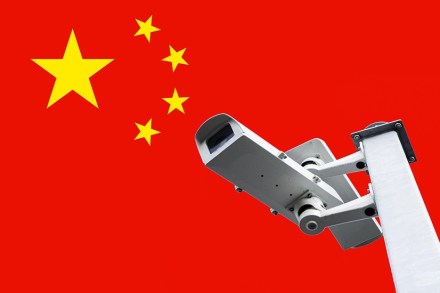
In January, the United States declared that China’s brutal treatment of the Uighur people in Xinjiang amounted to genocide. ‘I believe this genocide is ongoing, and we are witnessing the systematic attempt to destroy the Uighurs by the Chinese party-state,’ said Mike Pompeo, the former US secretary of state. British MPs made a similar declaration in April. Beijing fervently denies the accusation, and some experts maintain that ‘cultural genocide’ is a more appropriate label. But whatever we call it, the systematic attempt to erase Uighur identity, culture and history is a heinous crime against humanity.

The Tibetans’ fight for freedom continues — but only just

From our UK edition

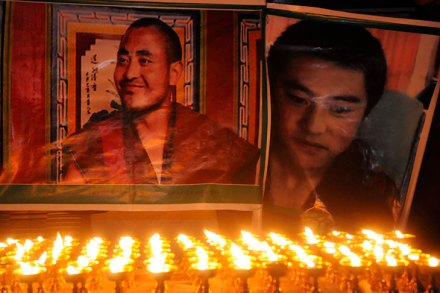
‘Free Tibet!’ used to be a rallying cry for Hollywood A-listers and rock stars. Richard Gere hung out with the Dalai Lama; the Beastie Boys organised a series of giant benefit concerts. Global attention has shifted to other regions suffocating under the jackboot of the Chinese Communist party (CCP), notably Xinjiang and Hong Kong. But the Tibetans’ fight for freedom continues — though only just. Since 2009, 156 Tibetans have set themselves alight in protest at China’s repressive policies. Nearly a third of them are from Ngaba, a small county on the south-eastern edge of the vast Tibetan plateau. Ngaba (pronounced Nabba and known as Aba in Chinese) is home to 73,000 citizens and a mind-boggling 50,000 security personnel.

A separation of powers

From our UK edition

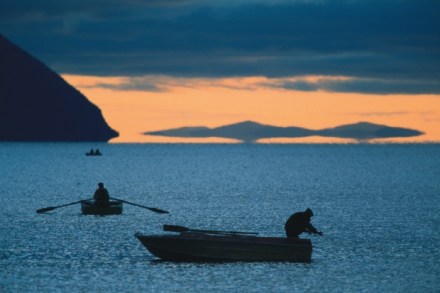
In 2014, Beijing and Moscow signed a US$400 billion deal to deliver Russian gas to Chinese consumers. Construction of the Power of Siberia pipeline began last summer on the banks of the Amur river, known in Chinese as the Black Dragon river. It marks a rapprochement between two powers who have warily eyed each other across the frigid water of the Amur, which forms the border, for more than three centuries. According to Beijing’s man in Moscow, ‘China and Russia are together now like lips and teeth.’ In Black Dragon River, Dominic Ziegler attempts to explain how they got there.

The crackdown that backfired

From our UK edition

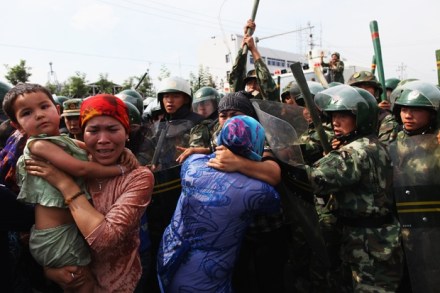
In October 2013, a jeep ploughed through a crowd of pedestrians on the edge of Tiananmen Square, crashed and burst into flames, killing five people. The authorities identified the driver as Uighur, a member of an Islamic ethnic minority hailing from China’s northwest region of Xinjiang. Six months later, eight knife-wielding Uighurs rampaged through a packed railway station in Kunming in southwest China, killing 29 people and wounding more than 140 others — an attack described by the national media as ‘China’s 9/11’. Beijing blamed both attacks on radical Islamist organisations pursuing what it calls the ‘three evils’: terrorism, separatism and religious extremism.