Culture

Culture

The good, the bad and the ugly in books, exhibitions, cinema, TV, dance, music, podcasts and theatre.

Adapt or die: what the natural world can teach us about climate change

More from Books

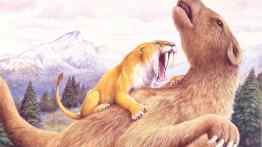
Climate change may be the central challenge of our century, but almost all attention has focused on its consequences for one organism: Homo sapiens. In an original, wide-ranging and carefully researched book, the American biologist Thor Hanson addresses its implications for the rest of life. Rather than overwhelming us with a sense of catastrophe, he adopts a balanced approach. He doesn’t baulk at pointing out that plants and animals are showing signs of stress — indeed one of his conclusions is that climate change isn’t imminent: the consequences are everywhere right now. But his book documents how many species, from butterflies to butterflyfish, are showing remarkable resilience.

What did the Russians make of Francis Bacon?

More from Books

The KGB might not have known much about modern art, but they knew what they liked. For instance, at what came to be called the ‘Bulldozer show’ of 15 September 1974, the Soviet secret service instructed a small militia of off-duty policemen to besiege an unofficial exhibition being staged by a group of underground artists in a field on the outskirts of Moscow. As James Birch recalls, KGB goons ‘attacked the show, using bulldozers and water cannons. Artists and onlookers were beaten up, some paintings were set on fire, other works were thrown into tipper lorries where mud was piled on top by diggers’. Surviving artworks were ‘driven off to be buried’ in an unknown location.

Smugglers’ gold: Winchelsea, by Alex Preston, reviewed

More from Books

The atmospheric medieval town of Rye on the south coast still celebrates being a former haunt of smugglers, and on foggy nights it’s not hard to imagine stealthy figures in the shadows rolling barrels of illicit rum down its cobbled streets. Alex Preston has relocated to nearby Winchelsea, making it the setting for this maritime yarn. But any residual glamour attaching to these tax-averse citizens of Sussex is largely dispelled in a tale with as many moral qualms as thrilling exploits. Goody Brown recounts the cross-dressing adventures of her youth as the sole female member of the infamous Hawkhurst gang in the 1740s. Rescued from the sea as a baby (her mother was not so lucky), she is adopted by a kindly local couple and brought up in a house named Paradise.

Dystopian horror: They, by Kay Dick, reviewed

More from Books

Her name has faded, but the British author and editor Kay Dick once cut a striking figure. She lived in Hampstead with the novelist Kathleen Farrell for more than 20 years, among a mid-20th-century literary set that included Stevie Smith and Ivy Compton-Burnett. Her most acclaimed novel was The Shelf, the story of a lesbian affair which drew heavily on her own life and circle. In 1977, she published They, a dystopian horror quite unlike her other work. It won the South-East Arts Literature Prize but soon went out of print, where it remained until a literary agent chanced on it in a charity shop. Reissued with an introduction by Carmen Maria Machado, another master of the uncanny, They makes its second entrance, into a world that has caught up.

Man of mystery: Not Everybody Lives the Same Way, by Jean-Paul Dubois, reviewed

More from Books

For Jean-Paul Dubois, as for Emily Dickinson, ‘March is the month of expectation’. A prolific writer, he limits his literary endeavours to that one month each year. Whatever his reasoning, it has produced results. His 2004 novel A French Life won the prestigious Prix Femina and, in 2019, Not Everybody Lives the Same Way was awarded France’s top literary prize, the Prix Goncourt. The premise of the novel is simple. Paul Hansen, a middle-aged building super-intendent, is confined to a Montreal jail for a crime which is not revealed until the end. Life is reduced to its bare essentials when he is forced to ‘share a toilet seat’ with a muscle-bound Hell’s Angel on a murder charge.

The great Chinese puzzle: how to adapt the language to modern communication technologies

More from Books

Any student of Chinese will sympathise with the 17th-century Jesuit priest Fr Emeric Langlois de Chavagnac when he wrote: ‘One can only endure the pain of learning it for the love of God.’ With its convoluted characters, subtle tones and numerous homonyms, it can seem as though the language just doesn’t want to be learned. Jing Tsu’s Kingdom of Characters starts from the premise that this is not merely a problem for foreigners: for millennia, the Chinese themselves have been confounded by it. At the beginning of the last century, the literacy rate in China was only 30 per cent for men and 2 per cent for women. Those without the means to study had little chance of grasping the idiosyncratic script.

Rejecting the Raj: Gandhi’s acolytes in the West

More from Books

Madeleine Slade, born in 1892, was a typical upper-class Victorian daughter of empire: a childhood riding around her grand-father’s estate in Surrey was followed by years of rejecting suitors and performing Beethoven on the piano. Occasionally she would sail across the world to visit her father, the commander-in-chief of the East Indies Squadron, who was responsible for Britain’s fleet in the Indian Ocean. But in 1923, a trip to Switzerland to visit the Nobel laureate Romain Rolland in the hills of Villeneuve would change the concert pianist’s life forever. Rolland had recently written about an Indian civil rights activist called Mahatma Gandhi. ‘You have not heard about him?’ he asked in amazement. ‘He is another Christ!

How the net finally closed on the Nazi henchman Andrei Sawoniuk

More from Books

Fedor Zan was 18, working on the river closing sluices, when, on a winter afternoon in 1942, he saw his childhood friend Andrei Sawoniuk standing in a clearing outside Domachevo, their town in Belarus. Sawoniuk had lined up 15 terrified women, all wearing the yellow Jewish star. As Zan watched, hidden behind the pine trees, Sawoniuk ordered the women to strip naked, shot them in the back and kicked their bodies into a newly dug pit. Fifty-seven years later, Zan was one of a dozen witnesses to give evidence against Sawoniuk at the Old Bailey, at the only war crimes trial ever held in Britain.

A tale of love and grim determination: Zorrie, by Laird Hunt, reviewed

More from Books

When Zorrie Underwood, the titular character in Laird Hunt’s deeply touching novel about an Indiana farm woman, is pregnant, a little girl asks how her baby breathes. ‘Like a fish,’ says Zorrie, which is how Hunt treats his readers, luring them with a snapshot of Zorrie’s diminishing days before reeling them in as her life unspools. Grief stamps an early and enduring presence on Zorrie when diphtheria takes her parents, leaving her to be raised by a harsh elderly aunt who had ‘drunk too deeply from the cup of bitterness after a badly failed marriage’. Zorrie takes solace in nature and nuggets of kindness from her schoolteacher, but finds herself alone again, aged 21, when her aunt dies, leaving her nothing.

The women who changed American cuisine forever

More from Books

What is ‘immigrant food’? In America, the answer can be just about anything — from burritos to bibimbap to burgers. In a country shaped by immigrants, there is little else but immigrant food. But while some food cultures are firmly embedded in the American mainstream, well-mixed into the fabled ‘melting pot’, others are not. This is ever-changing: a few decades ago the ubiquity of sushi, for example, would have been unthink-able. Is this a good thing? It depends who you ask. Assimilation can bring belonging, but also compromise. Greater knowledge and appreciation of different food cultures doesn’t just happen. People make it happen.

For Glasgow – with love and squalor: The Second Cut, by Louise Welsh, reviewed

More from Books

Never, never kill the dog. It’s rule one in the crime writer’s manual. Cats are bad enough, as I can testify, having once had the temerity to behead a cat — in a novel, I mean —and then crucify the mutilated corpse upside down on a church door. As a general rule, if you kill a domestic pet in your crime story you should expect a hostile postbag of epic proportions. But rules are meant to be broken. Which is why it’s a pleasure to find in Louise Welsh’s latest novel a stinking, maggot-swarming Jack Russell entombed in a chest with a tightly fitting lid. She’s an author whose stock-in-trade is the unexpected, which is also demonstrated by the variety of her fiction.

Confused lives: It’s Getting Dark, by Peter Stamm, reviewed

More from Books

The Swiss writer Peter Stamm’s inscrutable, alienated outsiders make bizarre choices to escape stifling mundanity. Their discontent suggests malaise, something Stamm accentuates in his spare prose. The result is a distilled essence of unease: the reader is uncomfortable, but can’t look away. This masterful combination of fundamental themes, explored without embellishment through confused lives, has won the author numerous prizes. His 2020 novel The Sweet Indifference hinged on the possibility of seizing lost chances and allowing events to unfold differently. In this collection of short stories, the narrator of ‘Marcia’ is a recluse who ponders about an ex from whom he beat a callously precipitate retreat.

The misery memoir of a devoted polyamorist

More from Books

The rules of sex can kill. In 1844 an angry mob shot Joseph Smith, the founder of Mormonism, for his polygamous ways. But in the counterculture today, polyamorists face less of a physical threat and more of a metaphysical one, as chronicled by the journalist Rachel Krantz in her tortured book Open: An Uncensored Memoir of Love, Liberation and Non-Monogamy. At its heart it’s the dark tale of a vulnerable woman falling for a manipulative man who slowly sucks the soul and marrow out of her. I wondered: why write this book, Rachel? You’re on the path to healing, so why peel your skin off with your nib and present it to the reader?

Gay and abandoned: A Previous Life, by Edmund White, reviewed

More from Books

Edmund White’s new novel opens, somewhat improbably, in 2050. This imagined future, however, springs few surprises on the reader and is in fact almost identical to the present. Indeed, the leap forward in time is merely a narrative device, allowing a 70-year-old Sicilian aristocrat to reminisce about his affair 30 years earlier with the elderly Edmund White, now long dead and more or less forgotten as a writer. Ruggero Castelnuovo has subsequently married a much younger American woman, Constance. The couple have made a pact never to talk about their past lives, but they now decide to write their private ‘confessions’, and much of the book is taken up with these largely sexual memoirs, sections of which they read aloud to each other.

The Georgians feel closer to us now than the Victorians

More from Books

‘The two most fascinating subjects in the universe are sex and the 18th century,’ declared the novelist Brigid Brophy when the ban on Fanny Hill was lifted in 1963. Penelope Corfield’s big, handsome, enjoyable book goes a good way to illustrating Brophy’s assertion. Part source book, part interpretive history of the long 18th century (1688-1837), it is also a guide and gazetteer to the continuing presence of Georgian England in our towns and minds. The world before 1688 is largely unfamiliar to us. The 18th century, however, with its lovable rogues, its introduction of constitutional monarchy, its rights of man and its sexual libertines, is akin to ours.

Formidable woman of letters: the grit and wisdom of Elizabeth Hardwick

Lead book review

In an author’s note at the beginning of her biography of Elizabeth Hardwick, Cathy Curtis warns that she has included ‘only as much information’ about Hardwick’s ‘famous husband, the poet Robert Lowell, as is necessary to tell the story of her life’. Ironically, this caveat highlights Hardwick’s status as another wife of the poet. There’s no question that her tumultuous marriage and singular divorce from Lowell were major events in her literary career, but it’s disappointing that in this very first biography of Hardwick, Curtis offers so little argument for her literary and cultural importance. Admittedly, that’s no simple task.

A late fling: Free Love, by Tessa Hadley, reviewed

More from Books

Tessa Hadley is the queen of the portentous evening, the pregnant light and the carefully composed life unwittingly waiting to be unravelled. Free Love, like its predecessor Late in the Day, begins on one such evening. The year is 1967 and Phyllis, a suburban housewife, is applying her make-up. She and her husband, a ‘respected Arabist’, are expecting the son of a family friend for dinner. Nicholas arrives, and broods angrily over his resentment of the staid old guard his hosts represent while plotting half-heartedly to seduce Phyllis as vengeance. Hadley is wonderfully wry at undermining the novel’s own urge towards solemnity: He wondered, if he pulled at that ribbon on Phyllis’s dress, what would come undone?

A topsy-turvy world: Peaces, by Helen Oyeyemi, reviewed

More from Books

At a village train station in deepest Kent two men and their pet mongoose are setting off on their honeymoon. The men are Otto and Xavier Shin and the mongoose is Árpád Montague XXX; the train is the Lucky Day — a former tea-smuggler’s transportation, now home to a mysterious woman named Ava Kapoor. They do not know who she is or where they are heading. Nonetheless they embark, happy in the knowledge that anything could happen. Readers familiar with Helen Oyeyemi will already feel at home. Playful, otherworldly and sinister, her novels tend to inhabit a fairy-tale world of wicked stepmothers, haunted houses and run-away children. Mr Fox cannibalised parts of Bluebeard; Gingerbread shared ingredients with Hansel and Gretel.

When did postmodernism begin?

More from Books

There’s a scene in Martin Amis’s 1990s revenge comedy The Information in which a book reviewer, who’s crushed by his failures and rendered literally impotent by his best friend’s success, is sitting in a low-lit suburban room beside a girl (not his wife) named Belladonna: ‘She was definitely younger than him. He was a modernist. She was the thing that came next.’ Stuart Jeffries argues in his new book that the thing that came next was in fact a thing that started a couple of decades before Amis wrote The Information. In Jeffries’s telling, postmodernity can be dated to 13 August 1971, when Richard Nixon held a closed-door meeting that led to America’s abandonment of the Bretton Woods policy of gold-backed currencies.

Celebrating Konstantin Paustovsky — hailed as ‘the Russian Proust’

More from Books

When is a life worth telling? The Soviet writer Konstantin Paustovsky’s six-volume autobiography The Story of a Life combines high drama with heroic misadventure in a comico-lyrical amalgam of history and domestic detail that enchants from start to finish. Why Paustovsky is not better known outside his native Moscow is a mystery. In the mid-1960s he was nominated for the Nobel prize. (He was pipped to the post by Mikhail Sholokhov, the author of the obediently propagandist And Quiet Flows the Don.) Denounced as a ‘counter-revolutionary’ by the Soviet Writers’ Union, Paustovsky belonged to that select band of writers who inspire true fandom.

Should we blame our ancestors for slavery when we’re equally culpable?

More from Books

The premise of White Debt is that the author’s ancestors ran a business selling a product grown by slaves. Therefore he wants to investigate Britain’s role in slavery — which is a rather odd framing, since his family’s tobacco firm wasn’t started until decades after slavery in British colonies was abolished. But Thomas Harding apparently only recently learned that slavery happened in the British Empire. He goes as far as to ask: ‘How could I not have known this?’ Well, truly, I don’t know. I don’t recall the time when I wasn’t aware that slavery was the reason that people of African descent live in the Caribbean today. Some of their ancestors were enslaved in territories that belonged to Britain.

The Greeks’ bitter fight for freedom

More from Books

Last year was the 200th anniversary of the outbreak of the war of Greek independence in March 1821. It has been celebrated by a flood of books and events, a particularly instructive exhibition at the Benaki Museum in Athens and this gruesome page-turner. Mark Mazower, professor of history at Columbia University and the author of many books on modern Greece, stresses the passion for freedom, exceptional stamina and heroism which helped Greeks establish an independent state between 1821 and 1830. Greeks had long felt oppressed as subjects of the Ottoman empire. One of them called it ‘a tyranny so frightful... neither equal nor comparable to any other and so unjust’.

The novels that became instant classics

More from Books

In the world of books, a modern classic is an altogether more slippery thing than a classic: it must walk a line between freshness and durability; reflect the current age but hope to outlast it. For individual publishers, given many 20th-century writers are still in copyright, a modern classics list will necessarily be partial. However, few such partial lists are as complete as Penguin Modern Classics (PMCs), founded in 1961 four years after Penguin’s general editor A.S.B. Glover said: ‘We don’t want — without outstandingly good reasons — to start any new series such as “Modern Classics”.

Scholars and spectres: The Runes Have Been Cast, by Robert Irwin, reviewed

More from Books

It could be said that the power of a horror story depends on the possibility, however minute, of it being true. This is partly why so many masters of the genre, from Bram Stoker to Robert Louis Stevenson, have given their narratives the semblance of believability by including epistolary passages, ‘found’ documents and the commentaries of ‘editors’ in their books. In The Runes Have Been Cast, Robert Irwin takes the opposite approach, writing in a prologue: Should any of my readers incline to a serious study of the subject of this book, it is only right to urge them most strongly to refrain from being drawn into the practice of the Secret Art... My own observations have led me to an absolute conviction that to do so would be a complete waste of time.

Variations on a theme: To Paradise, by Hanya Yanagihara, reviewed

More from Books

My daunting brief: to tell you about Hanya Yanagihara and her new, uncategorisable 720-page novel in 550 words. It’s the book-reviewing equivalent of a heated round of Articulate. Bums on the edge of the sofa, team. Flip that egg-timer. Here goes! American, born 1974, childhood spent largely in Hawaii. Debuted with The People in the Trees, 2013: clever, concept-led story about a fictional island whose inhabitants stumble upon the secret of extreme longevity. Best known for her second novel, the 800-page A Little Life, sold more than a million copies, shortlisted for the Booker. Come on, you know this one! Four gay friends, but mainly about Jude, the victim of terrible child abuse, addicted to self-harm.

The march of the larch: the Treeline is now encroaching on the arctic tundra

More from Books

Covering 20 per cent of the Earth’s surface, the boreal forest is the largest living system, or ‘biome’, on land. It contains one third of all the planet’s trees and encircles much of the northern hemisphere in a halo of green. The northernmost extent of this forest, called the treeline, marks the point beyond which it is too cold for trees to grow. This is perhaps not where you’d expect to find Ben Rawlence, an author and journalist whose previous books have focused on humanitarian crises in Africa. But, as he explains in The Treeline, things are changing alarmingly fast in this biome: ‘The trees are on the move. They shouldn’t be. And this sinister fact has enormous consequences for all life on Earth.