Culture

Culture

The good, the bad and the ugly in books, exhibitions, cinema, TV, dance, music, podcasts and theatre.

The Belfast Blitz: These Days, by Lucy Caldwell, reviewed

More from Books

Caught outside at the start of a raid in the Belfast Blitz as the incendiary bombs rain down, Audrey looks up at the sky, transfixed by its eerie beauty. She watches ‘the first magnesium flares falling, bursting into incandescent light, hanging there over the city like chandeliers’. It is the sort of thing you never forget, she thinks, ‘not in a lifetime’. This scene in These Days, by the Northern Irish writer Lucy Caldwell, brilliantly captures familiar territory for anyone who has read about the Blitz. The awe at the peculiar beauty, the feeling that this is unforgettable and will change people forever, the desire to domesticate these undomesticated happenings (the chandeliers): all this comes up often in fiction and memoir from the period.

Portrait of a domestic tyrant: The Exhibitionist, by Charlotte Mendelson, reviewed

More from Books

If vivid, drily hilarious tales about messy families stuffed with passive aggression and seething resentment are your thing, you will gleefully hoover up Charlotte Mendelson’s riotous, prize-winning novels. These buzzing sagas dissect dysfunctional relationships with spiky wit and remarkable acuity. The Exhibitionist is as good as any of her previous books. Ray Hanrahan is a failed artist who once glimpsed mild critical approbation before lapsing into obscurity. He’s also a comically monstrous anti-hero: narcissistic, abusive, controlling, dishonest and a hypochondriac. He has quashed his talented sculptor wife Lucia’s career with guilt- tripping and spurious claims of plagiarism. She is so cowed by his bullying that she jumps to his every command.

The Greek myths are always with us

More from Books

Once upon a time there was a collection of stories that everybody loved. They involved brave heroes such as Perseus and Theseus defeating fearful monsters like Medusa and the Minotaur. Sometimes they used ingenious gadgets to achieve their goals, a bit like James Bond with his exploding pen. Sometimes they were helped by women who took a fancy to them. Some, like Icarus, failed. Others succeeded but still came to a sticky end – like Oedipus, who solved the riddle of the Sphinx but also killed his dad and married his mum. The point is that these stories were so old they came from a time before writing. There was no set text, so they could be adopted and adapted and take many forms.

Knotty problems: French Braid, by Anne Tyler, reviewed

More from Books

Anne Tyler’s 24th novel French Braid opens in 2010 in Philadelphia train station. We find the teenage Serena, who has the ‘usual Garrett-family blue’ eyes, with her boyfriend James, waiting for a train back to Baltimore, where they’re at university together. Serena runs into her cousin Nicholas – although she’s not certain it’s him – and doesn’t seem especially keen to speak to him. There’s an awkward meeting; then Serena and James go to catch their train. A sense of unease hangs over the whole encounter. James speaks for the reader when he says: ‘Maybe there’s some deep dark secret in your family’s past.’ Uncovering this secret is at the heart of the novel.

The heartbreak left in the wake of the Terra Nova

More from Books

The story of the five women waiting at home for Captain Scott and his doomed polar party is naturally occluded in tragedy. In this engaging book Katherine MacInnes for the first time presents them – two mothers at the outset, and three wives – as distinct individuals, separated one from the other by class, education, faith and temperament. Kathleen Scott, the leader’s wife, was a gifted, confident sculptor with a lively social set and a house on Buckingham Palace Road. Caroline Oates, the widowed mother of the saturnine, Eton-educated cavalry officer Laurie (‘I dislike Scott intensely’), was the wealthy owner of Gestingthorpe Hall in Essex.

Graham Robb deserves to be a French national treasure

Lead book review

This is a ceaselessly interesting, knowledgeable and evocative book about France over thousands of years. Is it at all likely to have been produced by a French writer? Though it’s about some deeply serious subjects, it’s very amusing; it makes no attempt to constrain itself within an overarching theoretical framework; it would be impossible to extract from it a grand statement beginning ‘The French are all…’; it is pragmatic, full of enterprising scholarly initiative and a gift for observation without intruding. Most strikingly, it’s a book about France in which the author has profitably spent a good deal of time outside Paris.

Lasting infamy: Booth, by Karen Joy Fowler, reviewed

More from Books

Were it not for an event on the night of 14 April 1865, John Wilkes Booth would be remembered, if at all, as an actor; brother of the more famous Edwin, and son of Junius Brutus – a footnote to the history of American theatre. But that night Booth leaped on to the stage of Ford’s theatre, Washington D.C., shouting ‘Sic semper tyrannis!’ before fleeing. He had just shot Abraham Lincoln. Five days earlier the Civil War had officially ended. Booth, a Confederate sympathiser, feared Lincoln would overthrow the constitution – he was already promising votes to freed slaves. The assassination was Booth’s way to ‘avenge the South’.

Jesus’s female disciples remain women of mystery

More from Books

Is there a patron saint of conjecture? Perhaps it is a name known only to Bible scholars, who have rich cause to guard it jealously. Even if such a saint is invoked by the academy alone, the petitioning must be pretty constant. Lucky, then, that this account of the early female followers of Jesus is jointly authored, for it takes more than one person to dream up the vocabulary required for 200 pages of guesswork. As Joan Taylor and Helen Bond admit in their introduction: ‘Sometimes there’s not much to go on and we’ll need to use our imaginations.

An ill wind in Buenos Aires: Portrait of Unknown Lady, by María Gainza, reviewed

More from Books

How to review a book that pokes fun at critics? When the protagonist of María Gainza’s Portrait of an Unknown Lady reads reviews, she tends to ‘scan the first five or six lines, skip to the last two or three, and end up thinking, what’s with these people?’ When she becomes an art critic, she takes up the ‘language of the shyster, empty language, language just to occupy column inches’. And you can bet she has readers hanging on her every word – as we do in this story of the quest to find a legendary art forger who one day disappeared. It feels like the Argentine writer is having fun in the follow up to her dazzling debut Optic Nerve. A detective novel of sorts, this second novel is set in the Buenos Aires art world.

Abandoned for a bogus guru – Lily Dunn’s harrowing family memoir

More from Books

Sins of My Father begins with an ending. Describing her 61-year-old parent’s final desperate flight from a life of vibrant glitter, creativity and affluence, Lily Dunn reveals the extent to which it was simultaneously riddled with devastating addiction. After alcoholism, drugs, money and sex played their destructive role, her father (who is never given a first name) died incontinent, with shoes that ‘let the rain in’, having subsisted on a diet of vodka and scones and, due to the removal of all his teeth, with a mouth that had ‘turned in on itself, a perpetual downward curve of misery’, a smile reversed.

A magical epic: Moon Witch, Spider King, by Marlon James, reviewed

More from Books

When the first volume of Marlon James’s Dark Star trilogy appeared in 2019, it was quickly recognised as a masterly work of fantasy fiction, drawing comparisons with Tolkien, Angela Carter and Beowulf. Part quest narrative, part picaresque, Black Leopard, Red Wolf follows a man named Tracker as he weaves a trail through various lands, encountering a magical cast of shapeshifters, witches and powerbrokers in a seemingly never-ending search for a lost child.

The party’s finally over for Nigel Farage

More from Books

Nigel Farage was never even an MP, but Michael Crick argues convincingly that he is one of the top five most significant politicians of the past half century. Without him we might still be in the EU. All political careers supposedly end in failure, but maybe his didn’t. As with Boris Johnson (whom he resembles in many ways), Farage’s bluff, bonhomous public image is misleading. He is far more ruthless than he appears. Many of those close to him believe that his air crash on polling day in 2010 changed his personality. He was in a two-seater plane towing a banner saying ‘Vote Ukip’ when the banner wrapped itself round the rudder and the plane nose-dived to the ground.

The making of a poet: Mother’s Boy, by Patrick Gale, reviewed

More from Books

Charles Causley was a poet’s poet. Both Ted Hughes and Philip Larkin considered him the finest candidate for the laureateship, which Hughes later won. Now Patrick Gale has made him a novelist’s poet in this richly engaging fictionalised account of his early life. Mother’s Boy is bookended by two world wars: the first, in which Charles is born, and his father Charlie suffers the injuries that would lead to his premature death; the second, in which Charles, who had written schoolboy verse, ‘although poetry was not really his thing’, discovers his poetic voice while serving as a coder in the navy.

TB is back with a vengeance

More from Books

If you were a teenager before 2005, one reminder of tuberculosis in British life is that small circular scar on your bicep. Maybe you’ve explained to your children why it’s there, if you ever knew. The BCG is no longer a routine vaccination in the UK, a revision which signalled to many that TB was over. What used to be known as consumption became treatable, preventable and ostensibly consigned to medical history as a threat of the past. We tell stories about diseases as if they are constant things. ‘It’s no worse than flu’ has become a familiar phrase; but flu is not all that common, it varies wildly in severity and changes strain every year. Pathogens evolve and mutate, avoiding the risk of staying the same for too long.

Sister, where are you? – Clover Stroud mourns her beloved sibling

More from Books

‘CERTIFICATE IS NOT EVIDENCE OF IDENTITY,’ the freshly issued death certificate read. In the craziness and shock of grief for her beloved sister Nell Gifford, who died at 4.20 p.m. on 8 December 2019, aged 46 (‘Cause of death: metastatic breast cancer’), Clover Stroud found herself clinging to those capitalised words. ‘Yes, the certificate was wrong… My sister was not the deceased and the very certificate I was holding was telling me that.’ She started searching for her everywhere. ‘Whereareyouwherareyouwhere-areyouwhereareyou’ she asks for one whole page of this book in an enlarged typeface denoting the din in her head. She feels as if she’s setting out into the evil depths of a forest, but what will she find?

Julie Burchill has found a new way to provoke: she’s turned sincere

More from Books

The greatest ever social media spat took place before the first tweet was sent, and was conducted via fax, which was like email but with the satisfyingly tangible tear of a fresh missive just arrived from across the planet. It was early 1993 and Julie Burchill, then of the Modern Review, was locked in a war with Camille Paglia, then of any US talk show you cared to tune into. The conflict began with a disobliging review Burchill filed of Paglia’s Sexual Personae, before shifting to the Xerox front, where Paglia made the mistake of questioning her interlocutor’s working-class credentials. Burchill brought hostilities to an abrupt close with her final communiqué, which read in toto: ‘Dear Professor Paglia, Fuck off, you crazy old dyke. Always, Julie Burchill.

The torment of mentoring spoilt rich kids

More from Books

For 20 years of my adult life, I moonlighted as a private tutor. After a full day in the office (at a literary job which paid me the price of a Mars Bar p.c.m.), I would traipse the streets, from Notting Hill mansion to cramped suburban flat and everywhere in between, leaving a trail of English comprehensions, Latin translations and Ancient Greek primers in my wake. Not many private jets were involved, but I did run through so much shoe leather that I tried to claim a new pair of brogues as an expense. My accountant, alas, was having none of it. Every so often, the press sensationalises the world of tutoring. That we were paid up to £1,000 per hour is entirely untrue, more’s the pity.

What the Anglo-Saxons made of 1066 and all that followed

More from Books

By any yardstick, the Norman Conquest was a ghastly business. Within two decades, the English aristocracy had been more than decimated, all of England’s cathedrals were being levelled and rebuilt, the north had been harried and the language of government changed. What made it worse was that it was utterly unnecessary. In 1066, Edward the Confessor had an heir of the blood royal – Edgar Ætheling, the grandson of Edmund Ironside (d. 1016). Had he not been shoved aside by bigger men, much fuss might have been avoided. In her superbly adroit new history, Eleanor Parker examines how memories of Edgar and his like – the generation that straddled the Conquest – survived, or were melded to meet the needs of the time.

The fuss over Mary Seacole’s statue has obscured the real person

Lead book review

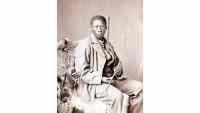
Who would have thought that a statue of a West Indian-born nurse in south London has a role in today’s culture wars? Unveiled in 2016, it stands three metres tall outside the great teaching hospital, St Thomas’, and depicts Mary Seacole, an extraordinary Creole woman who was loved and renowned for giving succour to British troops, first in her native Jamaica and then in Crimea during the bloody and prolonged war with Russia of 1853-6. It is controversial on two main counts. First, it stands on hallowed ground at the hospital where Florence Nightingale pioneered nursing as a profession after returning from Crimea.

Do we still need explorers today?

More from Books

In November 2017 Benedict Allen found himself at the centre of a media frenzy. He’d been in Papua New Guinea (PNG) on a one-man expedition and hadn’t been heard of for weeks. Declaring him ‘lost’, several papers turned on him, accusing him of being overprivileged and imperialistic. One even suggested the whole thing was a stunt. It didn’t help that he was picked up by a helicopter, sent by the Daily Mail. This was a story the paper’s rivals wanted to spoil. Explorer is Allen’s account of that journey and how it all began. It’s no excuse or apology, but is written with anger and passion. The story begins in adolescence, with a boy who was idealistic, stubborn and determined to travel the world alone and in his own way.

Margaret Atwood seems embarrassed by the sheer volume of her output

More from Books

Margaret Atwood is among the major writers of English fiction of our time. This is a very boring way to start a review, but it is true. Atwood, now 82, is prize-winning, popular and prolific. She’s won two Bookers. Several of her books have attained totemic status with readers, most obviously the reproductive dystopia of The Handmaid’s Tale, but also Cat’s Eye, for its steely portrayal of girlhood cruelty, and The Blind Assassin, which combines feminist grit with genre-straddling swagger. And there are so many books.

That sinking feeling: The Swimmers, by Julie Otsuka, reviewed

More from Books

Julie Otsuka has good rhythm, sentences that move to a satisfying beat. Even as her tone shifts — from tender to funny to cynical to sinister — the beat goes on uninterrupted. In this, her third novel, the narrative has a steady flow. The Swimmers traces the cracks that develop in an underground pool, and in a woman’s mind, and the slow and unavoidable deterioration of both. It opens with an introduction to the pool that reads like a guided tour from the swimmers themselves. We learn about their rituals: ‘Some of us have to swim 100 laps every day, others… until the bad thoughts go away (Sister Catherine, lane two).’ There are dos and don’ts and people to watch out for — ‘tailgaters, lane Nazis, arm flailers’.

A playful version of the universe: Pure Colour, by Sheila Heti, reviewed

More from Books

Readers familiar with Sheila Heti’s work, most notably How Should a Person Be? and Motherhood, in which she examines both the possibility and implications of choosing one’s life and dealing with the consequences, will be familiar with her apparent capriciousness. Her prose — freewheeling, elliptical, a tangle of jokiness and jeopardy — seems to capture the puzzle of proportionality: how seriously should we take this one life we have, and how can we hope to balance our opposing urges towards levity and gravity?

Howard Jacobson superbly captures the terrible cost of becoming a writer

More from Books

Howard Jacobson, who turns 80 this year, published his first novel aged 40. Since then he has produced roughly a book every two years, including The Finkler Question, which won the Man Booker in 2010. Given that he was put on Earth to write, why the wait? This is the subject of Mother’s Boy, a tale of self-persecution in the form of a monologue which includes interjections from the ghosts of his parents and one chapter, recording a period in his twenties that he drifted through in a dream state, printed in a font resembling handwriting. ‘How’s the novel coming along?’ his father would routinely ask after Jacobson graduated from Cambridge with a ‘poor degree’ in English. He was taught by F.R.

The machinations of the Dudleys make Game of Thrones look tame

More from Books

This is the gripping story of the ever-fluctuating fortunes of three generations of the Dudley dynasty, servants to — and at times rivals for — the Crown in the 16th century. As Joanne Paul observes in her engrossing biography of an extraordinary family, ‘had fate, Fortuna, Nemesis or God made only the slightest adjustment to their orchestration of events’, the Dudleys, not the Tudors, might have ruled England for generations. The narrative begins in the 1490s with Edmund Dudley, an Oxford-educated barrister who rose to a position of power, influence and wealth at the early Tudor court, only to be arrested and imprisoned in the Tower within days of Henry VII’s death in 1509.