Claudia FitzHerbert

No one could match Tess, to Thomas Hardy’s dismay

From our UK edition

In her disillusioned later years Thomas Hardy’s first wife, Emma, bitterly reflected: ‘He understands only the women he invents – the others not at all.’ In Hardy Women, Paula Byrne sets out to recover the stories of the women in his life ‘who did not have a voice and who were often deliberately omitted from Hardy’s self-ghosted autobiography’, in order to reveal that ‘the magnificent fictional women he invented would not have been possible without the hardship and hardiness of the real ones who shaped his passions and his imagination’.
What can we learn of George Eliot through her heroines?

From our UK edition

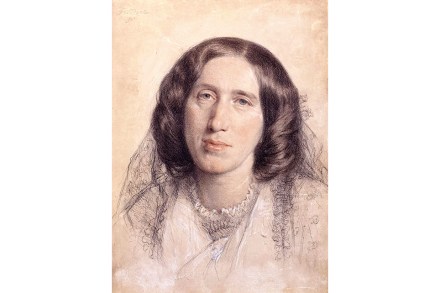
‘I have... found someone to take care of me in the world,’ Marian Evans wrote to her brother in 1857, three years after setting up house with George Henry Lewes. Professing herself ‘well acquainted with his mind and character’, she requested that the modest income from her father’s legacy should in future be paid into her husband’s bank account. A reply from the family solicitor forced her to acknowledge that ‘our marriage is not a legal one, though it is regarded by us both as a sacred bond’. The funds were paid accordingly, but all contact was severed. Very soon, money from Evans’s novels – written under the pseudonym of George Eliot – also began pouring into Lewes’s bank account.

The mother’s tale

From our UK edition

‘I’m sick of this story of yours, this idea that it’s about drugs. If you want that to be the story then go away and write one of your f***ing novels about it, OK?’ says the angry son towards the end of The Lost Child, which goes nowhere slowly, despite the rollercoaster ride of publicity it has received. It is hard not to think that the boy has a point. Why didn’t Myerson do the decently indecent thing and write a novel? Plenty of writers — good writers — make little up, but nontheless deploy the mask of fiction which also provides protection for traduced parents, children, lovers and friends of the nightmare novelist. Perhaps Myerson is professional enough to know when not to write a novel.

Who needed who most? The complex bond between Vera Brittain and Winifred Holtby

From our UK edition

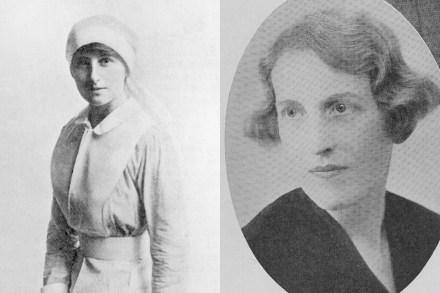
These letters between Vera Brittain and Winifred Holtby cover 15 years of a remarkable friendship that began at Somerville College, Oxford in 1919 and ended only with Holtby’s premature death from kidney failure in 1935. Brittain went up to Oxford in 1914, but left to serve as a nurse in the first world war. She returned freighted with tragic experience, having lost both her lover and her brother and tended the wounds of horribly injured soldiers close to the front. She disconcerted younger undergraduates with her fiercely competitive and forthright views combined with fragile looks and a general air of suppressed trauma.

Mismatched from the start: One Day I Shall Astonish the World, by Nina Stibbe, reviewed

From our UK edition

First the bad news: Nina Stibbe’s new novel does not feature Lizzie Vogel, the engaging narrator of the trilogy that made her name as a comic novelist after she’d first published some extremely funny letters written during her stint as a nanny in a north London household in the 1980s. Man at the Helm (2015) is the novel Dickens lacked the generosity to write, in which tribute is paid to the creative value of a chaotic childhood presided over by what the conventional world calls an unfit parent. The two which followed covered just a year of Lizzie’s teens and early twenties. The fact that our beady-eyed chronicler remains on the threshold of adult life ensures an atmosphere of optimism, despite the dark strain of jeopardy running through each of the books.

Plucky young rebel

From our UK edition

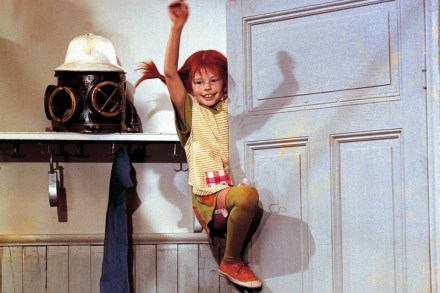
Pippi Longstocking is a nine-year-old girl who lives alone with a monkey and horse in a cottage called Villa Villekulla at the edge of a village close to the sea in an unnamed part of Sweden. She is a tender-hearted braggart, brilliant but unlettered, with a punning, pulling-the-rug wit. She lives as she likes — sleeping with her shoes on the pillow is something children always remember about Pippi, along with the carrot-coloured plaits at right ankles to her freckled face and her superhuman strength. Pippi burst upon the world in 1945 and her main adventures were over by 1950 — a few later books elaborated on scenes already laid down.

The magic of bookshops

From our UK edition

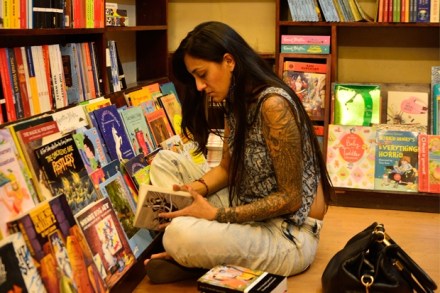
It is not uncommon for writers to be obsessed by bookshops. Some even find their writing feet through loving a particular bookshop and developing a habit, which helps to form the writers they become. And often they end up in a rage with the common run of bookshops. Why would they not? It is, or used to be, a numbers game, and most bookshops fail to stock most writers. But in recent years online outlets such as Amazon have changed the stocking (and the hating) game. Since proper bookshops became an endangered species, a use-them-or-lose-them energy pervades the bookish classes. It is a form of virtue signalling to go to your local, if you have one, order in what they haven’t got and pay more than you would online.

Middlemarch: the novel that reads you

From our UK edition

The genesis of The Road to Middlemarch was a fine article in the New Yorker about  Rebecca Mead’s unsuccessful search for the origin of the remark, sometimes attributed to George Eliot, that ‘it’s never too late to become the person you might have been’. To Mead this seemed at variance with the concentration in Middlemarch on ‘the melancholy acknowledgment of limitation’. She sets her vain attempt to re-attribute that sentence in apposition to Eliot’s story of  Lydgate, the doctor whose scientific ambitions are dashed in the wake of his marriage to the implacable Rosamond Vincy: ‘I had aspired to make a link in the chain of discovery, and had failed.

Why did Penelope Fitzgerald start writing so late? 

From our UK edition

‘Experiences aren’t given us to be “got over”, otherwise they would hardly be experiences.’ The opening sentence of the first draft of The Bookshop, published in 1978 when Penelope Fitzgerald was 62, didn’t survive in the finished version, but its author had found her voice, and, in a way, her subject. She had learnt how to look back. She had begun publishing only four years earlier, with a life of Edward Burne-Jones. There followed a thriller, written to amuse her husband as he lay dying, and a second biography, The Knox Brothers. This was about her father, ‘Evoe’ Knox, editor of Punch and author of light verse, and his three brothers, two of whom became priests in different denominations.

A guide to the media circus

From our UK edition

Caitlin Moran’s  bestselling How to be a Woman careered with reckless frivolity from the personal (eldest of eight, home-schooled in a council house in Wolverhampton) to the political (better pornography, larger pants, more body hair). Her latest effort, Moranthology (Ebury Press, £18.99) casts a retrospective glow of gravity over its predecessor. That was a manifesto of sorts; this is proper-job knockabout. Moran, who writes three columns a week for The Times, gives us a mish-mash of interviews, ‘celebrity watches’ and other ephemera from the past 20 years. Her skill as an interviewer lies not in the killer question but in the way she conveys being there and messing it up.

The Daylight Gate, by Jeanette Winterson Claudia FitzHerbert

From our UK edition

The story of the Pendle witch trials in 1612 is well known, thanks to the publication of The Wonderfull Disoverie of Witches in Lancashire by Thomas Potts, clerk to the Lancashire Assizes in which ten of the 12 accused were condemned to death by hanging. But it is also unknown because Potts’s certainties are not ours. We know who was accused of what but not why, although several of the cases collapsed into each other, with one defendant being released after a witness was ‘proved’ to have been in the pay of a Catholic priest. Witchery and popery were equally reprehensible, target culture making it imperative for Potts and his cronies to nail someone for something.

Cuckoo in the nest

From our UK edition

Caradoc King, the well-known literary agent, was adopted in 1948 as a baby into a family of three girls, shortly joined by a fourth, presided over by a difficult, unhappy mother and her feebly adoring husband. He grew up unaware of the adoption and has never discovered its motive. His adoptive mother, Jill, the moving spirit behind every family decision, may have simply longed for a boy. If so, she was singularly ill-prepared for standard boyish delinquencies. Young Carodoc liked playing with matches, embroidering the truth, and inspecting — in a spirit of scientific enquiry — the private parts of his younger sister.

Triumph and disaster

From our UK edition

The title of this first novel refers to a version of childhood as a magical kingdom where evil can be overturned and heaven and earth remade at the whim of a power-crazed infant. In fact our narrator’s world has already been darkened by the time she is presented by her beloved elder brother with the rabbit she insists on calling God. She has been sexually abused by an elderly neighbour, a Jewish musician who fascinates her with tales of the concentration camp in which he was never interned. The brother discovers the betrayal, promises to keep it a secret and — this all happens in the first 30 pages — terrifies the elderly musician into suicide.

Spoilt for choice | 27 February 2010

From our UK edition

It is more than ten years since Natasha Walter published The New Feminism, a can-do look at the ‘uniquely happy story’ of the women’s movement. It is more than ten years since Natasha Walter published The New Feminism, a can-do look at the ‘uniquely happy story’ of the women’s movement. Then she urged the sisterhood to cast aside the puritanical fixations of yesterday and instead concentrate on politics, pay and the right to work part-time for a year or two without being left behind. At the time I was one of the several crosspatch hoodies who said ‘steady on: patchwork careers are all very well, but what about the uses and abuses of pornography?’ It’s good to see that Walter has now changed her tune.

More mayoral election fever

From our UK edition

Once Upon a Time in the North is not to be confused with The Book of Dust, the big book which Philip Pullman has been promising for some time in interviews about His Dark Materials trilogy and what happens next. It is, instead, a short, elegant, simple story about what happened between two of his best-loved characters — the Texan aeronaut and the talking polar bear — a long time before the events of Northern Lights (1995). And while the title pays tribute to a classic western, and the story itself, although set in an Arctic port, has about it more than a whiff of cowboy gunshot, this little volume nonetheless bears defiant witness to the untranslatable glories of print as a medium.

Doing something about your mind

From our UK edition

Peter Conradi is a retired academic best known for his critical work on Iris Murdoch and, more recently, as her authorised biographer. The biography, though painstaking and full of interesting material, exemplified the difficulty of constricting a linear portrait of a thinker who not only wrote obsessively about mages and the electric currents — for both good and ill — around them but also herself occupied that territory in her relations with friends, lovers, acolytes, pupils and biographers. Going Buddhist turns this difficulty to triumphant advantage. Conradi’s friendship with Murdoch and their long conversation about matters of religion are one of several connecting threads in what is in effect a long essay about the author’s personal experience of the Path.

Selling sex up the river

From our UK edition

Anne Enright is an Irish writer with a startling gift for domesticating the outlandish. In her last novel, about twins separated at birth, she explored the sadness at the heart of tales of freakish sameness. In her latest, based on the true story of a 19th-century Irish concubine, deranged appetites are passed off as endearing peccadilloes. The novel opens like an arty French film, with some rhythmic coupling in a Paris flat. Eliza Lynch, an 18-year-old beauty with a chronic clothes habit and a pragmatically carnal relationship with her dressmaker, is intent on pleasuring Francisco Solano Lopez, a visiting South American with absurd manners and extravagant tastes. He is the heir-apparent to the dictatorship of Paraguay, she is a black-eyed hussy on the run from a prudent marriage.