Emily Hill

Emily Hill

Emily Hill is the author of the short story collection Bad Romance.

Weimar Britain, the war on science & are you a competitive reader?

From our UK edition

36 min listen

First: a warning from history Politics moving increasingly from the corridors of power into the streets, economic insecurity exacerbating tensions and the centre of politics failing to hold; these are just some of the echoes from Weimar Germany that the Spectator’s editor Michael Gove sees when looking at present-day Britain. But, he says, ‘there are grounds for hope’ – what are they? Michael joined the podcast to discuss.   Next: why did science succumb to the ‘culture wars’? Biologist and peer Matt Ridley bemoans the ‘cultification of science’, arguing that ‘left-wing ideological nonsense’ ended up permeating through all scientific disciplines.

The rise of performative reading

From our UK edition

‘To be or not to be’ may be the question but when it comes to eliciting answers, I’ve always preferred Mr Darcy’s epic conversation starter: ‘What think you of books?’ Two hundred years on, it has become harder than ever to find out what anyone actually thinks of books – and not just because our attention spans have been so corroded by dopamine addiction. There are more books published today than ever. TikTok creates relentless literary sensations, and the day after the murder of Charlie Kirk, AI-produced histories were available on Amazon giving ‘the full story’.  If social media is to be believed, everyone is reading so much it’s impossible to keep up. But what matters most is not what you think about books but how your books look.

Help! I’m trapped in a leasehold flat

From our UK edition

Generation Rent, we are always being told, are fed up of having to pay ‘dead’ money to their landlords. The rate of home ownership among 35- to 44-year-olds plunged from 74 per cent in 2003 to 56 per cent in 2019. But no one should think they will necessarily be better off, or feel more in control of their destiny, if they succeed in taking the plunge and buying a home. They could end up like me. Notionally, I have become a home owner by virtue of buying a one-bedroom flat in an ‘affordable housing’ scheme in Wandsworth, south London. Yet I feel more like a serf who must pay an exorbitant annual tithe to her feudal overlord. In common with the ‘owners’ of Britain’s other 4.6 million leasehold properties, I will never actually own my property.

A character assassination of Rudy Giuliani

From our UK edition

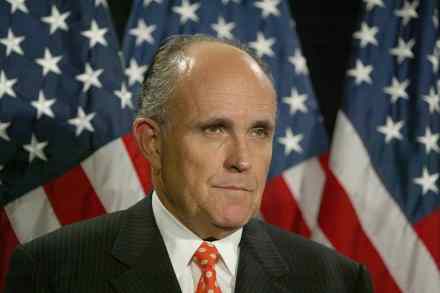
Lord help me I love a hatchet job, and you’ll have to too if you want to make it through Giuliani before donating it to Oxfam. This is not just any old biography – it’s a 480-page character assassination. Born in 1944 to an ex-con who broke kneecaps for a living and a mother who was about as ambitious as Margaret Beaufort, Rudy Giuliani excelled at school, qualified as a lawyer and started making his mark as a prosecutor. Across 12 days in 1986, he won convictions against the heads of four New York crime families (the fifth was murdered before he came to trial), a politician from the Bronx who’d presided over ‘a vast municipal corruption scandal’ and the Wall Street banker Ivan Boesky, ‘an icon of a delirious era in the financial sector’.

The absurd theatre of Amber Heard vs Johnny Depp

From our UK edition

Johnny Depp, a Hollywood star whose career currently consists of a perfume advert, is suing his ex-wife Amber Heard, a Hollywood actress who didn’t star in anything before she met him, for defamation. He says that she destroyed his career by telling the world he’s a wife-beater – and he wants $50 million in compensation. She says he is destroying her career by denying it – and wants $100 million ‘for nuisance’. Unfortunately, only one of them is any good at acting – which makes this trial a real nail biter for the folks back home drenched in Dior Sauvage who feel the only crime Johnny Depp ever committed was breaking up with Winona Ryder.

Can Elon Musk take on the tech censors?

From our UK edition

25 min listen

In this week’s episode: Is Elon Musk heading for a clash with the British Government over free speech?Elon Musk is buying Twitter. But might the Tesla CEO be in for a battle he wasn’t expecting with the UK government? Spectator Editor Fraser Nelson writes about this potential clash in this week’s issue and he joins the podcast to expand on his thesis. (00:49)Also this week: Where is it ever ok to stare at someone? If you’ve been on the tube recently you might have spotted a rather startling sign. This poster warns passengers about intrusive staring on public transport, so as to protect women from feeling intimidated on their commute. But who, we ask, will speak up for those who love staring at people on public transport?

How I finally learned to love my eco-home

From our UK edition

Nine years ago, when I invested every-thing I had in a part-rent, part-buy, one-bedroom, government-backed eco-home which proved to be a boiling box in summer, my first instinct was to throw myself out of a window – but I couldn’t because they opened only ten centimetres. My second was to complain about it in The Spectator. Now, I return to update you on my energy bills. Prepare to turn green with envy. Friends who live successful sorts of lives – involving houses, spouses and gardens – exclaim ‘Oh, so you weren’t joking about living in a J.G. Ballard novel?’ when they come around for the book launches I host in my living room, before asking if I can open a window. ‘I can actually,’ I boast.

AOC, America’s youngest congresswoman, has already been compared with FDR and JFK

From our UK edition

‘Who is AOC?’ the back cover of this book asks. ‘A wack job!’ says Donald Trump. ‘She needs to run for president when she turns 35,’ Cardi B explains. Alexandria Ocasio-Cortez is the youngest congresswoman in America. She goes by her initials (like FDR and JFK) and is a Latina from the Bronx and Westchester, with no background in policy making, a bartender. She has a boyfriend; she uses social media to communicate with fans and fight with political foes, and also to cook ramen noodles in front of millions of people while chatting with them about structural inequality and mass incarceration. And every one of these things winds up meaning so much. Take Up Space is a ‘kaleidoscopic biography’, assembled by the editors of New York magazine.

Is it really a crime to stare?

From our UK edition

‘A sky full of stars and he was staring at her’ is a love poem by a dead Roman but on the London Underground, all a man will find if he looks skyward is a TFL advert warning him if he stares at me in an Attican fashion I’m to call the police. ‘Staring’ (Sadiq Khan’s bright red public safety warning reads – with ominous eyeballs popping out of the ‘a’ and the ‘g’) that may be construed as ‘intense’ and of ‘sexual nature’ is now ‘sexual harassment’ and ‘not tolerated’. Should anyone ‘see it or experience it’ they are to text the British Transport Police or dial an 0800 sexual harassment hotline if they want to remain anonymous.

The curious cult of self love

From our UK edition

As Sigmund Freud once told me in a YouTube video: ‘Who lacks sex – speaks about sex, hungry talks about food, a person who has no money – about money, and our oligarchs and bankers talk about morality.’ So beware anyone who starts preaching ‘self-love’ at you. Chances are they hate themselves quite as much as you do – if not more so – and have been duped by the latest fad into revealing their deeply narcissistic behaviour patterns.

The indomitable popularity of Joe Rogan

From our UK edition

‘Nobody has stronger opinions about Joe Rogan than people who have never listened to Joe Rogan,’ is Edward Snowden’s view but I am the exception that proves the rule because the more I listen to him the more I profess my love for him. At points in the past year, the Joe Rogan podcast has been all that’s prevented me hurling myself out of the window with Elizabeth Day’s latest book. If you feel isolated and lonely in the post-lockdown world you might find yourself – among the legions of truck drivers stuck in cabs and Amazon workers waiting for robots to replace them – falling for him too.

Playboy’s shameless bid to distance itself from Hugh Hefner

From our UK edition

‘Get woke, go broke’ is the rule that explains the collapse of so many powerful institutions which profess social justice principles before asphyxiating on their own hypocrisy. Playboy may be the next corporation to consign itself to oblivion. This week, it distanced itself from its late founder, Hugh Hefner. It's a mission that is doomed to failure. 'Today's Playboy is not Hugh Hefner's Playboy,' we were informed in an open letter published on Playboy's website. The statement came after various 'Bunnies' told a TV documentary that Hefner drugged, groomed and secretly filmed girls and celebrity guests at his mansion.

I stand with Novak Djokovic

From our UK edition

Is anyone else alarmed by the widespread glee at the way Novak Djokovic has been treated by the Aussies? The world's top tennis player is in an immigration detention hotel in Melbourne, fighting to avoid being deported. Djokovic, who was granted a medical exemption to defend his title in the Australian Open, somehow snuck into the country with a bunch of tennis racquets before he was intercepted by the Australian authorities. The media is labelling Djokovic’s case as yet another example of ‘rules for thee and not for me’. But it isn't, because he hasn’t formulated any of the arbitrary and draconian Covid diktats imposed on the rest of us.

Emily Ratajkowski is having her cake and eating it

From our UK edition

After listening to an hour-and-a-half of Emily Ratajkowski talking about My Body I had to look up naked pictures of her on the internet to understand what she was complaining about. She arrived fully clothed to the 'How To Academy' to be interviewed by Pandora Sykes. This made it hard to know whether her dangerous-sounding upbringing as ‘an only child in a house with no walls’ had affected her physically.  ‘It had a profound effect on me,’ Emily told Pandora, explaining that she gets the ‘woozies’ to this day.

Leo McKinstry, Emily Hill and Daisy Dunn

From our UK edition

19 min listen

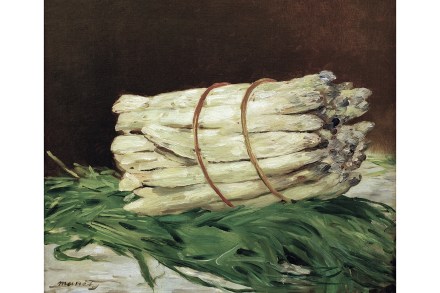
On this week's episode, Leo McKinstry starts by arguing that having to sell the family home to pay for social care is not an injustice. (00:50) Then, Emily Hill reads her piece. She's not looking forward to the return of hugging. (08:00) Daisy Dunn finishes the podcast by examining the underappreciated art of asparagus.

Hugs vs the hug-nots: where do you stand?

From our UK edition

On Monday, the Prime Minister says, we can hug again. Personally, I never stopped, but then I’ve been corrupted by southerners, foreigners, posh boys and gorgeous homosexuals. In luvvie land (aka London and Twitter), there’s this perception that everyone is desperate to rush into one another’s arms because they’ve desisted for so long. In many places outside the M25, that idea is so nuts it’s comical. In Norfolk, where I was raised, most people meet with a nod and a grunt, and it is the height of good manners not to ‘look at anyone funny’ (in other words, we don’t make eye contact with strangers). If any outsider tries to offer a hug next week, they’ll likely get clobbered.

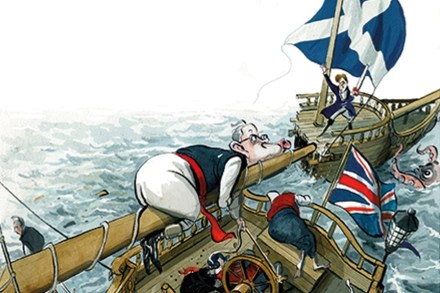
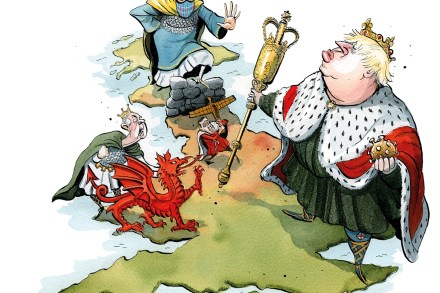
The break-up: Is Boris about to lose Scotland?

From our UK edition

40 min listen

Could No. 10 infighting lose the Union? (00:40) When should the government tell us how to behave? (13:20) Can a relationship work without hugging for a year? (31:30) With The Spectator’s deputy political editor Katy Balls; The Spectator’s Scotland editor Alex Massie; vice chair of Ogilvy and Spectator columnist Rory Sutherland; Deirdre McCloskey, Professor of Economics, History, English and Communications at University of Illinois at Chicago; writer Rob Palk; and journalist Emily Hill.  Presented by Lara Prendergast. Produced by Max Jeffery and Charlie Price.

Divided nation: will Covid rules tear the country apart?

From our UK edition

37 min listen

In this second round of restrictions, the lockdown is no longer national. But a regional approach is full of political perils (00:45). Plus, the real reason to be disappointed in Aung San Suu Kyi (12:50) and is Sally Rooney's Normal People just overrated (26:15).With The Spectator's political editor James Forsyth; Middlesbrough mayor Andrew Preston; historian Francis Pike; the Myanmar bureau chief for Reuters Poppy McPherson; journalist Emily Hill; and The Times's deputy books editor James Marriott.Presented by Cindy Yu.Produced by Cindy Yu and Max Jeffery.

Spare me the cult of Sally Rooney

From our UK edition

I have invented a new literary category, chic lit, to describe all the books written by elite females (Lena Dunham, Caitlin Moran, Elizabeth Day, Dolly Alderton, Sally Rooney, ad infinitum) for elite females. If you’re not one and can’t stand any of them, god help you. Their books will be forced on you anyway. Publishers can’t hear you scream. There is no metric for books kicked around living rooms or dumped in charity shops. Sally Rooney’s Normal People, for instance, is the worst novel I’ve ever finished. I had to. I was that appalled.

In lockdown, green privilege is real

From our UK edition

Long ago, a friend warned me I was living in a J.G. Ballard novel, but only in lockdown has the plot of High-Rise started to unfurl on the banks of the Thames. Developers are forced to build a certain number of homes for Londoners who could never otherwise afford anything, and height comes at a premium. So we’re stuck on the lower floors, in small, airless flats, overlooking land we’re not allowed to stray on to, as the rich exist in splendid corona-isolation above, peer down from their balconies and call security — to persecute us by making hints and suggestions. Ten days ago, a letter was stuffed underneath my door.