Nicola Barker

Nicola Barker: TonyInterruptor

From our UK edition

27 min listen

Sam Leith's guest on this week's Book Club podcast is Nicola Barker, talking about her new book TonyInterruptor -- about how a man who interrupts a free jazz concert becomes a viral sensation on social media. Nicola tells Sam why some of her books are bouts of the flu and some are sneezes, how hard she works on her apparently spontaneous prose, why she remains devoted to reality television — and about the time she went to visit Martin Amis with a ghetto blaster.
Is the Virgin Mary being sidelined by Rome?

From our UK edition

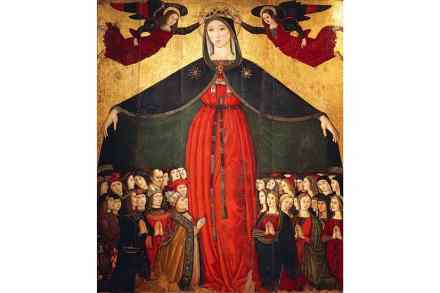
The Catholic church has always venerated Mary (‘Mother of God’) above other saints. But in recent years there has been a slight (a very slight) cooling in the church with regard to the inclusion of Mary in the liturgy of the mass. It’s been an English custom since medieval times to recite a Hail Mary (a verse of the rosary – the traditional Marian prayer) at the end of the ‘Prayers of the Faithful’ – the sequence of introductory prayers in the main body of the service. But just over a decade ago Rome decided to gently discourage this practice. It still continues in many churches (old habits die hard) and in some senses represents a small disjunction in the English church’s relationship with Rome. Okay, not small – tiny. Infinitesimal.

The End of Times and the coming of the Antichrist

From our UK edition

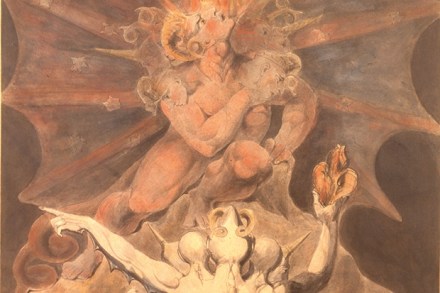
Two things it may be wise to know before picking up this relatively short and surprisingly cheerful brand spanking NEW biography of the Antichrist: (1) the meaning of the word ‘eschatological’ (it’s fairly critical); (2) the fact that the Antichrist is not the devil (a common misapprehension). The Antichrist is actually the son/spawn of the devil, and Philip C. Almond has already provided us with a perfectly serviceable biography of the Prince of Darkness himself (also NEW, even though, um, a few years old now). As a religious/cultural figure the Antichrist was actually a bit of a slow starter.

The downside of mindfulness

From our UK edition

Way back in 1996 Norman E. Sjoman published a book called The Yoga Tradition of the Mysore Palace, in which he contested that much of what we now (in the West) consider to be yoga — a practice apparently steeped in millennia of ancient Indian tradition — is actually a veritable hotchpotch of disparate influences, some of which are surprisingly modern. In 2010 Mark Singleton’s controversial Yoga Body: The Origins of Modern Posture Practice consolidated Sjoman’s argument, and Yoga International (through somewhat gritted teeth, no doubt) claimed it represented ‘a watershed moment in the history of global asana culture’.

A never-ending mystery

From our UK edition

In an age where ‘authenticity’ is prized above all things (even if what this actually means is that — like, say, Trump — you are just celebrated for being authentically narcissistic), it seems a rare kind of delight to investigate a spiritual/mystical philosophy of which it is airily claimed that: ‘It’s meaningless to speak of authenticity.’ Wow. Double-blink. Welcome to the curious but fascinating world of Harry Freedman’s Kabbalah: Secrecy, Scandal and the Soul, a cheerfully non-partisan, no-frills attempt at demystifying one of the world’s most mysterious, opaque and esoteric spiritual traditions. Yes. Kabbalah… or…um… Cabala. Freedman certainly has his work cut out here.

A Muslim’s insights into Christianity

From our UK edition

I’m not a critic, I’m an enthusiast. And when you are an enthusiast you need to try your best to keep it in check when writing reviews, just in case your prodigious levels of excitement and, well, enthusiasm, threaten to overwhelm readers and only succeed in putting them off. Because people generally need a bit of room — to create some distance, establish a tiny bit of breathing space — in order to make their own considered decisions about the liable goodness or badness of a thing. But shucks to all of that.

Strategies for seduction

From our UK edition

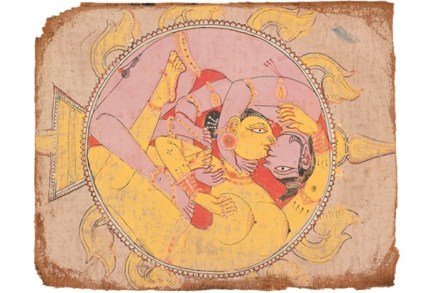
The rough English translation of Kamasutra is pleasure (kama) treatise (sutra). In the West, since it was first (rather surreptitiously) translated and published back in 1883, the book has generally been associated with a series of beautiful, ancient illustrations of a couple determinedly coupling in a variety of fascinating — and often utterly improbable — positions; as essentially ‘the erotic counterpart to the ascetic asanas of yoga’. But there is so much more to it than that, as Wendy Doniger doggedly contends in this, her fine collection of frank, brief, clear-eyed essays.

The holy sinner

From our UK edition

Many of the great faith narratives (the Holy Quran being a notable exception) are clumsy, rough-hewn things; makepiece amalgams of different texts from an abundance of sources that have been gradually hacked together over hundreds — sometimes even thousands — of years. Most have been found useful or resonant (spiritually and politically) at various stages in history, and some have been purposefully engineered (by individuals or institutions with agendas — their motives pure or otherwise). Eventually these fragments become embedded into a whole — a unity. A consensus is reached on what, fundamentally, works. This process is essentially pragmatic.

Love it or loathe it

From our UK edition

At the heart of the eschatological ideology of the Islamic State is the belief that when the world ends (and the world ending is a good thing in their estimation) the final conflagration will take place in northern Syria, in an unremarkable town called Dabiq (which Isis presently occupy). It is here that the Armies of Rome will combine forces against the Armies of Islam, and the Armies of Rome will be defeated. Other significant details include the appearance of a mahdi (a messianic leader) and a dajjal (an anti-messiah) whom Jesus (Islam’s second greatest prophet) will return to earth to destroy, thereby (perhaps somewhat bizarrely from a western perspective) leading the forces of Islam to victory. Apocalypses, it seems, are a fashion perennial. They never go out of style.