Craig Raine

Rescuing the Nativity from cliché

From our UK edition

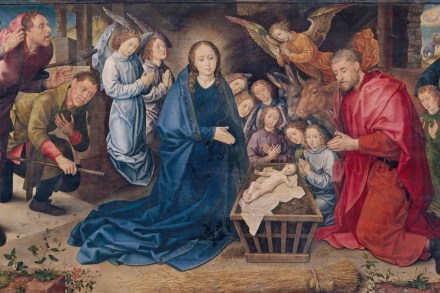
The Nativity. In ‘Over 2,000 Illustrations and a Complete Concordance’, Elizabeth Bishop ends her travelogue-poem – St Peter’s, Mexico, Dingle, Marrakesh – by opening the Bible. ‘(The gilt rubs off the edges/ of the pages and pollinates the fingertips.)’ She gives us the famous stable, ‘lulled within, a family with pets’. Domesticated, nothing out of the ordinary, yet prefaced by strangeness: ‘the dark ajar, the rocks breaking with light,/ an undisturbed, unbreathing flame.’ Undisturbed because it is an illustration and therefore fixed. Undisturbed also because it is the Holy Spirit – steady, unchanging – not spirited, but spiritual. Bruce Chatwin’s On the Black Hill has a school nativity: ‘“I am the Angel Gabriel,” he said in a suffocated voice.

The wit of Tom Stoppard

From our UK edition

The playwright Peter Nichols created a character based on Tom Stoppard. Miles Whittier. On a car journey across London, I once asked Peter why he was so irked by Stoppard. Thelma, his wife, answered for him: ‘He uses all the oxygen.’ But Stoppard was miles wittier. Asked by a punter, after the New York first night of Rosencrantz and Guildenstern are Dead, what his play was about, he replied: ‘It’s about to earn me a great deal of money.’ Think about it: the only person capable of preserving that bon mot was the playwright himself. He knew how funny he was. Later, he was more careful.

Modest, interesting – no masterpieces: Millet at the National Gallery reviewed

From our UK edition

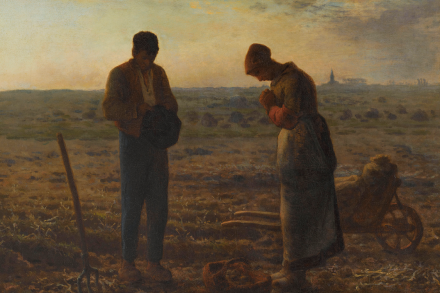
Jean-François Millet (1814-75). One Room. 14 items. Eight paintings. Six drawings and sketches. Modest, interesting. No masterpieces. The show appeals to the contemporary English preference for the unassuming, the humble, the unpretentious. Take ‘The Wood Sawyers’ (oil on canvas, 1850-2). Two figures are sawing a tree trunk with a long two-man bucking saw. Two thick sections have already been cut and the sawyers are busy with a third. The simplified trunk is like a salami, the bark corresponding to the floury skin. The main foreground figure with his blue rump has his foot braced against the trunk and commands our immediate attention. You can see the folds of flesh gathered at the back of his neck as he looks up from the task towards his fellow worker.

‘I’ve taken to sleeping in my teeth’ – the wartime admissions of T.S. Eliot

From our UK edition

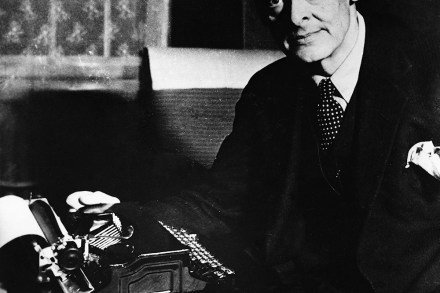
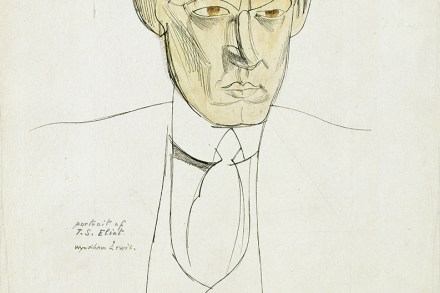
In 1944, T.S. Eliot is 56 years old. He seems older: ‘I am getting to be a wambling old codger.’ He is war-worn: ‘I have taken, when in London, to sleeping in my teeth.’ As a fire-watcher sharing shifts, his sleep is hampered by understandable pudeur: ‘I haven’t got enough phlegm to undress completely, and I think it best to sleep in my truss, in case of sudden blasting, which is not very comfortable.’ He knows, too, that his letters are dull. To Anne Ridler, 19 June 1942, he confesses: ‘If I had any small gift for letter writing, it has been ruined years ago by the pressure of the kind of correspondence I have to practise most of the time.’ Namely, the business letter, where you can see Eliot now and then resorting to the formulaic.

What we get wrong about modernism

From our UK edition

In The Art of the Novel, Milan Kundera writes, witheringly: ‘we must reckon with the modernism of fixed rules, the modernism of the university – establishment modernism, so to speak.’ He is addressing the novels of Hermann Broch, which, he argues, don’t fit the standardised mould. ‘This establishment modernism, for instance, insists on the destruction of the novelform. In Broch’s perspective, the possibilities of the novel form are far from being exhausted. Establishment modernism would have the novel do away with the artifice of character, which it claims is finally nothing but a mask pointlessly hiding the author’s face. In Broch’s characters, the author’s self is undetectable.

Why disaffected actors often make excellent playwrights

From our UK edition

Actors are easily bored on long runs. Phoebe Waller-Bridge once revealed that she staged distractions in the wings to amuse her colleagues. On the last night of Hay Fever, egged on by another actor, she bent over ‘and showed [her] arsehole’ to the on-stage actors. Nabokov’s plays are seldom performed. But he was alive to middling, mediocre dramatic clichés, fashions long-forgotten, but invaluably preserved in his 1941 lecture ‘The Tragedy of Tragedy’: ‘The next trick, to take the most obvious ones, is the promise of somebody’s arrival. So-and-so is expected. We know that so-and-so will unavoidably come…’ This is the lost convention, the stand-by that Beckett was frustrating in Waiting for Godot – with its tedious announcements and its adamantine disappointment.

Kingsley goes to the toilet

From our UK edition

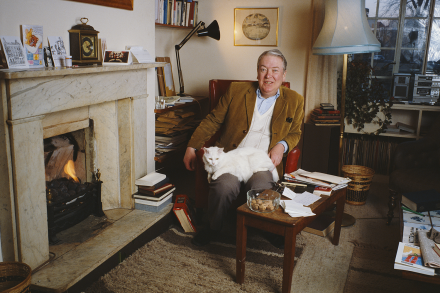
In 1978, I gave a poetry reading at Hull University. Philip Larkin was glumly, politely, in attendance. I was duly appreciative, knowing what it must have cost him. He was deaf as well as disaffected. Perhaps the deafness helped. The next day, we had a lunchtime drink at the University bar. We talked about Kingsley’s recently published Jake’s Thing, a fictionalised account of Kingsley’s sexual relations with Jane Howard. Larkin was puzzled: ‘It’s determinedly foul-mouthed, which I like, but there is a central implausibility. Jake can do it, but he doesn’t want to.’ An innuendo? A suggestion that Jake, and by implication Kingsley, couldn’t? He sipped something improbable like a Dubonnet. A year previously, Kingsley had taken me to lunch in Wheeler’s.

The art of sexual innuendo

From our UK edition

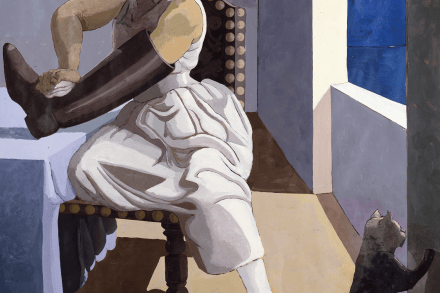
Paula Rego’s 2021 retrospective at Tate Britain demonstrated that, among art critics, ambiguity is still highly prized as a measure of merit. Martin Gayford: ‘No one, including its creator, can be aware of everything that’s going on.’ Laura Cumming at least gave examples. Of ‘The Cadet and his Sister’ (1988), she commented: ‘Bondage – physical, emotional, familial – is always in the air.’ The adjectives in that nervous parenthesis are insurance, the critic spreading her bets. The picture shows an older, bigger sister, formally dressed, with her cadet brother in uniform, wearing white ceremonial gloves. Behind them, a careful vista of trees. The painting depicts a milieu of public formality. Except that she has removed her gloves to tie his shoe laces.

The greatest paintings are always full of important unimportant things

From our UK edition

Goya to Impressionism: Masterpieces from the Oskar Reinhart Collection, at the Courtauld, consists of a selection of 25 absorbing paintings chosen from 207. I was disappointed but not surprised that one of the greatest paintings in the world, Pieter Bruegel the Elder’s ‘Die Anbetung der Könige im Schnee’ (The Adoration of the Kings in the Snow, 1563), didn’t make the journey from Winterthur in Switzerland. Too precious to put at risk. There is no requirement for a collector to accumulate thematically consistent paintings. Whim, availability, opportunism, taste, connoisseurship, pleasure, accident, catholicity all play their part. The Oskar Reinhart collection is gloriously heterogeneous, a series of bonnes bouches.

The problem of back-story in drama

From our UK edition

Olga in Three Sisters, the opening speech: ‘Father died just a year ago, on this very day – the fifth of May, your name-day, Irina.’ Jeeves says somewhere in P.G. Wodehouse that people with monogrammed slippers are afraid of forgetting their names. Irina, the absent-minded sister, probably needed reminding it was her birthday. A useful side-effect is that the audience also knows exactly when and where we are. Tracy Letts’s August: Osage County begins with a frank information offload: Beverly Weston, the patriarch, conveniently explains to the new native-American hire, Johnna, the basic set-up: ‘My wife takes pills and I drink.’ This bald set-up is ‘concealed’ by digressions about Berryman, T.S.

What makes a good title?

From our UK edition

Liszt’s compositions tend to have descriptive titles – ‘Wild Chase’; ‘Dreams of Love’ – whereas Chopin avoided titles. Thomas Wentworth Higginson wished titles on Emily Dickinson’s poems, opposed by his fellow editor Mabel Loomis Todd. They didn’t stick. Maybe this is why Dickinson is acclaimed but unread. ‘I heard a Fly buzz’ is easier to remember than 465. We can express this truth by quoting Dickens on the Bible in Little Dorrit: ‘such hiccupping reference as 2 Ep. Thess. C. iii, v. 6 & 7.’ Or by remembering how often we forget our several PINs. For poets, titles can be a resource, a useful press release before the actual poem Titles are important. Titles are useful.

Christmas I: Katy Balls, Craig Brown, Kate Weinberg, Craig Raine, Lisa Haseldine and Melissa Kite

From our UK edition

37 min listen

On this week’s Christmas Out Loud - part one: Katy Balls runs through the Westminster wishlists for 2025 (1:26); Craig Brown reads his satirist’s notebook (7:06); Kate Weinberg explains the healing power of a father’s bedtime reading (13:47); Craig Raine reviews a new four volume edition of the prose of T.S. Eliot (19:10); Lisa Haseldine provides her notes on hymnals (28:15); and Melissa Kite explains why she shouldn’t be allowed to go to church (31:19).  Produced and presented by Patrick Gibbons.

4,000 pages of T.S. Eliot’s literary criticism is not enough

From our UK edition

This is Alice B. Toklas, ventriloquised by her partner, Gertrude Stein: I must say that only three times in my life have I met a genius and each time a bell within me rang and I was not mistaken, and I may say in each case it was before there was any general recognition of the quality of genius in them. The three geniuses of whom I speak are Gertrude Stein, Pablo Picasso and Alfred Whitehead [the mathematician]. Defiantly, flagrantly clairvoyant. Daring us to dispute the claim, the Big Lie flourishes. Size matters. Think George Steiner, Joseph Brodsky, Big Whoppers both, tirelessly fibbing.  Towards the end of his life, in 1963, T.S.

‘There are an awful lot of my paintings I don’t like,’ admitted Francis Bacon

From our UK edition

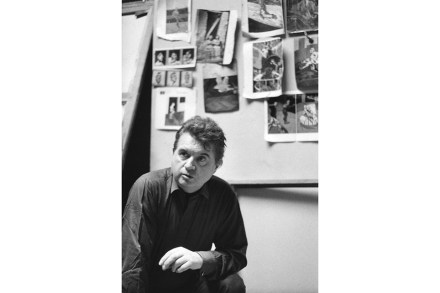
In 1959, Edvard Munch’s ‘The Scream’ was hanging above the bed where Francis Bacon nursed a fractured skull after falling downstairs drunk at his framer Alfred Hecht’s house on the King’s Road. It was there to be re-framed – a circumstantial detail Mark Stevens and Annalyn Swan report neutrally, en passant, in their 2021 biography Francis Bacon: Revelations. An inadvertent cry, nay a scream, for attention? Or a frame-up? It was a decade after Bacon painted his first screaming pope, a palimpsest obviously based on Velázquez but equally in hock to Munch. Francis Bacon: A Self-Portrait in Words is an annotated compilation by Michael Peppiatt of statements, letters, studio notes and selected interviews.

Why is Frans Hals still not considered the equal of Rembrandt?

From our UK edition

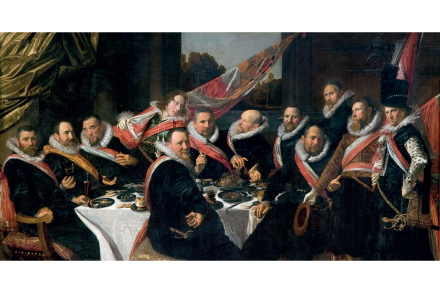
Who was Frans Hals? We know very little about him. He was baptised in either 1582 or 1583 in Antwerp. He died in 1666 at the age of 83 or 84. Approximately 220 works survive. One discredited narrative claimed Hals was a drunk – an inference probably based on his subject matter. There are several depictions of drinkers. On the other hand, there is his evident industry. Two streets in Haarlem, where he lived his entire life, have been identified, but not the actual houses. He was buried in St Bavo’s church in the Grote Markt, which was originally Catholic but became Protestant. There are two commemorative slabs next to each other in the chancel floor competing for authenticity. Which is appropriate, because there are two Frans Hals – the traditionalist and the innovator. They co-exist.

Eliot’s ‘wretched old’ typewriter looms large in an analysis of The Waste Land

From our UK edition

In 2018, the ferocious American poet-critic William Logan took time off from routinely, invigoratingly eviscerating contemporary poets to write Dickinson’s Nerves, Frost’s Woods: Poetry in the Shadow of the Past – a study of classic poems in their historical contexts. It was an informative, interesting exercise, prefaced by this significant reservation: ‘Knowledge of the circumstance is not ipso facto knowledge of the poem.’ Ezra Pound eliminated the weaker passages of The Waste Land, some of them, surprisingly, downright bad Matthew Hollis attempts something similar: an immersion in the verité, the lost circumstances of composition. His subtitle, ‘A Biography of a Poem’, is a brilliant piece of marketing, a hook, an attractive promise of something new and original.

The nightmare of making films about poets

From our UK edition

Television and film are popular mediums. Poetry has never been popular. This is Sam Weller’s father in Pickwick Papers, when he discovers his son writing a valentine, alarmed it might be poetry: Poetry’s unnat’tral; no man ever talked poetry ’cept a beadle on boxin’ day, or Warren’s blackin’, or Rowland’s oil, or some o’ them low fellows; never let yourself down to talk poetry, my boy. In 1994, I made a short film about Kipling. The director, Tony Cash, a man with a first-class Oxford degree in Russian, objected to a two-second reference to Aristotle’s ‘pity and terror’ in my script. ‘If you mention Aristotle, they [the TV audience] will think you’re an arsehole or an idiot.

The sad fate of Edna St Vincent Millay – America’s once celebrated poet

From our UK edition

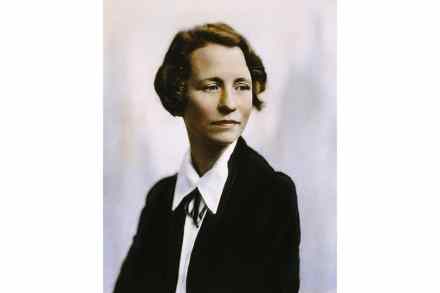
In June 1957, Robert Lowell attended a poetry reading by E.E. Cummings. Sitting dutifully and deferentially alongside him were Allen Tate, W.S. Merwin and his wife Dido and the classical scholar William Alfred, ‘while Cummings read outrageous and sentimental poems, good and bad of both kinds’. They were not alone: ‘About eight thousand people listened.’ But you can tell from Lowell’s adjectives – ‘outrageous and sentimental’ – that Cummings’s reputation is already on the slide. Edna St Vincent Millay’s diaries record a reading in Waco on 10 January 1930: ‘In spite of icy streets, really dangerous & cold weather, abt. 1500 people present.

Pablo Picasso in love and war

From our UK edition

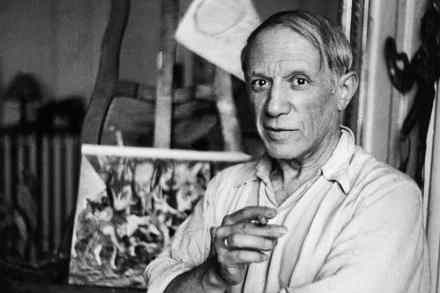
The decade 1933-43 was one of busy erotic multi-tasking by the deft and diminutive Pablo Picasso. It took him the best part of ten years to effect a separation from the reluctant Olga Khokhlova, his ex-ballerina wife, retired injured from the Diaghilev Ballets Russes. Legal proceedings were triggered by her discovery of Picasso’s affair with Marie-Thérèse Walter (aged 17 when Picasso picked her up in 1927 outside the Galeries Lafayette). On 5 October 1935, Marie-Thérèse gave birth to Picasso’s daughter, Maria de la Concepción, later known as Maya. By then Picasso was fornicating on many fronts: with Alice Paalen, the wife of an Austrian painter, and the 49-year-old Valentine Hugo, an ex of André Breton.

How good is he? Pissarro: Father of Impressionism, at the Ashmolean Museum, reviewed

From our UK edition

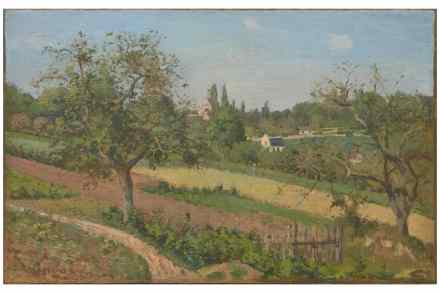
Two markers: ‘Cottages at Auvers-sur-Oise’ (c.1873) is a sweet especial rural scene of faintly slovenly thatched cottages with, at its centre, an outside privy, its door modestly shut. A discreet little detail. Second, early in the exhibition, Corot’s ‘Duck-Pond’ (1855–60), an indicator of the tradition to which Pissarro belongs — a world of unconsidered trifles, granted a quiet importance. Linda Whiteley’s excellent, informative catalogue essay quotes Pissarro on Corot: ‘Happy are those who see beauty in modest places where others see nothing. Everything is beautiful, the whole secret lies in knowing how to interpret.’ He is writing this credo to his son Lucien in 1893.