Culture

Culture

The good, the bad and the ugly in books, exhibitions, cinema, TV, dance, music, podcasts and theatre.

The perfect holiday read: The Bee Sting, by Paul Murray, reviewed

More from Books

Hello, summer! This is it. If you have been waiting for your big holiday read, finally here it is: an immersive, brilliantly structured, beautifully written mega-tome that is as laugh-out-loud funny as it is deeply disturbing. It is never a good idea to begin a review (or indeed to end one) with a round of applause unless you want to sound like a complete pushover or a total patsy, but full credit where it’s due: Paul Murray, the undisputed reigning champion of epic Irish tragicomedy, has done it again. He did it first with An Evening of Long Goodbyes (2003), which read as if a young, Irish P.G. Wodehouse were frantically rewriting A Confederacy of Dunces.

Chris Mullin’s eye for the absurd remains as keen as ever

More from Books

Journalists seldom get to the top in politics. They find it hard to trot out the dreary virtue-signalling that political communication often requires. Chris Mullin, I suspect, finds it almost impossible. He was a Bennite, but the Bennites quickly discovered he was unreliable. The Blairites might have welcomed him had they not suspected, rightly, that he would get the line wrong sooner rather than later.  There’s an endearing vanity in the way Mullin reports every kind remark made about his previous published diaries The only journalist to have made the top job in politics is Boris Johnson, and he crashed and burned. My friend Denis MacShane, who has ability and charm, also crashed and burned on his way up.

Roger Deakin – at ease in the countryside as a poacher with deep pockets

More from Books

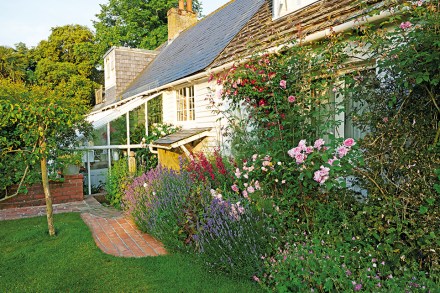
Few authors have left such an immediate legacy as Roger Deakin. When he died of a sudden illness in 2007, aged 63, he had written just two books: Waterlog, which set off the wild swimming craze, and the even more influential Wildwood, which helped kickstart the publishing phenomenon of nature writing. Yet both books only really became well known after his death. During his lifetime he was, at best, a cult taste. When I approached the BBC 20 years ago with the idea that he should present a televisual version of Waterlog in which he swam ‘across’ England, through its ponds, lakes and rivers, I was told no one was interested in wild swimming – and who was Roger Deakin anyway? Patrick Barkham has set out to answer that question.

Architecture for all occasions

More from Books

Architecture is a public art, but public intellectuals tend to engage with more abstract stuff. The style-wars ructions excited by our new King nearly 40 years ago have been settled by gravity, but intelligent discussion about what makes a great building is still a rarity, especially in the Ministry of Levelling Up, where there is muddle. On the one hand, ‘generic’ is anathematised; on the other, ‘design codes’ and building regulations which stifle the original thinking necessary to good design are encouraged. Perhaps the Ministry should put in a therapeutic bulk order for Hugh Pearman’s About Architecture. ‘If these be the times, then this must be the man,’ as Andrew Marvell said of Oliver Cromwell. Pearman was the architecture critic of the Sunday Times for 30 years.

The problems of being a Bee Gee

Lead book review

For quite some time, the prospect of death has held a fresh terror. The British Heart Foundation’s step-by-step guide to cardiopulmonary resuscitation advises performing chest compressions ‘to the beat of “Stayin’ Alive” by the Bee Gees’. This means that the last sound some of us will ever hear is ‘Stayin’ Alive’, with our chests as the drums: Feel the city breakin’ and everybody shakin’And we’re stayin’ alive, stayin’ alive!Ah! ah! ah! ah!Stayin’ alive! Stayin’ alive! Despite their success, the Bee Gees have always been regarded as naff. They are to pop music what Fanny Cradock was to cookery or Julian Fellowes is to the world of letters. Bob Stanley is on a mission to rescue their reputation.

Gruesome British folk sports – from cheese-rolling to Hare Pie Scramble

More from Books

‘Two mobs of men fighting over possession of a ball in a freezing, muddy river in Derbyshire,’ writes Harry Pearson, ‘is the British equivalent of the Rio Carnival.’ He’s not wrong. Brazil may have the sun, but we’ve got the capacity for mindless violence. It’s a trait expressed in many of the folk sports covered in this highly entertaining book. The mass football games (such as the one in Ashbourne), which take place over pitches several miles long, aren’t quite as vicious as they once were. In a Georgian contest between the Men of Suffolk and the Men of Norfolk, nine players died. In Jedburgh, they used an Englishman’s severed head as the ball. Nevertheless, the modern contests are far from gentle.

A deadly game of chance: The Story of a Forest, by Linda Grant, reviewed

More from Books

‘Like a child in a fairy tale’, 14-year old Mina Mendel walks into a Latvian forest one day in 1913. With her basket and shawl, she looks like Little Red Riding Hood, but the wolves she meets – Bolsheviks, ‘agents of the coming revolution’ – are anything but mythical. Linda Grant begins her sweeping, ambitious ninth novel The Story of the Forest with this accidental encounter. From Latvia to Liverpool – and Soho to World’s End – she tells the story of one Jewish family in the 20th century as they live through plots to overthrow the tsar, the trenches of of the Great War, the racism of Liverpudlian suburbs and the horrors of the second world war It is a novel of chances: of lives changed by the ring of a phone, a meeting in a street, or the march of global history.

The company of hens could be the best cure for depression

More from Books

A friend of mine, an inspirational teacher, says that one of the best things parents can do is to allow children to believe that their dreams can come true. Arthur Parkinson met his first chicken as a toddler, growing up in a former mining town, and from that moment he longed for a brood of his own. So his father set to, building a handsome ark-shaped hen house, poring over Ad-Mag to find amusing poultry for sale, driving Arthur around country lanes at weekends in search of rare breeds.

Among the giants: Titanium Noir, by Nick Harkaway, reviewed

More from Books

Roddy Tebbit is a quiet, tidy professor researching lake algae. His calendar is largely empty and his apartment has no family photographs. A colleague remembers him as ‘shy to the point of being rude’. Why somebody would put a bullet in his skull is unclear, yet this is how the cynical gumshoe Cal Sounder discovers him at the beginning of Nick Harkaway’s slick novel Titanium Noir. We soon find out that the dead man’s unremarkableness was deceptive. On the mortuary slab he easily clears seven feet end to end, and though he has the face of a man in his mid-forties, his driving licence puts him in at the start of his tenth decade.

How many black or Asian Britons feel a strong sense of European identity?

More from Books

Though wokeness is a vile thing, it has contributed to our culture in one fortunate way – by inspiring brilliant books which refute it. The woeful lack of anything passing for analysis (probably a colonial tool of oppression, like brunch) on the SJW side has thrown into gloriously sharp relief the difference in the intellectual firepower between those who believe in free speech and those who resemble Veruca Salt after joining the Stasi.

Daily life at the 18th-century Bank of England

More from Books

The England cricket team was once greeted at an Ashes test by an Australian banner with the immortal words ‘WOTHAM IS A BANKER’, the simple genius of the line being that you knew Wotham was being insulted before you had worked out quite who Wotham was, or what exactly he was being accused of. But, as Anne Murphy reminds us, the word ‘banker’ was not always just a word of abuse; it could also denote personal probity, sobriety, a certain nitpicking stolidity of thought, above all a preoccupation with credit and public confidence. It was not automatically oxymoronic to think of ‘virtuous bankers’.

The dark side of racing: Kick the Latch, by Kathryn Scanlan, reviewed

More from Books

Kathryn Scanlan’s second novel Kick the Latch is adapted from the transcript of an interview with a family friend in her native Iowa. Its narrator, Sonia, looks back on her years as a racetrack hand in a series of vignettes. She recounts run-ins with violent men, a freak accident that put her in a coma, and interactions with assorted rural eccentrics, such as Bicycle Jenny, a notoriously pongy gardener who owns 70 chihuahuas, and Johnny Block, who keeps a pet crow and ‘some ferrets’. Animals ran amok on the trailer parks where she lived: ‘As soon as you stepped out your door the goose would come and – bam! – she’d nail you in the back of the leg... When I woke up, a goat was sat next to me, chewing on my sleeve.

Fun and games at the TLS

More from Books

‘When everyone appears to be of one accord in thinking the right thing, go the other way.’ This was, broadly speaking, the maxim by which J.C. wrote his weekly N.B. column for the Times Literary Supplement, after inheriting it from David Sexton in 1997. Tonally different to the rest of the paper, N.B. under J.C. became a place where a contrary spirit found its expression in a series of ongoing, in-joking set pieces. From updates on the latest grammatical or linguistic dicta in the (mythical) TLS Reviewer’s Handbook, ‘perambulations’ among bookshops in search of forgotten or out-of-print works, and a set of satirical prizes, such as the Jean Paul Sartre Prize for Prize Refusal, the column was a friend as well as ‘a dependant’ for its author.

Shakespeare sceptics are the new literary heroes

Lead book review

Let’s start with the basics. Despite widespread disinformation, including in Shakespeare was a Woman and Other Heresies, there is in fact ample historical evidence from the period that a) attributes the plays and poems to William Shakespeare, b) registers the same William Shakespeare as an actor and shareholder in Lord Chamberlain’s, later King’s Men, and c) connects this William Shakespeare with the William Shakespeare of Stratford-upon-Avon. Only if you believe that all this evidence is fabricated does the authorship question become a question. And once the question is admissible, all that mass of documentation is no longer sufficient to answer it.

Will we ever know the real George Orwell?

More from Books

While George Orwell was staying with his family in Southwold during the 1930s, figuring out how to become a writer, the town pharmacist was busy shooting ciné footage. On the edge of a crowd watching a circus parade, he captured a tall man smoking at a street corner. It’s impossible to identify this brief glimpse as Orwell, but D.J. Taylor sees the self-conscious figure holding himself apart as a possible sighting. It doesn’t seem all that revealing, so why does it matter? It feels somehow symbolic of a wider effort to grasp something tangible and candid of a writer who can too readily be obscured by his own myth. This might be a chance to get a look at the man himself rather than a stage-managed persona.

Double trouble: August Blue, by Deborah Levy, reviewed

More from Books

The narrator-protagonist of Deborah Levy’s August Blue, an elite-level concert pianist called Elsa, is going through a difficult time. She recently walked off stage after messing up a Rachmaninoff recital in Vienna. More worryingly, she has just dyed her hair blue. At a market stall in Athens, she becomes entranced by a pair of novelty mechanical horses, but they’re snapped up by another customer with whom she becomes fixated. Elsa keeps noticing ‘the horse woman’ out and about, and starts to think of her as ‘a sort of psychic double’. She is deeply impressed when she sees her smoking a large cigar: ‘It was a poke at life. A provocation. She had attitude and confidence.

The danger of making too many friends

More from Books

Elizabeth Day has found her niche as an astute, approachable social anthropologist, observing emotions and behaviour we are reluctant to discuss – such as failure – and draining them of their stigma. Her new book tackles the subject of friendship, which she points out has been far less analysed than romantic relationships. Her honesty and her ability to listen make her an endearing narrator and charming interviewer. She examines why friendship has always been so important to her. Admirers of her previous book, How to Fail, will recall that her childhood involved a stint at a Belfast boarding school where she was bullied, an experience she touches on again here.

The amazing aerial acrobatics of swifts

More from Books

It happens usually in the second week of May, between about the 8th and 12th (this year it was earlier, the 2nd): a distant sound, building as it approaches, and then the doppler dip as the first of the returning swifts screeches past the roof of our Cornish farmhouse. It’s the opening bracket of the summer months, one that closes with their departure just 12 weeks later. But it is a reminder, too, that while we might think of our house as home to two adult humans, two teenagers and a dog, it is also the habitat for several nesting swifts, swallows, house sparrows, pipistrelle bats, mice, occasional winter rodents and all manner of buzzing, creeping invertebrates, as well as the billions of microbes and bacteria that survive our admittedly liberal regime of cleaning.

Unholy row: The Choice, by Michael Arditti, reviewed

More from Books

Michael Arditti’s 13th novel The Choice is full of tough moral conundrums. The central dilemma facing Clarissa Phipps, the rector of St Peter’s Church in Tapley, Cheshire, is particularly knotty. Should she remove the church’s panels depicting a troublingly sensuous Eden, painted by the degenerate artist Seward Wemlock in the 1980s, or leave them to stand? Can, in short, an artist’s life ever be disassociated from their work? This is a hot potato, one with which Arditti grapples using endless reserves of theological nuance. By juxtaposing Clarissa’s choice with others she has to make in her life (and the original choices made by Adam and Eve in eating the forbidden fruit), he amplifies the moral complexities behind our hardest decisions.

A gruesome discovery: Death Under a Little Sky, by Stig Abell, reviewed

More from Books

The journalist Stig Abell has such a versatile CV – moving from the Sun to editorship of the TLS and then to his present morning slot on Times Radio – that it’s no surprise he has dipped a toe into the crime-writing waters where so many semi-celebrities increasingly swim. What may be surprising, given the rigours of the genre, is how well he’s done it. Death Under a Little Sky sits on the cusp of cosy crime. Jake Jackson is a police detective in London whose life changes when an oddball uncle dies, leaving him a large house deep in a nameless part of England, complete with acreage and a lake. The legacy coincides with the end of Jackson’s marriage and comes with enough cash to allow him to resign from his job.

Polly Toynbee searches in vain for one working-class ancestor

More from Books

Polly Toynbee’s fascinating, multi-generational memoir comes with a caveat to a Spectator reviewer. While her book is written with ‘self-conscious awareness’, Toynbee predicts, with a cautionary wag of the finger, that it will be reviewed in publications where ‘introspection is inconvenient’. Not a page goes by without a reference to the iniquities of class, accent, snobbery or patriarchal dominance Of course, introspection drives her narrative. Toynbee, a self-confessed ‘silver-spooner’, was born into a family of towering academic and literary influencers who, while enjoying connections and lifestyles as posh as they come, almost consistently resisted and campaigned against conservative elitism and privilege.

Our future life on Earth depends on the state of the ocean

More from Books

When we observe the ocean we rarely peek beneath its surface. As Helen Czerski shows in her lively and engrossing account of the physics of ocean spaces, we would not see much anyway. Sounds travel well in water, and blue whales talk to one another across thousands of miles; but light soon disappears, apart from the glow emitted by luminous fish. Historians of the oceans (myself included) have looked at how, when and why people have crossed the surface of these spaces, uninhabitable except in the security of a boat or on islands, such as those in Polynesia with which Czerski begins her book. But we need to dive deeper.

Haunted by Old Russia: Rachmaninoff’s lonely final years

Lead book review

Ask a roomful of concert pianists to pick their graveyard moment in Rachmaninoff’s Piano Concerto No. 3 (1909) and they’ll almost certainly point to five or so pages halfway through the last movement where an ant nest of piano notes infests a sparse orchestral threnody. When an elderly Vladimir Horowitz performed this passage – lank, dyed pageboy hair framing his Bela Lugosi face, hands darting over and under each other like butterflies – he looked more like a weaver at his loom than a virtuoso at his instrument. There are flickers of concentration, but the overall impression is one of extreme insouciance. ‘I am a Russian composer, and the land of my birth has influenced my temperament and outlook’ The originator of this style of playing was Sergei Rachmaninoff himself.

A canter through Britain’s racecourses

More from Books

Although it could hardly be less woke, the racing world is an excellent example of the diversity and inclusiveness we are all constantly urged to practise. Racecourses attract people of all classes, ages, creeds and economic status, some drawn by the spectacle, others by a love of horses or betting, and many just by the prospect of a good day out. Nicholas Clee, a committed racegoer, clearly enjoys the latter, and has hit on the idea of taking us round the racecourses of Britain and Ireland. There are 59 in Britain and 26 in Ireland, most of which he has visited several times. En route we pick up stories of horses, jockeys, trainers, the history of the race itself and, often, the best place to watch the spectacle.

The villains of Silicon Valley

More from Books

Historians joke that some parts of the world – Crete and the Balkans, for instance– produce more history than they can consume locally. The California town of Palo Alto produces more economics than it can consume, and therefore more politics, and therefore more culture. But this comes at a price. Malcolm Harris, a thirtysomething Marxist writer who grew up there, begins his book by citing the alarming rate at which his high-school classmates committed suicide, and argues that Palo Alto is haunted by the historical crimes on which it is built. He then itemises them across two centuries of history, tracing their influence from Stanford University and Silicon Valley out across the world.

Laughing in the face of cancer

More from Books

A much cited statistic of the modern era reminds us time and again that at some point in our lives one in two of us will get cancer. So routinely is this doled out that its repetition must surely have dulled the threat somewhat – until, of course, we become the one in the two. When chemotherapy leads to virulent mouth ulcers, Patterson reaches for onomatopoeia: ‘Aieeoo’ In 2019, this statistic took on new emphasis for Sylvia Patterson. Then a 54-year-old pop music journalist clinging on for dear life in an industry going the way of the dodo, she discovered a curious leakage around her right nipple. Doctors confirmed Google’s scaremongering – breast cancer – then mollified her in the way doctors do, assuring her that its early detection was a good thing.