Jenny McCartney

Jenny McCartney

Journalist, reviewer, author of the children's book The Stone Bird.

I just don’t get P.G. Wodehouse

From our UK edition

I have a confession to make, which may upset many readers. Having only a passing acquaintance with his books, I’ve long experienced a faint allergic reaction to the works of P.G. Wodehouse. It is, I think, to do with the mannered, heavily whimsical nature of his world; the circumlocutory sentences; the ‘right-ho’s and ‘dash it’s and choreographed mix-ups; and the inexplicably passionate adoration of his many fans, among whom I count a number of my family and friends. But before dismissing something that so many intelligent people hold in high esteem, it’s worth considering whether I’ve missed a trick.

Bella Freud’s fashion inquisition

Sometimes the mind needs to take a break. And I can’t think of a better stopping-off place than the soothing, gloriously bonkers discussions on the Fashion Neurosis podcast, hosted by the British fashion designer Bella Freud. Its premise is that Freud, daughter of Lucian and great-granddaughter of Sigmund, encourages guests to recline on her couch and talk over any and every aspect of their relationship to fashion. Her mellifluous, affirming manner is much more soft soap than steel wool, but this is not territory that requires a serious broadcaster, and the concept proves a surprisingly fruitful route into family history, personal stories and high-grade gossip.

Fashion

Soothing and glorious: Fashion Neurosis reviewed

From our UK edition

Sometimes the mind needs to take a break. And I can’t think of a better stopping-off place than the soothing, gloriously bonkers discussions on the Fashion Neurosis podcast, hosted by the British fashion designer Bella Freud. Its premise is that Freud, daughter of Lucian and great-grand-daughter of Sigmund, encourages guests to recline on her couch and talk over any and every aspect of their relationship to fashion. Her mellifluous, affirming manner is much more soft soap than wire wool, but this is not territory that requires a Robin Day, and the concept proves a surprisingly fruitful route into family history, personal stories and high-grade gossip.

It’s moving to think how happy Van Gogh was in Brixton

From our UK edition

When a phrase really takes off in the political sphere, you will recognise it by the frequency with which it crops up on the Today programme. Many years ago, I noticed that politicians had begun using the line ‘it’s not rocket science!’ when attacking the alleged inability of their opponents to get even the basics right. It had a muscular, common-sense ring to it, which they clearly relished, and it spread like norovirus through a cruise ship. How times have changed. Where once we had politicians who never stopped talking about rocket science, the ascent of Elon Musk in the US has brought us a rocket scientist who never stops talking about politics. Painful as it was, I think I liked it better the first way round.

Avoids the breathless hype of so many podcasts: Finding Mr Fox reviewed

From our UK edition

We are all surely familiar with those stories of naive young Brits who travel abroad and are persuaded by a charming new holiday friend to bring back what they’re told is an innocuous package, only to end up on the sharp end of drugs smuggling charges. The latest series of the BBC’s World of Secrets somewhat inverts those expectations: it tracks the fortunes of three innocent young Brazilian sailors and a French captain who were allegedly duped by a Norwich businessman into sailing a rackety yacht across the Atlantic with £100 million worth of cocaine hidden in the body of the ship.

Mandy Rice-Davies saw the Profumo affair as an adventure, not a scandal

From our UK edition

In the decades since the Profumo scandal gripped a nation, Mandy Rice-Davies has been fixed in the public imagination largely in the form of one verbal comeback and a photo. The comeback – ‘Well he would, wouldn’t he?’ – came after being told by a barrister in court that Lord Astor had denied sleeping with her. The photo was of an 18-year-old Rice-Davies, sleekly cat-eyed and beehive-haired, in the back seat of a car with her friend Christine Keeler, who had triggered a public frenzy by sleeping with the war minister John Profumo at the same time as a Soviet naval attaché, Yevgeny Ivanov.

The fascinating mechanics of striking a deal

From our UK edition

If you wish to know how to become a master negotiator, a formidable body of books will now offer to train you in that art, but I’m not entirely sure it can be taught. The greatest natural asset, I suppose, is the ability to enjoy the game: the performative mulling, tough-talking, buttering-up, pitching of curve balls and – when absolutely necessary – flamboyant execution of a real or bluff exit. Yet even for those of us who are clumsy and reluctant hagglers, the mechanics of striking a deal can be fascinating. This is the stuff of the Dealcraft podcast, hosted by Jim Sebenius, a professor of the Harvard Business School, and himself a high-flying negotiator.

Glamour or guilt? The perils of marketing the British country house

From our UK edition

The most angst-ridden sub-category of the very rich – admittedly a lucky bunch to start with – must surely contain those who have inherited a British country house, along with the exhortation to keep it up. Imagine the anxiety of knowing that one is custodian of a large, crumbling pile of distinguished architecture, stuffed with meaningful antiquities and perpetually besieged by damp, dry rot and taxes. For those of us who are already reliably paralysed by small-scale admin, it would be enough to drive you to drink or worse. In contrast, the landed gentry who survive best in this modern terrain must be energetic, ruthless and ingenious; in all probability possessing similar characteristics to those which propelled their ancestors to social prominence in the first place.

We’ve been doing a monstrous disservice to goldfish

From our UK edition

As everyone knows, Londoners don’t talk to strangers. And heaven forbid that anyone should make eye contact on the Tube. But despite having lived in the city for decades now, I’ve never really found this to be true. My average day out and about is punctuated by pleasant little conversations with strangers. Now and then, without too much effort, I’ve hit chat jackpot and got an entire life story out of a fellow bus passenger in seven stops. It seems that for many years we have been doing a monstrous disservice to goldfish Still, old myths die hard, and Radio 4 is promoting the new series of Alexei Sayle’s Strangers on a Train by saying that the host’s mission is to ‘break the golden rule of travelling by train and actually talk to his fellow passengers’.

Exploring the rise of vaping

For those of us with a poor grasp of time, who can still recall when a night at the bar could be sharply revisited by a Proustian wave of stale smoke arising from yesterday’s clothes, it can almost feel as if vaping crept up on us out of nowhere. One moment, it seemed, all the authorities had firmly agreed that pushing for vaping was creepy, and were pledging to legislate and tax cigarettes into oblivion; the next, great hordes of schoolchildren were apparently free to suck constantly on little vials of liquid nicotine with sugar-rush names such as Cherry Fizzle and Blue Razz Lemonade. What happened?

vaping

How we became addicted to vaping

From our UK edition

For those of us with a poor grasp of time, who can still recall when a night at the pub could be sharply revisited by a Proustian wave of stale smoke arising from yesterday’s clothes, it can almost feel as if vaping crept up on us out of nowhere. One moment, it seemed, all the authorities had firmly agreed that Nick O’Teen was a creepy pusher hooking innocent kids on gaspers, and were pledging to legislate and tax cigarettes into oblivion; the next, great hordes of schoolchildren were apparently free to suck constantly on little vials of liquid nicotine with sugar-rush names such as Cherry Fizzle and Blue Razz Lemonade. What happened?

Under the Taliban, Afghan light entertainment accrued unusual weight

From our UK edition

For a television talent show, Afghan Star had unusually high stakes. When it first hit Afghanistan’s screens in 2005, four years after the fall of the Taliban, it represented the triumph of music over those who had attempted to smother it. Even from the show’s somewhat chaotic inception, it galvanised a nation, sending supporters out on to the streets to canvas for their favourite performers. When the Taliban first swept into town, people were overjoyed: they were seen as ‘angels of peace’ The first winner, Shakib Hamdard, certainly deserved some luck: he had lost his father to a suicide bomb and his brother to a rocket attack, and was driving a taxi around Kabul to support his mother and sister.

A gripping podcast about America’s obsession with guns

From our UK edition

The love affair between so many Americans and their guns – long a source of international fascination – appears to be getting more painfully intense. The greater the publicity over gun crime, the more Americans think they’d better acquire a firearm to keep themselves safe. There are now roughly 400 million guns in the US – but most citizens feel more unsafe than ever, and with some justification. Last year featured both the highest level of gun ownership in US history and the highest recorded number of mass shootings. This really is one to listen to in bed, in the pitch dark – even better, pretend you’re in a couchette ‘How did we get here, and how do we get ourselves out?

I’m ashamed that I used to think ABBA wasn’t cool 

From our UK edition

One of the joys of listening to archive BBC interviews with pop stars is the chance to hear long-discarded hipster jargon served up in its original setting. Near the beginning of Radio 2’s ABBA at the BBC, marking 50 years since the group won Eurovision with ‘Waterloo’, a prime example was unearthed from the immediate aftermath of their success. ‘If you were one of the 500 million Eurovision viewers, you may be wondering which was more important in getting the song through to number one,’ said the host. ‘Was it the music or the way-out gear?’ I think we can safely conclude that it was the music, although the sight of Anni-Frid Lyngstad and Agnetha Faltskog in spangled velvet can’t have hurt.

The BBC seems to have come around to catcalling – in the Caribbean

From our UK edition

Where in the world is it best to be a woman? You might think that’s a tricky question to answer, given the number of factors that go into the mix, but a new BBC podcast has pledged to find out. The format of the show is that on any given topic – body image, say, or fair pay – two women will speak from two countries that ‘are getting things right’. The one that proves more convincing could win ‘a place in our female fantasyland’, the composite, woman-friendly utopia that the programme is building as its ultimate goal. Although the word ‘wellbeing’ was flourished in the pitch, the hosts Sophia Smith Galer and Scaachi Koul assure us that they are sceptical of the wellness industry ‘so you won’t be getting any horse yoga or vaginal steaming here’.

How did the internet become so horrific?

From our UK edition

I can dimly remember the internet getting going, gradually staking its claims on our attention with hardly anyone except tech nerds – and famously David Bowie – realising what was going on. In our defence it was the 1990s and we had a lot else to think about: Britpop, The End of History, lads’ mags, guacamole, supermodels, Tony Blair, Monica Lewinsky, etc. But here we all are now, in a world where I can do my banking from bed, America is fragmenting like papier-mâché in the rain, and primary school children can get porn on their smartphones. Can anyone recall the incremental steps that brought us here?

The Queen’s Reading Room needs more Queen

From our UK edition

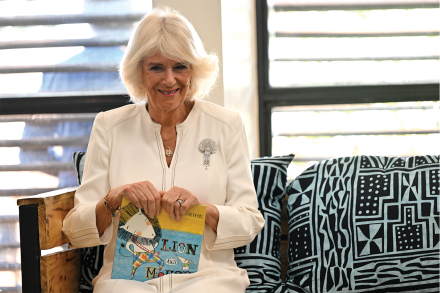
In the dog days of winter, when venturing out under darkened, sleety skies is to be avoided if at all possible, an online book club often seems the most appealing kind there is. Here in the UK, on territory in which the daytime TV hosts Richard and Judy once held undisputed reign, a bookish royal has entered the fray: Queen Camilla, whose ‘reading room’ and associated charity was launched on Instagram during the pandemic, and has now branched into podcasts.

Fascinating: Radio 4’s Empire of Tea reviewed

From our UK edition

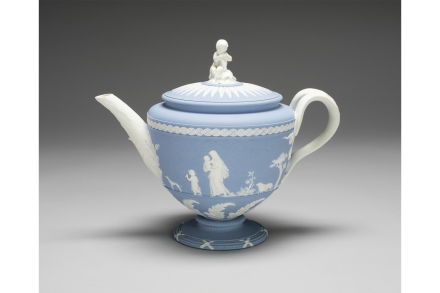
I can scarcely remember a time before tea: I started drinking it at around four, at home in Belfast, as a reward after school. Before long I was as fiercely protective of my right to a brew as the workers of British Leyland’s Birmingham car plant, who were famously spurred to strike action in 1981 when the management proposed cutting tea breaks by 11 minutes. Decades on, my passion is undiminished. There is no problem to which tea is not at least a partial solution: it restores flagging spirits, calms the over-excited, warms in winter and refreshes in summer.

Joni Mitchell, in her own words

From our UK edition

There’s always been something at once girlish and steely about Joni Mitchell, the stellar Canadian whom Rolling Stone called ‘one of the greatest songwriters ever’. As Radio 4’s Verbatim programme in honour of her 80th birthday reminds us, a stubborn hopefulness has carried her through turbulent times. Perhaps growing up in Saskatchewan, where winter temperatures drop to –30°C, put an early stiffener in her soul. When she contracted polio, aged nine, her mother braved the hospital ward in a mask to bring her bedridden daughter a small Christmas tree, but little Joni made a promise to the tree that she would walk sufficiently well again to be allowed back home for Christmas. This she managed. Before hitting ten, she took up smoking.

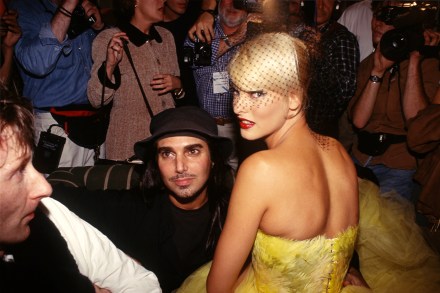
What happened to the supermodels of the 1990s?

From our UK edition

‘What advice would you give to your younger self?’ has become a popular question in interviews in recent years. It’s meant to generate something profound but, musing privately, I always find it a puzzler. Sometimes I think that maybe I shouldn’t have wasted so much of my twenties talking nonsense in pubs, but on the other hand I really enjoyed it. So I usually settle on: ‘Don’t buy a sofa bed, especially not the kind with a concealed metal frame that you pull out.’ Unbelievably, I’ve done this twice. These vast, unwieldy contraptions cost a bomb, weigh a ton, make a terrible sofa and an uncomfortable bed. If you’re 16 and reading this, be warned.