Helen Carr

The rose-tinted view of female friendship shatters

From our UK edition

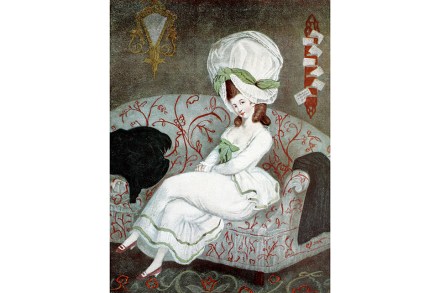
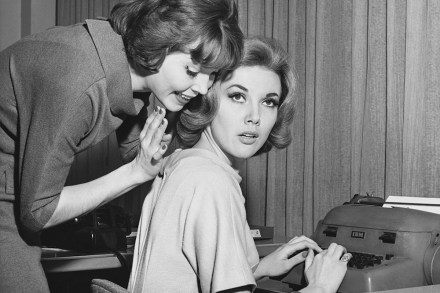
There is no such thing as a bad friend. The societal expectations and collective imagination of what friendship should look like have, over the past century, set unrealistic expectations, meaning we are all doomed at some point to fail as friends. At least this is what the cultural historian Tiffany Watt Smith argues in her new book. Bad Friend is elegantly written as part memoir, part history, citing multifarious sources, from 12th-century Paris to the American sitcom Friends. The author weaves in her own experiences of female friendships, candid that her research for the book made her reassess the formative and transformative relationships she has cultivated in her life. Reading the book forced my own recollection and reconsideration of friendships.
Whispers of ‘usurper’ at the Lancastrian court

From our UK edition

When Shakespeare wrote Richard II, he billed his play as a tragedy: the downfall of a king riddled with fear, contempt and an obscure sense of majesty. Shakespeare’s portrait was a reasonably accurate one. Some historians have suggested Richard was a narcissist; others that he had borderline personality disorder. Helen Castor offers a candid and considered view. Though the king ‘always knew he was special... his presence in the world shaped by his God-given destiny’, he simply lacked the conventional qualities of kingship. Richard’s tragedy was that he was doomed to rule under the spectre of his father and grandfather’s martial legacy – the Black Prince, hero of Crécy and the military giant Edward III. His cousin, however, possessed all the skills that a ruler required.

Margaret Tudor – queen, regent and hapless intermediary

From our UK edition

The history of princesses and queens has become well-trodden ground in the women’s history genre, particularly the Tudors. Linda Porter’s The Thistle and the Rose, a life of Margaret Tudor, queen consort to James IV and mother of James V, provides a refreshing change in subject. Margaret has had to share the stage with some of the most famous names and voices of the 16th century: Henry VII and his queen, Elizabeth of York; Henry VIII and his wives; and, of course, her namesake, Margaret Beaufort, the formidable Tudor matriarch who deftly helped place her son, the victor of Bosworth, on the throne.

Ordinary women make just as thrilling history as great men

From our UK edition

In 1348, the year the Black Death reached England and devastated the country, Matilda, the wife of Robert Comberworth, attacked someone called Magota and drew blood. She was fined 3d. Agnes, the wife of William Walker, attacked William de Pudsey and was fined four times the amount. Amica, an official watch-woman tasked with guarding a fruit crop, caught a certain Cecilia stealing. These women are among the many who star in Philippa Gregory’s latest book. Post-Conquest England is well-trodden ground, but Gregory’s history is not one of great men. It is of normal women – the women of legal battles, petitions, wills and letters. Her characters farm, pray, heal the sick, revolt and go to war. They are mothers, political agents, activists and victims.

From persecuted to persecutors: the story of early Christianity

From our UK edition

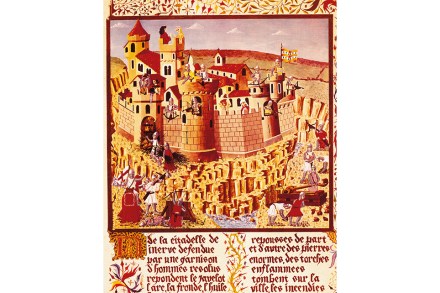
Dante travels through the circles of Hell, guided by Virgil. At the summit of the mountain of Purgatory, Virgil abandons him, leaving him with Beatrice, the woman Dante loved. With Beatrice’s smile, Dante is transported to Paradise, experiencing astral bliss as he soars through the cosmos. But Beatrice must leave him at the approach to the Eternal Fountain: for him to glimpse her smile further would be to incinerate him with its divinity. The relationship between humanity and divinity lies at the heart of this new history of the Middle Ages. Mark Gregory Pegg’s vignettes of martyrs, theologians, scholastics and secular figures illustrate the development of Christianity in the West after the collapse of the Roman empire, and the making of Latin Christendom.

The intricate stories timepieces tell

From our UK edition

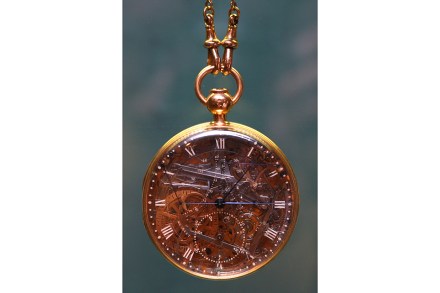
Humans live rigidly by the ticking hand of the clock, but few notice the passing of time with such precision as a horologist. Horology is the science of measuring time, and Rebecca Struthers is the first watchmaker in British history to earn a doctorate in antiquarian horology. After the Black Death, a wave of memento mori art swept Europe in the form of macabre cadaver tombs In her debut book Hands of Time she offers a personal history of time and watchmaking, inviting the reader inside her remarkable world. At her workshop in the Birmingham jewellery quarter, she dissects mechanisms that are ‘often smaller than a grain of rice’. Timepieces she has handled range from 18th-century pocket watches to Omega and Rolex wrist watches.

Snapshots of the Middle Ages in the Canterbury pilgrims

From our UK edition

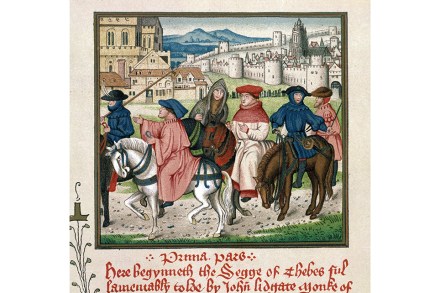
What does the term ‘medieval’ mean to you? Most of us have some idea of the Dark Ages, the centuries roughly spanning the departure of the Romans and the early, or indeed late, Middle Ages (which Ian Mortimer extends to the Renaissance). For those brought up on school history, or who revere the nous of the Romans, it was a time when civilisation declined. But the ‘Dark Age’ moniker is increasingly accepted as unfair, with historians arguing hotly and convincingly that the period was anything but dark. Seb Falk’s recent The Light Ages showed that major scientific exploration was under way in the late Middle Ages. Following on from this, Mortimer now explains why the period matters, and why it was once overlooked.