Culture

Culture

The good, the bad and the ugly in books, exhibitions, cinema, TV, dance, music, podcasts and theatre.

Falsifying history can only increase racial tension

More from Books

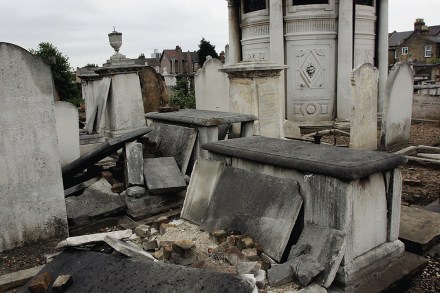
For many years the academic sociologist Frank Furedi has been among the strongest conservative voices in the front line of the culture wars. The target of his latest book is the systematic campaign to discredit the history of the West in the interest of a modern political agenda. The vandalising of statues, the ‘decolonisation’ of institutions and curricula, the recasting of museums and the rearrangement of libraries are all symptoms of something more fundamental. Furedi argues that historical memory is the foundation of western identity and culture. The object of the campaigners is to discredit the West’s ideals and achievements.

Rather in the lurch: Small Bomb at Dimperley, by Lissa Evans, reviewed

More from Books

Stories and films set in stately homes continue to fascinate us, and Lissa Evans’s latest novel is likely to increase our appetite. It is 1945, and Dimperley Manor, the large, dilapidated home of the Vere-Thissetts near Aylesbury, has been almost emptied of its wartime evacuees. Only the widowed Zena Baxter (who adores Dimperley) and her small daughter remain, and the place has become a millstone round the neck of the heir, Valentine. The new baronet is expected to marry a rich bride to save his ancestral home. The nation, battered and bloodied, has just voted overwhelmingly for Labour. Is it a new dawn or a disaster? All this might seem familiar to fans of Evelyn Waugh, P.G. Wodehouse, Hannah Rothschild and Emerald Fennell’s Saltburn.

India radiates kindly light across the East

More from Books

‘Everywhere I could see India, yet I could not recognise it.’ So said India’s great national poet Rabindranath Tagore of South-East Asia, after travelling there in 1927. Tagore was fascinated by how elements of ancient Indian culture had found their way eastwards: gods, temple architecture, the Sanskrit language and the great epics the Ramayana and the Mahabharata. A nationalist but also a universalist, Tagore welcomed the reshaping of these ideas by the people who received them, a process whose fruits he encountered in Malay literature and Balinese dance. He even hoped that one day a ‘regenerated Asia’, making creative use of its shared cultural heritage, might heal the world of the wounds he believed had been inflicted on it by the modern West.

The trivial details about royalty are what really fascinate us

Lead book review

For the moment, can there be anything new to say about Elizabeth II? In time, the archives will open up and more of her correspondence and any of the diary we know she kept will be made available to the public. (I wouldn’t get too excited – no monarch’s diary since Victoria’s has had much to tell us about its writer). But for now you would be forgiven for thinking every scrap has been gone over, every anecdote and every major or minor event in a long life. In an excruciating encounter with HM, Brown told her the plot of The Resistible Rise of Arturo Ui The first published biography of Elizabeth II came out in 1930, when she was four years old. When she died in 2022, she had been constantly written about for almost a century.

The song of the bearded seal and other marvels

More from Books

In his satirical Devil’s Dictionary, Ambrose Bierce defined the ocean as ‘a body of water occupying about two thirds of a world made for man – who has no gills’. Bierce may have been right to poke fun at human arrogance, but he underestimated the importance of the seas. Averaging almost 3,700 metres (12,000ft) deep, the ocean constitutes around nine tenths of the habitable space on our planet. It plays a commensurate role in the Earth system, not least as an engine – a ‘blue machine’ in the phrase that also titles an excellent book by the physicist and science presenter Helen Czerski – that moves heat around the planet.

A romantic obsession: Precipice, by Robert Harris, reviewed

More from Books

London in the long hot summer of 1914. A city of gold sovereigns, chaperones and muffin men, but also a place where war looms, paranoia breeds and secret papers mysteriously disappear. The world that Robert Harris brings to life in Precipice is both close to that of Buchan’s The Thirty-Nine Steps and simultaneously very far away. In place of rugged heroes giving dastardly spies what for, he offers a subtle drama about the distasteful and ultimately destructive love affair between a young aristocrat, Venetia Stanley, and a man 35 years her senior who, not coincidentally, happens to be the prime minister H.H. Asquith.

More curious canine incidents: Dogs and Monsters, by Mark Haddon, reviewed

More from Books

Mark Haddon’s latest collection of short stories, Dogs and Monsters, uses myth and history as springboards into mesmerising accounts of isolation, tragedy and, of course, dogs, which are a motif throughout, from the hounds who mistakenly tear apart their owner Actaeon, to one who befriends St Antony at his lowest point. Haddon monitors the borderlines between man and beast, divine and mortal, and what’s real and what isn’t. In ‘The Mother’s Story’, a reimagining of the Minotaur myth, the action is transported to quasi-medieval England. The first-person narrator is Pasiphae (though unnamed), whose ruthless husband has locked up her son Paul, born ‘a moon calf’.

A choice of thrillers for end of summer escapism

More from Books

Publishing has never much distinguished between fame and notoriety, and it’s hardly Charlotte Philby’s fault that her grand-father was the double agent Kim. Still, it seems an odd credential to extol. Philby is a good enough writer to be lauded for her work alone, and her latest book, The End of Summer (Borough Press, £16.99), is spy-free and her best so far. It’s 1985 and Judy McVee is an attractive teenage hustler who leaves her unsympathetic mother in London and moves to New York. There she supports herself by pilfering wallets from men in bars who mistake her friendliness for availability.

Can W.H. Auden be called a war poet?

More from Books

Nicholas Jenkins takes, as a point to navigate by in this rich and ingenious study of the early Auden, a remark by the poet’s friend Hannah Arendt. Auden, she said, had ‘the necessary secretiveness of the great poet’. You can’t always trust what Auden, in his prose and in his later interviews, claimed to have been getting at in the poems. And in Jenkins’s account, you can’t even trust what the poems think they’re getting at. Jenkins seeks to put Auden back in his own time, and embed the verse in his life. Auden said in public, for instance, that the first world war had little effect on him; and it’s seldom explicitly referenced in the verse. But in Jenkins’s version he’s a war poet.

Two young men in flight: Partita and A Winter in Zürau, by Gabriel Josipovici reviewed

More from Books

Two books in one: you flip it over, and it becomes the other. A Winter in Zürau is about Franz Kafka’s stay in a small Bohemian village with his sister Ottla after being diagnosed with tuberculosis. Or, as Gabriel Josipovici arrestingly puts it in the preface: ‘One day in the summer of 1917 the writer Franz Kafka woke up to find his mouth full of blood.’ (The echo of the opening line of Metamorphosis is surely deliberate.) Here, in isolation, he recuperated, or tried to. He wrote to Max Brod: ‘I’m not writing. What’s more, my will is not directed towards writing. If I could save myself... by digging holes, I would dig holes.’ Josipovici quotes this, and adds that there is a photograph of Samuel Beckett ‘doing just that’ in the second volume of his Collected Letters.

Iris Apfel’s talent to amaze

More from Books

This is a book like no other. Part artwork and part compendium of a lifetime’s experience in design, it is meant to be looked at as much as read. Nor is it titled Colourful for nothing: entire pages are in vivid hues of vermilion, lime green, canary yellow, emerald and toffee. On them are displayed illustrations, patterns of fabric and family photographs, interspersed with chunks of prose or aphorisms. In short, it is an expression of its author’s philosophy, threaded through rather disjointedly with the story of her life. Iris Apfel is the only woman I can think of – with the possible exceptions of Diana Vreeland and Helena Rubinstein – who turned extreme plainness into an aspect of personal style.

Celebrating Sequoyah and his Cherokee alphabet

More from Books

There are about 7,000 languages currently spoken on this planet. By the end of this century, all but 600 will have disappeared – the inevitable result of an unstoppable process as the last speakers of the world’s little languages die out, usually leaving no trace, for the vast majority are spoken only, with no written record. But even languages which have had the good fortune to be written down face their own extinction as their individual writing systems struggle to survive. Hundreds and hundreds of unique alphabets, as much as 90 per cent, face oblivion.

Introducing Tchaikovsky the merry scamp

Lead book review

Some years ago, following a Christmas performance of Tchaikovsky’s Nutcracker, I sat in one of the dives near the theatre with a member of the corps de ballet, the gay son of close friends. The audience had been populated largely by children and teenagers, most of whom were either smitten by the intrepid, empathetic Clara or wanted to be her. Yet the mood perceptibly shifted when, at the end of Act I, the life-sized nutcracker doll transformed into a most handsome prince, all grace and gluts. ‘Do you think in that moment,’ I asked my dancer friend, ‘that a smattering of adolescent boys, out on a family treat, notice their affections shifting from Clara to the Prince and receive there and then the gentlest yet unmistakable insight into their future selves?

Saved from certain death at Auschwitz – by playing the cello

Lead book review

Bees and mammoth bones, a shipwreck, horse urine (preferably female), a 17th-century craftsman and a 20th-century genocide. Playing an extended narrative game of Only Connect in her latest book, the musicologist Kate Kennedy takes a bird’s-eye view of four lives and five centuries as she turns her own instrument, the cello, into a prism. Part history, biography and auto-biography, with digressions into anthropology, acoustics and aesthetics and an intriguing cast of characters, Cello sings richly. But you have to be willing to go on the journey. Has publishing reached peak personality-stakes?

The juicy history of the apple

More from Books

In Food for Life, Tim Spector’s book on the science of eating, the author gives the chemical makeup of a mystery food, listing more than 30 scary-sounding E numbers, sugars, acids and chemicals, before revealing that it is an… apple. Sally Coulthard’s book shows that it’s the apple’s complexity as well as its familiarity, that makes it the ideal punchline for Spector, and, for Coulthard, a perfect vehicle to carry the history of how we grow, trade, cook and eat together and take responsibility for each other and the environment (or not).

The enduring charisma of Brazil’s working-class president

More from Books

A better title for this book might have been ‘Lula: A Drama’. In the first of two long- anticipated volumes, Fernando Morais has delivered an unconventional but riveting account of the key moments of tumult in the career of Brazil’s President Luiz Inácio Lula da Silva (2003-11; 2023-present). A veteran journalist, Morais is clinical in his detail of the underground union gatherings, abject poverty and family tragedy which formed Lula. He brings São Paulo’s working-class culture to life throughout, with popular car brands, pop songs and sessions of cachaça and gin rummy ever present. Lula’s upbringing was marred by hardship.

Is it wrong to try to ‘cure’ autism?

More from Books

Is autism the worst thing that can happen to a person? Is ABA – Applied Behaviour Analysis – the right treatment for an autistic child? Should an autistic person get away with being rude? Do autistic individuals not feel empathy? If, as exists for unborn Downs Syndrome babies, a precise test is found to diagnose foetal autism, should the mother abort? Is it wrong, as some high-functioning autistic people claim, to try to ‘cure’ autism? Surely it is important to offer intervention to less able autistic children and adults, to help make their lives more bearable? These are some of the questions discussed in this passionate and informative memoir.   Virginia Bovell’s son Danny, now 31, was diagnosed with autism in 1996, aged three.

How could Hitler have had so many willing henchmen?

More from Books

Eight decades after the second world war ended, for how much longer will we produce massive books about Hitler and the Nazis? Richard J. Evans, the former regius professor of history at the University of Cambridge, is one of the senior gardeners in this noxious orchard, having devoted a lifetime’s study to the subject. As a minor under-gardener in the same field, I believe that we now know all we need to about the Führer and the crimes of his vile regime, and, barring the unlikely discovery of something new, it is time that historians moved on. The damning facts can be briefly stated, and are cogently summed up by Evans in his conclusion: Hitler was a fanatic, brought to power by a German middle class traumatised by defeat in the first world war and the economic woes that followed.

Her weird name was the least of Moon Unit Zappa’s problems

More from Books

On Frank Zappa’s first date with Gail Sloatman, he blew his nose on her skirt. As acts of territory-marking go, it’s hard to imagine something more equivocal. But Gail, a 20-year-old secretary at Los Angeles’s Whisky a Go Go club, must have read it as love. She built her life around the musician, composer and ‘rock’s most committed iconoclast’, as his New York Times obituary described him, for 27 years, until his death from prostate cancer in 1993, aged 52. A year after that first, snot-filled seduction, the Zappas were married, a week before Gail gave birth to Moon Unit, the first of four children. Moon’s name is not a compound noun: Unit is her middle name, given to reflect how her arrival turned two people into a single family – Frank’s idea.

Whoever imagined that geology was a lifeless subject?

More from Books

Rocks are still and lifeless things, and geologists are men with beards whose emotional bandwidth is taken up with an unnatural attachment to cherts and clasts and the chill beauty of the subducted lithosphere. Such is the stereotype. The academic geologist and New Yorker contributor Marcia Bjornerud has managed to go a fair distance towards dispelling it. In her previous book, Timefulness, she wrote for the general reader and with persuasive lyricism about readjusting our focus to thinking in geological time.

Imperfections in wood can make for the loveliest carvings

More from Books

I am married to a wood snob. When we bought our house in 1999, my husband insisted that all the shelves (he is an antiquarian book dealer, so there are miles of them) should be made of ‘real’ wood, with not an inch of Medium Density Fibreboard. The price made me squeal. But a quarter of a century on, while friends’ MDF shelving droops like cables between telegraph poles, ours remains beautifully strong and straight. Callum Robinson would understand why this matters.

A death foretold: The Voyage Home, by Pat Barker, reviewed

More from Books

Emily Wilson, the distinguished translator of Homer, has remarked that Pat Barker’s The Silence of the Girls about the Trojan War is a distinctly feminist book. Renowned for her first world war Regeneration trilogy, Barker has now written a powerful novel about the first part of Aeschylus’s Oresteia. She takes the infrastructure of legend and invests it with brutal realism. Agamemnon’s return home to Mycenae after ten years of war is told entirely from the points of view of women. The narrator is Ritsa, Cassandra’s maid, her intimate ‘catch-fart’. (There is no reticence throughout about the use of crude colloquialisms.) Agamemnon the victor becomes the victim.

Bogart and Bacall’s first film together might as well have been called Carry On Flirting

More from Books

You must remember this... Harry Morgan is leaning on the bar wondering how the femme fatale and her wounded freedom fighter husband are doing. Then Slim walks in, wearing two wisps of black satin linked by a hoop around her navel. Harry tells her it’s time he checked on his patient. ‘Give her my love,’ says Slim. ‘I’d give her my own,’ says Harry, ‘if she were wearing that.’ And in real life, as the tabloids would say, he did. We are talking of To Have and Have Not (1944), in which Harry is Humphrey Bogart and Slim is Lauren Bacall. The director, Howard Hawks, said the movie was just an excuse to do some scenes.

How ‘The Rime of the Ancient Mariner’ plays tricks with the mind

More from Books

I’ve just returned from five days in the Lake District, attending the biennial ‘Friends of Coleridge’ conference in Grasmere. All the other attendees were seasoned Coleridge scholars, but I was a newbie. The reason for my going was the fact that I’m engaged in a project that has at times felt something of a lonesome road and indeed an albatross: to write a book about Coleridge’s ‘The Rime of the Ancient Mariner’. The poem comes to us with a vast undertow of explicit and implicit cultural and historical baggage, from its self-conscious antiquarian roots in late medieval ballads to its engagement with more currently pressing concerns of environmentalism and how we navigate the story of colonial expansion.

An unlikely comeback: Rare Singles, by Benjamin Myers, reviewed

More from Books

Last year, the Proms had a ‘Northern Soul’ special concert; and Benjamin Myers won the Goldsmith’s Prize for Cuddy, his polyphonic novel about St Cuthbert’s afterlife. I do not think he will win the prize again this year for Rare Singles, his novel about Northern Soul. I am glad about the Prom though, since I knew very little about the music; and listening to it did not appreciably deepen my enjoyment of this novel. Sentimentality is not a bad thing per se, but it is a difficult genre to do well, and Myers doesn’t do it half badly. The central figure is Earlon ‘Bucky’ Bronco, an elderly American widower wracked by pain, whose musical career comprised two singles, one barely released and both largely forgotten.

David Baddiel’s father and mother must be the most talked about parents in Britain

More from Books

According to Clive James: ‘A life without fame can be a good life, but fame without a life is no life at all.’ In My Family: The Memoir, the famous comedian David Baddiel proves he’s also had a life. Or, at least, a family. For anyone who hasn’t been paying attention – and Baddiel, as he admits, craves attention – or who has never watched television or listened to the radio over the past 30 or 40 years, Baddiel is famous as a stand-up comedian specialising in a ‘sweary and often not-very-nice-Jewish-boy style of comedy’, as a TV chat show host with fellow comedian Frank Skinner, presenting Fantasy Football League and Baddiel and Skinner Unplanned. He also writes films, sitcoms, novels and non-fiction, including the recent Jews Don’t Count.