James Bradley

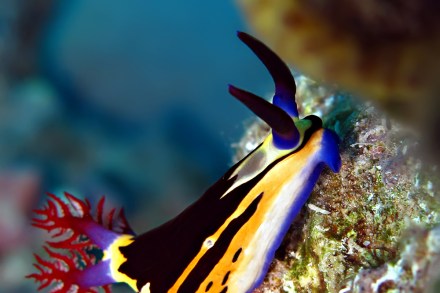
What sea slugs can teach us about organ transplants

From our UK edition

While they may be outnumbered and outweighed by insects, the terrestrial world is really the kingdom of the vertebrates. Mammals, birds, reptiles and amphibians dominate most ecosystems. Yet, as Drew Harvell points out in her fascinating new book, the seeming diversity of the terrestrial vertebrates is deceptive. In fact all are contained within just one of the 34 groups of animals that live on our planet, and their many designs are really variations on a quite narrow set of themes. This means that all share bilateral symmetry – heads with eyes and brains atop bodies with four limbs that contain their organs. By contrast, the other 33 groups of animals, the invertebrates, are astonishingly various in their design, with arsenals of adaptations and biological tricks.

James Bradley: The World in the Ocean

From our UK edition

49 min listen

My guest in this week’s Book Club podcast is the novelist and critic James Bradley whose new book is Deep Water: The World in the Ocean. He tells me how we need to rethink our relationship with the sea and the life it contains, why fish are much more intelligent than we are used to imagining, and why – amid planetary doom – there’s still room for hope.

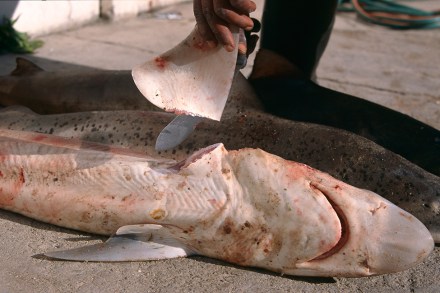
After half a billion years, are sharks heading for extinction?

From our UK edition

Sharks were never far from our minds as we grew up on the beach in Adelaide. Although attacks were rare, they were real. My grandfather was witness to the fatal mauling of a swimming instructor in the 1930s, and later a friend from university was killed while scuba diving off Port Noarlunga. Yet for the most part sharks were more an idea than a living presence. Other than an unsettlingly close encounter with a bronze whaler when I was 20, my interactions with the creatures as a young person were mostly confined to observing gentle Port Jackson sharks, wobbegongs and grey nurses while snorkelling and diving. This tendency to see sharks only through the prism of their vastly overestimated threat to human life obscures the many wonders of these remarkable animals.

A scorched Earth: Juice, by Tim Winton, reviewed

From our UK edition

Late last year in Australia’s The Monthly, Tim Winton wrote an essay on the urgent need for writers to look the climate crisis in the eye. Quoting Amitav Ghosh’s observation about the ‘patterns of evasion’ that continue to conceal the scale of the catastrophe, he argued that writers must overcome the habits of mind that treat the natural world as an inert externality. Instead, they must find ways to recognise that we are part of nature, and our fate is inseparable from the world around us. ‘We have difficult work to do,’ he declared. ‘And we’re late to the bushfire.’ Of course, Winton is not someone who could ever be accused of treating the natural world as mere window-dressing.

A whiff of paranoia

In the immediate aftermath of 9/11 many writers spoke of feeling immobilised. The scale of the attacks and the world’s shared experience of the media event seemed to demand a response; but simultaneously writers such as Ian McEwan, Martin Amis and Jay McInerney described a sense that the tools at their disposal were inadequate — that the reality of what had taken place exceeded fictional representation. These three all recovered from their shock reasonably quickly, contributing to the flood of 9/11 fiction that poured into bookshops during the 2000s. In recent years this torrent of novels and stories has slowed, but as Christopher Priest’s eerily powerful An American Story demonstrates, it most certainly has not stopped.

A riot of in-jokes

From our UK edition

Almost 120 years ago, the Australian writer Henry Lawson offered some counsel to those who came after him, writing that his advice to any young Australian writer whose talents have been recognised would be to go steerage, stow away, swim and seek London, Yankeeland or Timbucktoo rather than stay in Australia till his genius turn to gall or beer. Or failing this — and still in the interests of human nature and literature — to study elementary anatomy, especially as applies to the cranium, and then shoot himself carefully with the aid of a looking-glass.

A host of feuding poets

From our UK edition

The Indian poet Jeet Thayil’s first novel, Narcopolis, charted a two-decade-long descent into the underworlds of Mumbai and addiction. One part de Quincey, one part Burroughs, it was distinguished not just by the sustained beauty and brilliance of its prose but by what must surely rank as a strong contender for the funniest scene in a Theosophy Hall ever written. It was also highly autobiographical and, perhaps just as importantly, deliberately subversive, rejecting the questions of national identity and family that preoccupy most Indian novels that find favour in the West. Something similar might be said about Thayil’s new novel, The Book of Chocolate Saints.

Why is SF so sneered at?

From our UK edition

In recent years the question of why the literary mainstream continues to marginalize and ignore writers of Science Fiction and Fantasy has become a live issue, perhaps most eloquently demonstrated by the furious reaction to the BBC’s shabby and offhand treatment of the genres in its World Book Night program, The Books We Really Read. As someone who reads widely in both fields it’s an irritation I have some sympathy with. Where forty years ago any reader worth their salt would have at least a passing knowledge of SF authors such as J.G. Ballard, Brian Aldiss and Ursula Le Guin, many now wear their ignorance of the form proudly, dismissing it with the same shudder they reserve for Twilight.