Peter Frankopan

Peter Frankopan is professor of global history at Oxford University and author of The Earth Transformed: An Untold History

‘Keir Starmer has become Boris Johnson!’ with Prue Leith & Peter Frankopan

From our UK edition

40 min listen

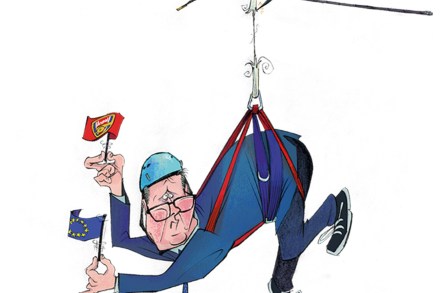
In this week’s podcast, the panel unpacks Tim Shipman’s explosive cover story, including a leaked message suggesting just how closely Starmer backed Mandelson’s appointment from the start – and why the Prime Minister is now struggling to shift responsibility as the fallout grows. Host Lara Prendergast is joined by William Moore, historian Peter Frankopan and Prue Leith to assess whether this is a moment of real political danger for Starmer – or simply another Westminster storm. As comparisons with Boris Johnson mount, they ask whether Labour’s internal critics will act, what alternatives (if any) exist, and why the deeper problem may be a striking lack of talent across British politics.

‘Keir Starmer has become Boris Johnson!’ with Prue Leith & Peter Frankopan

Iran: why theocracies survive – with Peter Frankopan

From our UK edition

25 min listen

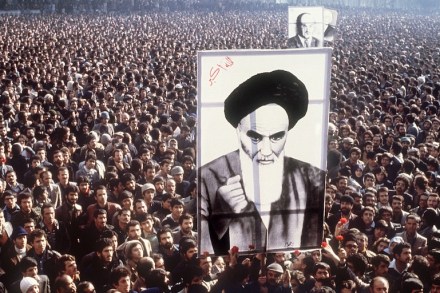
In the 21st century, the theocratic nature of the Iranian regime – ruled by senior Shia clerics – appears to be a rarity. The constitutional role of religion is perhaps matched only by the Vatican City and Afghanistan, though these vary in terms of autocracy – as evidenced by the brutal suppression of protests across Iran in the past few weeks. The regime, installed following the 1979 revolution and led first by Ayatollah Khomeini and now Ayatollah Khameini, has proven remarkably resilient; how has it survived so long?

A new era of nuclear weapons is here

From our UK edition

The world is moving into a more dangerous age. According to the Peace Research Institute Oslo, last year set a grim record, namely the highest number of state-based armed conflicts in more than seven decades. At the same time, we are seeing a fundamental realignment of global geopolitics – made clear from the recent meeting of the Shanghai Co-operation Organisation in Tianjin and the ‘Victory Day’ parade held in Beijing shortly afterwards. There, the leaders of what many in the West see as an emerging new world order stood shoulder to shoulder as Chinese military hardware was put on display to mark 80 years since the end of the second world war. That anniversary underscored the commemoration last month to mark the only two occasions where atomic bombs have been used.

Is the world safer than in 1945?

From our UK edition

11 min listen

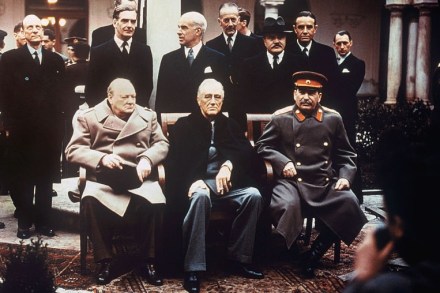
80 years ago this week Japan surrendered to the allies, ushering in the end of the Second World War. To mark the anniversary of VJ day, historians Sir Antony Beevor and Peter Frankopan join James Heale to discuss its significance. As collective memory of the war fades, are we in danger of forgetting its lessons? And, with rising state-on-state violence and geopolitical flashpoints, is the world really safer today than in 1945? Produced by Patrick Gibbons.

The real reason Trump’s Alaska summit matters

From our UK edition

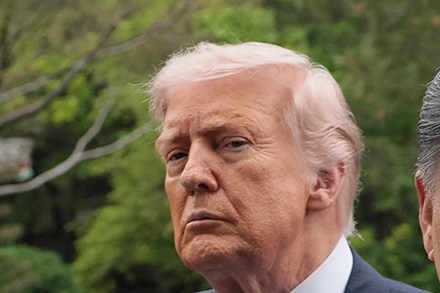
Donald Trump has never lacked confidence. ‘I’m here to get the thing over with,’ he said last week when announcing the meeting with Vladimir Putin. ‘President Putin, I believe, wants to see peace. And Zelensky wants to see peace. Now, President Zelensky has to get… everything he needs, because he’s going to have to get ready to sign something.’ To many, that sounded like a variation on Trump’s much repeated election claim that he would end the Ukraine war in 24 hours: a grandiose statement that will probably bear little if any fruit this week. Indeed, the smart money is on the Alaska summit resulting in claims of a ‘historic breakthrough’, which will change little on the front lines.

Peter Frankopan, Tim Shipman, Francis Pike, Hermione Eyre and George Young

From our UK edition

42 min listen

On this week’s Spectator Out Loud: Peter Frankopan argues that Israel’s attack on Iran has been planned for years (2:00); just how bad are things for Kemi Badenoch, asks Tim Shipman (13:34); Francis Pike says there are plenty of reasons to believe in ghosts (21:49); Hermione Eyre, wife of Alex Burghart MP, reviews Sarah Vine’s book How Not To Be a Political Wife: A Memoir, which deals with Vine’s marriage to ex-husband Michael Gove (28:46); and, George Young reports on the French sculptors building the new Statue of Liberty (34:45). Produced and presented by Patrick Gibbons.

Israel’s attack on Iran has been planned for years

From our UK edition

It was clear at the time that what happened on 7 October 2023 would change the Middle East. What was perhaps less obvious was the impact it would have on the rest of the world. In addition to the suffering in Gaza, the weeks and months that followed Hamas’s horrific attacks have seen the reconfiguration of Syria, the effective dismantling of Hezbollah, the decapitation of the leadership of Hamas and now, with Iran, a time when the decision-making in Tehran, Jerusalem and Washington will have a profound effect on the shape of the emerging global order. Historians like to think about turning points and moments in the past where the wheels of history turned. In one sense that is, of course, true about 7 October.

Matthew Parris, Joanna Bell, Peter Frankopan, Mary Wakefield and Flora Watkins

From our UK edition

38 min listen

On this week’s Spectator Out Loud: pondering AI, Matthew Parris wonders if he is alone in thinking (1:10); Joanna Bell meets the leader of the Independent Ireland party, Michael Collins, ahead of the Irish general election later this month (8:41); Professor Peter Frankopan argues that the world is facing a new race to rule the seas (17:31); Mary Wakefield reviews Rod Dreher’s new book Living in wonder: finding mystery and meaning in a secular age (28:47); and, Flora Watkins looks at the Christmas comeback of Babycham (34:10).  Produced and presented by Patrick Gibbons.

Will China soon rule the waves?

From our UK edition

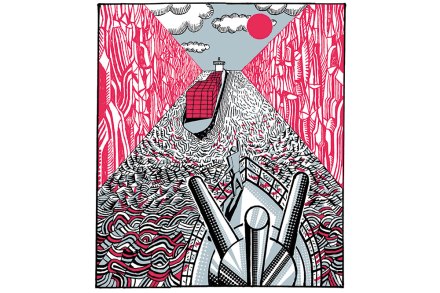
On Sunday morning, a communications cable between Sweden and Lithuania was damaged, almost certainly deliberately. Just hours later, the C-Lion cable, the only data link between Finland and central Europe, was severed by what authorities have diplomatically called an ‘external impact’. Most would call it sabotage. In a week where the Biden administration finally gave Kyiv authorisation to use longer-range missiles against targets in Russia, few should think it is a coincidence. Sir Walter Raleigh said that ‘whoever commands the sea commands the trade’ and that ‘whoever commands the trade of the world commands the riches of the world – and consequently the world itself’.

Is it up to pop stars to save the planet now?

From our UK edition

‘Walking by the banks of the Chao Praya on a breezy evening after a day of intense heat,’ writes Sunil Amrith at the start of his melancholic new book, ‘I struggled to connect the scene before me.’ While the river that flows through Bangkok looked idyllic, ‘crowded with noisy pleasure boats festooned with lights’, Amrith was struck by the realisation that half of the city ‘could be underwater by the end of this century’. This thought was the latest stage in a process that he says has taken him time to work out: ‘I can no longer separate the crisis of life on Earth from our concerns with justice and human freedom that inspired me to become a historian in the first place.

The greed and hypocrisy of the opium trade continue to shock

From our UK edition

‘A fact that confounds me now when I think back on it,’ writes the acclaimed Indian author Amitav Ghosh at the start of this expansive and thoughtful book, ‘is that for most of my life China was for me a vast, uniform blankness.’ There were many reasons for this, he says. The war between India and China in 1962 might have played a part, along with the complex relationship between the two countries since then; but also the way that ‘an inner barrier’ has been ‘implanted in the minds’ of many around the world – one that blocks out China but allows in the ‘language, clothing, sport, material objects and art of the West’. Smoke and Ashes is a lovely blend of historical writing, travelogue and personal reflection stemming from what the author calls his ‘epiphany’.

Why the West is worried about the Red Sea

From our UK edition

Last night, the United States and United Kingdom launched a series of missile strikes on Houthi targets in the Yemen. The dramatic strikes are a response to the rise of piratical attacks by Houthis on ships going through the Red Sea. The west’s move risks further regional escalation, as the war in Gaza goes on and hostilities bubble all over Middle East, especially with Iran. But the West is particularly concerned about the Red Sea because it is that most thorny of geopolitical problems – a chokepoint. A chokepoint is a narrow stretch that connects two larger bodies of water.

Central Europe has shaped our culture for centuries – yet we still find the region baffling

From our UK edition

It is easy to overlook the importance of Central Europe, writes Martyn Rady at the start of this fascinating book. For some modern writers the region is best typified by similarities, or differences, over postboxes, popular preferences for spirits over wine or ‘the heavy smell of boiled cabbage, state beer and a soapy whiff of overripe watermelons’. For others, it is an exotic world of ‘small nations’ east of Germany, where one has to wait for the end of the sentence to learn the operative verb: a place of ‘baffling’ languages ‘written with an abundance of consonants, odd diacritical marks and, in places, even a different alphabet’. Take a step back, and Central Europe takes centre stage.

Is Putin winning?

From our UK edition

37 min listen

This week:Is Putin winning?In his cover piece for the magazine, historian and author Peter Frankopan says that Russia is reshaping the world in its favour by cultivating an anti-Western alliance of nations. He is joined by Ukrainian journalist – and author of The Spectator's Ukraine In Focus newsletter – Svitlana Morenets, to discuss whether this could tip the balance of the war (01:08).Also this week:The Spectator's assistant online foreign editor Max Jeffery writes a letter from Abu Dhabi, after he visited the International Defence Exhibition. He is joined by author and former member of the ANC Andrew Feinstein, to uncover the covert world of the international arms trade and how governments seek to conceal it (17:52).

Is Putin winning? The world order is changing in his favour

From our UK edition

‘This is not about Ukraine at all, but the world order,’ said Sergei Lavrov, Russia’s foreign minister, a month after the invasion. ‘The unipolar world is irretrievably receding into the past … A multi-polar world is being born.’ The US is no longer the world’s policeman, in other words – a message that resonates in countries that have long been suspicious of American power. The West’s core coalition may remain solid, but it has failed to win over many of the countries that refused to pick sides. Moscow’s diplomatic mission to build ties and hone a narrative over the past decade has paid dividends. Look at Africa.

What, if anything, unites Asia as a continent?

From our UK edition

‘Asia is one’, wrote Okakura Kakuzo, the Japanese art historian, at the start of his The Ideals of the East in 1901. Nile Green disagrees in this sparky and impressive book. There is no reason why ‘Buddhism, Confucianism or Shinto should be more intelligible to a “fellow Asian” from the Middle East or India than to a European’. For one thing, ‘Asia’ is home to a vast number of language groups, including ‘Sino-Tibetan and Turkic, Indo-European and Semitic, Dravidian and Japonic, Austroasiatic, and others’, as well as ‘to a far wider variety of writing systems than Europe, Africa and the Americas combined’. So how and why, then, did the clumsy label come into being and stick? The blame, argues Green, lies with Europeans.

The war that changed the world in the early seventh century

From our UK edition

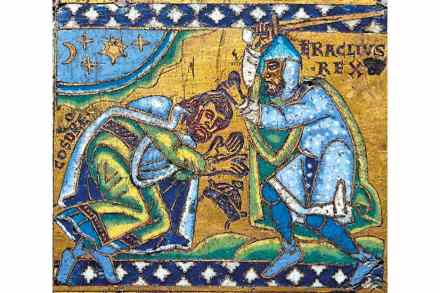
It was not a war to end all wars, writes James Howard-Johnston at the start of this illuminating and thought-provoking book about the confrontation between the empires of Rome and Persia that began at the start of the 7th century and lasted the best part of three decades; it was not even a war with ambitious goals. The ‘last great war of antiquity’ started when the Shah of Persia, Khusro II, decided that the assassination of an unpopular emperor in a palace coup in Constantinople gave him the excuse and the window he needed to try to put right a punitive settlement that had been imposed on Persia a decade earlier.

Most people who call themselves Caucasian know nothing about the Caucasus

From our UK edition

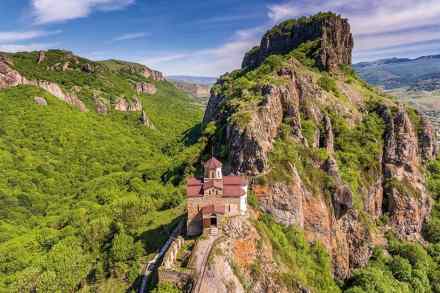
The Caucasus, a popular saying goes, is a ‘mountain of tongues’. Describing this region requires a strong constitution, determination and brilliance because, as Christoph Baumer writes in this magnificent book, ‘in many ways, the Caucasus region is a puzzle’. That is something of an understatement. For one thing, the mountains usually referred to as the Caucasus are in fact part of two geologically distinct ranges: the Greater Caucasus that is around 100 kilometres wide and ten times the length, spans the land between the Black and Caspian Seas and acts as a climatic valve, blocking off like a plug cold Arctic air from passing south; and the Lesser Caucasus, that is considerably lower, easier to pass and about half the length of the range to the north.

Kazakhstan is about the size of Europe — but we know almost nothing about it

From our UK edition

Kazakhstan, say signs by the side of the road in this vast Central Asian country, is ‘a land of unity and accord’. Few outside pay a great deal of attention to a state that is almost as large as Europe, and home to eye-popping natural resources, chiefly — but not only — oil. One who does is Joanna Lillis, who used to work in Russia and then for the BBC Monitoring Service in neighbouring Uzbekistan, and knows the region as well as anyone. Her book, Dark Shadows, is astute, refreshing and revelatory; it is also surprisingly tender, showing not only her affection but her care in trying to make sense of a country that needs to be understood warts and all.

A tale of two addictions

From our UK edition

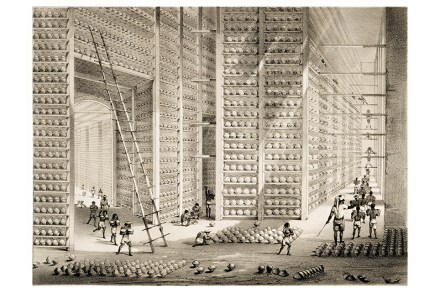
China, wrote Adam Smith, is ‘one of the richest, that is, one of the most fertile, best cultivated, most industrious and most populous countries in the world’. It was an obvious exemplar for a man who was trying to write An Inquiry into the Nature and Causes of the Wealth of Nations. In the late 18th century, when Smith published his seminal work, Britain had not only already begun to build an empire; it was about to learn from the experience of losing parts of it too, as the colonies in North America detached and went their own way. Despite the shock of the US Declaration of Independence — in the very same year that The Wealth of Nations was published — it was Asia that was much more important, lucrative and interesting than the Americas to the British.