Oliver Soden

Thoughtful fantasy: Travel Light, by Naomi Mitchison, reviewed

From our UK edition

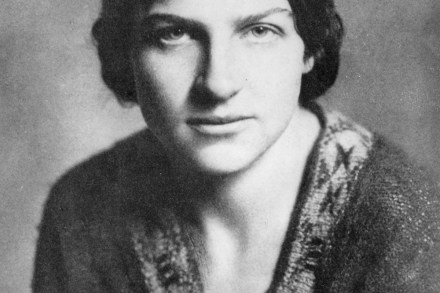
Naomi Mitchison is now renowned for being the author of ‘lost classics’ – famous for being forgotten. She lived to be 101 and wrote nearly as many books. She supported anti-Nazi movements in 1930s Vienna, ran a sexual health centre for women, became an octogenarian campaigner for nuclear disarmament and an ‘adviser and mother of the Bakgatla tribe in Botswana’. Despite two biographies and attempts to revive her masterpiece, The Corn King and the Spring Queen, she remains undervalued – perhaps because of her refusal to settle into one genre and her determination to venture into the territory of historical epic spiced with mythic ritual and dark magic. Travel Light was originally published in 1952 as a children’s book.

The making of William Golding as a writer

From our UK edition

It is hard to believe that the 1983 Nobel Prize in Literature would have been awarded to the author of titles such as The Chinese Have X-Ray Eyes, Here Be Monsters or – yes – An Erection at Barchester. But if William Golding had had his way, so it might have proved. Charles Monteith, his loyal editor at Faber & Faber, saved him from himself; and thus it was that those books were called instead Pincher Martin, Darkness Visible and The Spire. For whatever reason, Golding thought himself a monster and his journals seethed with self-disgust Even Golding’s first and most famous novel, Lord of the Flies (1954), started life as Strangers from Within. Its publishing history is almost as well known as its plot (of boys stranded on an island turning savage).

The Life of Violet catches a side of Virginia Woolf that has been obscured

She was Adeline Virginia Stephen, then. Signing her letter “AVS”, in August 1907 the 25-year-old who became Virginia Woolf complained to her friend Lady Robert Cecil: “The effort it is to write… I feel like one rolled at the bottom of a green flood, smoothed, obliterated, how should my pockets still be full of words?” Long before the masterpieces that would make her name, she was working on a series of literary exercises. These attempted to remold the biographical form into one that could encompass and celebrate the lives, not of famous men, but of unfamous women and combine what she called the granite and rainbow of “life-writing”: stony fact and iridescent fantasy. Her letter continues: If you keep The Life, or Myth, don’t quote it – see my vanity!

Woolf

A Charles Dickens patchwork

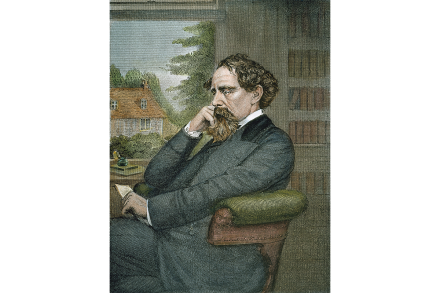
What connects pistachios, hay, and Mr. Krook in Charles Dickens’s Bleak House? Asked this question on a recent episode of the British TV quiz show Only Connect, the contestants noted all three are prone to spontaneous combustion, although, as one player exclaimed, “I can’t imagine that happening in a novel, but things were different back then.” Novels contain novel imaginings, but people back then were equally skeptical. Dickens eventually had to defend the death of Krook, the sozzled owner of a rag-and-bottle shop, by listing the historical precedents. He knew a thing or two about a rapid reaction between fuel and oxygen that emits a fiery blaze of energy. By night he walked and walked, to still his beating mind.

dickens

A geriatric Lord of the Flies: Killing Time, by Alan Bennett, reviewed

From our UK edition

Somewhere, there must be a PhD: Flashing: Exhibitionistic Disorder in the Oeuvre of Alan Bennett. It’s there in the first of his Talking Heads monologues (‘He’s been had up for exposing himself in Sainsbury’s doorway – as mother said, Tesco, you could understand it’) and in the last, Waiting for the Telegram, which opened with Thora Hird, one-time presenter of Songs of Praise, saying: ‘I saw this feller’s what-do-you-call-it today.’ It takes three pages for a what-do-you-call-it to appear in Killing Time, Bennett’s new novella, which is set in Hill Topp House old people’s home. Mr Woodruff, a resident, is indefatigable, his self-exposure a running motif as ‘not for the first time, he tried to show Audrey his willy’.

‘I had once been a cat’ – the feline fantasies of Caleb Carr

From our UK edition

One of my favourite cartoons is of the owl and the pussycat going to sea in their pea-green boat. The caption is the owl’s guilty admission: ‘I’m afraid there have been… other cats.’ Caleb Carr, in this memoir of his own love affair with a pussycat, is straightfaced: ‘I should own up to the fact that I’d had similar relationships with other cats – even (and in some cases especially) cats who were not mine.’ I have a high tolerance for cat books, but after this one I turned in relief to a ‘Simon’s Cat’ animation on YouTube. There’s one in which a hapless man opens the door for a kitten who has spent hours scrabbling hysterically at the glass like a prisoner longing for escape. The animal then decides that, on reflection, outdoors is overrated.

The talented Evan S. Connell

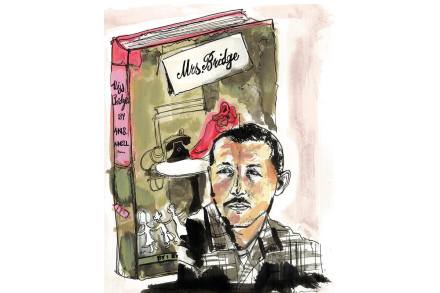
When the journalist Steve Paul began his biography of the writer Evan S. Connell, a young librarian was helping him access research material. She happened across a photograph, and remarked, “What a suave-looking dude.” Connell had movie-star good looks. Of his eight novels, two are now packaged as classics of American literature. This on top of a biography of Goya; a 2009 Man Booker International nomination for lifetime achievement; and a bestselling history of a battle in the Great Sioux War of 1876. Acolytes recommend his greatest book, Mrs. Bridge, with the confident smile that looks forward to welcoming another member to the exclusive band of Connellites.

Connell

The notorious feud between John Ruskin and James Whistler

It was too dark to see, and the painting was upside down. In 1877 John Ruskin, the leading art critic of Victorian England, attended an exhibition that included paintings by the American-born artist James Abbott McNeill Whistler. He hated them — and said so. In print. “I have seen, and heard, much of Cockney impudence before now; but never expected to hear a coxcomb ask two hundred guineas for flinging a pot of paint in the public’s face.” Whistler sued. The following year the argument came to court, on a dark day in a gloomy and gaslit courtroom. The canvases that Ruskin had so disliked were propped up against a wall and barely visible; one was the wrong way up, and another was dropped unceremoniously onto an elderly gentleman’s balding head.

ruskin

An admirable but flawed new biography of George Eliot

What to call her? The question troubled George Eliot, and challenges Clare Carlisle, her latest biographer. Even this book’s indexer plays along, providing more than one entry for its shapeshifting but steadfast subject. The Marriage Question shows us a woman fragmented, attempting to understand in her various existences how — and if — personal freedom can be achieved when your life is bound to another. Mary Ann (or Anne) Evans was born in Warwickshire, in the West Midlands of England, in 1819. On moving to London in 1850, hoping to make her living as a writer, she became Marian Evans.

Eliot

A purring cat is not always contented

From our UK edition

Large cats cannot miaow. (Lions and tigers, I mean, not moggies who have overindulged on Whiskers Meaty Selection in Gravy.) The largest feline ever to have lived was a sabre-toothed cat in South America, which weighed nearly half a tonne. Female house cats can copulate up to 20 times a day when in the mood. Male cats have a bone in their penis. Cats are green-red colour blind. There are probably more than half a billion cats alive in the world at this moment. These are gleanings merely from the footnotes of Jonathan Losos’s The Age of Cats, which is portly with information. The book, surveying cats’ evolutionary history, behavioural habits and potential future, has a lovely cast list of felines wild and domestic, large and small.

Crash test: the new era of economic uncertainty

From our UK edition

40 min listen

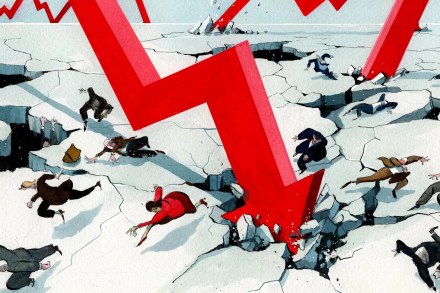
On the podcast: The Spectator's economics editor Kate Andrews looks back on a week of economic turbulence and asks whether we should be worried, for her cover piece in the magazine. She is joined by the economist – and former 'Trussketeer' – Julian Jessop, to discuss whether we are entering a new era of economic uncertainty (01:06). Also this week: In the magazine, The Spectator’s deputy features editor Gus Carter says that the culture of toxic masculinity has gone too far, and that young men are being marginalised in schools and online as they are repeatedly told that they are a danger to women. He is joined by the Times columnist Hugo Rifkind, to explore how today's sexual politics is impacting young men (13:21).

Caring for the dying in a world of Zoom

From our UK edition

Ten years ago, recently graduated and unemployed, I sent my CV to a raft of radio producers. Just one replied. ‘Dear Oliver,’ wrote Marilyn Imrie, in an email with the subject line ‘YOU’: ‘How nice to hear from you and about you.’ Her generosity and enthusiasm were writ large in those three capitals, which headed a letter that came festooned with advice, offers of work experience and an anecdote about her adaptation of Samuel Richardson’s Clarissa. It takes skill to shorten one of the longest novels in the language, but then Imrie was a legendary figure in the world of radio. We briefly corresponded but did not meet. Runcie’s real subjects are not death and disease, but love, and the object of his love Motor neurone disease runs the following course.

Rescued by the Goldberg Variations

From our UK edition

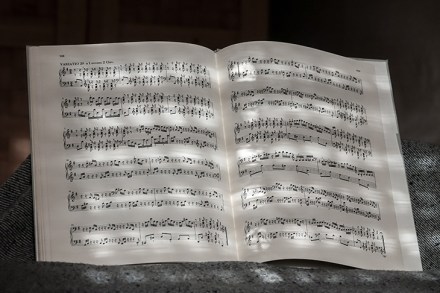
Were this a less good book than it is, it would be called How Bach Can Help You Grieve. As it is, Counterpoint serves very well, describing the American art and architecture critic Philip Kennicott’s intertwined themes: his reaction to the death of his mother, with whom he had a fractious and traumatic relationship, and his attempt to learn Bach’s Goldberg Variations, through which he considers the ability of the greatest music to ease us out of a senseless pit of grief. This is a deeply serious and often affecting book, combining the ‘grief memoir’ with the genre created by Alan Rusbridger in Play It Again, an account of an amateur pianist learning Chopin’s Ballade No. 1.

Edith Nesbit — a children’s writer of genius who disinherited her own adopted offspring

From our UK edition

‘When one writes for children,’ the novelist Jill Paton Walsh has said, ‘there are more people in the room. Writing for children involves the adult writer, and the child that writer once was; the present child reader, and the adult that child will become.’ Edith Nesbit, one of the greatest writers for children, was brilliantly attentive to this quartet. What she remembered clearly was childhood’s capacity for belief. At the moment when, in Five Children and It, the Psammead emerges from the sand, she comments: ‘It is wonderful how quickly you get used to things, even the most astonishing.’ In The Phoenix and the Carpet those same children find a mythical bird in their fireplace. They are ‘hardly astonished at all’.