Lisa Hilton

‘I secreted a venom which spurted out indiscriminately’ – Muriel Spark

From our UK edition

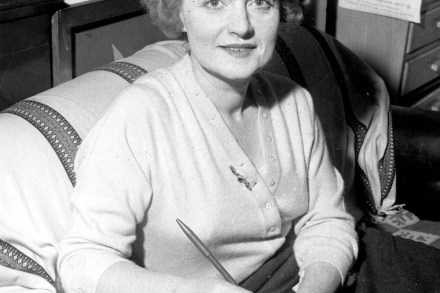
In 1995, Dame Muriel Spark, then one of Britain’s most distinguished living writers, was interviewed for a BBC documentary. During filming, the show’s editor commented that ‘her biographer must be the most depressed man in England’. Three years earlier, Spark had personally anointed Martin Stannard as the writer of what she intended to be the authorised version of her life, presenting him with the vast archive of documentation – spanning 50 years and 50 metres – gathered at her home in Arezzo. ‘Treat me as if I were dead,’ she instructed him. Stannard understood this to mean that he should proceed as a traditional historian; by the time his hag-ridden book was published 17 years later he had learned his mistake.

The dogged women on the trail of Dr Crippen

From our UK edition

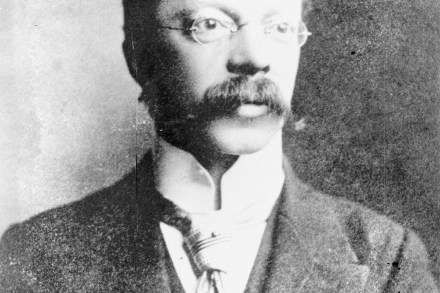
On 18 November 1910, 300 women marched on the Houses of Parliament to demand the right to vote. Their protest was met with shameless brutality: punches, kicks, beatings and sexual assault from policemen and male bystanders. Three weeks earlier, a young woman named Ethel Le Neve had been tried for her part in the most sensational crime of the new century, the ‘London Cellar Murder’. The portrait of Le Neve presented by her barrister had been one of ‘perfect Edwardian feminine innocence’, docile, gentle, lacking in agency – a reassuring contrast to the strident, determined suffragettes, whose refusal to conform to societal expectations were to culminate in the attacks at Westminster. The suffragettes had their jaws broken; Le Neve walked free.

Richard Dawkins, Nicholas Farrell, Mary Wakefield, Lisa Hilton and Philip Hensher

From our UK edition

33 min listen

On this week’s Spectator Out Loud: Richard Dawkins reads his diary for the week (1:21); Nicholas Farrell argues that Italy is showing the EU the way on migration (6:33); Mary Wakefield reflects on the horrors, and teaching, of the Second World War (13:54); Lisa Hilton examines what made George Villiers a favourite of King James I (19:10); and a local heroin addict makes Philip Hensher contemplate his weight (27:10).  Produced and presented by Patrick Gibbons.

The court favourite who became the most hated man in England

From our UK edition

The Duke of Buckingham, wrote Alexandre Dumas, lived ‘one of those fabulous existences which survive... to astonish posterity’. In the summer of 1614, a young man from a modest gentry family was invited to a hunting party in Northamptonshire to meet a very special guest. George Villiers was affable, not terribly bright and superlatively beautiful. His mother Mary, a practical and ambitious woman, knew what his looks could do for the family, and she aimed high. The mark was King James I, a monarch who openly loved men. The king had lavished his then favourite, Robert Carr, with titles, wealth and great offices, but the finest pair of legs in Europe extinguished his star.

The joy of hanging out with artists

From our UK edition

Lynn Barber is known as a distinguished journalist, but what she always wanted to do was hang out with artists. This book feels like a marvellous cocktail party, packed with the painters and sculptors Barber has interviewed over the years: Howard Hodgkin, Phyllida Barlow, Grayson Perry, Maggi Hambling. Sarah Lucas and Tracey Emin eye one another warily from opposite sides of the room; Salvador Dali’s ocelot weaves between the guests; everyone, naturally, is smoking. Lucian Freud is a no-show – though having refused Barber’s many interview requests, he did send a scrawled note explaining he had no wish to ‘be shat upon by a stranger’. Feuds and gossip are the making of any gathering, and A Little Art Education is not a book of art criticism.

The wit and wisdom of Margaret Cavendish

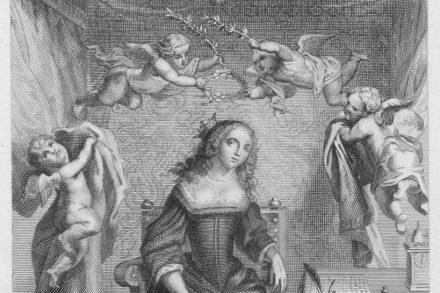
Margaret Cavendish, Duchess of Newcastle, who died aged fifty in 1673, was a divisive character whose life spanned one of the most fraught periods of English history. To some contemporaries, she was one of the wonders of the age, while others considered her one of the silliest writers ever to have taken up a pen. In her last two decades, Cavendish published over a dozen works of drama, philosophy and poetry, including what some consider her masterpiece, The Blazing World. Posterity has seen her obscured and dismissed, the fame she admitted craving granted only in 1929, when Virginia Woolf described Cavendish in A Room of One’s Own as “a giant cucumber” who “frittered her time away, scribbling nonsense and plunging ever deeper into obscurity.

Cavendish

The splendour and squalor of Venice

From our UK edition

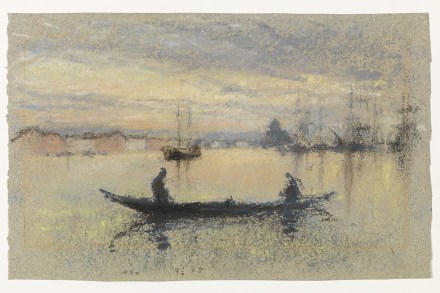
Hard by the Rialto, in a densely packed and depressingly tacky quarter of Venice, the church of San Giovanni Cristosomo houses one of Giovanni Bellini’s most luminous and exquisite paintings. ‘I Santi Cristoforo, Girolamo e Ludovico di Tolosa’ is known to locals as ‘the Burger King Bellini’, after the fast food outlet opposite the church door. In any other city, the picture’s exquisite handling of light and complex mingling of Christian piety with Renaissance Neo-platonism would grant it a museum of its own, but in Venice its principal spectators are weary tourists in line for a Whopper. Martin Gayford’s paean to Venice as ‘a huge, three-dimensional repository of memory’ is constantly alert to such anomalies.

Think autofiction is easy? Think again

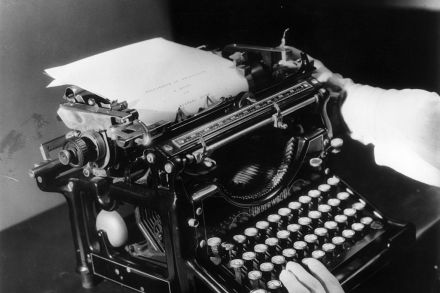
"No, Lisa." As rejection letters go, it was admirably concise. I’d made an attempt at “autofiction,” that amorphous genre which inhabits the space between autobiography and fiction, and this was the entirety of my editors’ response. Any writer who has been at it for any length of time will have received Dear Johns from publishers, but is two words a record? It was something to cling to, at least, during the five further years it took for the book to find a home. Eventually, a French house took it, and Les Femmes de mes amants staggered unobtrusively into print in June this year. Obviously, I should have set my sights on Paris from the first.

autofiction

Abolishing museums serves nobody

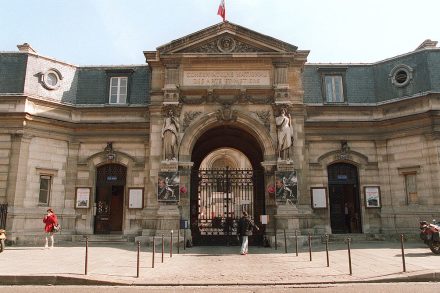
Museums used to be such comfortable spaces. Peaceful. Places of remembered somnolent plodding on school outings or rainy Sunday afternoons; somewhere to eat a lunchtime sandwich or sneak a quiet doze in front of a favorite painting, somewhere you maybe never actually went but were vaguely pleased to have around, like a respectable elderly relation. Museums existed in a rarefied (if somewhat dusty) realm beyond the exigencies of daily life, where voices were lowered and visitors emerged with a gratifying sense of being hallowed by contact with Culture. However, museums across the world currently find themselves on the front line of that hardiest of perennial abstract conflicts, the culture wars.

museums

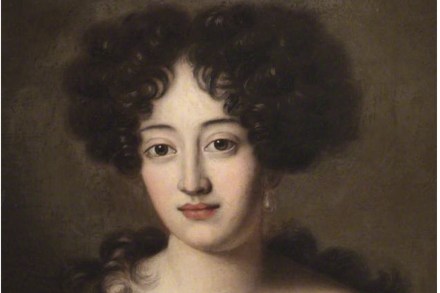
Bullying on Twitter is nothing compared with what Charles II’s mistresses endured

From our UK edition

Strolling through Whitehall Palace in the early years of the Restoration, Samuel Pepys was thrilled to spy a washing line displaying ‘the finest smocks and linen petticoats of my Lady Castlemaine’s… and did me good to look upon them’. The owner of the glamorous undergarments was Barbara Villiers, the first of the many maîtresses-en-titre of King Charles II who form the subject of this incisive new study. Linda Porter’s eye for detail is no less acute (though certainly less creepy) than Pepys’s.

On a wing and a prayer | 15 March 2018

From our UK edition

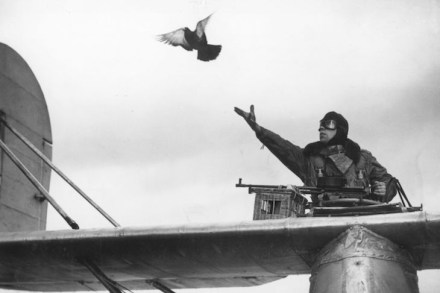
Operation Columba was one of the most secretive arms of British Intelligence during the second world war. Between April 1941 and September 1944, its agents made 16,554 drops over an area stretching from Copenhagen to Bordeaux. Amongst Columba’s successes was the mapping of Belgium’s entire coastal defence system, 67 kilometres worth of priceless, minutely detailed information. Columba was the province of a specially created Secret Service division, M114 (d), which received its first message from occupied Europe on 10 April 1941. The correspondent ended his message stoutly: ‘I am, and will always remain, a Frenchman.

Italy’s apathetic attitude towards corruption

From our UK edition

Another day, another Berlusconi outrage. Writing on the “embarrassment” Silvio Berlusconi must have felt at having received the news of David Mills’s conviction for bribery whilst in conference with Nancy Pelosi, the British press have rather touchingly missed the point. The news is not that Mills has been found guilty, nor that due to Italy’s statute of limitations law he will be unlikely to serve a single day of his sentence, nor that Berlusconi’s government have exempted their leader from trial, nor yet that the “Alfano lodo” is likely to be further manipulated to prevent the judicial conclusion in the Mills case from being permitted as evidence in any future trial of the Italian premier, despite claims of its being unconstitutional.

Fearful of the Wetlands?

From our UK edition

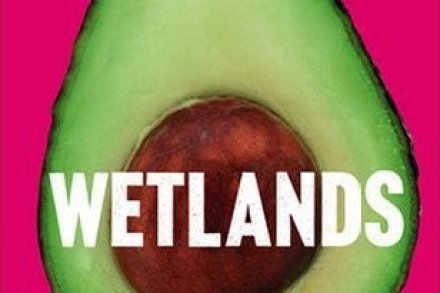
Literary news this week suggests that when it comes to women writing about sex, reviewers are still reacting in the same way as Dr Johnson to his walking dog, surprised that it’s being done at all. So hats off to Charlotte Roche, who has managed to give both the Sunday Times and the Guardian the willies by cheerfully confessing to consuming pornography with her husband and starting her book Wetlands with a graphic discussion of hemorrhoids. Male reviewers seem barely to have moved on from the mentality of the Chatterley trial: anything which disturbs or shocks them must be dismissed as pornography.

We treat our pupils like Aldous Huxley’s Gammas

From our UK edition

The historian Lisa Hilton is dismayed by the government’s latest proposals for the teaching of history in which the understanding of complex narrative will be marginalised Like any self-respecting adolescent, I spent most of my teenage years referring to my parents as fascists. What exactly that meant I had little idea, thanks to a state education in which world history consisted of Romans, mediaeval monasteries, the Industrial Revolution and the first world war, in a repetitious carousel of unrelated events.

How to look the part on the piste

From our UK edition

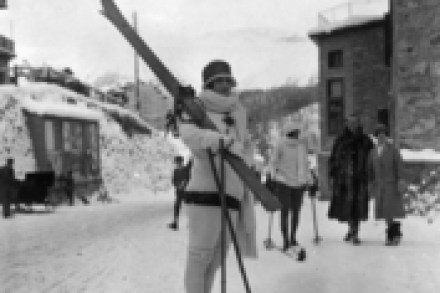
Milan may be Italy’s richest city, but no-one this weekend was talking about the markets or “Il New Deal di Obama”. The only topic during the Engadine treasure hunt is who is going ‘up” this weekend.  “Up” means St Moritz, where from December until April, Milanese society is to be found every weekend munching apfelstrudel at Hanselman’s, hosting kitschy raclette parties in their houses at Zuoz or Celerina and possibly taking a run down the Trais Fluors or the Corvatsch.   Romans claim the more serious pedigrees, but what the Milanese miss on breeding they make up for in snottiness. Getting it wrong in St Moritz is horribly easy.

An affront to faith and thought

From our UK edition

Many of us may no longer believe in God, but it appears we still miss Him. The nineteenth century’s anguished howl of loss as the tide of faith receded across the sands of Dover beach had diminished to barely a whimper before the atheist buses zoomed along to jolly up the argument. Catholic bishops in Genoa have succeeded in banning the Italian version of the campaign whilst bus driver Ron Heather has declared his intention to boycott any bus carrying the slogan “There’s probably no God. Now stop worrying and enjoy your life”. Perhaps Mr Heather is objecting to a certain lack of rigour in the statement; “probably” inclines to a more agnostic view, whilst as a predicate for relaxation the absence of God seems inane, if not vulgar.

A fat-fighting New Year?

From our UK edition

I love the gym on a January morning. The frantic flush on the faces of the bankers as they Stairmaster to redundancy, the quivers of the anorexics staggering into their fifth mile. Actually, there aren’t any anorexics. The anorexics of Bloomsbury are clearly lacking in New Year’s resolve. Hardly surprising, as despite the tsunami of publicity annually devoted to the perils of eating disorders, only 19 out of 1,000,000 women are suffering from anorexia, according to Clinical Knowledge Summaries, as opposed to the 240,000 afflicted with obesity. Hardly an epidemic, yet anorexia is one of those curious points of intersection where the Guardian and the Daily Mail agree.

Dressing for the end of the world

From our UK edition

We know it’s not cool to dress like a master of the universe right now, and the lunchtime crowd at the Ivy on Tuesday were less Madoff than Man at C&A. Regulars have always been more fashionable than Fashion, considering themselves too serious and important to appear to pay attention to clothes, but the abundance of pastel jumpers suggests a trend reminiscent of Nineties black-nylon stealth wealth. Perhaps dressing like a contestant in a celebrity golf challenge indicates a cannily egalitarian sympathy with the miseries of middle management. Sartorial stress is creeping into other outposts of the Caring empire.

No more puffs in Paris

From our UK edition

One of the best things about Paris is that it never changes. The stone is always the colour of Champagne, the cabbies are always foul and Bernard-Henri Levi is always seated on the first table opposite the door as you go into the Flore. I’ve spent most of my adult life in Paris, and perhaps the thing I loved about it most is that one could never be unhappy there. Wretched, heartbroken, tragic, but never merely sad. All that was necessary was a noisette  and a Marlboro Light and suddenly one was Juliette Greco or Simone de Beauvoir-deliciously, adolescently, maudlin. Yet now it smells wrong. Sunday was the first time I had been back since the smoking ban, and the cafes no longer smell of Gauloises and angst but of industrial air freshener and bitter despair.

Mind the shoes!

From our UK edition

Still few signs of retrenchment in Notting Hill, although at a Euro-bankers party this weekend one wit did propose that Soda-Streamed Chablis might pass as acceptably crunchy Champagne. How the time must fly in what’s left of the City. Over the canapés (chestnuts wrapped in lardo, salmon with liquorice), one guest described the distress she had felt at the appalling poverty which co-exists with the conspicuous trappings of new wealth on a recent business trip to Mumbai. Recent tragedy aside, the Western press seems reluctant to criticize this aspect of the Indian economic boom, preferring to relegate teeming misery to the status of energetic vibrancy or authentic local colour.