Culture

Culture

The good, the bad and the ugly in books, exhibitions, cinema, TV, dance, music, podcasts and theatre.

Bones, bridles and bits – but where’s the horse?

More from Books

The German cultural scientist Ulrich Raulff has written that horses have as many meanings as bones. In the archaeologist William Taylor’s new history of horses and humans, we meet all those bones. Found in thawing permafrost, in caves, and buried ceremonially in graves in Siberia and Chile, the bones are cracked open by Taylor to show how the horse evolved in the Americas before its early encounters with human hunters. Does a 5,000-year-old worn tooth tell us it once chomped a bit? Does damage to vertebrae indicate a rider? Then came domestication, transforming the species from near extinction to tool and symbol on every major landmass on the planet. After that, horses and their keepers created empires, paced epically long trade routes – and brought plague from the steppes.

The SAS explode from the shadows in six days that shook Britain

Lead book review

Ben Macintyre has a knack of distilling impeccably sourced information about clandestine operations into clear, exciting narrative prose. His latest book, about the April 1980 Iranian embassy siege in London, starts as it means to go on – with a snapshot of seven Range Rovers, two Ford Transit vans and two furniture lorries pulling out of Bradbury Lines, the then headquarters of the Special Air Service (SAS) in Hereford. Lying low inside were 45 soldiers and ‘enough weaponry to fight a medium-sized war’. Each man carried a submachine gun, mostly the ‘reliably lethal’ Heckler & Koch MP5, which fires 13 rounds a second, with four 30-round magazines of 9x19mm parabellum bullets.

From ugly duckling into swan – the remarkable transformation of Pamela Digby

Lead book review

The tramp of lovers marching through our heroine’s bedroom in the first half of Sonia Purnell’s Kingmaker almost deafens the reader. But then not for nothing did Pamela Digby Churchill Hayward Harriman become known as the alpha courtesan of the 20th century. What is perhaps not so well covered is her decade-long influence on American politics before becoming the United States Ambassador to France under (no, not literally) Bill Clinton. The Hon Pamela Digby was born on 20 March 1920 and brought up quietly in Dorset, riding, hunting and meeting only those her parents (her father was the 11th Baron Digby) considered above the social plimsoll line. Early on she realised that what gave a woman supreme independence was great wealth – usually acquired through a man.

Undercover in the Dordogne: Creation Lake, by Rachel Kushner, reviewed

More from Books

Creation Lake, by the American author Rachel Kushner, is a dazzling, genre-defying novel, satirical yet profound. In her 2018 novel The Mars Room, Kushner took us inside the US prison system and eviscerated it. Here she goes back a decade, as well as 40,000 years, interweaving into the main plot notes on the extinction of the Neanderthals. The book is a spy thriller which also interrogates the human condition, our origins, and the conundrum of mankind’s future.   The year is presumably 2013 (the song ‘Get Lucky’ blasts from every radio) and a 34-year-old American spy named Sadie Smith has landed in France, nursing a bruised ego after a failed FBI mission.

The pitfalls of privilege and philanthropy: Entitlement, by Rumaan Alam, reviewed

More from Books

Money can’t buy you love, the Beatles sang. But that doesn’t matter so much if you’re not interested in love, like Brooke Orr, the 33-year-old heroine of Rumaan Alam’s fourth novel, Entitlement. In contrast to Alam’s wildly successful, lockdown-resonant Leave the World Behind, the latest book is set in 2014, during the era of ‘Obama’s Placid America’, a world depicted as a virtually frictionless pre-Trump utopia in which ‘black, gorgeous, serious, passionate’ young women such as Brooke can thrive. When she leaves her teaching job and joins the charitable Asher and Carol Jaffee Foundation – started after the benign octogenarian billionaire Asher Jaffee lost his daughter – she realises that money is where her heart lies.

Man’s fraught relationship with nature extends back to prehistory

More from Books

It is now almost a prerequisite of any dispute among environmentalists to recall a judgment offered by the literary critic Raymond Williams – that ‘nature’ is perhaps the most complex word in the English language. Attempts to unravel its meaning are fraught with challenge. Does it signify just the living elements of the biosphere, or does it include inanimate parts, such as mountains and rivers? The extreme heat of the Sun at its core makes it the place least hospitable to life – yet it is equally the source of the whole process. Perhaps the greatest of all associated questions is whether humans are subsumed within, or inexorably separated from, the Sun’s operations. Jeremy Mynott’s book does an exceptional job of teasing out most of nature’s multiple meanings.

The mystique of Henry V remains as powerful as ever

More from Books

A rare portrait of King Henry V of England painted in the early 16th century shows him in profile. This unusual angle may have served two purposes. One was as a rather outdated emulation of Italian profile portraiture, with its blunt references to the might of imperial Rome; the other was to hide a disfiguring scar from a dangerous wound suffered at the battle of Shrewsbury in 1403. Henry was only 16 at the time of the battle, and it was a brutal way to earn his spurs. An arrow had penetrated his cheek six inches and lodged at the back of his skull. He was lucky to have survived both the wound and its treatment. But Henry was on the winning side; the defeated forces of Henry ‘Hotspur’ Percy were cut down ruthlessly.

The tedium of covering ‘the greatest trial in history’

More from Books

Three-and-a-half miles south-west of Nuremberg in the small town of Stein stands the Schloss Faber-Castell, a 19th-century neo-Renaissance castle built for a dynasty of pencil manufacturers. In October 1945 it became home to hundreds of reporters who were covering the trial of 21 high-ranking Nazis, including Hermann Göring, Rudolph Hess, Joachim von Ribbentrop, Alfred Rosenberg, Julius Streicher and Albert Speer, with Martin Bormann being tried in absentia.

Observing nature observed: the art of Caspar David Friedrich

More from Books

Imagine wandering through Germany. You might picture blustery Baltic seascapes, seen from island retreats such as Rügen. Or you might be hiking in the central Harz mountains, peering down at clouds that drift into green pastures and blend into brownish rock. Perhaps you’re standing at the country’s eastern edge, gazing at moonlight that gleams through gaps in the forests and ravines of sandstone highlands. What we sketch in our minds probably follows the contours of the canvases of Caspar David Friedrich, Germany’s Romantic artist-in-chief. And these stock images have been reproduced in many a tourist guide. They’re now on display again, in full colour and new frames – literally and figuratively – to mark 250 years since Friedrich came into the world.

An outcast among outcasts: Katerina, by Aharon Appelfeld, reviewed

More from Books

‘Nothing escape’s the wolf’s fangs,’ thinks the narrator of Katerina. Through an outlandish sequence of chances and choices, somehow its author did just that. Aharon Appelfeld, a child of assimilated parents, lived in the old Jewish heartland of Bukovina. In 1940, short-lived Soviet occupation gave way to Nazi control. His mother was murdered and his father disappeared. Young Aharon escaped the Czernowitz ghetto and survived as a wild child in the forests, sheltered by a village prostitute, then as the ‘slave’ of a Ukrainian bandit gang. When the Red Army arrived he cooked for them before, via a peril-strewn route through Italy, he migrated to Mandate Palestine.

The power of mushrooms to kill or cure

More from Books

Weird, stinky and occasionally deadly: not everyone can make heart room for mushrooms. But Richard Fortey, a palaeontologist who recently retired from his post at the Natural History Museum after more than three decades’ service, has always found ‘pleasure and perplexity’ in the ‘alien’ world of fungi. In his lovably nerdish 2021 memoir A Curious Boy, Fortey credited the Observer’s Guide to Common Fungi with setting him on the path to a passionate life scientific. As the uncoordinated son of a sporty father (a champion fly fisherman who owned several fishing shops), the young naturalist got his teenage kicks stalking riverbanks and studying the strange organisms he found there. In 2006, he was even briefly credited with identifying a mushroom previously unknown to science.

The medieval English matriarch was a force to be reckoned with

More from Books

In 1448, Margaret Paston, a wife and mother in her twenties, wrote to her husband John urgently requesting more weapons: she needed crossbows, poleaxes, windlasses and jacks. In John’s absence, a local lord was trying to take over Gresham, their property in Norfolk, and was mounting a violent siege of the manor house. Margaret was leading the defence. She was multi-tasking, however. In the same letter she also asks John to send some almonds and sugar, as well as woollen cloth for gowns for their young sons and broadcloth for a hood for herself. The missive survives as part of the Paston letters, the largest extant set of medieval correspondence relating to a single family in England.

Uncomfortable truths about the siege of Leningrad

More from Books

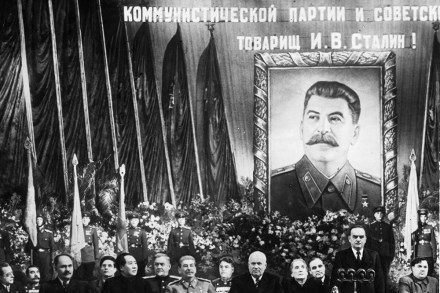
Even before the 872-day long siege ended, both survivors and onlookers had already begun to refer to Leningrad – formerly and currently known as St Petersburg – as a city of heroes. Tales of bravery and self-sacrifice were enshrined in memorials, histories and memoirs, which between 1945 and 1991 were published in the Soviet Union at an average rate of one per day. But heroism is, of course, only a partial description of life within the starving city where theft, murder, betrayal and a million smaller acts of self-interest were just as prevalent as acts of valour. The idea that Leningrad was a city of heroes was in part a ploy to enable the living to carry on alongside their survivors’ guilt, sometimes inside apartments they had taken from the newly dead.

The spy with the bullet-proof Rolls-Royce

More from Books

‘Biffy’ Dunderdale (1899-1991) was a legend in his own lifetime within MI6. Born in Odessa to an Austrian countess and a British trader representing Vickers, his cosmopolitan upbringing endowed him with English, Russian, German, Turkish, French and Polish. His real first name was Wilfred, Biffy being acquired through youthful handiness with his fists. Biffy played an important role in smuggling the Polish copy of the Enigma cipher machine to London Education and family connections made him intimate with prominent Levantine trading families such as the Whittalls, Keuns and La Fontaines. Members of each served with him in MI6 and two into modern times.

A necklace for the Empress Josephine: The Glassmaker, by Tracy Chevalier, reviewed

More from Books

The latest book from Tracy Chevalier, author of 11 novels, including the bestselling Girl with a Pearl Earring, tells the captivating story of Orsola Rosso, whom we first encounter in 1486 as a young girl on Murano, the glassmakers’ island in the Venetian lagoon. Within a few pages, her father, the maestro at the family’s workshop, is dramatically killed by a shard of glass flying ‘like a hot dart straight into his neck’. Orsola’s lazy, impetuous brother Marco, less skilful than their father, must take over, but orders soon begin to dwindle. How will Orsola help her family recover and prosper?

We’ll never know what treasures the Tudor Reformation robbed us of

More from Books

In 1693, quarrymen working near Caerleon, outside Newport in Wales, uncovered an alabaster sculpture of a figure they did not recognise. The man wore a suit of armour, which had once been covered in gold leaf. In one hand he held a sword, in the other a pair of scales. The scales themselves held a girl’s face and a globe of the Earth. The sculpture was donated to the Ashmolean, but experts there were baffled by it. Could it represent the goddess Astrea, one of them wondered. In fact, it represented the Archangel Michael, one of the most significant figures in the medieval church. Among other things, it will be Michael who wields the scales on Judgment Day.

Never pour scorn on Croydon

More from Books

‘So f-ing Croydon,’ was the worst insult David Bowie could think of to describe a person or thing that revolted him. ‘Less of a place, more of a punchline,’ was a recent swipe by Sue Perkins, the Croydon-born comedian who grew up at the tail end of the town’s golden era of rampant employment, ambitious cultural venues and well-endowed private schools. London’s outermost, southernmost, most populous borough is an easy target for condescension: too brash, yet too poor; too try-hard, yet too lethargic; too ambitious, yet not ambitious enough. As the Croydonian author John Grindrod has written, locals are accustomed to Croydon’s ‘very existence – our existence – provoking outrage’. Croydon, neither London nor suburb, can’t win.

A world history of morality is maddeningly optimistic

More from Books

The memory of Tsutomu Yamaguchi will be with me for some time. Though wounded, he survived the Hiroshima atom bomb and returned to his home town, Nagasaki. Three days later, he survived another nuclear attack. He died in 2010, aged 93. This fat, complex, good-natured and intriguing book is full of such memorable material. Hanno Sauer is a German philosopher with an all-encompassing mind and a capacity to entertain. His arguments are sometimes clogged and improbable and I don’t find his primary thesis – basically that things can only get better – credible, but then I feel the same about most philosophers. The thesis is based on Sauer’s belief that moral norms are what made us the dominant species and will continue to do so.

Why are the sailors who first braved the Atlantic so often ignored?

More from Books

It is easy to assume that there is not much to be said about the history of the Atlantic before 12 October 1492, when Christopher Columbus reached the Bahamas. In 2005, the Harvard historian Bernard Bailyn published a little book entitled Atlantic History: Concept and Contours which said absolutely nothing about what happened before Columbus, whom he barely mentioned. Atlantic history meant for Bailyn, and the growing mass of Atlantic historians, the story of modern contacts between the four continents that face the Atlantic, especially the nefarious slave trade linking Africa to the Americas.

What prompted Vivien Leigh’s dark journey into madness?

More from Books

‘Vivien was barking mad from the word go,’ Laurence Olivier reflected in later life, and Lyndsy Spence’s biography would fully concur with the summing-up. At best, the actress was ‘suspended in a dream world’, unable to separate herself from the classic characters she played – Scarlett O’Hara, with her dark hair and flashing eyes, or Blanche DuBois (‘she is a tragic figure and I understand her’). At her worst, Leigh was, in her own words, ‘a thing, an amoeba, at the bottom of the sea’. Where Madness Lies is a sympathetic description of Leigh’s ‘perturbing nature’; an analysis of her numerous breakdowns, when she was in the grip of manic-depressive cycles – the high spirits and crushing melancholia, when ‘everything inside her brain was white noise’.

Nordic dream or nightmare?: The Mark, by Frida Isberg, reviewed

More from Books

Imagine a society, a high-minded psychologist tells his curmudgeonly father, ‘in which people are like cars. They have to go in for inspection once a year’ in order to assess their emotional fitness for the shared highway of life. As for the ‘psychopathic percentage’ whose ‘moral disorders’ lead them to fail this spiritual MoT, never fear: state-funded therapy will get them on the road again. And should they refuse? Surely, as we learn later in The Mark, everyone longs to stand ‘on the right side of history’. The Nordic dream of close-knit, high-trust, mutually supportive welfare societies has always had its internal critics: mavericks, naysayers and backsliders, who prize autonomy beyond, even against, community.

The great French painter who had no time for France

Lead book review

In 1855, Paul Gauguin’s widowed mother Aline returned to her husband’s family in Orleans after seven years in Peru. She brought back her daughter Marie, eight-year-old son Paul and her collection of pre-Columbian artefacts. They had no commercial value but those strange objects, sprouting the heads of birds and animals, had a power that the westernised world had lost touch with. They sank deep into the imagination of her wild, headstrong boy, who often described himself as ‘a savage from Peru’. After the sensory overload of South America, France and school were grey, cold and miserable. With education over, Gauguin insisted on going to sea and served in the navy in the Franco-Prussian war.

The quest for the world’s highest peaks

More from Books

What makes men and women climb high? Most commonly, according to Daniel Light, ‘the prosecution of science or the advancement of empire’. It might also be general flag-waving or just personal fulfilment, as in the case of ‘private traveller’ Godfrey Vigne, who opened his English eyes to the wonder of the Karakoram in the baleful 1930s. London-based Light – ‘a keen climber, not a serious mountaineer’ – has produced a colourful survey of mostly 19th-century mountaineering across the globe, starting with the geographer and natural philosopher Alexander von Humboldt and his five-year expedition to South America.

Will there ever be another cricket captain like Richie Benaud?

More from Books

Some books have good titles. Many books, sadly, have terrible titles. But a few rare books have the perfect title – the one that tells you briefly what the book is about, and also whether you want to own it. Richie Benaud’s Blue Suede Shoes is one such. If that title grabs you, you should go out and buy it now, because the book is brilliant. If it doesn’t, you have probably stopped reading this review already and turned over to Melissa Kite. Either you love Blofeld’s ‘My Dear Old Thing’ eccentricities or you want him slowly roasted over an open fire Harry Ricketts is a poet and critic who was born in London but has lived in New Zealand since 1981.

The greatest British pop singer who never made a hit single

More from Books

This is a magnificent book, regardless of whether the reader knows who it is about. I state this bluntly at the outset because I am keenly aware that many more people are ignorant of Lawrence’s career and achievements in the field of popular music than will be familiar with them; and that I will need to use up a significant number of words attempting to explain a figure who has repeatedly proven inexplicable to the public at large. So here goes... Has the indefatigably eccentric Lawrence led a charmed life or a cursed one? Lawrence Hayward may be the greatest British pop star never to have enjoyed a hit single.

Six politicians who shaped modern Britain

More from Books

‘All political careers end in failure,’ said Enoch Powell. Maybe. But just occasionally our imperfect political system throws up someone whose impact on our way of life, for good or ill, outlives them. In a series of elegant essays, Vernon Bogdanor, professor of government at King’s College London, examines the careers of six politicians – three from left of centre, three from the right – who, in his view, changed the political weather of modern Britain. Only one, Nigel Farage, is still alive.  First up is Aneurin Bevan, the left-wing firebrand who, in the teeth of fierce opposition from the mighty, vested-interested British Medical Association, presided over the creation of the National Health Service.