Richard Davenport-Hines

‘I like it when my pupils run the world’: a celebration of Jeremy Catto

From our UK edition

Jeremy Catto’s first sexual experiences were with a greengrocer’s son, but he lost interest in the boy after discovering that his family used tea bags rather than tea leaves. As a youth he marched with the Oxford branch of the Committee for Nuclear Disarmament, but bearing aloft a banner calling for the restoration of the Bourbon monarchy in France. In middle age, he caused consternation by changing into his pyjamas on an overnight flight to Singapore: ‘But it’s my bedtime!’ he cried when there were complaints. Catto, evidently, was a fine example of that quick-witted type, with a dauntless and uncompromising way of making arbitrary choices, known as the English eccentric. ‘The best bankers are historians, not economists,’ said Catto.

The curious influence of Oscar Wilde on Hollywood

From our UK edition

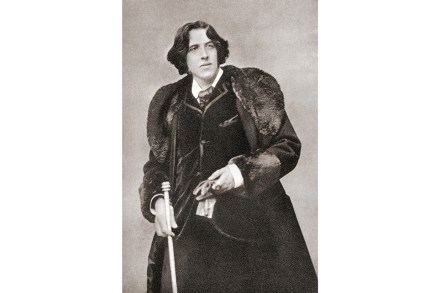
The Importance of Being Earnest was NBC’s first coast-to-coast broadcast of a play in 1929. It was ideal for radio, partly because Oscar Wilde’s crisp dialogue obviated any need of facial expressions or gestures. Epigrammatic speech, as Noël Coward found, was a signifier of modernity in the 1920s. Beyond that, as Kate Hext shows, the America of Calvin Coolidge and Herbert Hoover had a sinewy and hardy sympathy for the Anglo-French fin-de-siècle literary mode of the 1890s known as Decadence.

Flirting in 15th-century Florence

From our UK edition

Noel Malcolm, a former political columnist of The Spectator, the historian of English nonsense verse and editor of Thomas Hobbes’s Leviathan, has written a book on an arresting subject. Forbidden Desire in Early Modern Europe gives close and relentless scrutiny to male-male sexual relations in Europe, the Ottoman empire, north Africa and in such dispersed colonies and outposts as New England, Peru, Cape Town and the Dutch East Indies. Malcolm’s interest in the subject began with his find of a cache of documents dating from 1588. These recorded the official investigation of a male couple – a trainee interpreter for Venice’s envoy in Constantinople and the envoy’s barber – who fell in love.

Nothing compares with Chips Channon’s diaries for sheer exuberance

From our UK edition

‘Why was he born so beautiful, why was he born at all?’ When ‘Chips’ Channon strolled into the House of Commons tea room in 1951, this was the chant with which encircling drunken Labour MPs mocked him. Politically, he was inessential they thought, and epicene. He admitted to being the best-dressed of MPs, but reckoned the young socialist Anthony Crosland to be the most beautiful. As a historical record keeper, though, he has cut a deeper and more ineffaceable mark than any of his tormentors. Nothing compares with the unexpurgated Channon diaries. They are rich, exuberant, copious and shatteringly honest.

The centenary of literary Modernism

From our UK edition

43 min listen

In this week's Book Club podcast, we're going back 100 years to 1922 – the year which is usually seen as heralding the birth of literary Modernism. My guests are Richard Davenport-Hines, author of A Night At The Majestic: Proust and the Great Modernist Dinner Party, and the scholar and critic Merve Emre, who has worked extensively on Joyce and Woolf. I asked them how much Modernism really did represent a break with the past, and how much it looked like a coherent movement at the time. Along the way we learn what Proust and Joyce found to discuss when they met, why Virginia Woolf was so rude about Ulysses, and what the mainstream story of Modernism left out...

The horrors of 1922 included atrocities, assassinations and the rise of Mussolini

From our UK edition

Sixty years ago the Daily Express ran a regular feature entitled ‘Just Fancy That!’ Each short segment highlighted some strange coincidence or weird incident that would hook readers’ interests. Human oddities, unlucky mischances, freaks of nature and improbable statistics were dealt out every day. It made for easy reading, but sometimes gave pause for thought. Nick Rennison has adapted the ‘Just Fancy That!’ formula to make a handy book for the bedside table in the visitors’ bedroom. In crisp and evocative snatches, he gives monthly summaries of global events, domestic episodes, newspaper sensations, sporting triumphs and cultural acclaim during 1922.