Leaf Arbuthnot

The childhood terrors of Judith Hermann

From our UK edition

The German writer Judith Hermann burst on the literary scene in 1998 with her short story collection Summerhouse, Later, and was soon heralded as one of a new wave of Fräuleinwunder – girl wonders who were writing fiction that felt fresh and uninhibited. Now she has produced a memoir of sorts – in parts slyly moving, in others so stony-faced and self-serious as to border on the parodic. First the parodic. The book opens one night in Berlin with Hermann running into the psychotherapist she has been seeing three times a week for ten years. Over the course of these sessions, she recalls, she fell in love, then out of love, with him, though he hardly spoke to her at all. This encounter feels initially charged and full of promise, but it leads nowhere in particular.

The agonies of adolescence: The Party, by Tessa Hadley, reviewed

From our UK edition

My husband and I like to play Tessa Hadley bingo whenever she has a new book out. You get a point if one of the characters is dressed in a bad outfit, which the author seems rather to admire – a purple jacket with orange tassels; a long felt skirt; a beret, maybe at an angle. You get another point if a beautiful boy-man steals the heart of the story’s older heroine; bonus points if he is unaware of his beauty, a little callous, elegant or golden-skinned. In a recent interview with the New York Times, Sally Rooney said she thought originality was overrated: that she didn’t much mind the idea that she might end up producing variations on the same novel for the rest of her writing life. The 68-year-old Hadley has more or less done this, and her fans are grateful for it.

My summer of love with God’s gift

From our UK edition

When the author and podcaster Viv Groskop first visited Ukraine, she travelled there from Moscow, on a long train that ran eventually beside a field of sunflowers. They were, she recalls in her lovely and modestly scaled memoir, like a ‘blast of sunshine screaming: “Welcome to Ukraine! You are no longer in Russia!”’ The year was 1994, and Groskop had been in the former USSR for a little under a year. A modern languages undergraduate at Cambridge, she had decided to take her year abroad in St Petersburg. Until she got there, she had barely thought of Ukraine. It was one of a bunch of newly independent states; it hadn’t come up on her course.

Anorexia has a long history – but are we any closer to understanding it?

From our UK edition

In 1992, a few weeks after her 14th birthday, Hadley Freeman stopped eating. Nothing very dramatic caused this. A skinnier classmate at her all-girls school in London told her: ‘I wish I was normal like you.’ But the comment triggered a change that was dramatic in the extreme. Within weeks, Freeman was monitoring every crumb that entered her mouth, opening the fridge just to smell the food, making her house quake as she did star jumps over and over again. Within months her weight had plummeted and she was sent by her frantic parents to a doctor. She was diagnosed with anorexia nervosa and lived in various psychiatric wards for the next two and a half years. She is now a journalist, formerly at the Guardian, currently at the Sunday Times.

‘It felt like a piece of bad news I should pass on to someone else’ – Robert Douglas-Fairhurst on his MS diagnosis

From our UK edition

In October 2017 the academic Robert Douglas-Fairhurst went to see a neurologist in Oxford. A couple of months earlier a weird thing had happened: he’d gone on a long walk and ended it shuffling along, like an old man in slippers. He wasn’t yet 50. Having had a scan, he was looking forward to hearing there was nothing to worry about. ‘I’m going to come right out with it,’ the neurologist said, fixing him in the eye. ‘I think you have multiple sclerosis.’ Contemplating a trip to Dignitas, he wonders if people generally buy a two-way ticket or just the single All of us, Douglas-Fairhurst writes in Metamorphosis, his heartening and unexpectedly gripping memoir, find at one point or other that we are standing on a trap-door.

This sceptred isle: the fantasy realm of Redonda

From our UK edition

There is an island in the Caribbean so small that it doesn’t appear on many world maps. Its name is Redonda; one of its kings, the Spanish writer Javier Marías, died two months ago. It’s an unforgiving place, uninhabited and windswept, basically a large rock a mile long and about a third of a mile wide. But birds like it, particularly a species called the booby, whose calls sound like a person crying out: ‘Oh no! Oh no! Oh no!’ The fantasy kingdom even had a national anthem – and a flag designed by the Duke of Guano The island is the subject of the Canadian writer Michael Hingston’s often excellent Try Not to Be Strange. I can see booksellers scratching their heads over where to shelve it.

An immorality tale: Lapvona, by Ottessa Moshfegh, reviewed

From our UK edition

Has there been a better novel this century than Ottessa Moshfegh’s My Year of Rest and Relaxation? There might not have been. The book was a hit when it came out in 2018 and had a second wind during the pandemic, when readers found themselves ‘resonating’ with its cabin-fever plot. Not that there was much plot: the novel follows a beautiful young woman marooned in her New York apartment, where she mainly watches TV and pops pills like they’re Pringles. There’s more plot in Moshfegh’s latest novel Lapvona. We’re not in contemporary America any more but in somewhere like medieval Europe, and the characters aren’t ‘prettier than Sharon Stone’ but proper old-school mingers, all tooth and gangle and belly.

University Challenge: the next education mess

From our UK edition

31 min listen

While the government’s U-turn on A-level and GCSE results has been widely welcomed, universities are still in a dire state – why? (00:55) Plus, has Boris Johnson got the right approach in his war on fat? (15:00) And finally, are illegal raves during the pandemic socially irresponsible, or just young people sticking it to The Man? (25:45)  With academic and author Matthew Goodwin; chair of the Education Select Committee Robert Halfon; Spectator columnist Lionel Shriver; weight loss doctor Andrew Jenkinson; Spectator contributors Leaf Arbuthnot and James Delingpole. Presented by Cindy Yu. Produced by Cindy Yu, Max Jeffery and Alexa Rendell.

Private tragedies: Must I Go, by Yiyun Li, reviewed

From our UK edition

I can think of few novels as bleak or dispiriting as Yiyun Li’s 2009 debut, The Vagrants. Set in a Chinese industrial town in 1979, it opens with one woman’s death and closes with another. The pages in between are jammed with misery meted out by scalpel: treacherous friends, underfed children, craven officials, all have their turn upon the stage, while school choirs sing unfalteringly in praise of the communist party. Her latest book, Must I Go, is more cheerful, if only by a whisker. It’s the first time Li has set a novel squarely in her adopted America, with a faded Californian babe as its heroine. Lilia Liska is 81 and thrice widowed. She is spending her final years in a retirement village that she tolerates.

Mission Impossible: can Boris Johnson rewire the British government?

From our UK edition

39 min listen

The Prime Minister is trying to reform the civil service. He's not the first to try - so will he succeed? (00:50) The stakes for success are high, as his opponent is no longer Jeremy Corbyn, but the more impressive Keir Starmer. How have Starmer's first almost 100 days gone? (15:45) And last, how widespread is loneliness? (29:45)With the Spectator's political editor James Forsyth; Jill Rutter from UK In a Changing Europe; our deputy political editor Katy Balls; former C4 Economics Editor Paul Mason; author Leaf Arbuthnot; and Andy Nazer from the Campaign to End Loneliness.Presented by Cindy Yu.

Audio Reads: Fredrik Erixon, James Forsyth, and Leaf Arbuthnot

From our UK edition

25 min listen

On this week's Audio Reads, Swedish economist Fredrik Erixon reads his cover piece explaining how European nations are all flying blind in the pandemic. James Forsyth advocates a complete rewiring of the British state. And Leaf Arbuthnot, whose novel Looking For Eliza is released this week, extolls the joys of Zoom raves.

How to go clubbing without leaving your living room

From our UK edition

To my surprise, what I miss most about life before the lockdown are parties. As others pine for restaurants and theatres, I am longing for sticky floors and 4 a.m. Ubers. Give me plastic cups and music so loud you feel it in your kidneys. Sylvia Plath wrote disparagingly of the ‘shrill tinsel gaiety of parties with no purpose’. It’s precisely that shrillness and pointlessness that I’m yearning for: drunk young bodies cramming together for no reason other than to be close to one another. At the weekend, my longing finally spilled over and I decided to make do online. I put on a nice top and loaded my lashes with mascara.

Bill Bryson: It’s impossible to be sick of England

From our UK edition

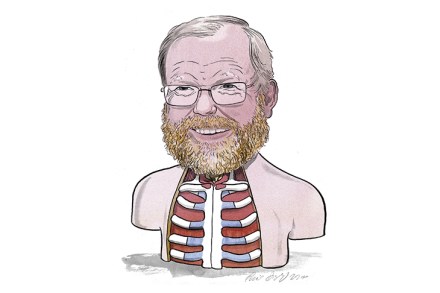
‘It’s remarkable that bad things don’t happen to us more often,’ notes Bill Bryson in his latest book, a look at the ‘warm wobble of flesh’ that is the human body. He wrote it long before coronavirus upset the world, but parts of it are particularly relevant now. Viruses worth their salt know how to get around, writes Bryson. Researchers from the University of Arizona infected a door handle to an office and found it took just four hours for a virus to spread through the building, turning up on virtually every device inside and ‘infecting’ half the workers. Kissing, oddly, is among the least effective ways to spread germs. Ordinary touch is best. ‘A successful virus is one that doesn’t kill too well and can circulate widely.

My crush on Jeremy Corbyn is no longer cool

From our UK edition

There are some crushes that ought to be crushed. When I was about nine, I fancied our village vicar — he had a pleasant, boring face and would throw Mars bars into the congregation during sermons. Things came to a halt after I saw him by chance at a local swimming pool. Underneath his cassock was a lawn of hair so dark, you couldn’t see his skin. Even his arms were furred. I was, in the way of many nine-year-olds, ruthless in my judgement. I stopped fancying him at once and avoided him at church, calling him 'Gorilla Priest' in my head. Years on, I find myself contending with another embarrassing crush. I have a bit of a thing for Jeremy Corbyn — or 'Jessica Chastain' as I like to call him in company.