Culture

Culture

The good, the bad and the ugly in books, exhibitions, cinema, TV, dance, music, podcasts and theatre.

The Spectator’s books of 2012, pt 3

2012 is done. Here is the final selection (published in the magazine last month)  of the Spectator's best books of the year. Happy 2013. Susan Hill Spitalfields Life by The Gentle Author (Saltyard Books, £20). The writer started a daily blog about his life in Spitalfields — people, jobs, buildings, street life, monuments. A whole piece of London is here, ghosts of Spitalfields’ past haunting the vibrant present. It is unlike any other book. Two excellent thrillers by two rising stars. Safe House by Chris Ewan (Faber, £14.99) is set on an Isle of Man as you never imagined it and has one of the best new heroines for a long time. Whereas Shadow of the Rock, the first book by Thomas Mogford (Bloomsbury, £12.99), is partly set on Gibraltar.

The Spectator’s books of 2012, pt 2

2012 is very nearly finished. Here is a selection (published in the magazine last month) of the Spectator's best books of the year. Matthew Parris There’s been a fad for publishing ‘biographies’ of entities that are not human beings: everything from longitude to the mosquito, and the format can prove forced. But Robert Shepherd’s Westminster, A Biography: From Earliest Times to the Present (Bloomsbury, £20) chooses a subject with a beating heart. Westminster has developed a most distinct personality since its birth as a swampy Bronze Age island, and Shepherd explains, describes and charts it with great scholarship, of course, but with a smile and a quizzical eyebrow. I love learning how little I knew.

Torn between ideology and compassion

More from Books

On 1 September 1978, the then prime minister Jim Callaghan invited six leading trade unionists to dinner at his Elizabethan farmhouse in Sussex. By all accounts it was a very jolly affair with Callaghan’s wife Audrey doing the cooking and their granddaughter Tamsin Jay handing round the dishes. The trade union grandees went away convinced that Callaghan was about to call a general election. Instead, he sat on his hands and waited. It proved to be a catastrophic misjudgment. Just four months later they all met up again — this time to discuss declaring a national emergency.

Renaissance superwoman

More from Books

In 1471 Galeazzo Maria Sforza, Duke of Milan, led a brash entourage of wine-swilling, jewel-bedecked courtiers into Florence. It was Lent. This was not the most auspicious way to begin a diplomatic mission to settle the dispute over Imola, the tiny Romagna fiefdom that Galeazzo had offered to sell to Lorenzo de’Medici. Even Lorenzo, epitome of the parvenu, was stunned by the fanfare. But for all the wrangling, within two years the territory would fall into Papal hands with the dowry of Caterina Sforza. The Deadly Sisterhood is a wide-ranging historical narrative about the women and power struggles that dominated Italy in the late 15th and early 16th centuries.

From the playing fields of Eton to El Alamein

More from Books

The fascination with the last of the cavalry is enduring, perhaps partly because of the horseman’s apocalyptic links: one of the contenders for the last cavalry charge, about which there is still no consensus, is the battle of Megiddo in 1918, on the Plain of Armageddon. Now we have another question: who was the last great cavalryman? Not that it is actually posed in this engaging biography of the British contender to the title, the little-known Sir Richard McCreery, who fought in France in the Great War on horseback, and commanded Eighth Army in Italy during the second world war from a tank and occasionally an aircraft. But it is implicit in the author’s criteria: ‘the only member of the [non-mechanised] cavalry arm after 1918 to lead a British army in wartime’.

A master of tactical retreat

Lead book review

A fanciful and doubtless risky parallel between Charles de Gaulle and the Russian emperor Alexander I suggested itself while I read Marie-Pierre Rey’s superb new biography of the latter. Both men came to power through an act of political parricide: Alexander because he was tacitly complicit in the plot to overthrow his father, a plot which ended in Paul’s sordid murder in 1801, strangled with a scarf by the conspirator-courtiers after they discovered him cowering behind a screen in his bedroom; de Gaulle because he rebelled against his former mentor and the undisputed national hero from the Great War, Marshal Pétain, both on military strategy before the second world war and on the political choice to be made once it broke out.

The Spectator’s books of 2012, pt 1

2012 is drawing to a close. Here is a selection (published in the magazine last month)  of the Spectator's best books of the year. A.N.Wilson Sidney Chambers and the Shadow of Death by James Runcie (Bloomsbury, £14.99). At last, an Anglican Father Brown. Runcie has sensibly set his detective stories in the 1950s, before the boring era when DNA and science spoilt the poetry of crime investigation. Canon Chambers, a self-effacing, clever clergyman with a taste for pubs and shove-halfpenny, and an agonised capacity to fall in love with women, is surely a bit as Archbishop Runcie must have been when he came out of the Guards and took orders?  Each tale is beautifully crafted and surprising. I hope for many more volumes.

The great books Spectator writers and others hate

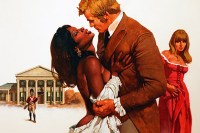
Find out which books PD James, Sam Leith, Susan Hill, Mark Amory, Barry Humphries and many more hate, then tell us about yours in the comments section. Craig Brown Which classic work do you think this comes from? ‘Her teeth were white in her brown face and her skin and her eyes were the same golden tawny brown. She had high cheek-bones, merry eyes and a straight mouth with full lips. Her hair was the golden brown of a grain field that has been burned dark in the sun but it was cut short all over her head so that it was but little longer than the fur on a beaver pelt.’ Jeffrey Archer? Jackie Collins? Lee Child? I’ll give you one more clue.

‘Turboparalysis’ Revisited

The word ‘turboparalysis’, coined by Michael Lind (who has a brilliant piece on the subject in the Spectator Christmas double issue), is paradoxical, even illogical. And yet it is clear, perfect for our times. Lind defines his term as: ‘a prolonged condition of furious motion without movement in any particular direction, a situation in which the engine roars and the wheels spin but the vehicle refuses to move.’ Turboparalysis is a new word; but its sense is familiar. We are often warned that we ‘risk repeating the mistakes of the 1930s’. Comparison between eras is always awkward.

Children’s books for Christmas

If you're still struggling to find a present for the inscrutable toddlers and children in your life, fear not for behold we bring you good tidings of great joy: Juliet Townsend's annual selection of the best children's books on the market, published in the Spectator a few weeks back.  My 20-month-old granddaughter totters into the room. Her eyes are shining with the fervour of St Bernadette. She has caught a glimpse of the divine. Two small stuffed pigs are clasped in her arms. Clearly she has been in heaven. Actually she has just returned from a visit to Peppa Pig World, the most exciting experience of her short life. Anyone who has contact with very small children today will be all too familiar with Peppa, the toddlers’ Harry Potter in her universal appeal.

An assassination at Christmas

In the upper outer corridor of the Summer Palace, with its views of the palm fringed courtyard below, the young man was waiting with his gun. It was a no frills 7.65 Ruby automatic pistol, one of thousands a Spanish small arms manufacturer had supplied the French Army during the First World. Some of the offices along the narrow corridor were already deserted for the holiday. Nonetheless he had been assured that, however long his Christmas Eve lunch, the admiral would be back because he would want to read his latest telegrams. At about 3.30pm he heard footsteps, the murmur of voices then, rather surprisingly perhaps, laughter.

Why Dr Faustus’ dark obsessions still resonate

Faustus to Helen of Troy from Doctor Faustus, by Christopher Marlowe Was this the face that launched a thousand ships? And burnt the topless towers of Ilium? Sweet Helen, make me immortal with a kiss. Her lips suck forth my soul, see where it flies: Come Helen, come give me my soul again. Here will I dwell, for heaven be in these lips, And all is dross that is not Helena. I will be Paris, and for love of thee, Instead of Troy shall Wittenberg be sacked, And I will combat with weak Menelaus, And wear thy colours on my plumed crest. Yea I will wound Achilles in the heel, And then return to Helen for a kiss. O thou art fairer than the evening air, Clad in the beauty of a thousand stars.

Sean O’ Brien: Poetry is political, all writing is political

Sean O’ Brien was born in London in 1952. Shortly afterwards, he moved to Hull, where he grew up, thus firmly cementing an allegiance to the North of England: a subject he explores in much of his poetry. In these Collected Poems, that begin with his debut, The Indoor Park (1983), and end with his most recent collection, November (2011), O’ Brien displays his remarkable contribution to British poetry over the last three decades.

The future of the trivia book

It is, if Noddy Holder is to be believed, Christmas. And so those of us who pen trivia books listen for the ring of tills or, as is increasingly the case these days, for clicks on Amazon’s ‘Add to Basket’ icon. Will our offering be the one bulging the stockings this year? Will the royalties tide us through another few months? And even if they do, what is the long-term future for the trivia book in an age when so many factoids (TM Steve Wright in the Afternoon) are freely available on the internet? The subject is one I discussed recently in a Covent Garden pub with some elves. Some QI elves. Yes, these creatures really do exist. They’re not just names invented to pad out the credits on BBC2.

Dickens and the profit motive

More from life

I’m writing this from a hotel room in Stockholm where I’ve been stranded for the last 24 hours thanks to bad weather. Turns out the Swedish airport authorities aren’t any better at coping with snow than ours — which is surprising given how often it must snow over here. Nevertheless, it has given me an opportunity to reflect on why David Cameron hasn’t been more assiduous about following in the footsteps of Fredrik Reinfeldt, the leader of Sweden’s centre-right coalition. I think the answer has something to do with the works of Charles Dickens, particularly A Christmas Carol.

Marcus Berkmann’s choice of stocking fillers

If you're short on ideas for minor Christmas presents, then you can't do better for expert guidance than read Marcus Berkmann's choice of stocking fillers from last week's issue of the Spectator magazine. There can be few phrases in the language more debased than ‘Christmas gift book’. (Well, ‘friendly fire’, maybe, or ‘light entertainment’.) Needless to say, every writer worth his overdraft wants to do one, having already spent in his head all the lovely money he is going to earn from it. But you are essentially writing something for people to buy for other people who would rather have been given something else. Having produced one or two of the things myself, I suspect that most Christmas books aren’t even opened, let alone read.

Rock solid

More from Books

Rod Stewart once tried to convince his mother that he had made a lot of money, and wanted to buy her a really big Christmas present. After much thought, she chose a new bread bin. Feet that stay on the ground are obviously a family trait. Rod: The Autobiography (Century, £20) is excellent, like listening to the guy in the pub who became a rock star but still drinks at the local. You don’t sell 200 million records without knowing how to connect with people, and Stewart does that just as well on the page as in his songs. The young singer sets his hair with sugar dissolved in water. He and Ronnie Wood hide behind a pot plant to escape the amorous intentions of Janis Joplin.

Those who can, teach

More from Books

This book shouldn’t work. A memoir written by a 40-year-old, who has never written a book before, hardly sounds promising. The topic, education, moreover is death to good literature: barely has a book been written about the subject that is not dull beyond belief. Yet, against all the odds, this book turns out to be an enthralling read. Teach First is one of the most inspiring ideas around in 21st-century Britain. The book tells the story of its first decade, from 2002-12. Rising from nowhere, it has become one of the top graduate employers in Britain and is slowly achieving its mission of transforming opportunities for socially disadvantaged young people.

First pluck your crow

More from Books

As fewer people write by hand, some of us who do venture to squeak a thin call of alarm, like mice behind the frescoes during the last days of Pompeii. Philip Hensher (novelist and university teacher) voices dismay more manfully in this eloquent account of what has been and will be lost by the ending of this ancient habit, now that thoughts are transferred on to screens by squirming thumbs on dwarf keyboards. He has a ten-point plan for restoring pen and ink to daily life, and urges us all, literate or semi-literate, to try it out.

Not just for Christmas

More from Books

New York is a strange place for dogs. As I walked back from an early morning art-world breakfast — black coffee and untouched fruit, untouched granola — the apartment buildings of the Upper East Side were disgorging perfectly groomed hounds and their staff for their walks in Central Park. I’m used to south London dog-walking, the shuffling between apology for our puppy, the avoidance of Staffies and the odd five-minute conversations with other park-goers. It is shambolic. I think of the Pont cartoon of ‘the British love for dogs’ — the total displacement of human life by a motley, shaggy array of dogs — and see a great cultural difference. This anthology confirms the difference.

Into the limelight

More from Books

The online accessibility of British population censuses has resulted in an outpouring  of ‘who and how we were’, keeping amateur genealogists, local historians and social commentators extremely busy. Barry Anthony’s book relies heavily on the censuses of the late Victorian and Edwardian years, combined with a close reading of the astonishingly detailed stage magazines and papers such as the Era and the Entr’acte, to flesh out what we know of the early life of England’s most famous comic actor. Charlie Chaplin’s stage career was not long; he seems to have seen, in some flash of foresight, that film was the coming medium and by 1914 he had transferred his gifts from theatre to screen.

Bleak beauty

More from Books

Adam Gopnik’s dazzlingly knowledgeable and beautifully told essays on winter began life as the Massey Lecture Series on Canadian National Radio, the Canadian Reith lectures. But dismiss from your mind any of the rather stodged up seriousness that always seems to hang around Important Radio Talks on the BBC. Gopnik is serious, and believes and cares passionately about things, but he understands exactly what an essay is, or should be: an attempt to get at something, a stroll into the not-yet-known or only-just-thought-about. He says in a foreword that his chapters are in fact edited transcripts of trial runs for those talks, given to a few friends, at home, in front of the fire, with the winter outside.

As dark and heavy as plum pudding

More from Books

Dressed up as a child-friendly, pocket-sized hardback, just the right size for a Christmas stocking and with a pretty front-cover illustration of two dear little children in a snowy fir forest, Inventing the Christmas Tree (Yale, £12.99) is actually a learned 90-page thesis on the history of the Christmas tree by the German author Bernd Brunner, who has also written monographs on bears, the moon and snowmen. As it’s translated into American, we have gray, color, luster, skeptics and travelers. But rather than reading it in an American accent, I read it in a German one.

Old King Noël

More from Books

What is this I hold in my hands? Is it just a book? It’s quite heavy, but somehow, instinctively, one feels its light heart.  When I eventually prize its even glossier inner core from its glossy padded outer shell, I still ask: what is this? It looks like a book, but its pages don’t shut flat or lie open; they spring apart, gaping enticingly, as if someone had inserted bulky, once-essential memos or long-forgotten mementos between the pages. But shake it, and nothing falls out. No shopping list, no ribbon-tied bundles of unrequited love, no scrunched up scraps of half-remembered receipts. Open it at one of these many inviting gaps. What’s this? A manilla envelope, seemingly casually inserted, but integrally attached to the right-hand page.

Of knowledge, life, good and evil

More from Books

The British Museum contains more about trees than one might expect: trees in paintings, drawings, sculpture, and all kinds of small artefacts of wood and bark. Frances Carey, sometime Deputy Keeper of Prints and Drawings, discusses trees as viewed through the collections. She deals not with trees themselves — for that one goes to the Natural History Museum and Kew Gardens — but with trees as interpreted (or misinterpreted) by botanical illustrators, divines, etchers, literary writers, medallists, metaphorists, mythologists, painters, poets, politicians and sculptors, on a worldwide scale going back to the Neolithic if not beyond. Discussions of people’s varied reactions to trees are followed by an ‘Arboretum’: 24 chapters each dealing with one genus of tree.

A bloody waste

More from Books

The US invasion of Iraq in 2003 was an act of frivolity without parallel in United States history. The destruction of the Baathist state caused Iraqis to flee into their ancient sectarian and racial communities, and laid out a killing-ground where animosities suppressed in other Muslim countries could be fought out to the last Iraqi. By early 2006, when Sunni extremists (usually called al-Qa’eda) blew up the holy Shia mosque in Samarra, the country was in civil war. The United States kept its nerve. With the dogged support of President George W. Bush in Washington, five additional fighting brigades and uncounted tons of reinforced concrete, Generals David H. Petraeus and Raymond T.