Lynn Shepherd

What if Byron and the Shelleys had live tweeted from the Villa Diodati?

From our UK edition

It’s one of the most famous – indeed infamous – episodes in English literary history. In the summer of 1816 Lord Byron took a villa on the banks of Lake Geneva. He was attended by his doctor, John William Polidori, and another nearby house was rented by Percy Bysshe Shelley, Mary Wollstonecraft Godwin, with whom the married Shelley had eloped two years previously, and Claire Clairmont, Mary’s stepsister and Byron’s mistress. The weather was terrible that year – so bad they called it ‘the ‘year without a summer’ – and the party spent most of their time indoors, gathered about the fireplace in Lord Byron’s drawing-room.
How did you do? Answers to our Young Romantics quiz

From our UK edition

Here are the answers to the quiz posted last week. The winner will receive a signed first edition of Lynn Shepherd’s new novel, A Treacherous Likeness, which was inspired by the Shelleys. You can read Andrew Taylor’s Spectator review of A Treacherous Likeness here, or subscribe to do so here.

Young Romantics quiz

From our UK edition

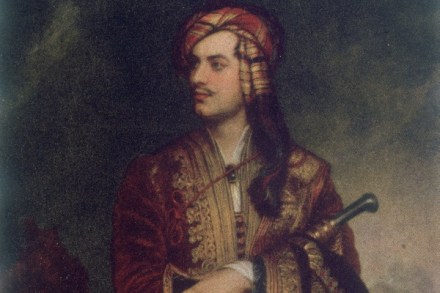
Byron may have been mad, bad and dangerous to know, but how’s your knowledge of the rest of the Young Romantics? Are you a connoisseur of Keats, or a specialist on Shelley? Take this light-hearted quiz to find out how much you really know about this dazzling generation of English poets. There are four possible answers to the questions below, and one of them relates to Byron, Keats or Shelley. There’s a point for every correct answer, and some bonus points to be won as well, if you can spot a few Romantic red herrings I’ve hidden in here too… Answers should be emailed to dblackburn @ spectator.co.uk. The winner will receive a signed first edition of Lynn Shepherd’s new book A Treacherous Likeness. Answers will be published next Wednesday.

Puffing Pamela: Book hype, 18th-century style

From our UK edition

There are quite a few candidates competing for the title of the first novel in English literature. You can make a strong case for Robinson Crusoe, published in 1719, or Gulliver’s Travels of 1726, or even – at a push – argue for Sir Philip Sidney’s Countess of Pembroke’s Arcadia, issued over a hundred years before, but one of the super-heavyweight contenders will always be Samuel Richardson’s 1740 novel-in-letters, Pamela. When it first appeared Pamela was as much of a sensation as the X Factor and Fifty Shades rolled into one, a genuine ‘multi-media event’ more than two hundred years before that phrase was even coined.

My favourite passage from Dickens…

From our UK edition

My favourite Dickens passage is, without question, the opening to Bleak House. That astounding description of the fog and mud in the London streets and the possibility of a megalosaurus ‘forty feet long or so, waddling like an elephantine lizard up Holborn Hill’. The manuscript is part of the Dickens exhibition on at the Museum of London at the moment, and while it's fascinating to watch Dickens adjusting and editing to hone his effect, it was obvious to me that the great rush of words that carries you along in those first pages of Bleak House came rushing from his pen with the same crackle of energy you feel as you read it. Breathtaking. (Lynn Shepherd's new book, The Solitary House, is inspired by Bleak House) In Chancery London.

Following Dickens

From our UK edition

2012 is a year of Dickens anniversaries — a major one for him, and what’s turned out to be quite a significant one for me. It’s his bicentenary, of course, but it will also be 30 years since I first read Bleak House. I know that because I wrote an essay on it in my first term at Oxford. Looking at that again, when I came upon it a few weeks ago, I experienced one of those odd time-slip moments when you meet your younger self coming back.