Jane Ridley

Nymphomaniac, fearless campaigner, alcoholic – Nancy Cunard was all this and more

From our UK edition

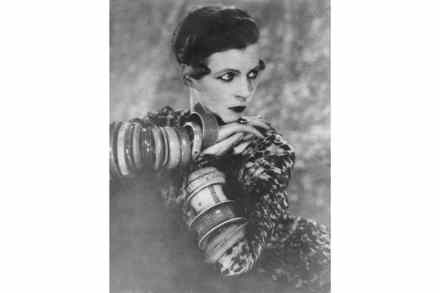
The title of Anne de Courcy’s riveting new book might give the impression that Nancy Cunard had no more than five lovers. In fact she had many, many more. Born in 1896, Nancy was the only child of fantastically ill-matched parents. Her mother, Maud – she later changed her name to Emerald – was an American heiress and socialite. Her father, Sir Bache Cunard, was a fox-hunting squire busily engaged in spending the fortune he inherited as the grandson of the founder of the shipping line. Maud neglected Nancy, leaving her in the charge of an odious governess. The only person who had any time for the lonely little girl was the writer George Moore, her mother’s lover. Some said he was Nancy’s father, but this seems unlikely.
Jane Ridley: George V

From our UK edition

36 min listen

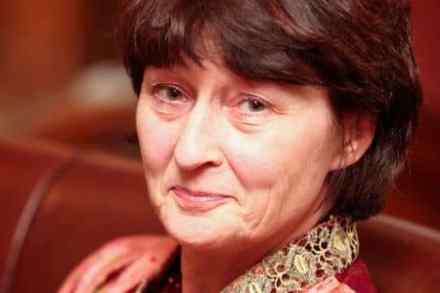
In this week’s Book Club podcast, Sam's guest is the historian Jane Ridley, talking about her new book George V: Never A Dull Moment. She tells him there’s so much more to the 'boring' monarch than shooting grouse and collecting stamps. Hear how he navigated some of the worst constitutional crises in memory, saved the British monarchy as the grand dynasties of Europe started toppling… and then inadvertently imperilled it again by his treatment of his son and heir.

More juicy gossip from Kenneth ‘Climbing’ Rose

From our UK edition

When this second volume of diaries begins in 1979, Kenneth Rose is 54 and well established as the author of the Sunday Telegraph social column ‘Albany at Large’. The first volume, published last year, was reckoned by many to be a disappointmaent on account of Rose’s snobbery. This one is better. By now Rose has arrived. The Thatcher years were his glory days. When he died in 2014 Rose left six million words of journals, which he bequeathed to the Bodleian Library, and the two volumes edited by D.R. Thorpe which have been published amount to roughly half a million words. Rose saw his diary as his legacy. Back in 1988 he recorded: ‘George Weidenfeld is very enthusiastic about eventually publishing the journals I have been keeping.

The best-kept secret

From our UK edition

In the winter of 1820–1 a 29-year old woman named Anne Lister went to stay with some female friends who lived nearby. This was a visit between gentry families of the sort that Jane Austen describes in her novels. But there the resemblance ends. By the end of her stay Anne had flirted with four women and gone to bed with three of them. She then wrote a letter to another woman, swearing undying love. We know about Lister’s sex life from the lengthy daily diaries that she kept. She devised a clever code in which she described her sexual encounters in remorseless detail. The German writer Angela Steidele has used the diaries to construct a life of Anne Lister, and a fascinating story it is too.

A cracking royal read

From our UK edition

Never judge a book by its cover. To look at, this is a coffee-table book with shiny pages which make it too heavy to take on Ryanair, but that does it a disservice. In reality it is a shrewdly observed and engagingly written account of a neglected subject — the royal household. Tinniswood takes a long view, beginning with Elizabeth I, and one of the points he makes concerns the unchanging nature of monarchy. Both Elizabeth I and Elizabeth II needed to put on a display of magnificence, for example, but both were also aware that out-of-control costs spelt trouble with Parliament. The chief cause of ballooning costs for the Tudors and Stuarts was that too many people were living at Court at the monarch’s expense.

Quite contrary | 2 August 2018

From our UK edition

The best royal biography ever written is probably James Pope-Hennessy’s Queen Mary. Published in 1959, only six years after the queen’s death, it is a masterpiece: no one has written better about her German relations, about her larger-than-life mother, Fat Mary, the Duchess of Teck, or about the royal family in the early 20th century. It is an astonishingly candid book, considering that it was published at the time when the royal code of secrecy was at its height. The greatest tribute to the author is that no serious life of Queen Mary has appeared since. Pope-Hennessy didn’t actually want to write the book. When the royal librarian Owen Morshead asked him to do it, his first instinct was to refuse. He was an unlikely choice for the job.

The British Dreyfus

From our UK edition

One day in December 1908, a wealthy 81-year-old spinster named Marion Gilchrist was bludgeoned to death in her Glasgow flat. Miss Gilchrist, who lived alone with her maid, was an obsessive collector and hoarder of jewels, which she hid among her clothes. There was no sign of a forced entry, but a valuable diamond brooch was missing. The month before the murder she had changed her will, cutting out her relatives, whom she hated, and leaving everything to her maid. The Glasgow police decided to arrest a foreigner named Oscar Slater. He happened to have pawned a brooch around the time of the murder. The brooch turned out to belong to Slater himself, but the police persisted in pursuing him, even though he denied having any knowledge of Miss Gilchrist.

Millicent Fawcett deserves her Parliament Square statue

From our UK edition

When Westminster Council granted planning permission for a statue of Millicent Fawcett in Parliament Square to mark this year’s centenary of women getting the vote, many people were puzzled. Few had heard of this feminist campaigner, and even fewer knew about the suffragist movement which she led. The suffragette Emmeline Pankhurst seemed a far more appropriate candidate for a statue. Not only was she famous, but some feminist historians claimed that her role in gaining the vote was more important. These two books stand on different sides of the debate. Diane Atkinson has written a collective biography celebrating Mrs Pankhurst and the suffragettes, while Jane Robinson makes the case for Millicent Fawcett and the suffragists. The two leaders were very different.

Women on the warpath

From our UK edition

When Westminster Council granted planning permission for a statue of Millicent Fawcett in Parliament Square to mark this year’s centenary of women getting the vote, many people were puzzled. Few had heard of this feminist campaigner, and even fewer knew about the suffragist movement which she led. The suffragette Emmeline Pankhurst seemed a far more appropriate candidate for a statue. Not only was she famous, but some feminist historians claimed that her role in gaining the vote was more important. These two books stand on different sides of the debate. Diane Atkinson has written a collective biography celebrating Mrs Pankhurst and the suffragettes, while Jane Robinson makes the case for Millicent Fawcett and the suffragists. The two leaders were very different.

Britain über alles

From our UK edition

  David Cannadine was a schoolboy in 1950s Birmingham, which was still recognisable as the city that Joseph Chamberlain had known. In the 1960s the town planners demolished much of Victorian Birmingham. The bulldozing of 19th-century cities coincided with — and helped to cause — a boom in Victorian history, led by Asa Briggs. As a postgraduate student at Cambridge, Cannadine wrote a thesis on Birmingham’s 19th-century aristocratic landowners. Since then, there has been a torrent of academic research on 19th-century history, and this has had a ‘deadening and dampening effect’. The Victorians have gone out of fashion. Historians have migrated to the rich pastures of the 18th century or the newly available archives of the 20th.

A feminist trailblazer

From our UK edition

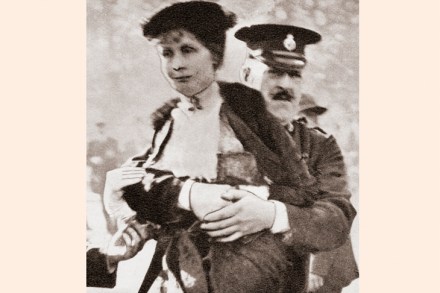
On the evening of 28 October 1908, two unremarkable middle-class women wearing heavy overcoats gained admission to the Ladies’ Gallery, high above the chamber in the House of Commons. Suffragettes had previously hit the headlines by chaining themselves to the railings at 10 Downing Street and, emboldened by this success, the leaders of the women’s movement planned an even more outrageous demonstration. The Ladies’ Gallery was surrounded by a metal grille, and this had huge significance for the suffragettes, as it symbolised their exclusion from the patriarchal political system. The plot was for two of them to chain themselves to the hated grille. One of the women chosen for the job was an Australian named Muriel Matters.

Forty years of comfort-eating

From our UK edition

In 2015 a pair of linen drawers belonging to Queen Victoria sold at auction for over £12,000. In old age Queen Victoria swathed herself in wraps and loose gowns which artfully concealed her figure, and her official photographers were ordered to photoshop her outline. But these knickers with their 45” waistband make plain that the 5’-queen was borderline obese. Annie Gray has written a culinary biography of Queen Victoria which tells us what she ate. Breakfast was a hearty meal, often featuring lamb chops. For dinner Victoria ate rich French food, and her menus were always written in French. No plain Mrs Beeton-style cooking for the queen. Dinner began with a choice of soups.

Suspension of disbelief

From our UK edition

The history of modern medicine is a roll call of brilliant minds making breakthrough discoveries. We rarely hear about the losers, but Wendy Moore has chosen to write the extraordinary story of a massive medical fiasco: the craze for mesmerism which gripped Victorian London in 1838. The practice of using the ancient technique of hypnosis for medical purposes takes its name from the 18th-century German physician Franz Mesmer. The mesmerist of Moore’s story was a society doctor called John Elliotson, a man who has been almost forgotten today. Elliotson was a self-made physician who rose quickly to the top of his profession. Clever, tough and ambitious, by the age of 40 he was professor of medicine at London University.

Charming old fox

From our UK edition

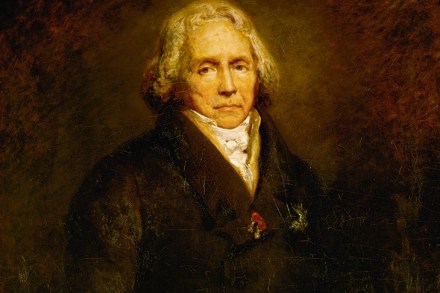
Talleyrand was 76 when he took up the post of French ambassador in London in 1830. Linda Kelly deals only with the last phase of Talleyrand’s long and tumultuous career, but this short book brings him marvellously to life. He was not an impressive figure. Little over 5’3” in height, he walked with a limp —one leg was in an iron brace. ‘Always dress slowly when you are in a hurry,’ was one of his maxims, and each morning during his lengthy toilette his valet coiffed his long, straggly white locks with curling tongs. One wag described him as ‘a big packet of flannel enveloped in a blue coat and surmounted by a death’s head covered in parchment’.

Bad behaviour

From our UK edition

Molly Keane achieved fame and critical acclaim in 1981 aged 75, when she published the novel Good Behaviour, a razor-sharp social comedy about the Anglo-Irish in the 1930s. Her success was the more sensational because it was unexpected. Twenty years previously her play Dazzling Prospect had flopped disastrously at the box office. A drawing-room farce in the era of the kitchen sink, it seemed so dated that Kenneth Tynan remarked that he could hear horses whinnying in the audience. Convinced that her writing career was finished, Keane had published nothing since. She wrote Good Behaviour in secret, for herself. When her friend the publisher Billy Collins turned it down as too dark, she put it away in a drawer.

Blithe spirit

From our UK edition

Lady Anne Barnard is a name that means almost nothing today, but her story is a remarkable one. She defied all the expectations governing the behaviour of upper-class women in 18th-century society, yet she made a success of her life. She died leaving six volumes of unpublished autobiography with a stern injunction that her papers were never to be published. For 200 years her memoirs have languished in the family archive, and Stephen Taylor is the first biographer to reveal her secrets. Anne was the daughter of a threadbare Scottish peer, Lord Balcarres, and she grew up the eldest of 11 children in a prisonlike tower house in Fife. Pushed by her mother to contract a conventional arranged marriage, trading her breeding for newly-gained wealth, Anne dug in her toes.

In the company of queens

From our UK edition

Steven Runciman, the historian of Byzantium, is a puzzling figure. He was an outrageous snob, once remarking that he would have enjoyed being the widower of a Spanish duchess, which would have made him a dowager duke in Castile. He particularly relished the company of queens (of the female variety), and he took the Queen Mother out to lunch once a year at the Athenaeum. But as Minoo Dinshaw shows in this richly original life, the snobbery was a subtle pose. Runciman was a tease who liked to play games with people, and he made a career out of being enigmatic. His family were wealthy shipbuilders in Northumberland. His parents were both dedicated public servants — his father was a minister in the last Liberal governments.

Cultivating the fourth estate

From our UK edition

Lord Palmerston is remembered today not for his foreign policy nor for his octogenarian philandering, but for his management of the press. He was the first prime minister to grasp that dealing with journalists was all about pragmatic negotiation and buttering people up. The deal between Palmerston and the newspapers was: ‘I’ll tell you something no one knows if you give me your support and a favourable report.’ It still works like that today. Most historians assume that Palmerston was the only Victorian prime minister to cultivate the fourth estate. Balfour loftily boasted that he never read the newspapers. But this was an affectation. As Paul Brighton shows in this new study, 19th-century prime ministers all had contacts with the press.

Songs of innocence and experience

From our UK edition

We live in an age of generational turmoil. Baby-boom parents are accused of clinging on to jobs and houses which they should be freeing up for their children. Twentysomethings who can’t afford to leave home and can’t get jobs are attacked as aimless and immature. Both sides of the generational divide should take comfort from this timely, thoughtful work by Steven Mintz, professor of history at the University of Texas at Austin. In Mintz’s view, no one is to blame for these changes, neither the selfish baby boomers nor their Peter Pan offspring. What is happening is a shift in the nature of adulthood, and to understand this we need a historical perspective.

Move over Downton: Margot and the Asquiths’ marital soap opera

From our UK edition

You might be forgiven for thinking that there is no need for yet another book about Margot Asquith. Her War Diary was published only a few months ago: surely we have had enough about this woman, extraordinary though she was. Anne de Courcy’s new book shows that this is not the case at all. Instead of using Margot’s voluminous diaries to illustrate the politics of the Asquith government, as most writers have done, she writes the story from Margot’s point of view. The result is a gripping read. When the rising Liberal politician Herbert Henry Asquith married Margot Tennant in 1894 he was a 42-year-old widower and she was 30.