Culture

Culture

The good, the bad and the ugly in books, exhibitions, cinema, TV, dance, music, podcasts and theatre.

Things Fall Apart: Flesh, by David Szalay, reviewed

More from Books

London and the South East, The Innocent, Spring, All That Man Is, Turbulence – the titles of David Szalay’s first five novels, which won a flurry of prizes, are all captured, in a sense, by Flesh, his sixth. Much of the latest book is set in Britain’s capital, and the innocent frequently lose that tag as its protagonist battles to advance his position. When we first meet him, Istvan is 15, living with his mother in Budapest in the dying days of communism and being introduced to sex by a neighbour. Having served a jail sentence for killing the woman’s husband, this ‘solitary individual’ joins the army and, after tours in the Middle East, heads for London – only to be stuck on the door of a strip club.

The punishing life of a chief whip

More from Books

For many Spectator readers, their only exposure to the workings of the Whips’ Office will be through the machinations of Francis Urquhart, Michael Dobbs’s fictional chief whip made famous in House of Cards. In the first diaries published by a former chief whip, Simon Hart aims to shine a light on the vital and often unrecognised role that the Whips’ Office plays in the functioning of parliament and government. Having been overlooked by David Cameron and Theresa May, Hart arrives at the top table under Boris Johnson in 2019, nine years after his entry to parliament. He serves as secretary of state for Wales until he joinsa slew of others in resigning from the government – the prelude to Johnson’s resignation as prime minister.

A war of words: circulating forbidden literature behind the Iron Curtain

Lead book review

If James Bond, now in American hands, re-emerges refreshed as an agent of the CIA, then it will be a homecoming of sorts, given that his creator played a role in drawing up the blueprint for America’s first foreign intelligence service. In May 1941, Commander Ian Fleming sat down in Washington with Colonel William (‘Wild Bill’) Donovan to sketch out an agency modelled on British naval intelligence. Under Donovan’s stewardship, this became the Office of Strategic Services and, in 1947, the CIA. The two men got on well and were not afraid to try things that had not been tried before.

The weirdness of the pre-Beatles pop world

More from Books

Quizzed about pop by the teen music magazine Smash Hits in 1987, the year of her third consecutive electoral victory, Margaret Thatcher singled out ‘Telstar’, a chart-topper from a quarter of a century earlier, for special praise. She pronounced it ‘a lovely song… I absolutely loved that. The Tornados, yes.’ As a whizzily futuristic sounding instrumental ode to a transatlantic communications satellite, and only the second British recording to top the American Billboard charts, its charm for Thatcher was perhaps as much political as musical. That it was the work of an independent producer might also have appealed to her love of freewheeling, self-reliant private enterprise.

Is Keir Starmer really Morgan McSweeney’s puppet?

More from Books

Every government has its éminence grise.  The quiet, ruthless man (or occasional woman) operates in the shadows, only to be eventually outed when the boys and girls in the backroom fall out among themselves or when someone pens a memoir. Think Peter Mandelson, Nick Timothy, Fiona Hill and Dominic Cummings. The authors of Get In, both lobby journalists, have produced a detailed insider account of the rise of Keir Starmer, as seen through the eyes of those inhabitants of the political underworld whose names rarely surface in the public prints. In this case, the focus is on one alleged strategic genius, a man in his late forties with the memorable name of Morgan McSweeney, referred to throughout by the somewhat sinister moniker of ‘the Irishman’.

The world is now inexorably divided – and the West must fight to survive

More from Books

In The Builder’s Stone, Melanie Phillips reminds us forcefully that we must never forget how 7 October 2023 changed the world. On that day Hamas terrorists from Gaza invaded southern Israel and brutally raped women and butchered or burned alive 1,100 Jewish men, women and children. They also dragged 250 Israelis, including three-year-old twins, grandparents and young women whom they had already attacked, into Gaza as hostages. They filmed it all on their body cameras, and perhaps the most terrifying thing they recorded was the glee with which they carried out these atrocities. Phillips, a British writer who lives in Jerusalem and London, has spent many decades fighting Goliaths.

How can a biography of Woody Allen be so unbearably dull?

More from Books

How do you make the life of Woody Allen unbearably dull? Mainly by retelling the plots of every one of his movies, along with lists of cast and crew, box-office receipts and critical reactions. And there are so many movies – 50 so far, but there’ll probably be another by the time you read this. Long ago, Allen got into the habit of making a film a year, and so he goes on. He once said he was ‘like an institutionalised person who basket-weaves’ – he couldn’t stop. So we have to wade through an awful lot of filmography before the juicy stuff – the scandal – begins. Mia Farrow doesn’t even appear until page 313. In 1979, when she first met Woody, she was divorced from Frank Sinatra and André Previn and had recently adopted her seventh child.

Hope springs eternal: The Café with No Name, by Robert Seethaler, reviewed

More from Books

Call it a mosaic. Here it all is – the pathos of a botched first date, a birth, a death, a feud, a stumble into love. The Café With No Name deals with the small dramas of everyday life.  The setting is Vienna – not the elegant city of Schönbrunn but the Karmelitermarkt, one of the poorest districts, debris from Allied bombs still filling the basements in 1966. Robert Simon has worked in the market for seven years, shifting crates of swedes, restacking firewood, cleaning the floor at the fishmonger. He enjoys his work, but he’s 31 and restless. He finds himself casting a speculative eye at the café on the corner, shabby and abandoned, ivy climbing up the wall. His landlady, a war widow, encourages him: ‘You always need a bit more hope than worries.

Three’s a crowd: The City Changes its Face, by Eimear McBride, reviewed

More from Books

Nearly a decade after Eimear McBride published The Lesser Bohemians (her second novel after the success of A Girl is a Half-Formed Thing),the Irish writer has returned to the drab, smoke-filled world of 1990s London. The City Changes its Face is told from the perspective of 20-year-old Eily, two years after she has left Ireland to study drama in London and has met Stephen, an established actor 20 years her senior. In the interim period, the pair have moved from Kentish Town to Camden. Eily has taken time out of drama school, and Grace, Stephen’s daughter from a previous relationship, has made an appearance. The novel consists largely of a conversation that takes place over the course of one night, with flashbacks to the intervening years.

Any form of saturation bombing is a stain on humanity

More from Books

At 8.15 a.m. on 6 August 1945, a B-29 bomber called Enola Gay dropped ‘Little Boy’ over Hiroshima. The thermal radiation from the atom bomb was 900 times more searing than the sun. An estimated 118,661 civilians died, horribly. Survivors staggered about with their skin in shreds, their intestines hanging out and their blacked and bleeding faces grotesquely disfigured. Upon hearing the news, President Harry Truman called the bombing ‘the greatest thing in history’. Why the US unleashed the terrible bombs over Hiroshima, and three days later over Nagasaki, has been much debated ever since. In his excellent short book on the subject, Richard Overy writes: The question asked is usually ‘Was it necessary?

The enlightened rule of the Empress Maria Theresa

Lead book review

The role of personality and charm in running a state is one theme of Richard Bassett’s superb book, the first English biography of the Empress Maria Theresa since Edward Crankshaw’s in 1969. The different parts of the Habsburg monarchy – Austria, Tyrol, Bohemia, Hungary, Croatia and Milan – had little in common except dynasty, geography and Catholicism. Yet, partly owing to Maria Theresa’s force of character, this complex tapestry of nationalities remained a great power After she came to the throne in 1740, she felt ‘forsaken by the whole world’. Encouraged by France, Austria’s neighbours Prussia, Saxony and Bavaria invaded the monarchy in order to divide it between them.

An artist in her own right: the genius of Elizabeth Siddal

More from Books

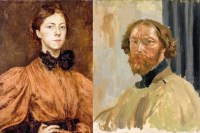
Elizabeth Eleanor Rossetti, as this new book calls her in a break with convention, is better known by her maiden name: Elizabeth Siddal or Siddall (the spelling is uncertain, as is much else about her). The Pre-Raphaelite icon was familiar to the public as the model for John Everett Millais’s ‘Ophelia’ sinking to her watery grave and as the muse of Dante Gabriel Rossetti, who eventually married her. Not long afterwards she died of an opiate overdose in 1862, aged 32. Her early demise, echoing her association with Ophelia, left her ripe for myth-making, as first explored by Jan Marsh in her groundbreaking The Legend of Elizabeth Siddal (1989).

Why were the security services so obsessed with the Marxist historian Christopher Hill?

More from Books

What did the great Marxist historian Christopher Hill think of orgies? Michael Braddick’s splendid and judicious biography doesn’t ponder this question. However, it strikes me as worth posing since, for a three-week period in the winter of 1978, an ensemble of actors (including the future Hollywood star Bob Hoskins) could be found naked at the National Theatre simulating group sex in Hill’s name. The actors were performing in Keith Dewhurst’s radical stage adaptation of Hill’s masterpiece of 17th-century popular history The World Turned Upside Down (1972) and were embodying what it might have been like to be enthusiastic members of one of the radical millenarian sects at the centre of Hill’s study.

A mild diversion for a wet afternoon: Three Days in June, by Anne Tyler, reviewed

More from Books

Anne Tyler, who won the Pulitzer Prize in 1989, is much admired by writers, ranging from Hanya Yanagihara to Nick Hornby, for novels such as The Accidental Tourist (1985) and A Spool of Blue Thread (2015). In Three Days in June, Tyler’s 25th novel, Gail Baines is not having a good day. An assistant headmistress, she is expecting to be promoted when the headmistress asks to speak to her. Instead, her boss suggests she finds another job, citing – to Gail’s surprise – her lack of people skills. It is the day before Gail’s daughter’s wedding and, shortly after she returns home early, her ex-husband Max turns up unexpectedly, hoping to stay with her. He has not even brought a suit with him for the wedding, but he has brought a cat that needs rehousing.

The sexual escapades of Edmund White sound like an improbably sordid Carry On film

More from Books

Edmund White grew up in a world where sex, and gay sex in particular, was an unspoken reality. In 1950s Cincinnati, ‘no one “came out” except drag queens and the campy peroxided waiter at the diner’, he writes in the first chapter of The Loves of My Life. That blanket of near-silence doesn’t seem to have inhibited him much. He was sexually precocious from the age of 12, as his autobiographical novel A Boy’s Own Story (1982) first suggested. But it may account for the determined frankness with which he has treated sex in both his fiction and memoirs. For an author who came of age in pre-liberation America, erotic candour has always been a political act, at least in part – never merely profligate.

Modernisation has sent Russia spinning back to the Stone Age

More from Books

When Howard Amos first came to Russia, in 2007, it was a country you visited with interest, even enthusiasm. Modernisation, potentially a progressive development, was on the cards; America was getting ready to ‘reset’ US-Russian relations; foreigners were able to volunteer at Russian orphanages. That was what Amos did, working with disadvantaged children in Pskov Region. In the 2010s, he returned to Russia as a journalist and reported from places high and low. He draws on his experiences in this book’s 17 essays, centred on topics ranging from politics to poetry, religion to rural affairs. Inevitably, war is a recurring theme. One of Amos’s interviewees, Sergei, works for a German organisation set up to give fallen soldiers marked graves.

The gruesome fascination of female murderers

More from Books

On 27 January 1688, Mary Hobry, a French midwife living in London, strangled a man to death. The corpse lay in her bed for several days before she carved it up. Then, in the dead of night, she used her petticoat to drag the dismembered body through the neighbourhood – Castle Street, Drury Lane, Parker’s Lane – to be disposed of. The torso was dumped on a rubbish heap; the legs, arms and head were tossed in a cesspit. What did Mary think, I wonder, as she tiptoed home, finally rid of her husband? The secret was not to last long. Within hours the evidence was uncovered, sending the West End into scandalised uproar. When the head was found, covered in excrement, it caused a ‘great noise’ to erupt in the streets.

The supreme conjuror Charles Dickens weaves his magic spell

Lead book review

As Charles Dickens lay in his coffin, his will was read out to the assembled mourners. ‘I conjure my friends,’ he sternly instructed them, ‘on no account to make me the subject of any monument, memorial or testimonial whatever.’ It’s an appeal that later generations have studiously ignored, as can be seen in the piles of commemorative merchandise that are available to purchase online. These range from a fully poseable Dickens action figure (‘with quill pen and removable hat’) to a T-shirt featuring his face and the slogan ‘I put the lit in literature’. They can also be seen in the shelfloads of biographies and critical works published every year.

The magic of early radio days

More from Books

‘Is it necessary to have the window open when listening to the new device?’ asked Edith Davidson, the wife of the Archbishop of Canterbury, in 1923, referring to the latest fashionable contraption, the wireless. We might laugh – but it does take time for the older generation to catch up with new technology. To this day I instinctively roll down my car window (unnecessarily, I’m pretty sure) to point my phone towards the sensor that will grant me access to my local club. In her joyous, richly illustrated book about the early years of radio from the listeners’ point of view, the BBC radio producer Beaty Rubens takes us inside the British home.

Reversing our economic decline is not easy, but it is simple

More from Books

Our immiseration came swiftly and stealthily. At the start of the 21st century, Britain was a prosperous country. Ambitious people fought to come here. We trusted that, over time, we would become wealthier – an expectation that had been accurate for most of the previous two centuries. Since the millennium, Britain and western Europe have pretty much stopped growing – especially if we ignore the impact of immigration and calculate GDP per head. Reversing this slowdown should be the top issue at every election, but it is surprisingly under-discussed. In theory, almost all our politicians want growth. Keir Starmer and Rachel Reeves keep describing it, nasally and tautologically, as their ‘number one priority’.

The perils of poaching: Beartooth, by Callan Wink, reviewed

More from Books

Beartooth, the second novel by the Montana-based writer Callan Wink, opens with two brothers elbow-deep in the viscera of the third black bear they have just shot out of season. Hazan’s hands are ‘moving around the hot insides of the animal as if he were rummaging through a junk drawer’. He wants the gallbladder, which will fetch around $1,500 – far more than the brothers get for chopping firewood. The skull, claws and skin will swell their illegal bounty by another $500. Thad and Hazan, aged 27 and 26 respectively, are in serious debt after their father’s recent death, and their roof is leaking. Logging in the Montana backcountry is hard work and poaching pays much better, even if their father would have disapproved.

The pursuit of love letters: My Search for Warren Harding, by Robert Plunket, reviewed

More from Books

There is something wonderful about a novel being rescued from obscurity. Robert Plunket’s My Search for Warren Harding was first published in 1983, given a few decent reviews and then disappeared. Occasionally admirers – including rather influential ones like Amy Sedaris and Larry David – would lend a weathered copy to friends, insisting they read it. And so here we are. Elliot Weiner, a third-rate academic (in fact the word ‘academic’ barely seems to apply), hears that Rebekah Kinney, a former mistress of Warren G. Harding, president of the United States from 1921 to 1923, is living in a decrepit mansion in Los Angeles.

Putin’s éminence grise: The Wizard of the Kremlin, by Giuliano da Empoli, reviewed

More from Books

Occasionally a book is published, perhaps twice in a generation, which is so bad but internationally celebrated that one questions everything one has believed about literature. The Wizard of the Kremlin, written in French by the Italian political scientist Giuliano da Empoli, was awarded the French Academy’s Grand Prix de Roman in 2022. It narrowly missed the Prix Goncourt, France’s equivalent of the Booker, and has since been translated into 30 languages. If a novel this inept is so successful then we have truly entered Spenglerian end times. The book is not just poorly constructed, filled with two-dimensional characters, tin-eared dialogue and inauthentic settings. Its very premise is ridiculous.

Is the future of democracy in the balance?

More from Books

At the turn of the century, the ineluctable march of democracy seemed assured. The Cold War extinguished and eastern Europe freed, a Whiggish history of the world continued to be written. A quarter of a century on, the great wave has broken and rolled back. Democracy is not what it was in Chile, Peru, Venezuela, Brazil, Hungary, Egypt, Turkey, Russia and Afghanistan. It has not emerged in China. The future looks less democratic than the past. Such concerns bother the big brain of the former Supreme Court judge and medieval historian Jonathan Sumption in his latest brilliant collection of essays.

The Coromandel coast under threat

More from Books

This is a remarkable book by a remarkable man. Based on the Coromandel coast at Chennai in south-eastern India, Yuvan Aves is an active naturalist and an ardent activist. Still in his twenties, he teaches outdoor classes, he campaigns and he notes down the movements and habits of invertebrates, birds and fauna in his local wetlands and littoral. All his observations and the wider thoughts on ecology that make up Intertidal are given added heft and poignancy by the searing account of his childhood which begins the book. His father was a philandering no-hoper whom his mother left for another man. That man was even worse. He took against the young Aves and subjected him to regular beatings, forcing him to scrape the blood from the walls when visitors were coming.

In search of Pico della Mirandola, the quintessential Renaissance Man

Lead book review

Edward Wilson-Lee writes rather chin-strokey, erudite books for the half-educated general reader with a strong taste for big ideas and the ever-so-slightly weird –which is to say people exactly like me and very possibly like you. The Catalogue of Shipwrecked Books: Young Columbus and the Quest for a Universal Library (2018); A History of Water: Being an Account of a Murder, an Epic and Two Visions of Global History (2022): autodidact catnip. He’s a gifted chronicler of the odd, the interesting and the esoteric. Think non-fiction Umberto Eco.

The nerdy obsessive who became the world’s richest man

More from Books

Shortly before Bill Gates’s seventh birthday in 1962, his parents stuffed their son into a button-down shirt and blazer for a visit to Century 21, a bold showcase of scientific prowess in their home town of Seattle. This futuristic fair was intended as the nation’s rebuff to Soviet Russia following the Sputnik satellite launch, which sparked the space race. The family enjoyed the new 600ft Space Needle. They also saw the Mercury capsule that carried the first American into space; Ford’s concept of a six-wheeled nuclear-powered car; and IBM’s idea of a cheap computer, costing $100,000. Best of all in the boy’s view was rattling around on the Wild Mouse Ride, which felt risky and thrilling, stoking a lifelong love of rollercoasters.