James Cahill

The depth of Edmund de Waal

“I’m very, very proud of making pots,” says Edmund de Waal. “I don’t call myself a conceptual artist.” He is putting the finishing touches to an exhibition of ceramic sculptures at Gagosian’s Beverly Hills gallery. Around the walls are sleek, tiered vitrines filled with porcelain vessels, along with a sequence of smaller gold-painted boxes – “reliquaries,” as de Waal calls them, inspired by the early Renaissance master Duccio. “I hate the word minimalism. I find it completely useless as a term.” In the last 20 years, de Waal has risen from the status of a humble ceramicist to become one of Britain and America’s leading contemporary artists, best known for his multipart installations of pots.

A prolonged love affair: The Two Roberts, by Damian Barr, reviewed

From our UK edition

For a time, Robert Colquhoun and Robert MacBryde were at the heart of the in-crowd. Stories of Francis Bacon, Lucian Freud and their wartime circle often make reference to the two young painters from Scotland. Feted in the 1940s for their modernist styles – Colquhoun typically portraying figures, MacBryde preferring still life scenes – they later lapsed into painful, drink-sodden obscurity. Damian Barr’s novel, The Two Roberts, is a tender and evocative act of resurrection. It portrays the men’s lives from the time of their first meeting as students at Glasgow School of Art to the moment in the mid-1950s when, penniless and out of fashion, they retreated to an ancient cottage in Suffolk.

Adam McEwen’s small masterpieces of the uncanny

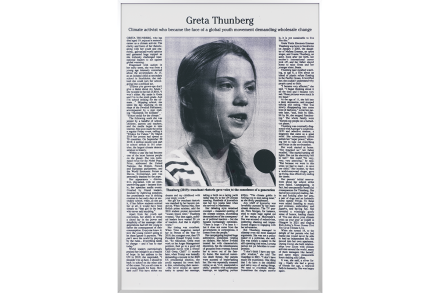
We meet at Adam McEwen’s apartment on the Upper East Side, a few hours before he makes a lightning trip back to London, where he was once a journalist working for the Daily Telegraph. After studying art, McEwen worked for a while writing obituaries, and his eureka moment came in 2000 with the decision to turn his day job into art. He began to write fake obituaries for living subjects, adopting the detached prose and visual design of a broadsheet newspaper. Each text was presented as a black-and-white C-print, and subjects included Jeff Koons, Marilyn Chambers, Macaulay Culkin and Nicole Kidman. McEwen’s fictitious obituaries are small masterpieces of the uncanny. In the instant of reading one, the hypothesized death seems real.

McEwen

Looking on in anger: Happiness and Love, by Zoe Dubno, reviewed

From our UK edition

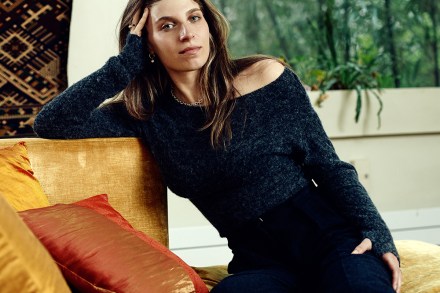
The fantasy of telling disagreeable friends how awful they really are is a relatable one. But rarely does it find such extravagant, relentless expression as in Zoe Dubno’s debut novel Happiness and Love. The narrator is a nameless woman who finds herself among former friends in New York. While she never succumbs to an outburst, her interior monologue issues forth like a furious esprit d’escalier. The dramatic scenario – modelled on that of Thomas Bernhard’s 1984 novel Woodcutters – is a dinner party in the loft dwelling of an ‘art world’ couple with whom the narrator used to live, following the funeral of one of their cohort.

The sexual escapades of Edmund White sound like an improbably sordid Carry On film

From our UK edition

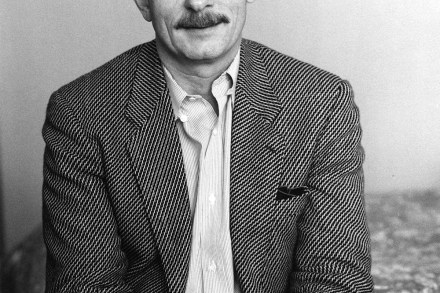
Edmund White grew up in a world where sex, and gay sex in particular, was an unspoken reality. In 1950s Cincinnati, ‘no one “came out” except drag queens and the campy peroxided waiter at the diner’, he writes in the first chapter of The Loves of My Life. That blanket of near-silence doesn’t seem to have inhibited him much. He was sexually precocious from the age of 12, as his autobiographical novel A Boy’s Own Story (1982) first suggested. But it may account for the determined frankness with which he has treated sex in both his fiction and memoirs. For an author who came of age in pre-liberation America, erotic candour has always been a political act, at least in part – never merely profligate.

Andy Warhol would have revelled in the chaos of his legacy

From our UK edition

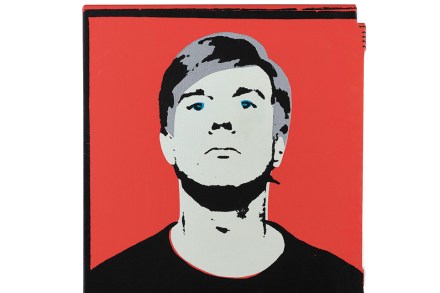
Andy Warhol’s legacy has been dogged by rows over authenticity more than that of any other modern artist. Warhol might well have predicted the chaos and even delighted in it. He once signed a fake painting at Christie’s – four silkscreened Jackie Kennedys – for the hell of it. ‘I don’t know why I ever did,’ he wrote in his diary – and yet the confession makes clear that he maintained a distinction, in the end, between what was fraudulent and what was his. You can’t sign a fake if everything is real. The task of the Andy Warhol Authentication Board – established in 1995 by the foundation which handles the artist’s vast legacy – was to uphold that distinction, preserving the integrity of his corpus.