Mike Cormack

Ian Thomson, Patrick Kidd, Mike Cormack, Ursula Buchan and Richard Bratby

From our UK edition

36 min listen

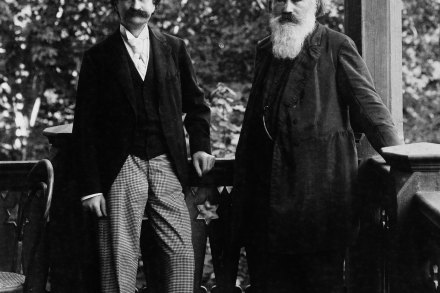
On this week’s Spectator Out Loud: Ian Thomson on what the destruction of the Hotel Oloffson means for Haiti (00:54); Patrick Kidd analyses Donald Trump and the art of golf diplomacy (06:43); Mike Cormack reviews Irvine Welsh’s Men In Love (16:49); Ursula Buchan provides her notes on the Palm House at Kew (20:38); and, Richard Bratby argues that Johann Strauss deserves better than to be the victim of snobbery – plus listen to the end for an extract from Strauss’s Emperor Waltz (24:24).  Produced and presented by Patrick Gibbons.
Tedious, lazy and pretentious – Irvine Welsh’s Men in Love is a disgrace

From our UK edition

There are 32 years between the publication of Irvine Welsh’s Trainspotting and his Men in Love – a gap roughly equivalent to that between Sgt. Pepper and ‘Windowlicker’ by Aphex Twin. Perhaps three cultural generations. It is disturbing, therefore, to find Welsh still pumping out further sequels to his spectacular literary debut. But whereas that had verbal fireworks, razor-sharp dialogue, superb character ventriloquism and a fearless examination of Scottish moral rot, Men in Love is – let’s be frank – tedious, lazy, pretentious and simply bad writing. Under the influence of American Psycho, Welsh has had characters narrating their fleeting perceptions since Filth (1998), in the hope that accumulation will create meaning.

James Kelman’s ‘Memoirs’ are a misnomer

From our UK edition

James Kelman doubtless remains best known for his 1994 Booker prize win for How Late It Was, How Late and the subsequent furore. The brouhaha looks painfully absurd 25 years later with the plaudits Kelman has received (when not being dismissed as akin to an ‘illiterate savage’) perhaps the greatest in post-war English literature. Here is a writer to stand alongside Zola, Beckett and Joyce.Yet since then it feels as though Kelman’s audience has grown more selective — a process perhaps aided by his move to the USA in 1998 to teach creative writing at the University of Texas at Austin. But with Kelman now in his 75th year, it’s long past time for the man himself to step forward. So we have What I Do (Memoirs), published by the small press thi wurd.

Poetic miniatures: A Lover’s Discourse, by Xiaolu Guo, reviewed

From our UK edition

The novelist, memoirist and film-maker Xiaolu Guo writes with tremendous delicacy and nuance about migration, language, alienation, and love. A Lover’s Discourse is a series of poetic miniatures, sometimes just a page long, following the unnamed female Chinese narrator, living in London to pursue a PhD, and her relationship with a similarly unnamed German-English architect. Some early humour comes from the mutual misunderstandings of two hugely different cultures, as when she mishears Hanover as hangover and is mystified when he describes himself as a Wasp. But these episodes are less farcical misunderstandings than opportunities to muse on the spaces between us all and how words obscure as much as clarify.

Anglo-Chinese misunderstanding: an Oxford don visits 1960s Beijing

From our UK edition

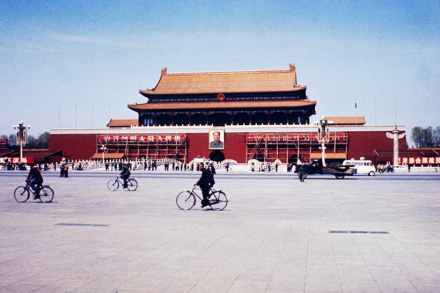
This book is a rather startling depiction of Hugh Trevor-Roper’s involvement with the Society for Anglo-Chinese Understanding (SACU), his sponsored visit to China in October 1965 (just months before the Cultural Revolution got under way) and his efforts to find out who actually controlled and funded SACU. Having been induced to be a sponsor of the society on legitimate grounds of interest in China and its history, Trevor-Roper was a last-minute addition to a delegation visiting Beijing and Xian. He was promised freedom of movement and access, though the reality turned out quite differently.

Entente hostile: China, Japan and Korea

From our UK edition

The mutual animosity of the Far East Asian nations can strike some as baffling, given their shared history and cultures, though anyone who grew up in a large family will know what it’s like to fight for individual space. With China’s rise, some form of understanding or defence alliance between Japan and South Korea seems in the interests of both nations, given Xi Jinping’s aggressive expansionism in the South China Sea and clear intent to exchange infrastructure for diplomatic support through his signature Belt and Road policy. Similarly, the political and cultural gap between the People’s Republic of China and the Republic of China is perhaps larger than ever, while Hong Kong seems to be slipping steadily towards ungovernability. But why?

Ray of light

From our UK edition

Often a blurb exaggerates, but rarely does it fundamentally misrepresent (unless it contains the words ‘In the tradition of...’). The Adulterants, however, talks of ‘the modern everyman... stubbornly ensconced in an adolescence that has extended well beyond his biological prime’. We thus expect a man-child, resiling from responsibility and dependent on internet porn and gaming — basically the Simon Pegg character in Shaun of the Dead. But the protagonist, Ray, is really ‘mostly’ a good guy: he mostly loves his pregnant wife Garthene, and looks forward to being a father; and the youngish couple are striving to buy ‘a horrible maisonette’ in the brutal London property market.

The keys to Chinese

From our UK edition

The history of industry is the story of the reduction of complexity to easily manageable, replicable components or actions. But what if some things appear to remain irreducible, complex and laborious? The Chinese writing system is one such case. For early information technologists, it presented what appeared like insoluble problems. Unlike an alphabet of 26 (English) or even 84 (Siamese) letters, the huge number of Chinese ideographic characters could not easily be reduced to a typeable common corpus. (Three 20th-century compilations totalled between nearly 50,000 and over 80,000 separate characters).