Mary Keen

The future isn’t rosy

From our UK edition

Emotional geography is now a recognised academic subject. Is emotional botany heading the same way? This is a year for thoughtful books about plants and the way they affect lives, what they make people feel and how we can respect nature. Many of the year’s works might appeal to non-gardeners. Readers hoping for rose-tinted pages may be disappointed. Allan Jenkins’s Plot 29 (4th Estate, £14.99) is ostensibly a diary of his allotment over a little more than a year. But, he writes: ‘Sometimes, when I think of this book, I am almost bewildered. It has taken such a turn. It was to be about gardening... with personal stuff added in.’ The editor of the Observer food magazine, Jenkins grows exotic vegetables and describes them lusciously.
Playing at shepherdesses

From our UK edition

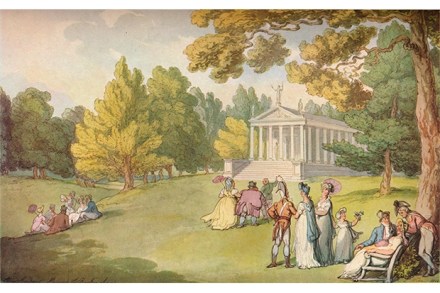
Oh, the longueurs of aristocratic Georgian leisure. What on earth did they do all day, with no domestic chores, no Wi-Fi, no television, no telephones for chatting and the slowest of transports to move their lives from the sticks to the bright lights of London or Bath? Kate Felus has written a fascinating book which tells us how the 18th-century landed gentry whiled away their summers out of doors. On winter she does not dwell, because, as she says, summer was the time when all the great landowners were likely to be at their country estates. Apart from Margaret Willes’s excellent Gardens of the British Working Class, the documented social history of gardens tends to concentrate on grand, rather than humble, establishments.

Dear Mary | 4 August 2016

From our UK edition

Q. David and Samantha Cameron, their family and two armed policemen have moved to the house opposite us. Do you think we should organise a small drinks party to introduce them to the neighbours — or just pretend that we haven’t noticed their arrival? My son has promised to remove his ‘Leave’ poster before we send out invitations. — Name & address withheld A. While your gesture may be well-intentioned, the reality is that the Camerons, like many successful couples in their late forties, are probably suffering from ‘new friends fatigue’. Do they really want to be introduced to another tranche based on their doorstep whose invitations will be more difficult to turn down?

Viewing the view

From our UK edition

Landskipping is about viewing the view, from the 18th century to the present. From the title (which is the only self-conscious thing about this terrific book) I feared we might be in for a heavy dose of Wordworthishness and ‘the lone enraptured male’ school of writing. But Anna Pavord, along with Kathleen Jamie, Dorothy Wordsworth and Jane Austen, is more down-to-earth than any Romantic moper. Like the author of Sense and Sensibility, she sees both sides of the coin. Romantic mopers, however, do crowd the early pages. Once a ‘correct’ taste for landscape became a desirable attainment in the mid-18th century, the way you looked at wild places was a way of demonstrating sensibility rather than sense.

Is there anything new left in gardening books?

From our UK edition

‘Whither the novel’ was a great dinner party topic in the 1960s. It is a question less aired these days, when novels come in strange and varied forms. From Paul Kingsnorth’s The Wake, set in the 11th century andwritten in cod Olde Englisshe, to the versifying of Constantine Phipps (much chosen as ‘book of the year’), there is plenty to please us all. Gardening books, however, have now reached the whithering stage. Samey, samey, samey is what they are, and this year even that most traditional of booksellers, Heywood Hill, has lamented the lack of anything new in the horticultural line. There are the inevitable huge picture books, the horticultural porn. The largest of these is Madison Cox’s The Gardener’s Garden (Phaidon £49.

This beautiful new history of Kew Gardens needs a bit of weeding

From our UK edition

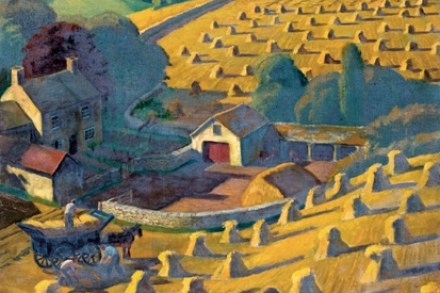
Edward Bawden’s Kew Gardens is a beautiful book. Lovers of early 20th-century British art will find it hard to stop gazing at the painted board cover under the dustjacket. It is so sheenily brilliant that you want to frame it and hang it on the wall at once. Every page, including the endpaper plans of Kew, is visually perfect, and the book is an agreeable size. Peyton Skipwith, formerly of the Fine Art Society, and Brian Webb, the designer, have collaborated on beautiful books before; their track record is impeccable. Published by the V&A, their latest work is an utterly desirable object. Having had the privilege of being on a tour of Paul Nash’s paintings at the Dulwich Art Gallery in the company of Mr Skipwith, I am aware that his knowledge on this period is vast.

Notes on…the great English garden

From our UK edition

‘Write about the best English gardens,’ says the email from the deputy editor, ‘or what makes a good garden?’ That’s a bit like saying, ‘write about the best paintings, or the best music.’ Beauty is in the eye of the beholder and we now behold so many varieties of English garden that it is hard to tell what Englishness is any longer. But it is probably safe to say that the trend is no longer lavender and roses and formal enclosures of yew and box, nor grassy parks with statues and studied references to high learning. When Kent leaped the fence in the 18th century and saw all nature as a garden, the whole world clapped. Pevsner called it ‘by far the greatest contribution England has made to aesthetic theory’.

Pretty maids all in a row

From our UK edition

It is received gardening wisdom that men tend lawns and women plant flowers. This is a good year to see how two exceptional writers on gardens live up to that definition. Our top horticultural columnists, Anna Pavord of the Independent and Robin Lane Fox of the Financial Times, have both published elegant and witty collections of journalism in 2010. Lane Fox’s Thoughtful Gardening (Particular Books, £25) has already been reviewed in The Spectator. For the purposes of male/ female comparison I can record that Lane Fox writes that flower gardening is what interests him, which makes a nonsense of received wisdom. He does not appear to mow much, but he is mad about killing weeds, bugs, badgers and foxes. In the Lane Fox plot it is a constant war on wildlife.

Vale of tares

From our UK edition

‘Feather footed through the plashy fen passes the questing vole.’ Nature writing used to be a subject for ridicule. ‘Feather footed through the plashy fen passes the questing vole.’ Nature writing used to be a subject for ridicule. Evelyn Waugh, the arch sneerer, might have found it harder to parody the modern breed of literary naturalists. Richard Mabey is perhaps the best known English author of recent fashionable books about the natural world. He belongs to a group of new naturalists which includes Robert Macfarlane the Cambridge don, Kathleen Jamie the poet, and the late Roger Deakin. They are all intellectuals, whose pitch is more observant and scientific than romantic.

Recent gardening books | 2 December 2009

From our UK edition

Philippa Lewis is a picture researcher, with an eye for uncommon facts and a wry way of presenting them. Her book Everything You Can Do in the Garden Without Actually Gardening (Frances Lincoln, £16.99), is a scholarly and entertaining social history with pictures. Most books of this type recycle old material, but this writer has a knack of discovering fresh facts. The Wordsworths papered their cottage with newspaper. Eric Ravilious tried to include a man diving into a swimming pool for his Wedgewood Garden service, but was told that the design would not be accessible to the British public. Princess Charlotte thought skittles were low grade at Claremont, so she turned the ninepin alley into flowerbeds.

A choice of gardening books

From our UK edition

Aspiration. Aspiration. Aspir- ation is still the watchword for publishers of gardening books. How many heavy, glossy productions filled with Get-the- Look pictures does the average gardener need? Especially when what is always peddled and praised tends to emphasise the haute couture of horticulture. There is a fashionable tendency to over-intellectualise about design. This is not what gardening is about. If you want more of this argument log onto www.thehadspenparabola.com, a website for the competition to redesign the walled garden at Hadspen, where there is some good online reading to be had. Victoria Glendinning is down-to-earth: ‘This is all gardens-in-the-head, not about real gardens and still less about making a garden.

A choice of gardening books | 20 December 2008

From our UK edition

This is the time of year for dutiful appraisal of current garden books. The heart sometimes sinks at the thought of conning the same old material in a newer and glossier arrangement, but Ronald Blythe’s Outsiders is a genuinely original find. Like Akenfield, his portrait of an English village, his latest work breaks the mould. I cannot remember enjoying a ‘garden’ book so much for years. The author remarks that ‘so much of my favourite garden-writing has nothing to do with gardening books’. If by that he means reading something that makes you feel you are in a garden, rather than gazing at photographs of other people’s borders, or learning how to do it, I think he has a point. Colette, Jane Austen, Mr Pooter, D. H. Lawrence, Alison Utley . . .

Ancient and modern unite

From our UK edition

Once, when Adam Nicolson was asked the question ‘will you be writing a family memoir?’, he answered, ‘I think my family is the most memoired family in the history of the universe. It’s like a disease. “No” is definitely the answer to that.’ But Sissinghurst: An Unfinished History is at least a quarter family memoir. After ‘a whispering gallery of family meanings, lasting more than a century’, the son and grandson of those most written-about writers has spoken out loud, in a voice of truth and tenderness. When he was 12, his mother left his father, and ‘the warmth left Sissinghurst that day’.

Recent gardening books | 24 November 2007

From our UK edition

Celebrity gardeners are what publishers are banking on this year. The Dowager Marchioness of Salisbury, known in New York as ‘the high priestess of historic garden design’, has given us her gardening autobiography. A Gardener’s Life (Frances Lincoln, £35) is illustrated by another aristocrat, Derry Moore — in private life Lord Drogheda. The book looks as beautiful as the gardens that the Marchioness makes. Her famous style of scholarly nostalgia can be seen in Ireland, France, Italy and America, as well as at Highgrove and in many English gardens, including her own newest venture, on a Chelsea roof. Cranborne remains for me the dream garden and Hatfield, perhaps her greatest achievement, appears all ‘luxe, calme et volupté’.

Pioneer of the studied casual

From our UK edition

Norah Lindsay had wit, beauty and a bohemian spirit. Diana Cooper described her dressing ‘mostly in tinsel and leopard skins and baroque pearls and emeralds’. At Sutton Courtenay, the house where she lived through the early years of her marriage to Harry Lindsay, she entertained non-stop. Raymond Asquith, Julian and Billy Grenfell, Maurice Baring and Jasper Ridley all flocked to her table from Oxford. ‘Sutton Courtenay, roses, the river and the youth of England splashing in the Thames and Norah, the sublime Norah,’ wrote Chips Channon. She was never out of love, often with several young men at a time. ‘Norah sometimes vexes me,’ wrote her sister Madeline Whitbread.

Recent gardening books | 26 November 2005

From our UK edition

Twenty years ago, gardening books never made it to the coffee table. The reader had to supply the glamorous illustrations. It was a bit like the difference between listening to the wireless and watching telly. I remember Mark Boxer, who was a publisher then, saying, ‘Once garden books start using pictures, they will sell in big numbers.’ They do, but they date and yesterday’s aspirational title is soon remaindered. This year, there are some picture books which should last longer than most, if only because they provide records of important gardens. The Country Life archive has been a good source of images, although only those that have been featured in the magazine are included, so these volumes can never present a true picture of design at the chosen moment.

Recent gardening books

From our UK edition

The late Paul Getty has left gardeners a surprising legacy. Gardens of the Roman World by Patrick Bowe was published in America last year by Getty publications and the copyright belongs to the J. Paul Getty Trust. Did our run-of-the-mill publishers miss a trick here? I imagine the proposal for a book about Roman gardens cannot have grabbed many editors. Picture them at the Frankfurt Book Fair muttering, ‘dead language, nothing to see, no stunning perennial borders, just a job lot of broken columns ...’ I hope they are all now eating hats and humble pie. The generosity and imagination of Paul Getty and his advisers have enabled Frances Lincoln to bring out an English edition of this beautiful book (£35).

Gardener’s question time

From our UK edition

Is the taxpayer about to stump up another £16 million for the Duchess of Northumberland's pet project, Alnwick Garden? Mary Keen investigates To him that hath shall be given, and to the Duke and Duchess of Northumberland hath been given quite a lot. We are talking public funding here. The £11.5m Lottery sum awarded to secure the Duke's Raphael for the nation is a record for a work of art. This could be chicken- feed, however, compared with the funding the Duchess hopes to bag for her pet project, the Alnwick Garden, which by the time it is completed will have cost an estimated £42m. When I interviewed Jane Northum-berland in March for the Daily Telegraph, she said something that I agreed not to mention in that article.

Finding Paradise in your own back garden

From our UK edition

Gardening is the nation's hobby. It is worth around £3 billion in annual business, much of it generated by television makeovers. No one is letting on that what keeps us spending is the pursuit of a dream. Makeovers are showbiz, brilliant marketing tools, but Eldorado will never be found at B & Q or the garden centre. Jane Fearnley-Whittingstall's new book, The Garden: An English Love Affair (Weidenfeld, £25) takes a beguiling look at what gardens have meant to us over the last 1,000 years. Garden histories, for the general reader, tend to employ recycled facts to demonstrate a bewildering number of trends, but recent books have tried different perspectives.

. . . and truncheons and snowdrops

From our UK edition

Alistair McAlpine, one-time treasurer of the Tory party, is not a conventional fellow. A picker up of unconsidered trifles, he has in his time collected truncheons, chickens and snowdrops. He gets crazes and then he moves on: whole collections go under the hammer. 'No object or painting has such beauty that I could not bear to part with it,' he writes. Eclecticism is his game. In his houses, the beautiful and the strange come and go, but in Lord McAlpine's head he keeps the oddities that have appealed to his mind. Rich men can go anywhere, whenever they like, and the insatiable curiosity of this one has taken him all over the world. If the mood seizes him, he can hop on a train in the south of France at dusk and be in Venice by dawn.