Culture

Culture

The good, the bad and the ugly in books, exhibitions, cinema, TV, dance, music, podcasts and theatre.

Passion, authority and the odd mini-rant: Scruton’s conservative vision

More from Books

Roger Scruton is that rarest of things: a first-rate philosopher who actually has a philosophy. Unfortunately at times for him, that philosophy is a conservative one. But his personal loss has been our great collective gain. As his new book again demonstrates, over the years his has been one of the few intellectually authoritative voices in modern British conservatism. In 1980, at the outset of the Thatcher decade, Scruton wrote The Meaning of Conservatism, a book which reportedly blighted his academic career: it remains an embarrassment to the British Academy that he was not made a Fellow until 2008. Academia may be softening at last, as his various professorships at Oxford and St Andrews testify. Yet living by his wits has not served him so badly.

I’m disappointed this director didn’t plunge the knife into Dustin Hoffman

More from Books

At the age of 75, the theatre director Michael Rudman has got around to his memoirs, their title taken from the mouth of Willy Loman in Death of a Salesman, the play in which Rudman once directed Dustin Hoffman to great acclaim. The author is also Felicity Kendal’s other half, making him a figure of envy for much of male Middle England. A tall ‘Texan Jew’ who went to Oxford, Rudman has quite a CV. He started at the Traverse in Edinburgh, where with the approval of the theatre’s chairman Nicholas Fairbairn he put on drugs and porno plays. An award-winning stint at the Hampstead Theatre followed, then a spell at the National Theatre. He later ran the Chichester Festival Theatre before going to the Sheffield Crucible.

Rowan Williams has been reading too much Wittgenstein

More from Books

It used to seem rather obvious that the world was full of evidence for God. These days, theologians no longer beat this drum — but some of them still give it soft little taps from time to time. Such tapping is what Rowan Williams is drawn to, now that he’s free of the obligation to dance around homosexuals and Muslims, so to speak. In this book, adapted from his recent Gifford lectures (a famous lecture series devoted to ‘natural theology’), he ponders the philosophy of language, and suggests that there is a deep affinity between how humans make meaning and how religious language makes sense. It’s a meticulously restrained and complex performance, as you’d expect — but worth straining to hear.

What’s that I hear? Francis Fukuyama back-pedalling frantically

More from Books

The problem with a futuristic thesis — particularly when summarised by a futuristic title — is that it is likely to be thrown back at you in the future. This is the problem that Francis Fukuyama has faced ever since he published his daring and now much derided book, The End of History and the Last Man, in 1992. In it, Fukuyama argued that history had been buried beneath the rubble of the former Berlin Wall and that the teleological process was now at an end: ‘What we may be witnessing... is the end point of mankind’s ideological evolution and the universalisation of Western liberal democracy as the final form of government.’ To many, this theory was literally exploded when the first plane hit the World Trade Center.

Yotam Ottolenghi: the Saatchi brothers of vegetable PR

More from Books

It would be a mistake to treat Plenty More, the new cookbook by Yotam Ottolenghi, merely as a collection of recipes. It is a collection of recipes, as it happens, and very good ones, but it’s more the epitome of a world view, a way of life, a vision of contemporary Britain. This is a collection of the great man’s latest vegetarian recipes from the Guardian magazine — I see some of my readers slipping from me as I write — and the mag accompanied the book’s serialisation with a picture of Yotam in the guise of a Renaissance artist, or prince. But really, the recipes are secondary to the man, who is pretty well the incarnation of the character of contemporary Britain.

Paul Merton’s is the most boastful autobiography in years

More from Books

Has there ever been a nun or a priest who wasn’t a bent sadist? Because here we go again. At school Paul Merton was terrorised by a nun who, in her black outfit with a white band, ‘looked like an angry pint of Guinness’. She walloped the future comedian if ever she detected an imaginative strain in his English compositions. ‘You can’t write about things that aren’t true,’ asserted this believer in the actuality of virgin births and rising from the dead. For stating that Beethoven invented rice pudding and Mozart baked the first crème brûlée, Merton was told he’d ‘poisoned the minds of your classmates with your ridiculous stories’. Of course, Merton has been poisoning and entertaining us ever since.

This former head of the Metropolitan finds Rembrandt boring

More from Books

Surely only a double-act of the stature of Philippe de Montebello, the director of the Metropolitan Museum of Art from 1977 to 2008 but also a colossus of the art world more generally, and Martin Gayford, the eminent critic who has doubled as the recording angel of the pensées of Lucian Freud and David Hockney, could have sold the idea of producing a record of conversations about looking at works of art to a publisher. As Gayford succinctly puts it: Philippe and I had embarked on a joint project: to meet in various places as opportunities presented themselves in the course of our travels. Our idea was to make a book that was neither art history nor art criticism but an experiment in shared appreciation.

Nabokov’s love letters are some of the most rapturous ever written

Lead book review

After the publication of The Original of Laura, Nabokov’s last and most disappointing novel in a very sketchy draft, you might have been forgiven for thinking there wasn’t much left to discover in the great novelist’s writings. If the posthumous fiction has been mostly fairly thin, this extraordinary and wonderful collection of letters to his wife restores him to us as the virtuoso of prose. They are some of the most rapturous love letters anyone has ever written, love letters from the length of a lifelong marriage; beautiful performances for Véra, Nabokov’s wife, and incidentally for us. The publishers have immediately issued this volume as a Penguin Classic. I don’t think we will quibble with that.

The Disappearance of Michel Houellebecq: French chin-stroking at its very best

Just when you thought Bernard-Henri Lévy had taken a chin-stroking national stereotype as far as it could possibly go, you open Le Monde‘s business pages and see this. Bernard Maris, one of France’s most respected financial correspondents, has written a 160-page book entitled Houellebecq Économiste. Maris’s book sets out its stall as an economic reading of the writer’s oeuvre, promising amongst other delights, a Malthusian interpretation of his 2005 novel The Possibility of an Island and an analysis of the division of labour in The Map and the Territory. Imagine Robert Peston writing a Hobbesian study of Irvine Welsh and you’re halfway there. I like Houellebecq’s novels.

Spectator writers on the good, the bad and the ugly moments of the IndyRef

James Forsyth Until that YouGov poll putting Yes ahead, the No camp had steered clear of making an emotional appeal. But in the aftermath of that poll, people—finally—began to speak about Britishness and their pride in it. At the Usher Hall in Edinburgh last Friday night, a sizable crowd had gathered to hear George Galloway, Danny Alexander, Brian Wilson and Professors MacDonald and Tomkins make the case for No. The audience listened attentively as the economic arguments were made. But it was when speakers began to talk about Britain and their pride in our history that the audience became really engaged. Alexander talked movingly about the people who had come from all over the UK to train in the Highlands for the liberation of Europe. Then, Gordon Brown arrived.

Going for a Song, by Bevis Hillier – extract

Lead book review

  On the Bust of Helen by Canova In this beloved marble view, Above the works and thought of man What nature could and would not, do, And beauty and Canova can! Beyond imagination’s power Beyond the Bard’s defeated art, With immortality her dower Behold the Helen of the heart! — George Gordon, Lord Byron (1788–1824) Precious Stones My Cherrystones! I prize them, No tongue can tell how much! Each lady caller eyes them, And madly longs to touch! At eve I lift them down, I look Upon them, and I cry; Recalling how my Prince ‘partook’ (Sweet word) of cherry pie! — Charles Stuart Calverly (1831–84) A Glass Collection Today I had a big surprise Uncle left me eight glass eyes.

Keep the Man Booker Prize British

Lead book review

I am nothing if not patriotic. Like most Americans, I am convinced that mine is the freest, most beautiful country on earth. But I cannot pretend to be happy that two of us have been shortlisted for the Booker Prize. When it was announced earlier this year that novels written by Americans — in fact, all novels written in English and published in Britain — would now be eligible for the award, I dismissed the news as a harmless gimmick. Now I am not so sure. Behind the fair-play, hands-across-the-border niceness of the committee’s gesture, I sense something else: masochism. The best evidence of this is a piece that ran last week in — where else? — the Guardian in which a panel named 15 American novels that ought to have won the Booker in their respective years of publication.

David Hockney, our most popular and hardworking living artist, returns to the easel

More from Books

The first volume of Christopher Simon Sykes’s biography of David Hockney ended in the summer of 1975. The 38-year-old painter had just returned to Paris, where he was then living, ‘energised’ by the widespread acclaim that greeted his designs for the Glyndebourne production of Stravinsky’s The Rake’s Progress. Energy was something Hockney would need in the years ahead when the time he always wanted to devote to painting was frequently interrupted by side-projects such as stage design or an investigation into earlier painters’ use of the camera lucida, sudden passions for new technology, and the increasing demands of celebrity.

Cecil Beaton, the bitch

More from Books

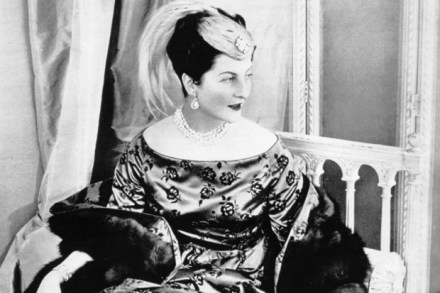
Beaton was the great inventor. Apart from inventing not only himself but his look, his voice, his persona and a glamorous family, he invented the a in photography, the Edwardian period for the stage and films, the most outré of costumes, the elaborate for his rooms, a cartoon-like simplicity for his drawings, and the dream of being a playwright and painter. What he didn’t need to invent was being a writer, at which, as his many books, and particularly this one prove, he was a natural. His lifelong observance of the world around him gave him the power to describe on paper, always acutely and often superbly, landscapes, cities, colours, nature. And of course people. He was a snob but not snobbish. Alice B.

And one more for the road – excerpts from Roddy Doyle’s latest

More from Books

9-12-12 — See the spacer died. —Wha’ spacer? —The Sky at Night fella. —Bobby Moore. —Patrick Moore. —That’s him, yeah. Did he die? —Yeah. —That’s a bit sad. He was good, wasn’t he? —Brilliant. Very English as well. —How d’yeh mean? —Well, like — he’d look into his telescope an’ his eyebrows would go mad cos he was so excited abou’ all the fuckin’ stars an’ the planets an’ tha’. An’ the words — —They fuckin’ poured out of him. —Exactly. It was brilliant. But if he’d been Irish, he’d just’ve said, So wha’? They’re only fuckin’ stars.

Beer and skittles and Lucian Freud and Quentin Crisp – a Hampstead misery memoir

More from Books

The rise of the ‘misery memoir’ describing abusive childhoods, followed by the I-was-a-teenage-druggie-alkie-gangbanger-tick-as-appropriate memoir, pushed into the shadows an older tradition, the memoir of childhood pleasure, of charm and humour. Some of the greats — Gwen Raverat’s Period Piece, Diana Holman-Hunt’s My Grandmothers and I — continue to be enjoyed; others every bit as good — Joan Wyndham’s Love Lessons trilogy — must be snapped up secondhand. Marjorie Ann Watt’s Slideshow never quite reaches these heights, but is nevertheless a welcome addition to this genre. Watts herself is a painter and illustrator, and here she uses words to depict the lost world of the prewar bohemian Hampstead upper-middle-classes.

If you hate art-world show-offs, Grayson Perry, what’s with the frocks?

More from Books

At the time it was all too easy to get sucked in by the hype. In 2013, Grayson Perry was the first visual artist ever to give the Reith Lectures and — unlike so many of his dry, earnest predecessors — here was a speaker ready to fulfil all three Reithian aims: to inform, educate and entertain. (‘I still find commercial art galleries intimidating,’ he observed in the first lecture. ‘From the frighteningly chic gallery girls on the front desk to the reverential hush around arcane lumps of stuff inside.’) Here also was a transvestite potter from Essex being welcomed to the heart of the British cultural establishment, a one-time outsider who’d made his name with pots depicting fetishism and bondage.

Hugh Trevor-Roper: the spy as historian, the historian as spy

More from Books

Shortly after the war began in September 1939, the branch of the intelligence services called MI8, or the Radio Security Service, recruited H.R. Trevor-Roper (as his name would appear the following year on the title page of his first book, his acerbic and somewhat anti-clerical life of Archbishop Laud). He was a young Oxford don, or would-be don, a research fellow of Merton. His academic career was now interrupted for six years: nominally commissioned in the Life Guards, he plunged deep into the murky world of secret intelligence. Before that, and before he turned to Modern History, Trevor-Roper had been a brilliant classicist, winning a string of university prizes.

Henry Kissinger interview: ‘I don’t see the wisdom there once was’

Features

Henry Kissinger doesn’t believe in retirement. At 91, having had a heart-valve operation three months ago, he is nonetheless publishing a book entitled World Order. As I happened to be interviewing him about it on 11 September, I asked him about his memories of 13 years ago. ‘I was in Frankfurt addressing a business group,’ he recalled in that voice of his that sounds like gravel has found its way into your car’s exhaust pipe. ‘A member of the audience had just asked a question when someone came on to the stage to say that he had an important announcement to make. I said that that may be, but I wanted to answer the question first, which I did, before the man said that New York had been attacked. It was about 2 p.m.

Literature’s least attractive power couple

More from Books

This book charts the rise and fall of one of the strangest power couples of modern times. The senior partner was initially Pam Johnson, a rising literary star, 28 years old and happily married with five novels under her belt and a fiction column on the Liverpool Post, when she singled out a novel by an obscure Civil Service scientist called C.P. Snow. He responded with a fan letter assuring her she could if she wanted ‘become quite easily the best woman writer in the world’. Snow at 35 was tubby, pop-eyed and lumbering but his effect on her was electric, ‘like a current of magic energy’.

‘Like Superman stopping a runaway train’: when Bobby Moore tackled Jairzinho

More from Books

Nothing illustrates the transformation in the working lives of professional footballers since the end of the maximum wage better than the story of how Bobby Moore only just made it to the West Ham ground for his first team debut against Manchester United. Today the players arrive from their luxury mansions insulated from the world in a Lamborghini or Maserati a few hours before kick-off to be pampered by an army of physios, clinicians, sports scientists and dieticians. Young Bobby had to catch a bus from his parents’ home in Barking to travel the three miles to Upton Park along with thousands of fans going to watch him play. Indeed there were so many that the Hammers left-half found himself at the back of a long queue at the bus stop.

Religion does not poison everything – everything poisons religion

More from Books

It slips so easily off the tongue. In fact, it’s a modern mantra. ‘Religion causes all the wars.’ Karen Armstrong claims to have heard it tossed off by American psychiatrists, London taxi-drivers and pretty much everyone else. Yet it’s an odd thing to say. For a start, which wars are we talking about? Among the many causes advanced for the Great War, ranging from the train timetables on the continent to the Kaiser’s withered left arm, I have never heard religion mentioned. Same with the second world war.

A salute to Georges Simenon

More from Books

One hundred years ago an 11-year-old boy called Georges Simenon was getting accustomed to the presence of the German army in Liège. Together with his mother and his younger brother he had been forced to hide in the cellar of their terraced house on the island of Outremeuse to avoid the firing squads. The Belgian fortress outside the city had resisted for longer than expected and had inflicted casualties on the invading army. The Uhlan lancers were so angry that 200 of the Simenons’ neighbours were lined up and shot. Once Belgian resistance had ended, the occupation of Liège became a quieter affair. For a while Madame Simenon even took in German soldiers as lodgers. Years later Georges recalled his youthful surprise at the number of German officers who wore corsets.

Rebellion without a cause: Peter Ackroyd’s curious Civil War

More from Books

How our perceptions of 17th-century England are dominated by the convulsions of the two decades at its centre! Peter Ackroyd’s book, the third of what have been announced as six volumes of his History of England, covers the period from the accession of James I in 1603 to the overthrow of his grandson James II in 1688. His priority is established by his title and by the facing portraits of Charles I and Oliver Cromwell on the front cover. He gives proportionately much more space to the conflicts of 1640–60 than to events on either side of them.

This new translation of Crime and Punishment is a masterpiece

More from Books

Subscribers to this periodical, while Mark Amory has been literary editor, must often have felt they were enjoying an incomparable feast. Even The Spectator at its best, however, could not quite rival the periodical the Russian Herald (Russkii Vestnik) under the editorship of M.N. Katkov. This phenomenal editor, in the year 1866, secured serial publication of the two giants of Russian fiction. Tolstoy had been slow in giving Katkov enough material for continuous serial publication of War and Peace. To fill the gap, Katkov enlisted Dostoevsky. Readers could enjoy episodes from War and Peace in the spring numbers of the magazine. Then in May, they could start Crime and Punishment.

Confused, unbalanced, brilliant: the Blanche Dubois of Tennessee Williams biographies

Lead book review

Anyone for Tennessee? At a best guess, the answer to that’s yes. There’s scarcely a moment these days when there isn’t a Williams play on somewhere in the West End or along the Great White Way. One reason for this is that he wrote such succulent roles, and I don’t mean just his steamroller leads, though for a kind of bruised or brittle actress, Blanche Dubois is as close to a female Hamlet as it gets. In A Streetcar Named Desire, there’s also the surly stud Stanley; Stella, his sex-drunk bride; and the courtly, perspiring Mitch, bewitched by Blanche’s blend of magic. Then think of The Glass Menagerie, which has the smothering mother Amanda, the crippled Laura, and the conflicted Tom, who abandons both to pursue his vocation as an author.