Culture

Culture

The good, the bad and the ugly in books, exhibitions, cinema, TV, dance, music, podcasts and theatre.

Is it possible to retain one’s dignity in the face of annihilation?

More from Books

Before the second world war, the Croydon-born cricketer C.B. Fry was offered the throne of Albania. It’s not certain why. Possibly because his splendid party piece involved leaping from a stationary position backwards on to a mantelpiece. Or because, historically, the Balkan nation has been so inexplicably Anglophile as to appreciate the pratfalling funnyman Norman Wisdom. Sadly Fry declined the role and it was later taken by the fabulously named if catastrophic ruler King Zog (real name Ahmed Muhtar Zogolli). Had Fry accepted, history, that capricious monster mixed of chance and fate, would have been very different. In reality, Zog was toppled in 1939 by Mussolini’s invading fascists, who turned Albania into an Italian protectorate before it fell under the Nazi yoke.

Nostalgia for snooker’s glory days

More from Books

Forty or so years ago, when I was at university, my friends Richard, Terence, Harry and I would often go to the Oxford Union to play snooker. There were two immaculate snooker tables in a large room at the top of the building and almost no one ever went there except for us. Unfortunately, our enthusiasm was not matched by concomitant talent. On one occasion it took us 34 minutes to pot a single ball. At a certain point in that endless non-break, Terence had an easy pot to a distant hole. Saying ‘I was going to pot the ball, but instead I’m going to do this’, he hit the ball with such misapplied force that it leapt in the air, off the table altogether and very nearly out of the door. Our frames would take hours.

Honeymoon from hell: Venetian Vespers, by John Banville, reviewed

More from Books

‘I am by trade a man of letters,’ Evelyn Dolman tells us as the curtain rises on Venetian Vespers. ‘I had a middling reputation in the period coming to be known, in our increasingly Frenchified age, as the fin de siècle, that is, the 1890s.’ If his writing mostly appears in the review sections, his marriage to Laura Rensselaer, the daughter of an American oil baron, is front-page stuff. But Laura has proved to be a distant, phantasmal partner. Even during the Dolmans’ sole night of physical intimacy, ‘it was as if, clasping me to her breast, she were at the same time looking aside and past my shoulder’. It moreover transpires that T. Willard Rensselaer, dead in mysterious circumstances, has cut his daughter out of his will.

Hiding from the Nazis in wartime Italy

More from Books

When memories come back to you, wrote W.G. Sebald in Austerlitz, his digressive novel about history and how it is remembered, their dreamlike quality sometimes makes you ‘feel as if you were looking at the past through a glass mountain’. Malcolm Gaskill’s exploration of the wartime adventures of his great-uncle Ralph, captured in Italian-occupied Libya in 1942, came from just such a memory, a ‘haunting’ dream experienced by his mother about her long-dead uncle. Finding a diary kept by Ralph while a prisoner, and fascinated by the ‘imperfections of memory’, Gaskill set off on a seven- year forage into the past that took him from archive to archive, retracing Ralph’s several attempts to escape.

Dark secrets of the British housewife

More from Books

Women and their guilty secrets; women and their innocent secrets; women and men’s secrets; women and state secrets; DNA tests busting women’s secrets – in her enticingly titled The Book of Revelations: Women and their Secrets, Juliet Nicolson comes at her subject from all possible angles. There is also a strongly feminist emphasis on wronged women across generations (Nicolson’s family included) who have somehow been coerced into keeping dark secrets by abusive men – or sometimes by abusive women. One such abusive woman was Phyllis Eliot, the headmistress of West Heath School, near Sevenoaks in Kent, during the late 1950s and early 1960s. Known as ‘P’, she used to kiss every girl goodnight in bed.

The young Tennyson reaches for the stars

Lead book review

Edward FitzGerald had a good story about rowing across Lake Windermere at the end of May 1835 with his old friend Alfred Tennyson. As they rested on their oars and gazed into the clear, still water, Tennyson recited some lines from his work in progress, ‘Morte d’Arthur’, describing how the Lady of the Lake fashioned Excalibur out of sight: ‘Nine years she wrought it, sitting in the deeps/ Upon the hidden bases of the hills.’ Then he gave himself a little pat on the back: ‘Not bad that, Fitz, is it?’ The lines are better than not bad, as they imagine an invisible process of creation by incorporating several fragments of earlier writing.

Why would your dead daughter climb out of her grave to harm you?

More from Books

Yarnton, Oxfordshire. A teenage girl is dumped face down in a pit, her legs bent and tethered. Around her lie the crania, jawbones and ribs of several children. Taken alone, this scene of 9th-century carnage puzzles as much as it horrifies. When placed in the wider context of a seemingly universal need to ensure that the dead stay in their graves, it’s highly suggestive. The subtitle of the medieval historian John Blair’s Killing the Dead is a tease, since vampire fiction is almost an afterthought. Folklore and imaginative literature are carefully separated from archaeological evidence.

A portrait of alienation: The Loneliness of Sonia and Sunny, by Kiran Desai, reviewed

More from Books

Twenty years on from winning the Booker Prize with The Inheritance of Loss, Kiran Desai returns with a vast masterpiece of a love story which has been longlisted for this year’s prize. Our two protagonists, Sonia and Sunny, come from wealthy neighbouring families in Allahabad, but both are in America when the novel begins. Sonia is in Vermont, working for the college library while finishing her studies, and Sunny is in New York, as a reporter for the Associated Press. When Sonia flees a coercive relationship after suffering depression and Sunny agrees to help a childhood friend choose a bride, they both return to India, where they encounter one another on a train from Delhi to Allahabad.

Even now, Nick Clegg offers too little too late

More from Books

Earlier this year a former staffer of what was then Facebook, now Meta, wrote a gossipy tell-all memoir about her time in the office there. It was a huge hit – especially after the company’s chief global affairs officer Joel Kaplan secured a ruling to prevent its promotion. Careless People, by Sarah Wynn-Williams, proved that there was a considerable appetite for anything that describes what it’s like to work for big tech. All of which boded well for Nick Clegg, who was Kaplan’s predecessor as the public face of Meta to governments across the world – until his departure was unceremoniously announced a few days before Donald Trump’s return to the White House.

The mystery of Rapa Nui’s moai may be solved

More from Books

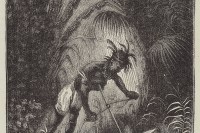
Boris Johnson claims that in his first year at Oxford he attended just one lecture. Delivered in the crepuscular gloom of the Pitt Rivers Museum, it was about Rapa Nui, the tiny Pacific island 2,200 miles from mainland Chile. As a boy, Johnson had read the Norwegian adventurer Thor Heyerdahl’s Aku-Aku: The Secret of Easter Island and had become obsessed. No wonder. For although Rapa Nui – or Easter Island – is only half the size of the Isle of Wight, it has a haunting history teeming with questions. Who first discovered this speck in the Pacific? How did they get there? How did they manage to settle in this place battered by subtropical seas, rat-infested, with no permanent freshwater streams and whose only abundant resource was stone? Were they cannibals?

Is China riding for a fall?

More from Books

The West gets China wrong. Spectator readers know the country as a vampire state feasting on foreign intellectual property and spewing out phony economic data in its thirst for wealth and power. It certainly is these things – but it also isn’t. It is more complex, and telling only half the story is ultimately self-defeating. While there is plenty to appal us about modern China, there is also much that we can learn from it. In Breakneck, Dan Wang reveals both sides of the ledger. ‘Too many outsiders see only the enrichment or the repression,’ he complains. His ‘big idea’ is that China is an engineering state, building at breakneck speed, whereas the United States is a ‘lawyerly society’ that has forgotten how to get stuff done.

The short, restless life of Robert Louis Stevenson

More from Books

The discriminating Argentinian novelist Jorge Luis Borges once revealed his fondness for ‘hourglasses, maps, 18th-century typography, etymologies, the taste of coffee, and the prose of Stevenson’ – a list that was quirky and eclectic, adjectives that neatly encapsulate Robert Louis Stevenson himself. The story has often been told – but it’s a good one – of how the wiry, velvet-jacketed Stevenson emerged from Edinburgh’s haute bourgeoisie to become a hugely successful writer, before ending his shortish, sickly life on the Pacific island of Samoa in 1894, a revered expatriate married to a wilful American woman a decade his senior.

The concept of ‘the West’ seems to mean anything you like

More from Books

A hundred years ago, T.S. Eliot wrote to Geoffrey Faber, for whose publishing company he had just started work, complaining: ‘The Defence of the West… is a subject about which everyone thinks he has something to say.’ Plus ça change? Back then, people were coming to terms with a war that had shown the West to be neither as unified nor as civilised as had been assumed. A century on, American isolationism, demographic decline, mass immigration, Islamism and a slow but decisive shift in global economic gravity are giving commentators the opportunity to bloviate endlessly about the decline/suicide/end/decay/of the West. But what exactly it is that we are defending or lamenting is far from clear. Georgios Varouxakis’s The West attempts to answer that question.

What has the reparations movement ever done for victims of modern slavery?

Lead book review

Slavery was – and importantly continues to be – a moral abomination. Its existence in the 21st century is a disgrace. Whole communities such as the Uighurs are subject to forced labour; two years ago it was estimated that 5.8 million people were living in slavery in China. And slavery is a problem much closer to home. Immigrants in the West are also at risk. A student of mine, an Indian national, enquired about the possibility of working at a Brick Lane curry house. He was told that they would ‘employ’ him, but that he would have to surrender his passport and sleep in a locked room on the premises.

Exploring the enchanted gardens of literature

Lead book review

‘If Eve had had a spade in paradise, we should not have had all that sad business with the apple,’ claims the narrator of the novel Elizabeth and her German Garden (1898). The author, Mary Annette Beauchamp, eventually adopted the pen name Elizabeth von Arnim, merging her identity with the fictional character she had created. Both Elizabeths lived in Nassenheide in Pomerania (now Rzedziny, Poland), but whereas the fictional one had a spectacular garden, with a majestic clematis ‘Jackmanii’, giant poppies and delphiniums, the real Elizabeth, according to E.M. Forster (who was briefly employed as a tutor to the von Arnim children), did not have much of a garden at all.

Horoscopes and horror – the reign of Septimius Severus

More from Books

Rome’s first African emperor, Septimius Severus, was renowned during his reign (193-211 AD) for the mass killings of his rivals (ruthlessness even by ancient standards); for his genocide against the Scots (a rare recourse, despite Rome’s bad reputation as imperialists); and his budget-stretching generosity to his soldiers. He had an unusually glamorous Syrian wife, Julia Domna, who indulged her pet philosophers and her husband’s superstitions while setting a hairstyle trend. He had women Christians thrown to wild animals. His two sons, Caracalla and Geta, notoriously hated each other.

A simple life fraught with difficulties: Ruth, by Kate Riley, reviewed

More from Books

‘The only solution for anger at your husband is to bake him a pie,’ says the eponymous heroine of Kate Riley’s first (and, she claims, last) novel, Ruth. ‘She heard it first from her mother and understood: daily acts of love were the best way to express anger.’ This is advice that Ruth both eyerolls and obeys. Born in the late 1960s and raised in a closed, communist, Christian community, she’s a beguiling, original character whose playful wit and innocent anarchy poke holes in the bubble world she inhabits without ever trying to push her way out. Instead, she invites us to imagine a society in which there are no possessions or individual choices, no recorded music or tampons, but lots of tray bakes and time to think.

Art and radicalism in 1930s Britain

More from Books

What is art for? How can it, should it, relate to the political framework of its time? How far can it shade into ‘propaganda of the imagination’? These are some of the questions threading through Andy Friend’s compelling account of the first decade of the Artists International Association, or AIA, a vital but under-explored British movement welding art and politics against the growing threat of international fascism.  The story opens in 1933 in the candlelit rooms of Misha Black above Seven Dials, Covent Garden, where a dozen impecunious jobbing artists met to discuss a sensational report from the Soviet Union.

Ignorance, madness or folly – what exactly constitutes stupidity?

More from Books

Best remembered now in the English-speaking world as a lyricist, Friedrich Schiller is often quoted for his line: ‘Against stupidity the gods themselves struggle in vain.’ I was waiting for that observation in A Short History of Stupidity. It didn’t appear, but Stuart Jeffries assembles an impressive team of thinkers who have come to the same conclusion. You can’t win: imbecility will always ace you. The great crime for Socrates was ignorance – something often mistaken for stupidity There is of course the question of what exactly constitutes stupidity. It’s a hard thing to pin down and the definition strays into many areas. Jeffries offers a learned, picturesque ramble through world civilisation in an attempt to come up with some answers.

Sebastian Faulks looks back on youth and lost idealism

More from Books

I must say, calling a book Fires Which Burned Brightly promises much. At best, from the jaded reviewer’s point of view, an autobiography of delusional self-aggrandisement; at worst, a wild mismatch between the, well, incendiary language of the title and the potentially humdrum contents. It might have been dreamed up by a master satirist intending to inflict maximum damage to the reputation of that noted gentleman of letters, Sebastian Faulks. I once invented a novelist named Julian Sensitive, whose only claim to fame was an autobiographical novel called, after T.S. Eliot’s Prufrock, ‘My Trousers Rolled’. That was a crude joke compared with the hilarity inspired byFaulks’s title.

Courage and humour in the face of unimaginable grief

More from Books

In the face of unendurable pain that must be endured and unimaginable loss that must be imagined, jokes should not be resisted or turned away. Miriam Toews, describing the day that her father ended his life, remembers him assessing the outfit – torn jeans and a green hoodie – that she had been wearing for a fortnight. ‘Did you have much trouble deciding what to wear?’ he asked as he left his ham sandwich uneaten at a family lunch. Afterwards, he made his way to the railway tracks. A dozen years later, Miriam’s older sister Marjorie died by suicide in the same manner the day before her 52nd birthday. Toews wrote about her father’s life in the non-fictional Swing Low, and about her sister in the astounding novel All My Puny Sorrows.

Alchemy – the ultimate fool’s errand

More from Books

Alchemy, astrology and medicine (before the triumph of germ theory): three worthless intellectual systems which provided a good living for many into the 18th century and even beyond. Alchemy turned into chemistry; astrology was divorced by astronomy; and medicine (which might have become Pasteurism or Listerism) somehow kept its old name while abandoning all its old therapies. There have always been people with the good sense to say that alchemists and astrologers were charlatans, and doctors were more likely to kill you than cure you, but few listened. After all, all three could claim to be ancient, respectable forms of learning. And all three were too good to be true. Who does not want wealth, foresight and good health?

The joyless rants of Andrea Long Chu

More from Books

Andrea Long Chu is the poster girl critic of the American progressive left. Writing primarily for New York magazine, she made her name with takedowns of celebrated novelists such as Hanya Yanagihara, Bret Easton Ellis and Zadie Smith. In 2023, she was awarded the Pulitzer Prize for reviews that ‘scrutinise authors as well as their works’. Refusing to separate art from artist is, of course, central to both critical theory and wider progressive politics. ‘If that makes me an ideologue, so be it,’ Chu writes. Authority is a compilation of these pieces, two new essays, and others that Chu published between 2018 and last year. ‘Why shouldn’t a book review be personal?’ she asks. ‘It’s my understanding that persons are where books come from.’ Fair enough.

There’s something about Marianne – but can French identity be defined?

Lead book review

In October 2018, Andrew Hussey, the convivial and courageous observer and analyst of the political and social travails of modern France, was cycling back to his office after lunch through the rather staid and un-bohemian environs of the Boulevard Raspail on the Left Bank in Paris. To the ‘middle-aged man who already has a heart condition’, the scene into which he pedalled near the Montparnasse cemetery was terrifying, but to the veteran historian of the fractious Fifth Republic not particularly unusual. Parisians were sitting on café terraces and queuing for ice cream while just around the corner ‘a mini-civil war’ was taking place.

Will we resist the bacteria of the future?

More from Books

Every doctor can remember a time when bacterial infection laid waste to their patient with hair-raising speed and virulence. The most indelible for me occurred a decade ago during surgical night shifts. Again and again I was called to the bedside of a young woman with the ‘flesh-eating bug’, or necrotising fasciitis. By the time she’d presented to A&E, a recent graze to her leg was causing such disproportionate pain that her family had been forced to carry her. When the surgeons opened up the limb, they found carnage. Group A streptococcus – a bacterium that benignly colonises the throats and skin of millions of us – had burrowed from the graze into the deepest tissues, where it dissolved flesh with the ease of battery acid.

What this new history of Brexit gets right

More from Books

Why did the United Kingdom leave the European Union? Perhaps it might be better to ask why did it ever join. Tom McTague attempts to answer both questions in this panoramic history of British – and continental – politics from 1942 to the present day. It is to the author’s great credit that he approaches a debate which has polarised politics and shattered friendships with disciplined, but never anaemic, detachment. It is hard to think of many books which leave one admiring both Edward Heath and Enoch Powell more. McTague has set himself a formidable task in seeking to explain the two most consequential decisions of British postwar politics. That he does so not just with fair-mindedness but mastery of narrative sweep and fresh perspective makes this a significant achievement.