Dennis Duncan

Dennis Duncan is an associate professor at UCL and the author of Index, A History of the

The scourge of plagiarism reaches crisis point

From our UK edition

‘Talent borrows, genius steals.’ Do you like it? I just came up with it. No, honestly. Any resemblance to the work of anyone else is purely coincidental. The idea that taking someone else’s words and passing them off as one’s own constitutes a form of theft goes back to antiquity. Aeschines, one of Socrates’s disciples, was said to have read out dialogues appropriated from his master, to which one philosophically informed heckler blurted out: ‘Oh! you thief; where did you get that?’ But, as I learned from Roger Kreuz’s Strikingly Similar, it was the Roman poet Martial who gave us our modern word for this crime. Plagiarius means kidnapper.

A philosophical quest: A Fictional Inquiry, by Daniele del Giudice, reviewed

From our UK edition

A researcher arrives in Trieste to piece together the life of a well-known literary figure. In cafés, bookshops and hospitals he visits the friends and lovers who were part of the writer’s circle. Now dying themselves, they share echoes of a literary scene that has long since dispersed. Women recall how they were celebrated in poetry; men how their conversation sparkled. Someone remembers how the writer once asked if he might immortalise one of his witticisms in his work: ‘Forty years ago I made a joke in a bar, and he said “Oh that’s good! Will you give it to me? I want to put it in my novel.’” But the proposed novel never came. At the heart of this short, dreamlike book is a gap: the great writer around whom this literary society orbited never published anything.

The Assyrians were really not so different from us

From our UK edition

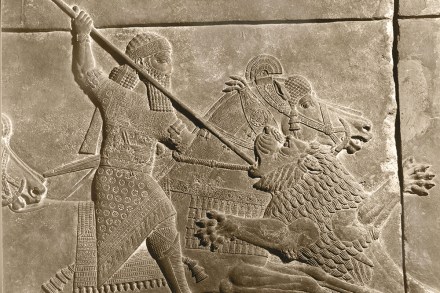
Among the most striking and memorable exhibits in the British Museum are the Assyrian reliefs depicting the royal hunt. These huge panels show the king, Ashurbanipal, shooting, spearing and stabbing a succession of lions, albeit ones that had been trapped beforehand and released from cages for the occasion. It is a magnificent work of art, carved in the city of Nineveh – on the outskirts of modern-day Mosul in northern Iraq – around the middle of the 7th century BC. My favourite section shows the king on horseback, riding full pelt, with no reins in his hands but only his bow and arrow.

Is writing now changing the world for the worse?

From our UK edition

How do you feel about writing? Does that sound like a bizarre question? OK, what about this? Do you worry that you don’t read enough? About the encroachment of screen time into book time? About the decline of letter-writing or penmanship? In universities, where ChatGPT has made a nightmare of written assessments, lecturers have had to fall back on viva voce interviews to determine whether students are the true authors of the essays they submit. My hunch is that writing – the idea of writing – is now more fretted over than celebrated; that what we feel towards this venerable invention is, on the whole, something like a complex of anxieties. At the same time, of course, there is a wild negativity bias going on here.

Are we losing the wisdom of the ages?

From our UK edition

‘Now, what I want is Facts...You can only form the minds of reasoning animals upon Facts: nothing else will ever be of any service to them.’ When Dickens begins Hard Times with these words, spoken by the odious, square-faced Mr Gradgrind, we are left in no doubt that, for Dickens, an education should consist of far more than simply having imperial gallons of facts poured into us until we are full to the brim. The novel’s opening scene is a wink shared between naughty school-children, between Dickens and us, reminding us that teacher is being absurd. Of course knowledge means more than just an accumulation of facts. But what then?

Publisher, translator, novelist, critic and polyglot: the many lives of Italo Calvino

From our UK edition

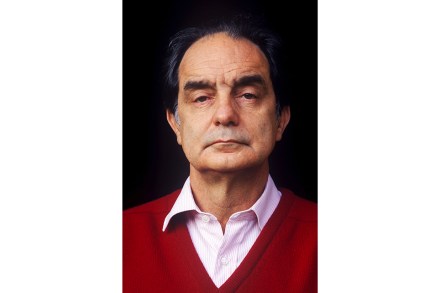
In retrospective mood, just months before the stroke that killed him, Italo Calvino mused on the character of his own writing. ‘The time has come for me to look for an overall definition for my work,’ he wrote. ‘I would suggest this: my working method has more often than not involved the subtraction of weight.’ Lightness – leggerezza – was the ideal he had striven for. If we think of his best known works in English – the dazzling high-wire acts of Invisible Cities or If on a Winter’s Night a Traveller – it would be hard to begrudge him the satisfaction of considering himself successful in his efforts. But let’s look at that formulation again: the subtraction of weight. Lightness here is not froth or naivety.

The whimsy – and casual cruelty – of the memoir index

From our UK edition

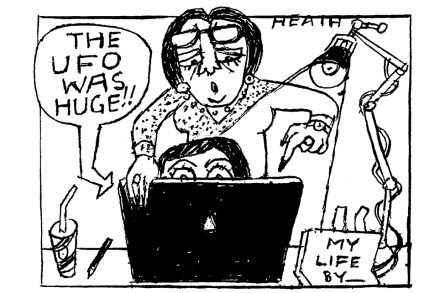
It’s that time when publishers flood bookshops with celebrity memoirs. We all know a sleb autobiography is rarely the work of the celebrity, but the ghostwriter is not the only anonymous voice at work – an indexer can play a quietly subversive part too. One of my favourite index moments is in Shaun Ryder’s autobiography (Twisting My Melon – of course!), towards the end of the S’s: ‘sinus problems, 2; splitting up with Denise, 63; splitting up with Felicia, 320; splitting up with Oriole, 295; splitting up with Trish, 246-7; sunburnt in Valencia, 141-2; teeth, 327-8; thyroid problem, 320, 326; UFOs seen, 33-4.’ Teeth, UFOs, hypochondria, and failed relationships on a doomed, never-learn loop.

Use it or lose it: has the public library had its day?

From our UK edition

I write this in a garret a few doors down from the public library in Muswell Hill, north London. It is a nice irony that a century and a half ago, on the site where the free-to-join municipal library now stands, was a villa owned by one Charles Edward Mudie. In the mid-19th century, Mudie had amassed a fortune by establishing a hugely successful lending library where subscribers could either pay a guinea a year to borrow as many books as they could read, or take the pay-as-you-go option of a shilling a book. For purely commercial reasons, Mudie was a staunch supporter of novels that were long enough (c.200,000 words) that they needed to be broken up into three separate volumes, and his influence was such that publishers would insist that writers bulk out their narratives accordingly.

Spells and bindings

In 1791, Isaac D’Israeli, father of future prime minister Benjamin, published his most famous work, the Curiosities of Literature, a collection of freewheeling mini-essays on whatever literary topics happened to tickle their author’s fancy: ‘Titles of Books’, ‘Noblemen Turned Critics’, ‘On the Custom of Saluting after Sneezing’, ‘Cicero’s Puns’. One of its joys is its capaciousness — completely unsystematic, yet seeming somehow to touch a little on everything. The book is long, but the essays are rarely more than a couple of pages, sometimes less.

library

Written in blood or bound in human skin: the world’s weirdest books

From our UK edition

In 1791, Isaac D’Israeli — father of prime minister Benjamin — published his most famous work, the Curiosities of Literature, a collection of freewheeling mini-essays on whatever literary topics happened to tickle their author’s fancy: ‘Titles of Books’, ‘Noblemen Turned Critics’, ‘On the Custom of Saluting after Sneezing’, ‘Cicero’s Puns’. One of its joys is its capaciousness — completely unsystematic, yet seeming somehow to touch a little on everything. The book is long, but the essays are rarely more than a couple of pages, sometimes less.

Binding love

From our UK edition

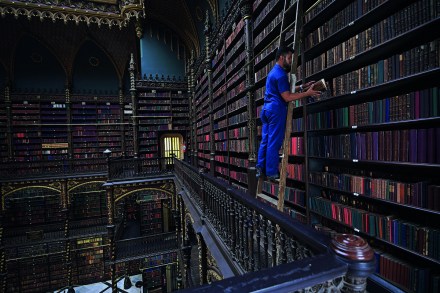
In the spring of 1998, Rolling Stones fans in Germany were disappointed to hear that the band had been forced to cancel a string of gigs. Keith Richards, the ne plus ultra of rock’s wild men, had damaged a rib in a tumble from a ladder while trying to retrieve a book from one of the higher shelves in his Connecticut library. Hide that smirk: it could just be true. Keef, it turns out, has not one but two extensive libraries — on either side of the Atlantic — and even went as far as applying the Dewey Decimal System to bring his sprawling collections into some kind of order. An addictive personality by any measure, Richards clearly has the book-collecting bug — and bibliomania, as Stuart Kells’s entertaining history cautions, can be a cruel mistress.

Method in the madness

From our UK edition

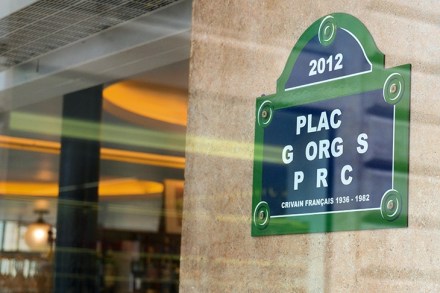
Have you heard of the Oulipo? The long-running Parisian workshop for experimental writing? Even if you haven’t, you might have heard of some of its members: Georges Perec, Italo Calvino, Marcel Duchamp. The group’s stock-in-trade (so-called ‘constrained writing’) is best illustrated by their most notorious production: Perec’s 1969 novel La Disparition which manages to avoid using the letter ‘e’ (and which was miraculously translated into English as A Void). Founded in 1960, the Oulipo spent its first decade in self-imposed semi-secrecy. While its academic sibling, Structuralism, came to dominate literature departments both at home and abroad, the Oulipo watched discreetly in disdain: why are the structuralists so dry, so up themselves?

Reading the reeds

From our UK edition

In 2016, after some unseemly back-and-forth between the Commons and Lords, it was decided that Acts of Parliament should no longer be printed on calfskin. Instead, new acts are now recorded on paper, though, in a classic parliamentary compromise, they will still be bound between vellum covers. Since the first paper mills appeared in Britain at the end of the 15th century —and paper almost immediately became the dominant medium for print — this means that parliament has managed valiantly to hold back the paper tide for over half a millennium. (To be fair, they only stopped writing acts out by hand in 1849, four centuries after Gutenberg.) Meanwhile, over the past 15 years, I have come to conduct most of my daily correspondence by email rather than troubling the postal service.

The forerunner of Google

From our UK edition

On 9 May 1502, a young Spaniard joined the fleet setting sail for the newly discovered Americas. The boy, Hernando, was 13 and his father was Christopher Columbus, ‘Admiral of the Ocean Sea’. Although Columbus père had already crossed the Atlantic three times, this would nevertheless be a journey of almost unimaginable privation. Hernando would witness hurricanes, shark attacks and brutal battles, both with the tribes of the northern Panamanian coast and with mutineers from his own ship. He would suffer fevers, see his father denied entry into the port he had founded a decade earlier, and he would be shipwrecked, for more than a year, on the southern coast of Cuba.