Culture

Culture

The good, the bad and the ugly in books, exhibitions, cinema, TV, dance, music, podcasts and theatre.

Philosophy’s greatest pessimist wasn’t so miserable after all

More from Books

According to the German philosopher Arthur Schopenhauer (1788-1860), people prefer reading books about great thinkers rather than by the thinkers themselves because ‘like is attracted to like and the shallow, tasteless gossip of a contemporary pinhead is more agreeable and convenient to them than the thoughts of great minds’. Thankfully, this contemptuous attitude towards biographers has not deterred David Bather Woods, a professor at Warwick University, from taking a fresh look at one of the most influential yet misunderstood figures in western philosophy. Woods’s prose is clear and compelling, though the book’s thematic structure is confusing. He argues that the defining event in Schopenhauer’s life was the suspected suicide of his father, Heinrich Floris.

The furious tug of war between 18th-century Whigs and Tories

More from Books

A foul-mouthed fantasist with a chin like an ironing board starts a wild conspiracy theory about the King’s brother. An alcoholic racing fanatic turns his gambler’s eye to the ballot box. A maniacal preacher gives such a polarising sermon that he paints himself as a second Christ and tours the country as a sex symbol. These are not the inventions of William Hogarth or Jonathan Swift; they are the figures who divided our political system in two, as George Owers tells us in his delightful new history of the birth of party politics. The Rage of Party traces the fevered rise of Whigs and Tories during the reigns of William III and Queen Anne.

In Putin’s Russia, feminism is an ugly word

More from Books

The excellent Moscow-born journalist Julia Ioffe’s first book recounts a well-known slice of Russian history from a fresh perspective – that of the mighty Russian woman who, it’s said, can ‘stop a galloping horse and run into a burning hut’. And how superhumanly brave and resilient they have had to be. Women were granted sweeping rights following the Revolution, then watched them dwindle for the rest of the century, in law but mainly in practice. What remained was the Soviet obligation to work regardless of gender, which created a country of professional women in every sphere: engineers, cosmonauts, judges, professors and 70 per cent of doctors by the 1970s.

The making of William Golding as a writer

More from Books

It is hard to believe that the 1983 Nobel Prize in Literature would have been awarded to the author of titles such as The Chinese Have X-Ray Eyes, Here Be Monsters or – yes – An Erection at Barchester. But if William Golding had had his way, so it might have proved. Charles Monteith, his loyal editor at Faber & Faber, saved him from himself; and thus it was that those books were called instead Pincher Martin, Darkness Visible and The Spire. For whatever reason, Golding thought himself a monster and his journals seethed with self-disgust Even Golding’s first and most famous novel, Lord of the Flies (1954), started life as Strangers from Within. Its publishing history is almost as well known as its plot (of boys stranded on an island turning savage).

The simple flatbread that conquered the world

More from Books

Pizza is the Italian food that has conquered the world. From Brussels to LA, from Beijing to Buenos Aires, pizzerias are everywhere. But what are the origins of this food, and how did it become so popular? Reading Luca Cesari’sbook made me hungry not only for a thin crust margherita but also to digest the wealth of information about this simple dish. The margherita gets its name from Queen Margherita of Savoy, who, in 1889, on a visit to Naples, summoned Raffaele Esposito, the celebrated pizzaiolo (pizza-maker and hawker) to the palace to try his wares. She so liked the one with tomato, mozzarella and basil (made to represent the colours of the Italian flag) that it was dedicated to her.

The reluctant spy: The Predicament, by William Boyd, reviewed

More from Books

According to the literary critic Harold Bloom, male writers have daddy issues. So keenly do they feel the oppressive influence of their forefathers that when they take up the pen it is to use it as a sword. To produce something new, they must engage their predecessors in a writerly duel to the death. Bloom’s examples are all very highbrow – Blake vs Milton, Keats vs Shakespeare – but the theory applies across the literary spectrum. When William Boyd sits down to write a new spy novel and, removing his pen from its sheath, looks up to assess the field, it is (among others) the faces of Ian Fleming and John le Carré who stare back. What better way to deal with the anxiety of their influence than to create a spy who is not only reluctant but practically monogamous too.

Serenity and splendour: a choice of gardening books

More from Books

This year marks the centenary of Britain’s National Pinetum at Bedgebury in Kent, originally founded to rescue the smog-ravaged collection of the Royal Botanic Gardens, Kew, and now part of a global conservation effort: one third of all conifer species are currently threatened with extinction. To celebrate the birthday, we have Bedgebury Florilegium by Christina Harrison and Dan Luscombe (Kew Publishing, £18), featuring 20 botanical paintings by Bedgebury’s Florilegium Society. This is a group of volunteer artists dedicated to documenting the Pinetum’s remarkable collection of more than 12,000 specimen trees. But perhaps the most beautiful book to cross my desk this year is Melbourne Hall Garden by Jodie Jones (Frances Lincoln, £35), hauntingly photographed by Andrea Jones.

Faith – and why mountains move us

More from Books

Sylvain Tesson’s White unfolds the story of a gruelling ski journey across the Alps during which the author aims to fulfil ‘a long-held dream of transforming travel into prayer’. Born in Paris in 1973, Tesson is a well-known adventure writer whose previous books include The Consolations of the Forest: Alone in a Cabin on the Siberian Taiga, which won awards on both sides of the Channel and was made into a film. As a public figure associated with the far right, Tesson remains divisive in his homeland. His political views do not seem to have dented book sales or literary coverage: one wonders if the same would be true if a travel writer of similar persuasion popped up here.

‘I could turn very nasty – I was an egotistical brute’, says Anthony Hopkins

More from Books

It’s a good job Anthony Hopkins is only an actor, as think what he’d be like as a dictator or grand inquisitor. ‘I could turn very nasty,’ he tells us in his memoir. Doing National Service: ‘I was beginning to enjoy the fisticuffs in my life.’ Encountering a Scotsman: ‘I felt a surge of hatred and anger. I head-butted him and smashed his nose so hard I heard it crack.’ To a director who’d annoyed him: ‘Learn some manners... or I’ll change the shape of your face.’ Mickey Rourke was told: ‘Touch me like that again and I’ll smash your face right into the back of your head.’ Hopkins is a nasty piece of work, and proud of it. He calls himself ‘a vindictive, cynical, insulting, horrible man’, adding for good measure: ‘I was an egotistical brute.

Books of the Year II – further recommendations from our regular reviewers

Lead book review

Philip Hensher I have a theory that Mick Herron’s Slow Horses novels are an ingenious variation on Shakespeare’s Henry IV plays. If, in a future episode, River Cartwright ascends to his kingdom renouncing Jackson Lamb, and if Catherine tells us of Jackson/Falstaff’s death offstage, don’t be surprised. In any case, Clown Town (Baskerville, £22) is a magisterially accomplished novel and Herron a master of vivid voice, showing himself in a plot of shining, machine-like efficiency. The other novel I adored was Tash Aw’s The South (4th Estate, £16.99) – a ravishingly written account of a brief, obsessive passion between two teenagers during a boiling hot Malaysian summer.

The Belgian resistance finally gets its due

More from Books

We are familiar with the myths and realities of French resistance and German occupation, but less so with the story of Belgian resistance. It was highly creditable, spanning both world wars, and has long deserved to be better known. This book should help ensure that it is. The title refers to the legend of the White Lady – la Dame Blanche – whose appearance was said to herald the downfall of the Hohenzollerns, the Kaiser’s dynasty. The name was adopted by a network of 1,084 Belgians who spied for MI6 against the country’s German occupiers during the first world war. According to MI6’s authorised history, this ‘became the most successful single British human intelligence operation’ of that war.

Beaujolais – a refuge for impecunious wine lovers

More from Books

With his three-piece suits, poodle hairdo and bizarrely bendy physique, Tom Gilbey looks like he was created in a secret laboratory beneath the streets of Turnham Green by the Wine Marketing Board. But I have it on good authority that he is a real person. Gilbey came to prominence last year as the self-styled ‘wine wanker’ who ran the London marathon, stopping every mile to taste a wine blind and guessing most of them right. Now we have the inevitable book; and while Gilbey isn’t an elegant prose stylist in the manner of Oz Clarke, Thirsty: 100 Great Wines and Stories (Square Peg, £20) is an enormously entertaining read. It’s part memoir, part guide to wine. The author comes from wine royalty.

Even as literate adults, we need to learn how to read

More from Books

Few readers can claim to be what Samuel Taylor Coleridge called ‘Mogul diamonds’ – those who not only ‘profit by what they read’, but ‘enable others to profit by it also’. If such people were rare in Coleridge’s time, then today, when reading is in dramatic decline, they are scarce enough that even the white rhino might feel a little smug. Anyone seeking a glimpse of this endangered reader could be forgiven for thinking that a university English department was its most likely habitat, but they would be wrong. Behind the brown office doors where academics labour, one is more likely to find the common squirrel, hoarding information and burying it under dense soil.

How the terrorists of the 1970s held the world to ransom

More from Books

At the end of the 1970s, the Illustrated London News printed a special edition to commemorate the decade. What did it focus on? Music, from David Bowie to Bob Marley? Some of the best films Hollywood has ever produced, from The Godfather on? Political crises, such as Watergate and the end of the war in Vietnam? No, there was only one headline: ‘The 1970s: The Years of Terrorism.’ We forget – and perhaps we want to – quite how brutal and random that time could be, with plane hijackings, the Munich Olympics atrocity and bombs going off from the Tower of London to Washington to Singapore, where the Japanese Red Army caused mayhem. In a superb and monumental book, Jason Burke details the principal movements that flourished and to a surprising extent nurtured each other.

Unhappy band of brothers: the Beach Boys’ story

More from Books

Film noir was the term coined by the French in the late 1940s to describe the genre of Hollywood crime movies which probed the darkness that lay in the shadows cast by all that bright Californian sunlight. The Beach Boys, who broke through in the early 1960s with a repertoire that hymned, in five-part harmonies, the Golden State’s promise of sun, sand and waves, bronzed bodies, beach-party ‘babes’, hot rods and open highways, were – and remain – the quintessential Californian band. But their story, an unhappy family saga featuring the three Wilson brothers (Brian, Carl and Dennis) and cousin Mike Love, is, like that of California’s itself, as dark as it is light. Their presiding musical genius, Brian, died in June.

What drove the German housewife to vote for Hitler?

More from Books

‘It happened, therefore it can happen again,’ warned the Holocaust survivor Primo Levi, explaining why witnesses to the horrors of Nazism and genocide must be listened to, and why it is important for future generations to stay vigilant against a repeat of such atrocities. The underlying assumption is that the Nazis’ rise to power and the terrible crimes that followed were preventable. We believe that German democracy need not have died; that Hitler could have been stopped from plunging much of the world into a horrific war and from eradicating the vast majority of European Jews.

Zadie Smith muses on the artist-muse relationship

More from Books

Zadie Smith was born in 1975 in the UK to a Jamaican mother and a British father, and grew up in the ethnically multi-shaded London borough of Brent. Her novels and essays often conjure the polyglot confusion and vibrant streetscapes of Willesden in north-west London where she went to school. Dead and Alive takes us from her beloved Kilburn High Road (Afro-wig emporia, pound shops) to an appreciation of a Stormzy concert at Glastonbury. This fourth essay collection is unfailingly interesting: Smith is uniquely placed to chart the vagaries of life in mixed-up, mixed-race Britain. Some of the greatest essayists of the 20th century were American. (Only a wordy journal such as the New Yorker could accommodate the long stroll, as perfected by Gore Vidal.

Was Cat Stevens the inspiration for Carly Simon’s ‘You’re So Vain’?

More from Books

Essentially this is a book of two halves –before and after Cat’s conversion to Islam in 1977 – and the first half is immeasurably the more engaging. He was born Steven Georgiou in 1948, the youngest of three children, to a Greek-Cypriot father and a Swedish mother, with a much older brother and sister. His parents ran a café, Moulin Rouge, on Shaftesbury Avenue, in the heart of London’s West End, and the family lived above it. He went to a Catholic primary school near Drury Lane and then, having failed the 11 plus exam, to a secondary modern in the City. But he left school at 16 with only one O-level, in art. It was enough to get him into Hammersmith Art School, but he was already more interested in writing songs.

Paul Poiret and the fickleness of fashion

More from Books

Such was Paul Poiret’s influence that he is the only couturier whose clothes are known to have caused several fatal accidents. At a time (1910-11) when fashion was loosening up he persuaded chic women into the hobble skirt, a garment so narrow round the ankles that only tiny, mincing steps were possible, with the result that several tripped over when stepping down from a pavement and one toppled from a bridge into a river where, unable to swim from the constriction around her ankles, she drowned.  In Mary E. Davis’s book, however, this dangerous garment gets only a brief mention.

A treasure chest of myths: The Poisoned King, by Katherine Rundell, reviewed

More from Books

You wait ages for an intelligent, literate children’s book, then two come along at once. There’s Philip Pullman’s The Rose Field and Katherine Rundell’s The Poisoned King. Of the two, Rundell’s is easier on the wrist: 336 pages to Pullman’s 621. She is an accomplished writer, the author of a study of John Donne. A scholarly background is all to the good here, for she has a treasure chest of myths and stories to rummage in. Her Impossible Creatures series (of which The Poisoned King is the second) is based on an archipelago, Glimouria, which holds the endangered creatures of mythology. A map of the islands, in Tomislav Tomic’s illustration, is faintly reminiscent of Pauline Baynes.

The lonely passions of Katherine Mansfield

More from Books

Katherine Mansfield refused to be pinned down. Aged 17, she told a friend she planned to lead ‘all sorts of lives’, already chafing at the limitations of her parents’ bourgeois world. She warned her first lover that she liked ‘always to have a great grip of life, so that I intensify the so-called small things – so that truly everything is significant’. Living, to Mansfield, was a challenge to be confronted head-on, a restless and active process of ‘shedding and renewing’. Her passion for life fortified her through a horrifying succession of troubles. It fed her art; it also exhausted her.  ‘Life’, in its most capacious sense, is the subject of Mansfield’s fiction.

Books of the Year I – chosen by our regular reviewers

Lead book review

Antony Beevor In Captives and Companions (Allen Lane, £35), Justin Marozzi has brought together a scholarly yet vivid history of slavery in the Islamic world in all its varied forms. Everything is covered, from the former slaves recruited by the Prophet, who achieved immense influence, to agricultural slavery, military conscription with Mamluks and Janissaries, the Barbary Coast corsairs who roamed the Mediterranean and the English Channel, and concubinage, right up to Daesh atrocities against Yazidi women. Slavery still exists in a number of countries and the dishonesty surrounding the whole subject has been clouded by the overwhelming emphasis on the Atlantic slave trade. It is a brave project, superbly researched and written, and Marozzi never puts a foot wrong.

Are Vermeer’s paintings really coded religious messages?

Lead book review

The Delft painter Johannes Vermeer, now probably the most beloved artist of the Dutch Golden Age, had an unusual career. His reputation in his lifetime was small. For some reason he painted almost exclusively for the van Ruijvens, so only those who knew the family would have been able to view much of the work. One foreign observer who did see a painting owned by a baker (probably handed over in security for a large overdue account) was incredulous at what the owner claimed was the value of a small picture by an unknown artist. After Vermeer’s death, and the sale of the collection for very little on the death of his patrons’ son-in-law, his name disappeared. He is hardly ever mentioned in any of the exhaustive and insightful 18th-century histories of Dutch painting.

The Wall Street Crash never ceases to fascinate

More from Books

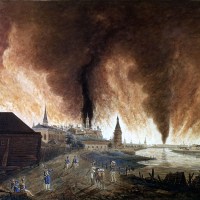
When Winston Churchill dined with the crème de la crème of American finance in New York on 28 October 1929, a facetious toast was made to ‘friends and former millionaires’. Despite a 13 per cent drop in the Dow after another day of market turmoil, the assembled banking titans felt they wouldn’t just survive the maelstrom, they would make more money from it. Churchill, whose finances were perennially chaotic, had caught stock market fever and lost today’s equivalent of almost $1.5 million. On returning to England, he declared the Wall Street crash ‘only a passing episode in the march of a valiant and serviceable people’. In the end, US stocks fell almost 90 per cent between their 1929 peak and 1932.

A celebration of friendship – by Andrew O’Hagan

More from Books

When I interviewed Andrew O’Hagan ten years ago about his Booker longlisted novel The Illuminations, the most striking thing that he said was: Friendship is more important than almost anything. I always thought it was a sort of deliverance, having a good friend, that they would bring a generosity and an unprejudiced eye to your ambition, your hopes and your thoughts in a way that family can’t always do. I mean what is family but a lovable collection of prejudices, some in your favour and some not? Although I agreed with him, I was intrigued that someone who was both a parent and a sibling would feel this way. The importance of friendship is clearly an ongoing preoccupation.

Thrilling tales of British pluck

More from Books

December 1917. For years the Ottoman Turks have been trying to spark a jihad of the world’s Sunni Muslims, hoping that Muslim subjects of the British Empire in India will rise in revolt. Now that Tsarist power in Russia has collapsed, the roads through central Asia are open and the war-weary British have virtually no resources left to prevent the Turkish empire from expanding into India.  Edward Noel, an aristocratic Catholic political officer who is supposed to be in Persia, sends a telegram to his betters from the city of Baku, perched on the western shore of the Caspian Sea and the source of half the world’s oil. He wants to plug the strategic gap in central Asia by raising a force of local troops.

Farewell to Lyra: The Rose Field, by Philip Pullman, reviewed

More from Books

In the middle of The Rose Field, the third volume of Philip Pullman’s The Book of Dust trilogy, Lyra has a conversation with an angel about storytelling. What matters most in a dream, says Lyra, is not information but emotion. It reads like Pullman’s own manifesto: the power of the His Dark Materials and Book of Dust novels is how much they make us feel – about the tie between characters and their daemons, the fear of Lyra’s sinister mother Mrs Coulter, the love between Will and Lyra, the protectiveness of the courageous pot boy Malcolm Polstead... The driving emotional force that carries us through The Rose Field is our desire to see Lyra and her daemon Pan reconciled.