Samantha Ellis

Pride and Prejudice retold in a thousand different ways

From our UK edition

‘It is a truth universally acknowledged that any essay about Jane Austen... must be in want of a poorly rendered paraphrasing of her most famous opening lines,’ writes Ella Risbridger in this sharp, gleefully obsessive field guide to romantic fiction. For her, Austen is the genre’s ‘mother’, and she crisply notes that while George Eliot disparaged ‘silly novels by lady novelists’, ‘she does appear to have read a lot of them’. Risbridger is the author of two cook books, including the award-winning Midnight Chicken (and Other Recipes Worth Living For); a children’s novel, The Secret Detectives; and the editor of anthologies of poetry and food writing. She has read a lot of romance novels, too.
The problem with trying to resuscitate dying languages

From our UK edition

Books about endangered languages tend to be laments, full of shocking statistics and portraits of impossibly frail, ancient last speakers in faraway places. Ross Perlin’s exuberant, radical book blasts that away, exploring, instead, New York, now ‘the most linguistically diverse city in the history of the world’, home to more than 700 languages (of approximately 7,000 on the planet), and a ‘last improbable refuge’ for many speakers of ‘embattled and endangered’ tongues. ‘Far from being confined to remote islands, towering mountains or impenetrable jungles, they are now right next door.’ So one block of flats in Brooklyn is a ‘vertical village’, home to 100 of the world’s 700 speakers of Seke, a language of Nepal.

Reflections on water in the Middle East

From our UK edition

These Bodies of Water begins dramatically (as befits a book derived from Sabrina Mahfouz’s Royal Court show A History of Water in the Middle East) in a stuffy little room in Whitehall where the author is being interrogated by a man in a beige mac who is vetting her for top security clearance. It all sounds a bit James Bond, except that Mahfouz is more like an ‘Egyptian Guyanese Nancy Drew’, as a boyfriend joked – extremely unusual in the civil service fast stream as a woman, working-class and Middle Eastern (her father is Egyptian, her mother is Guyanese-British). While her peers laugh off questions like ‘Have you ever had sex with an animal?’, Mahfouz finds herself ‘existing purely in opposition’ for the first time in her life.

Telling tales | 31 December 2015

From our UK edition

Medea says ‘hiiiiiiii’ on the first page of Mallory Ortberg’s hilarious book, which puts smartphones in the hands of literary heroes, heroines and their writers; ‘it’s Glauce right??’, Medea continues, squealing ‘when is the WEDDING/ I hope you guys have the Argonauts as groomsmen/ and they do the sword thing/ you know where they make the little roof with their swords/ and you run down underneath it’. From this startling opening, Ortberg romps through the canon. Hamlet has teenage tantrums about the sandwiches his mother brings up on a tray. Keats gushes about ‘THIS URN’ and Mrs Danvers upbraids Rebecca for bringing in ‘BAGGED tea?

The song of the sirens

From our UK edition

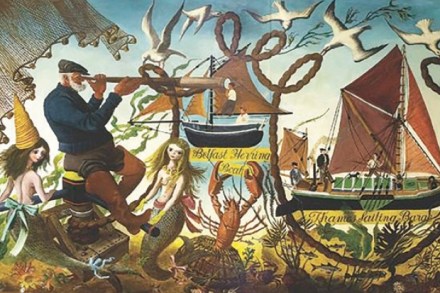
The first mermaid we meet in this intriguing, gorgeously produced book is spray-painted in scarlet on a wall in Madrid, holding a heart not a mirror. Not your average mermaid, then; but as the folklorist and playwright Sophia Kingshill delves further into their complex cultural history, it becomes clear there’s no such thing. Mermaids can be gorgeous but deadly, like the ones in Pirates of the Caribbean who lure sailors into the sea, then bare their horrible fangs and move in for the kill. They can be vulnerable, like Ariel in Disney’s joyous The Little Mermaid. They can be harbingers of storms, or symbols of female inconstancy.‘It’s always a risk to meet a mermaid,’ writes Kingshill.