Anne Margaret Daniel

Meeting Jay McInerney, Manhattan’s sassiest social novelist

Since his debut novel Bright Lights, Big City appeared in 1984, Jay McInerney has been one of the best-known writers whose work is mostly grounded on the long, skinny, granite-bedrocked river isle the Lenape called Manahatta, “island of hills.” He has lived in town for most of the past four decades too, and currently divides his time between a Village penthouse apartment and Water Mill in the Hamptons. McInerney walks into the lobby of the Marlton Hotel on West 8th Street, just paces from Washington Square, and heads turn. Young lovelies on their laptops with Mission Control Center-sized cans over their ears and chic hairstyles look up and blink, appealingly. Waiters slide swiftly to his side.

The photographer who connects Bob Dylan and the Beatles

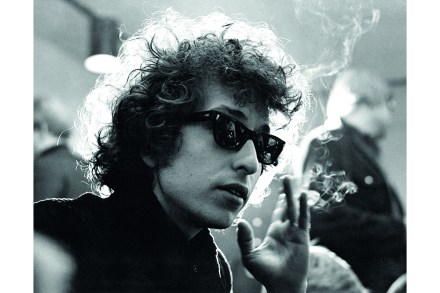
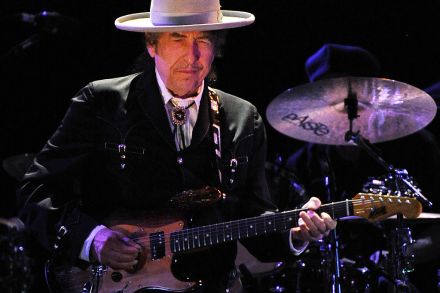
MAX JONES: “What do you think of the Beatles as artists and people?” BOB DYLAN: “Oh, I think they’re the best. They’re artists and they’re people.” —Melody Maker, March 1965 For more than 60 years, people have been fascinated by the connections between Bob Dylan and the Beatles. All were born during World War Two. All loved the music of Little Richard and Elvis Presley and Eddie Cochran; all were blues fans swept off their feet by rock and roll. Dylan was a Minnesota boy who early in his life became the avatar of the American folk scene, and then a protean man containing multitudes, both musically and otherwise.

bob dylan

The many David Bowies

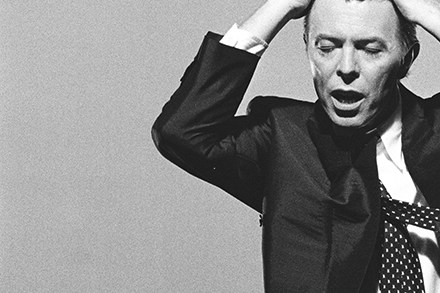
Alexander Larman is the author of a biography of John Wilmot, Earl of Rochester, and of Byron’s Women. Reading Larman’s new biography of David Bowie, one gets the sense that this could have been the end of a trilogy, given all three men’s talent and excesses. In fact, Bowie once considered playing Byron in a movie. Larman’s focus in Lazarus is on Bowie’s career from the end of the 1980s through to his final works: the musical Lazarus and the album Blackstar, the artist’s last gift to his fans, released on his 69th birthday – two days before his death from liver cancer in 2016.

bowie
hemingway

For whom the bell tolls

Close your eyes and imagine you’re married to Ernest Hemingway. Now, imagine it twice as bad, and you’ll be approaching the life story of Mary Welsh Hemingway. Hemingway was married four times: to Hadley Richardson in 1921, to Pauline Pfeiffer in 1927, to Martha Gellhorn in 1940 and to Mary Welsh in 1946. In every swap, he divorced his current wife for her successor. Mary wrote her own memoir, How It Was, after Hemingway’s death in 1961. Now Timothy Christian has written a well-researched and intensely detailed look at the life of a fascinating woman who became the steward of Hemingway’s literary estate and reputation long before he died. Mary Welsh was born in 1908 and raised in rural Minnesota.

How the teenage Carole King struck gold

From our UK edition

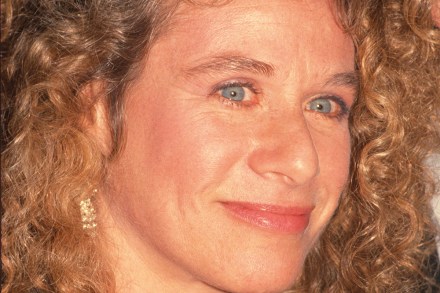
On 7 December 2015 the Kennedy Centre Honours were awarded to Carole King, George Lucas, Rita Moreno, Seiji Ozawa and Cicely Tyson. King sat by the White House Christmas tree during the afternoon reception wearing her medal and laughing as Barack Obama recited the most familiar of her thousands of song lines: ‘You make me feel like a natural woman.’ Obama grinned: ‘I think I just became the first president ever to say that... It sounded better when Aretha said it.’ That evening the tribute to King as a singer-songwriter included performances from James Taylor and the cast of the Broadway spectacular Beautiful: The Carole King Musical and concluded with an astounding performance by Aretha Franklin of ‘(You Make Me Feel Like) A Natural Woman’.

Sam Shepard’s life was as dramatic as his theater

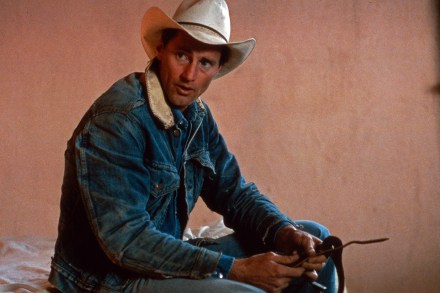
Sam Shepard and I crossed paths several times when we were both living near Charlottesville, Virginia, he with Jessica Lange and their family, and me as a student at the University of Virginia. He towered over passersby on the Downtown Mall, walking as if invisible spurs should be clinking on his bootheels, mane of dark floppy hair pushed back off his forehead and behind his ears, keen eyes above a quick grin. I last saw Shepard 20 years later, having a coffee and reading the Daily Racing Form in a Greenwich Village restaurant; he looked even better then. He was a true Renaissance man. There he was, on Bob Dylan’s Rolling Thunder Revue tour in 1975, charged with writing a screenplay for a movie somehow set in the concert tour.

sam shepard

Like Bob Dylan in the movies

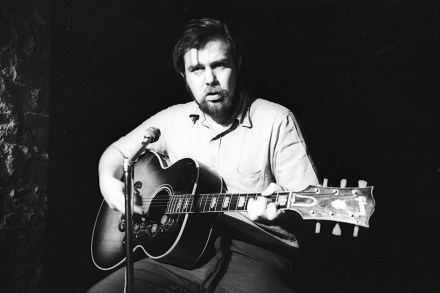
The Bob Dylan biopic A Complete Unknown has opened worldwide to largely positive reviews. Negative ones have focused on the silly quibble that fiction is not fact: the story told in the movie of Dylan’s rise to fame, from his January 1961 arrival in New York City as an unknown, folk-obsessed teenager from the Minnesota Iron Range, to his electrified electrifying performance at the Newport Folk Festival in July 1965, does not strictly hew to actual biography. Recently the New York Times made the unfathomable decision to take A.J. Weberman, best known for going through the Dylans’ garbage when they lived in Greenwich Village in the early 1970s (and getting thumped by Dylan for stalking), to see A Complete Unknown.

Dylan

The golden days of Greenwich Village

From our UK edition

This multitudinous chronicle is not the story of the folk music revival. Rather, it’s not only the story of the folk scene in Greenwich Village from the late 1950s through the early 1980s. Ambitiously, sometimes overwhelmingly, but always fascinatingly, David Browne – a senior editor at Rolling Stone – composes his book of interconnected stories stemming from jazz, blues, folk, folk-rock and all the complementing, competing musical genres that could define what’s been played in the basement nightclubs and coffee houses in this small area of New York City since the early 20th century. He takes his title from the talkin’ blues, the direct ancestor of rap, and he is, like the writers of those blues, a born storyteller.

Kevin Barry’s latest novel is bursting with energy, brutality and poetry

"He walked as calamity. He walked under Libra. He was living all this bullshit from the inside out. Oh, he scathed himself and harangued and to his own feet flung down fresh charges. But there were dreams of escape, too — one day you could ride south on a fine horse for the Monida Pass.” Well met by moonlight, Tom Rourke, doper and dreamer, formerly of County Cork, now a miner in Butte, Montana, in 1891. Welcome to yet another wild and whirling world made by Kevin Barry. Barry’s first collection of short stories, There Are Little Kingdoms, appeared in 2007; he was already celebrated in his native Ireland as a creator of darkly comic troubled characters compassionately drawn.

Barry

Was the flapper style of the 1920s so liberating?

From our UK edition

I had held Beauty’s sceptre, and had seen men slaves beneath it. I knew the isolation, the penalty of this greatness. Yet I owned it was an empire for which it might be well worth paying. —Olivia Shakespear, Beauty’s Hour (1896) All the Rage is a perfect title for a book about terrible beauty. The phrase means what’s fashionable at a particular time; but rage is a violent, sudden anger, stemming from the same Latin word that gives us rabies – mad, passionate, dangerous. Beauty, and its attainment, preservation and curse, are all things Virginia Nicholson chronicles and analyses in this compelling history spanning a century and focusing on its western, female manifestation.

Copyright chaos grows deeper by the minute

From our UK edition

The law doth punish man or woman That steals the goose from off the common But lets the greater felon loose Who steals the common from the goose The authors of a fascinating new look at the patchwork chaos called copyright begin their book with this epigraph from an ancient English protest song against fencing, and thereby privatising, common land. David Bellos, a comparative literature professor at Princeton University and winner of the first International Booker Prize in 2005 for his translations of Ismail Kadare, and Alexandre Montagu, a lawyer specialising in intellectual property and new media law, have written a timely history of a ‘relatively simple idea – that authors have rights in the works they create’.

The great late Yeats

The 1923 Nobel Prize in Literature was awarded to William Butler Yeats “for his always inspired poetry, which in a highly artistic form gives expression to the spirit of a whole nation.” Informed of the prize late on the night of November 14 by the editor of the Irish Times, the fifty-eight-year-old Yeats and his wife George sat up taking telephone calls and telegrams for a couple of hours. Then, according to Yeats’s sister Lily, the couple went down to the kitchen and cooked some sausages before going to bed. The next day, the Yeatses went out and began spending some of the check Yeats would receive in December.

yeats

Bob Dylan’s tower of song

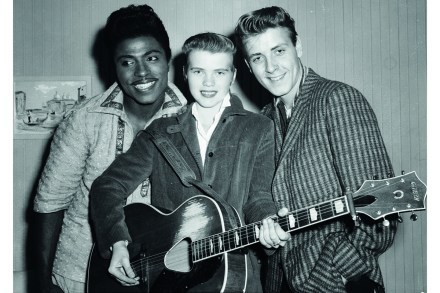
“He doesn’t write on drugs, he doesn’t write on liquor, he writes on everyday occurrences.” — Beatty Zimmerman, Bob Dylan’s mother, 1999. After you admire the cover of Bob Dylan’s The Philosophy of Modern Song, and its triptych portrait of Little Richard, Alis Lesley and Eddie Cochran in their prime, open it to the title page. There, in pulp-fiction red, is a little crimson lightning bolt. On the next page, there is a photograph of the twenty-two-year-old Elvis Presley — the man who popularized the lightning bolt, with his logo “TCB” or “Taking Care of Business in a Flash” — in a Memphis record store, looking through just-released bounty like “Here’s Little Richard” and “A Tribute To James Dean.

Dylan

The music that inspired Bob Dylan

From our UK edition

In Folk Music, Greil Marcus has captured an entire world of the creative and cultural development of the artist known as Bob Dylan in a single book. He not only tells a Dylan biography in seven songs but creates an autobiography of his own long career as a writer on music and America, as well as a rich history of American folk songs and the new life they engendered as Dylan sat down to write his own. How does he do it, I’ve often wondered when I’ve read him in the past. This time, I’ve no answers at all – only admiration and respect. Other biographies of Dylan (a growing number) often tell you more about their authors than their subject.

Bob Dylan, the song and dance man

In Folk Music, Greil Marcus has captured an entire world of the creative and cultural development of the artist known as Bob Dylan in a single book. Marcus not only tells a Bob Dylan biography through the study of seven songs, he also creates an autobiography of his own long career as a writer on music and America — as well as a rich history of American folk songs and the new life they engendered as Dylan sat down to write his own. How does Marcus do it? I’ve often wondered as I’ve read him in the past. This time, I have no answers at all, only admiration and respect. It is far from unusual for other biographies of Dylan — and there are a shelfful — to tell you more about the biographers than their subject.

Dylan

On the road with Bob Dylan

Bob Dylan has just concluded the first leg of his revitalized “Never Ending Tour,” which was paused, along with the world, after March 2020. Scheduled to travel to Japan last April, Dylan canceled his dates in Tokyo and Osaka, and presumably sheltered at home in California. He wasn’t resting, though. Just after midnight on March 27, 2020, his website posted a nearly 17-minute-long song, “Murder Most Foul,” circling around and about the assassination of President John F. Kennedy. Excited rumors of a record of new Dylan songs proved true when Rough and Rowdy Ways, his 39th studio album, was released on June 19, 2020. A year and a half later, Dylan and a newly constituted band finally took the record on tour.

No stone left unturned: The World of Bob Dylan reviewed

From our UK edition

In May 2019, the first World of Bob Dylan conference was held in Tulsa, Oklahoma. Why Tulsa? Because Dylan’s archives are there, acquired in 2015 by the George Kaiser Foundation and the University of Tulsa for a reported $15-$20 million. Tulsa was already home to fine museums and important historical and archival collections. In a statement in 2016 Dylan said he was glad that his archives ‘are to be included with the works of Woody Guthrie, and especially alongside all the valuable artefacts from the Native American nations’.

The odd couple: John Keats and F. Scott Fitzgerald

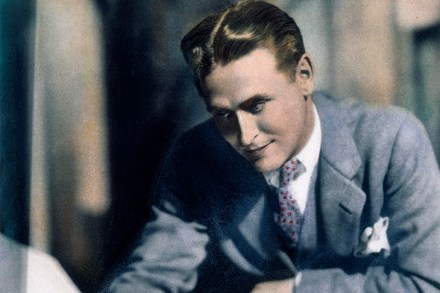
On a shard of paper, some time in the bleak 1930s, F. Scott Fitzgerald incorporated a favorite line from one of his favorite poets, John Keats, in a short verse of his own: 'Don’t you worry I surrender Days are long and life’s a bender Still I know that Tender is the Night.' Keats was a Romantic, perhaps the Romantic, with his lyric gift and tragically brief life. Fitzgerald loved the Romantic poets, and romance in the lower case, but was at the heart’s core a modernist, far more egoist than romantic, and quite hardboiled. The little quatrain above is rather like T.S. Eliot’s ‘jug jug’ in The Waste Land — homage of a sort, but also showing ironic distance, and no intention of writing like Keats.

Fitzgerald

The odd couple: John Keats and F. Scott Fitzgerald

From our UK edition

On a shard of paper, some time in the bleak mid-1930s, F. Scott Fitzgerald incorporated a favourite line from one of his favourite poets, John Keats, in a short verse of his own: Don’t you worry I surrenderDays are long and life’s a benderStill I know thatTender is the Night Keats was a Romantic, perhaps the Romantic, with his lyric gift and tragically brief life. Fitzgerald loved the Romantic poets, and romance in the lower case, but was at the heart’s core a modernist, far more egoist than romantic, and quite hard-boiled. The little quatrain above is rather like T.S. Eliot’s ‘jug jug’ in The Waste Land — homage of a sort, but also showing ironic distance, and no intention of writing like Keats.

Changed utterly | 30 May 2019

From our UK edition

All cities are shapeshifters, but London is special. London is a palimpsest of places gone but not lost. Even as it is taken apart and rebuilt reaching to the skies, London remains rooted in the lay of the land, shore ditches, hills and fields still giving their names to the neighbourhoods upon them, and all bisected by the great snaky tidal river. Born in Burnt Oak, Robert Elms grew up on one of those hills — Notting — and he would be sad but not remotely surprised that a Google search today cites first the film and then offers the question: ‘Is Notting Hill a real place?’ It was, he would say. Or, once upon a time, it was. Today, ‘it is international, aspirational, like a living Patek Philippe advert’.