Culture

Culture

The good, the bad and the ugly in books, exhibitions, cinema, TV, dance, music, podcasts and theatre.

Houdini looks bound to captivate us forever

More from Books

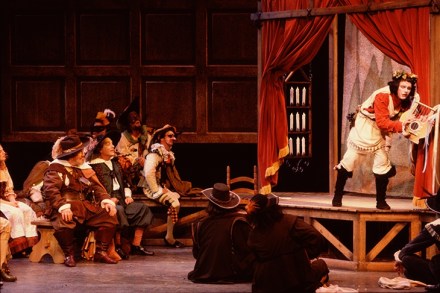
Give thanks to the person who invented Venetian blinds, they say, or it would be curtains for us all. Curtains is mostly what people got at a Houdini show. He’d come on stage, be locked up or sealed in or tied down, and then the curtains would descend. They could stay drawn for an hour or more. Ostensibly this was to ensure that nobody saw him effect his escape, but in reality it was to heighten the drama. Houdini was usually free within a couple of minutes, but he knew audiences didn’t want things to be too simple for him. As he put it: The easiest way to attract a crowd is to let it be known that at a given time and a given place someone is going to attempt something that in the event of failure will mean sudden death.

The delicate balance between God and Caesar in modern Britain

More from Books

At a well-reported political meeting at London’s Queen’s Hall during the first world war the preacher and suffragette Maude Royden used a phrase that would pass into history. ‘The Church shall go forward along the path of progress,’ she argued hopefully, ‘and be no longer satisfied to represent the Conservative party at prayer.’ ‘Conservative’ would soon slip to ‘Tory’, and one of the most popular and potent political epithets of the 20th century was born. There was (and is) much evidence for Royden’s famous phrase. An Anglican-Conservative complex dominated much 19th-century politics when most English — indeed much British — politics could be effectively divided along the lines of church or chapel.

A ‘loneliness pandemic’ could prove as dangerous as coronavirus

Lead book review

The subjugation of nature has formed a cornerstone of the human agenda. How surprising and humbling, then, to find our way of life so rapidly and unexpectedly undermined by a biological force that transcends identity and culture. Still worse, when we discover that the source of this chaos is a sub-microscopic viral particle whose genetic code — simpler than a bacterium — is barely compatible with a living entity. Yet it has brought global civilisation to a standstill.

Roger Scruton’s swan song: salvation through Parsifal

More from Books

This is Roger Scruton’s final book. Parsifal was Wagner’s final opera. Both works are intended to be taken as Last Words: testaments of belief at the end of a long spiritual journey. In the introduction, Scruton identifies the enduring problem in his life, and ours, as: ‘How to live in right relation with others, even if there is no God.’ He gives us his answer: Whether or not there is a God, there is this hallowed path towards a kind of salvation, the path that Wagner described as ‘godliness’, the path taken by Parsifal, and it is a path open to us all. Scruton sees Parsifal as a tale of redemption from the corrupting bondage of erotic love The path of our salvation, then, can be seen in the opera. Parsifal is a retelling of the Grail legend.

Walt Whitman’s poetry can change your life

More from Books

To describe a new book as ‘eagerly awaited’ is almost unpardonable. Yet Mark Doty’s What is the Grass: Walt Whitman in My Life is exactly that. It’s not just that Doty is an extraordinarily fine writer whose every word sings on the page. Poetry has a tendency to come into its own at exceptional times such as our own. William Wordsworth’s 250th anniversary has provoked media reflections on his consolatory power; a recently established Poetry Pharmacy is receiving attention; and social media brims with poems and poets attempting to make sense of what’s happening to us. Arguably there couldn’t be a more apt context for Doty’s book about his lifelong exploration of — and through — the great American poet Walt Whitman.

Much-hyped technological innovation isn’t necessarily progress

More from Books

Modern advances in communication technology, computer power and medical science can sometimes be so startling as to seem almost like magic. It’s easy to get excited about it all — but what happens if we get too excited? What happens if we lean too heavily on technology, convinced that it can solve all our problems? What happens if we begin to see technology in an unrealistic, hyped-up way? These are the questions at the heart of Gemma Milne’s book. The answer — somewhat unsurprisingly — is that over-excitement is a bad thing. Hype can damage scientific progress and in some cases send it into reverse.

Political biographies to enjoy in lockdown

More from Books

Here are ten political biographies, with a leavening of the classics, for those with time to kill in the present house arrest. The danger with such lists is that what has recently entered the memory becomes most prominent; so this one consists entirely of works published in the 20th century. Charles Moore’sThatcher, Leo McKinstry’s Rosebery and Andrew Roberts’s Churchill, all superb works, therefore do not figure; and I have arranged those that do in chronological order of their subjects. John Ehrman started his magnificent three-volume life of William Pitt the Younger in the late 1950s and published the final part in 1996. He was a gentleman-scholar of the old school who undertook pains-taking research but sought to produce a literary work as well as one of history.

Another alien in our midst: Pew, by Catherine Lacey, reviewed

More from Books

It needs authorial guts to write a novel in which details are shrouded, meaning is concealed and little is certain. Step up Catherine Lacey, and welcome. Her previous novels specialised in confounding the reader, taking the frames of road trip and science fiction and giving them a good yank. Now she’s gone full religious allegory on us: or has she? ‘Pew’ is the name the villagers in her novel give to a stranger they find sleeping on a pew in the local church. Lacey’s character offers no name, no story, no age or gender (so let’s use the pronoun they; though I admit I kept thinking of Pew as male, but that may just reflect my preconceptions about taciturn weirdos).

William Sitwell’s history of eating out reminds us painfully of what we’re missing

More from Books

In the concluding chapter of this book the Daily Telegraph’s restaurant critic and recovering vegan-baiter William Sitwell muses on the collapse of Jamie Oliver’s empire last year: ‘His endeavour, passion and hard work wasn’t enough... it was part of a bursting bubble.’ Since then more mid-range chains have announced their imminent demise. Teetering before lockdown, it’s not just the prospect of months of closure and general uncertainty that’s pushing them over the brink but decades of oversupply and a reliance on a cynical model of successful restaurants selling on and out. This book feels timely: a reminder of what we currently can’t have, and how the sector came to be. Sitwell is upfront about his book.

We don’t talk of a ‘working father’ — so why do we still refer to a ‘working mother’?

More from Books

The phrase ‘working mother’ ought to be as redundant sounding as ‘working father’ would be if anyone ever said that: in the UK three-quarters of women with dependent children work. Yet the working mother still feels provisional, something that lockdown has made sharply apparent to many women. Will it be Mum or Dad who claims the spare room, while the loser retreats to the kitchen table? Mum or Dad who does the home-schooling? Who will preserve their professional status, and who will slide into the domestic? The answer is that, in most cases, the woman loses, and her male partner quietly gathers the spoils.

The art of negotiation: Peace Talks, by Tim Finch, reviewed

More from Books

Early on in Tim Finch’s hypnotic novel Peace Talks, the narrator — the diplomat Edvard Behrends, who facilitates international peace negotiations — reflects: ‘Peace talks settle into this repeating pattern after a while, a pattern like that of the floor carpets in places like this conference centre, in which a polygonal weave mesmerises the eye almost to a vanishing point.’ He is commenting on the lonely, relentless routine of the talks, walks, meals and drinks, as official negotiations inch forward, stall, reverse and proceed again over the course of months.Alongside the diplomatic conference, another type of peace talk is underway: the meandering, intimate prose of the novel’s first-person narrative from Edvard to his wife Anna.

Without Joseph Banks, Cook’s first voyage might have been a failure

More from Books

When the wealthy young Joseph Banks announced that he intended joining Captain Cook’s expedition to Tahiti to observe the Transit of Venus, friends asked why he didn’t instead do the Grand Tour. ‘Every blockhead does that,’ Banks replied. ‘My Grand Tour shall be one round the whole globe.’ It was a wise decision, and his voyage on HMS Endeavour would be the making of him.

The deserted village green: is this the end of cricket as we know it?

More from Books

Imagine an archetypal English scene and it’s likely you’re picturing somewhere rural. Despite losing fields and fields each year to developers, the countryside is ingrained in our collective consciousness as our unspoiled national haven. It is Albion’s Garden of Eden, with its Holy Trinity of village church, local pub and cricket ground.Englishness itself, as much as cricket, is the main theme of Michael Henderson’s genre-melding And That Will Be England Gone: The Last Summer of Cricket. The title alludes to Philip Larkin’s poem ‘Going, Going’, and the last summer was 2019, when Henderson, sportswriter and cultural critic, took a journey around the cricket grounds of his past.

From ‘divine Caesar’ to Hitler’s lapdog – the rise and fall of Benito Mussolini

Lead book review

In 1919, an obscure political agitator called Benito Mussolini assembled a ragbag of Blackshirt diehards in the Lombard capital of Milan and launched the movement that was to become, two years later, the National Fascist Party. The party took its name from the classical Roman symbol of authority — an axe bound in rods, or fasces. Once in power, Mussolini introduced the stiff-armed Roman salute after the handshake was considered fey and unhygienic. At times he wore a richly tasselled fez and thrust out his chin pugnaciously for the cameras. For all his posturing and demagoguery, Mussolini was widely admired in pre-war Britain, where Lord Rothermere’s Daily Mail routinely carried flattering portraits of him.

Flower power: symbols of romance and revolution

More from Books

Critics have argued over the meaning of the great golden flower head to which Van Dyck points in his ‘Self-Portrait with a Sunflower’. It probably symbolises the radiant majesty of the painter’s patron, Charles I, but for Van Gogh the sunflower ‘embodied and shouted out yellow, the colour of light, warmth and happiness’. In the Victorian language of flowers the plant denoted pride or haughtiness, but its tendency to turn its head to the sun led Byron’s abject Julia to use its image on a seal for her final letter to Don Juan with the accompanying motto Elle vous suit partout.

Why are musicologists so indifferent to their subjects’ love lives?

More from Books

People often say that the battle for male gay rights has been won, at least in the West, and that may be true. But the drag of the past is still great, and I can think of only two major works between classical and recent times that celebrate same-sex love openly: Shakespeare’s sonnets and Oscar Wilde’s The Picture of Dorian Gray. Light began to break through after the Great War, but largely for fellow insiders. Auden and Isherwood were timid in what they published in their prime. Proust did gay, but stuck to sordid. Only Gide spoke out positively in Corydon, but the journals are almost mute on his sex life. It took Genet, Burroughs and Warhol to place a bomb under the whole culture-wide taboo and proclaim the news: that males could be magically sexy to other males.

René Dreyfus: the racing driver detested by the Nazis

More from Books

I have driven a racing car. On television, it looks like a smooth and scientific matter. It is not. A racing car is a fearsome environment of engulfing pyroclastic heat, metaphor-testing noise, vision-blurring vibration and nauseating centrifugal forces. Ninety years ago it was even worse. The cars had tyres with little grip, feeble brakes and no crash protection whatever. Hot oil would continuously spray over drivers, who raced in linen caps; and an off, as they call excursions, would often result in mutilation or immolation. Faster is the story of René Dreyfus, who flourished in this atrocious atmosphere, in a culture where the public found the achievement of speed a transfixing spectacle.

Would you kill for a cup of coffee?

More from Books

In the winter of 1939, at the San Francisco Golden Gate trade fair, an advertorial film called Behind the Cup told the story of El Salvadorean coffee, from seed to cup. America was the world’s biggest consumer, drinking nearly 60 billion cups a year. It opened with a picturesque image of local Indians in traditional costume dancing under the Santa Ana volcano. A trade commentator intoned: Far to the south, high in the mountains of Central America... studded with volcanic peaks, rich in tropical grandeur... Here at the beginning of the coffee season we find gaiety and laughter. Bankrolled by the coffee planters, it portrayed a Potemkin village of plantation life.

Is this the last round in the great celebrity Punch and Judy show?

More from Books

It’s been tough recently being Woody Allen, something that didn’t look too easy to begin with. Last year Amazon breached his four-film contract, preferring to settle out of court. Actors have lodged their public regret at working with him. He is one of Hollywood’s notable sinking stars. In March, following a demonstration by staff, Hachette pulped this book. ‘Everybody should take responsibility for their actions,’ one protesting employee told the Guardian — anonymously, and apparently without irony. The New York Times called him ‘a monster’. And if you think that’s social rock bottom, in 2016 the Clinton campaign refused his donation. Imagine that: money so tainted that not even the Clintons will bank it.

When Idi Amin threatened to shoot the cook

More from Books

Private chefs keep many secrets and are expected to go to their graves without sharing a morsel of gossip about their employers. Whether cooking for a pop star, tycoon or member of a royal family, chefs must guarantee confidentiality. Chatter can be career-ending or lead to lawsuits. For a few such cooks, revelations could even end in execution. When the Polish journalist Witold Szablowski came up with the winning idea of writing a book about what some of the world’s most notorious dictators ate, it proved a difficult task. Finding just a few living examples of their chefs took more than two years; persuading these individuals to tell their secrets even longer. Many years after their former bosses had died or been deposed, they were still afraid of their past.

How not to get away from it all in the Hebrides

More from Books

Some accounts of moving to the countryside are aspirational and inspiring, but this book is more of a ‘how not to’ guide. Within a few pages it’s clear that Tamsin Calidas’s decision to decamp with her husband to a tiny Hebridean island is highly ill-advised. They take on too much: buying a derelict croft, hoping to renovate the place and live self-sufficiently, with no farming experience. It’s not much of a surprise, especially to anyone with experience of life in the Scottish islands, when the relationship founders and her husband leaves. It’s a gripping start. Surely she won’t remain on the croft alone? Surely things can’t get worse? Astoundingly, both happen.

A Wiltshire mystery: A Saint in Swindon, by Alice Jolly, reviewed

More from Books

This novella is suited to our fevered times. Scheduled to coincide with the Swindon spring festival of literature, now cancelled, it reflects the way we are now living. Inspired by the collective imagination of a Swindon book group, Alice Jolly has written a prophetic story. The narrator is Janey, married to the older Phil and running Hunter’s Grove, a B&B in the Swindon suburbs. Phil is an impediment: ‘Retirement — twice as much husband and half as much money.’ Tuesday afternoons mean tea and sex with Len the builder — ‘Tea with Len, Cider with Rosie, what’s the difference?’ Other than that, Janey is visited by her girl friends, among whom is Carmen, who claims to be a modern-day illuminatus, a confusion of religious thought.

Sadness and scandal: Hinton, by Mark Blacklock, reviewed

More from Books

In 1886 the British mathematician and schoolmaster Charles Howard Hinton presented himself to the police at Bow Street, London to confess to bigamy. A theorist of the fourth dimension, he had looked destined to forge a career that would align him with the most renowned academic figures of the age. Now, with a conviction, a brief imprisonment, and ‘illegitimate’ twin sons attached to his name, his reputation was ruined. Unable to find employment, he fled with his first family to Japan. Mark Blacklock’s novel tells us what happened next. We initially encounter Hinton at Yokohama harbour where, with his four sons and his first wife, Mary, he is about to board ship to America.

Pity the poor stepmother — the most reviled character in folk literature

More from Books

Fairy stories were not originally aimed at children, and we do not know what the first audience responses were; but as humans do not change in certain essentials it seems likely that reactions centuries ago were similar to reactions now — when it is adults who often find many of them gruesome and unsuitable for those of single-figure age. Wicked stepmothers plot torment and murder; small children are banished alone to forests; wolves dress up in grandmotherly bonnets and shawls to deceive — and eventually to kill and eat — rosy-cheeked little girls; beautiful princesses are locked in high towers or tricked into taking poison to fall asleep for 100 years. These tales would not be out of place alongside True Stories of Serial Killers.

Moscow rules in London: how Putin’s agents corrupted the British elite

Lead book review

In the past year alone, Russia-watchers have been treated to books entitled The Code of Putinism; Putin’s World; Putin vs the People; The Putin System and We Need to Talk About Putin — just to mention the ones with Putin’s name in the title. In addition, Robert Service’s Kremlin Winter, Sergei Medvedev’s The Return of the Russian Leviathan and Andrew Monaghan’s Dealing with the Russians have also offered their own insights into the history, politics and future of Putin’s Russia. In this crowded field, is there a place for Putin’s People? Happily, there is.

For Jack Tar, going to sea was the ultimate adventure

More from Books

Seafaring and the rule of the waves — as the song would have it — was an integral part of Britain’s sense of identity for centuries, a fire in the national imagination arguably first sparked by the exploits of Sir Francis Drake and the defeat of the Spanish Armada, rising to full flame with the Battle of Trafalgar and the expansion and consolidation of the Empire, and finally dwindling to embers as imperial ambitions failed and ownership of the seas passed to the United States. It’s a story often told, and known almost too well.But this is not the story that the journalist-historian Stephen Taylor tells.

Clean lines and dirty habits: the Modernists of 1930s Hampstead

More from Books

With its distinctive hilly site and unusually coherent architecture (significantly, most of it domestic rather than civic), Hampstead has always had a singular character. But it is as much a state of mind as an address. Although two of England’s greatest native artists, Keats and Constable, made it their home, over the past three centuries Hampstead has notably attracted waves of exotics: French, Spanish and Jewish. These immigrants, struggling with heavy baggage labelled ‘high culture’, have had a huge influence on the neighbourhood.