Alan Johnson

Alan Johnson: Harold Wilson, Twentieth Century Man

From our UK edition

34 min listen

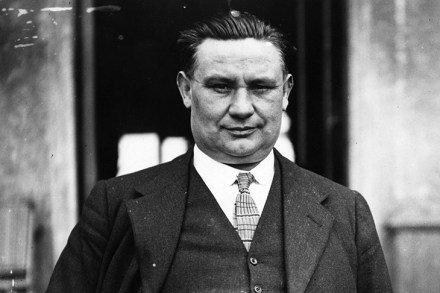
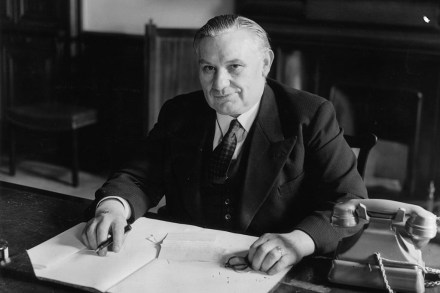
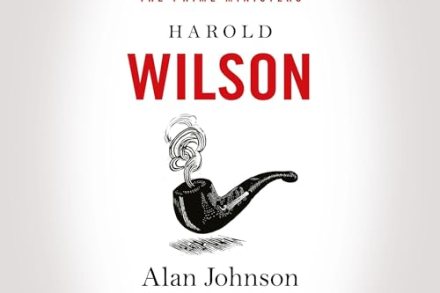
My guest in this week’s Book Club podcast is the former Home Secretary Alan Johnson, who joins me to talk about his new biography of Harold Wilson. He tells me about Wilson’s rocket-powered rise to the top, how he learned oratory on the hoof, why he might have been right to be paranoid… and what really went on with Marcia. This podcast is in association with Serious Readers. Use offer code 'TBC' for £100 off any HD Light and free UK delivery. Go to: www.seriousreaders.
beatles glimpses

We loved them, yeah, yeah, yeah

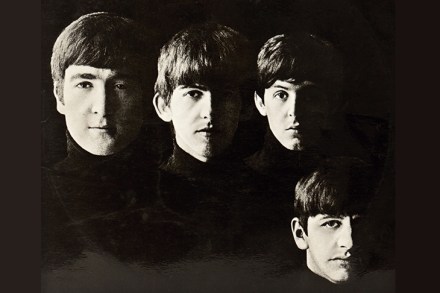
When the Beatles’ first authorized biographer, Hunter Davies, clinched the deal in 1967, his publisher remarked that ‘we know everything we could possibly know about the Beatles and they’ll disappear soon’. In that same year, the philosopher Bryan Magee adopted an incredulous tone in the Listener: ‘Does anyone seriously believe that Beatles music will be...part of daily life all over the world in the 2000s?’But here in the recently released statistics for the Top 10 global recording artists of 2019, among the Taylor Swifts and the Ed Sheerans, 50 years after they broke up — let me introduce you to the band you’ve known for all these years.

It was Bevin, not Bevan, who was the real national treasure

From our UK edition

On a family holiday almost 40 years ago I visited Winsford, the village on the edge of Exmoor where Ernest Bevin was born (and Boris Johnson was raised). Having read the first book in Alan Bullock’s scholarly three-volume biography, I’d become a convinced Bevinite (not to be confused with the followers of Nye Bevan, his near namesake and bête noire). As it was the centenary of Bevin’s birth I expected to find some kind of commemoration, but there was nothing apart from a faded plaque on the cottage he was born in. I asked the woman serving in the Post Office opposite if I’d missed anything, but she’d never heard of the great man.

Andrew Adonis: how Ernest Bevin was Labour’s Churchill

From our UK edition

43 min listen

In this week's books podcast I'm joined by Alan Johnson and Andrew Adonis to talk about the latter's new biography of a neglected great of British political history: Ernest Bevin: Labour's Churchill. He was, in Andrew's estimation, the man who did most to save Europe from Stalin. So why has Bevin been so forgotten? In what way was he Churchillian? What would he have made of the current state of the Labour party? And will we ever see his like again?

From Liverpool’s Cavern to the world stage: how the Beatles became a global phenomenon

From our UK edition

When the Beatles’ first authorised biographer, Hunter Davies, clinched the deal in 1967, his publisher remarked that ‘we know everything we could possibly know about the Beatles and they’ll disappear soon’. In that same year, the philosopher Bryan Magee adopted an incredulous tone in the Listener: ‘Does anyone seriously believe that Beatles music will be ... part of daily life all over the world in the 2000s?’ But here in the recently released statistics for the Top Ten global recording artists of 2019, among the Taylor Swifts and the Ed Sheerans, 50 years after they broke up — let me introduce you to the band you’ve known for all these years.

Teebee or not Teebee

From our UK edition

On the day that Tony Blair left the Commons chamber for the last time (to a standing ovation led by the leader of the opposition) I was moved from Education to Health and, a few days later, was to accompany the new prime minister on his first official engagement — to a hospital in Kingston-upon-Thames. I wandered into the PM’s office next to the Cabinet Room in 10 Downing Street early on that Saturday morning and noticed that something was missing. The sofa had gone. Gordon Brown had wasted no time in differentiating himself from a predecessor to whom the words ‘sofa government’ along with ‘spin’, ‘spads’ and ‘Iraq’ had attached themselves pejoratively like barnacles to a ship’s hull.

Don’t blame the BBC for scrapping free TV licences for over 75s

From our UK edition

The BBC is grappling with a dilemma forced upon it by George Osborne when he was chancellor. From 2020 the Corporation will be forced to fund the full £745 million cost of providing a free TV licence to households where one resident is over 75. One of the most significant achievements of the Blair government was its success in tackling pensioner poverty. When Labour took office in 1997 there were more than two and a half million pensioners living in abject poverty. By 2004, the Institute for Fiscal Studies was reporting that for the first time in recorded history, being old was no longer associated with being poor. This transformation was largely due to the introduction of Pension Credit, which brings pensioner income up to an adequate level.

Diary – 28 February 2019

From our UK edition

The separation between ‘members’ and ‘strangers’ always struck me as being one of the most archaic aspects of the House of Commons. When Natasha Barley, the brilliant director of the Children’s University in Hull, asked me (as the charity’s patron) to arrange a meeting with the Education Secretary, Damian Hinds, I felt obliged to accompany her on my first journey back since retiring as an MP in 2017. Damian graciously agreed to meet us in his Commons office so I led Natasha to the 1 Parliament Street entrance that I’d used for 20 years and showed my ex-MP’s pass to the uniformed officer on duty.

What David Aaronovitch’s brilliant memoir tells us about British communism

From our UK edition

Like most trade unionists in the 1970s and 80s I worked with a fair few communists. Men like Dickie Lawlor, Jock Cowan and Maurice Styles, postal workers for whom all events were viewed through the prism of ‘scientific socialism’. Communism gave them a philosophy by which to live their lives, and they were respected as men of principle even by those who abhorred their politics. Marx may have disparaged religion as the opiate of the people (and, in an even more memorable phrase, the sigh of the oppressed), but it was difficult to avoid the term ‘religious zeal’ when describing the way men like Dickie, Jock and Maurice approached their union work. By the time I knew them they’d long passed the stage of seeking converts.

Of hearts and heads

From our UK edition

Like most trade unionists in the 1970s and 80s I worked with a fair few communists. Men like Dickie Lawlor, Jock Cowan and Maurice Styles, postal workers for whom all events were viewed through the prism of ‘scientific socialism’. Communism gave them a philosophy by which to live their lives, and they were respected as men of principle even by those who abhorred their politics. Marx may have disparaged religion as the opiate of the people (and, in an even more memorable phrase, the sigh of the oppressed), but it was difficult to avoid the term ‘religious zeal’ when describing the way men like Dickie, Jock and Maurice approached their union work. By the time I knew them they’d long passed the stage of seeking converts.

Spectator books of the year: Alan Johnson on why H is for Hawk is A for Amazing

From our UK edition

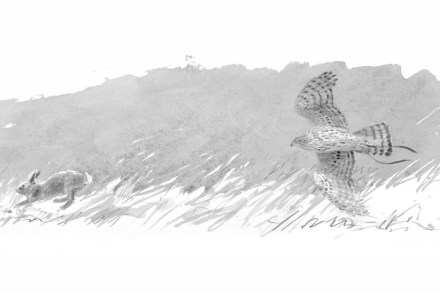
H is For Hawk (Cape, £14.99) is the most ‘A for Amazing’ book I’ve read in a long while. Helen Macdonald weaves together three separate but related strands to produce a majestic tapestry. No reader could fail to be more interested in its primary subject by the end — or to be impressed by the beauty of Macdonald’s prose. Donal Ryan burst on to the literary scene last year with his prize-winning The Spinning Heart. His latest novel, The Thing About December (Doubleday, £12.99), is a powerful rage against the moral vacuum at the heart of the Irish economy’s transformation into a Celtic Tiger, told in the sad, funny and utterly captivating story of poor Johnsey Cunliffe.

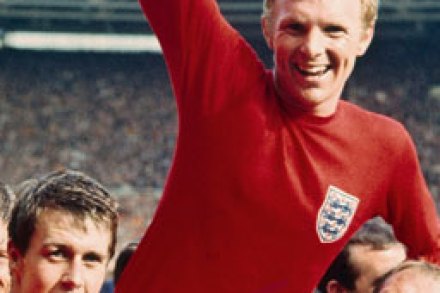
‘Like Superman stopping a runaway train’: when Bobby Moore tackled Jairzinho

From our UK edition

Nothing illustrates the transformation in the working lives of professional footballers since the end of the maximum wage better than the story of how Bobby Moore only just made it to the West Ham ground for his first team debut against Manchester United. Today the players arrive from their luxury mansions insulated from the world in a Lamborghini or Maserati a few hours before kick-off to be pampered by an army of physios, clinicians, sports scientists and dieticians. Young Bobby had to catch a bus from his parents’ home in Barking to travel the three miles to Upton Park along with thousands of fans going to watch him play. Indeed there were so many that the Hammers left-half found himself at the back of a long queue at the bus stop.

Our leaders have betrayed the noble worker. Oh really?

From our UK edition

In his essay on the ‘Peculiarities of the English’, E.P. Thompson gave his theoretical definition of class: When we speak of a class we are thinking of a very loosely defined body of people who share the same congeries of interests, social experiences, traditions and value-system, who have a disposition to behave as a class, to define themselves in their actions and in their consciousness in relation to other groups of people in class ways. But class itself is not a thing, it is a happening. Selina Todd has a snappier and more prosaic definition of the working class (‘The People’) as ‘a class of workers who depended on earning a living and were in that way distinguished from the rich who lived on the labour of others’.

We have not betrayed a generation

From our UK edition

Impatience for improvements in education is something I share. It is not a new phenomenon: in 1439 William Bingham, a London rector, petitioned Henry VI about the ‘great scarcity of masters of grammar’. What amazes me in the modern age is our collective complacency on education since the war. The independent National Foundation for Educational Research pointed out in the early 1990s that reading results in primary schools scarcely budged for almost 50 years. Staggeringly, this appeared to placate governments of both colours who were simply concerned with ensuring that things didn’t get worse. In 1997 we rejected that quiet life.