Culture

Culture

The good, the bad and the ugly in books, exhibitions, cinema, TV, dance, music, podcasts and theatre.

A story of skill, courage and imagination: how Britain’s Sea Harriers stole victory against the odds

More from Books

‘The world,’ Mrs Thatcher was reported to have said, ‘is full of ships.’ With this comment, unlike in many other things, she lacked a common touch. I do not know what she thought about planes, still less jump jets, but no doubt she would have shared the sentiment of Rowland White’s Harrier 809 about their pilots: brave, selfless individuals who showed daring and ingenuity in overcoming the numerically superior Argentine air force to steal victory against the odds. White is an aviation enthusiast, knowledgeable about the technical and logistical challenges fighter pilots face and adept at crafting a fast-paced narrative.

Alexandra Shulman’s unlikely career in fashion journalism should have made a Hollywood movie

More from Books

Alexandra Shulman says that she had ‘no desire to write an autobiography’ — so instead she has written about her clothes, and given us some scintillating reading. For despite having edited British Vogue for 25 years, until she retired in 2017, Shulman’s relationship with fashion at times reads less like a love affair than a marital tiff. Take, for example, the bra, which is the subject of chapter three. ‘There’s a point in most women’s lives when shopping for bras is consigned to one of those special places in hell,’ Shulman writes, revealing that, aged 17, she gave up, and didn’t wear a bra again for 20 years. (‘It wasn’t anything to do with lofty feminist ideals but simply that I hated how they felt.

Arthur Jeffress: bright young person of the post-war art scene

More from Books

The name Arthur Jeffress may not conjure many associations for those not familiar with the London post-war art world, but this wayward, flamboyant, controversial connoisseur and patron who left much of his ‘small but subversive’ collection to the Tate and the Southampton Art Gallery after his death in 1961 certainly deserves his footnote in history. ‘Small but subversive’ could describe the man as well as his collection: his fabulous wealth, inherited from Virginian tobacco plantation-owning ancestry, coupled with his rampant homosexuality, shaped a life of compulsive and conspicuous extravagance, in which art and sex vied with one another for supremacy against the backdrop of Belgravia and a palazzo just off the Grand Canal in Venice.

How Brighton’s gangs became increasingly radicalised

More from Books

Between October 2013 and January 2014, five teenaged boys from Brighton, three of them brothers from a family called Deghayes, travelled to Syria to join Jabhat al-Nusra, an Islamist militia and one of the main jihadist groups fighting the Syrian army. A dozen more young people from Brighton were also eager to go. Radicalisation had swept through the group like a ‘contagion’, catching parents and police unawares and baffling counter-extremism experts. In his disturbing No Return, Mark Townsend traces the various hidden causes of the Deghayes case, events that he claims ‘transformed the entire approach of the government’s counter-extremism programme, both in policy and ideology’.

The cult of Sappho in interwar Paris

Lead book review

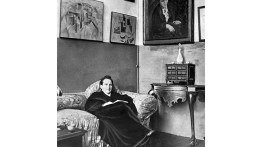
I like a book that can put its point in four outrageous words and use it as its title. Diana Souhami might be right. Without the women her book is devoted to, literary modernism would have looked very different. A consciously new approach to writing met a body of women who were being heard for the first time; the results were compelling. At the beginning of a novel by one of them, Gertrude Stein’s The Making of Americans, the terror of masculine traditions is concisely stated: Once an angry man dragged his father along the ground through his own orchard. ‘Stop!’, cried the groaning old man at last, ‘Stop! I did not drag my father beyond this tree.

Our rivers, as much as our oceans, are in urgent need of protection

More from Books

Geography can be history and history geography — and sometimes the most obvious things are overlooked. Laurence C. Smith’s Rivers of Power endeavours to make us see beneath the surfaces of arterial waters and consider them as carriers of civilisation and arbiters of destinies. Rivers are elemental and ambivalent. They are frontiers and highways, destroyers and fertilisers, fishing grounds and spiritual metaphors, power-givers and flushers of poisons. They are the veins of terrains, which like our own veins carry oxygen or pathogens, and extinction when they fail. They inspired Babylonian and Roman legal codes, outlining ideas about access, drainage, fishing, irrigation, maintenance, navigation, pollution and sharing that still course through 21st-century jurisprudence.

We all need to be let alone —not just Greta Garbo

More from Books

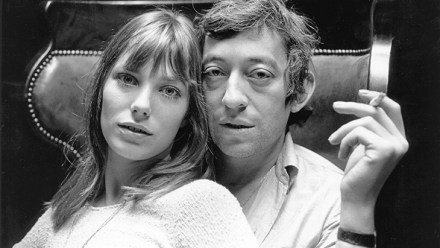
‘You’re never alone with a Strand,’ went the misbegotten advertisement for a new cigarette in 1959. What the copywriter didn’t realise is that smokers often smoke to be alone. As Mass Observation had reported a decade earlier: In an increasingly gregarious world, where fewer and fewer habits and pastimes are entirely individual, the cigarette remains for most people a pleasure that, whatever its social significance, can be enjoyed in entire solitude, and a pleasure that remains entirely individual. At the time, 80 per cent of British men and 40 per cent of women were regular smokers. Smoking was not just a means of inhaling death and of escaping the dead hand of others’ sociability, but briefly put the unbearableness of life behind a smoky veil.

Heated debate over Franklin’s doomed Arctic expedition

More from Books

How refreshing in a time of general sensitivity to find a book intended to infuriate and debunk. Welcome to the desolate Canadian Arctic, to the mystery of the Franklin expedition, which disappeared in 1845 seeking the North-West Passage, and to a world of disagreement about what happened to it. Ernest Coleman’s story of his search for clues to Franklin’s fate is delightfully prejudiced and pugnacious. The purpose of No Earthly Pole is, he writes, ‘to speak out in opposition to the clustering together of some academics and experts who have closed their minds’. Middle-aged lieutenant goes to the ends of the earth to defend the reputation of Queen Victoria’s Navy would make a lovely film.

Mysteries of English village life: Creeping Jenny, by Jeff Noon, reviewed

More from Books

I doubt whether any book would entice me more than a horrible hybrid of crimefiction, speculative fantasy, weird religion and postmodernism. If that makes Jeff Noon’s third outing of the private detective John Nyquist sound like a niche affair I apologise, as it is a rollicking and goose-flesh- inducing novel. Writers such as the late Gilbert Adair have already used the forms of the murder mystery to explore avant-garde ideas, especially in his Evadne Mount trilogy. Noon — the author of those modern classics Automated Alice and Vurt — has created the ultimate mash-up with his Nyquist novels. There is a small joke for bibliophilic readers on the back cover.

It’s still impossible for Horst Wächter to recognise his father as a Nazi war criminal

More from Books

In 1926, while putting in place the repressive laws and decrees that would define his dictatorship, Mussolini appointed a new chief of police. Arturo Bocchini was 36, a lawyer and former prefect of Brescia, a cynical, vengeful, witty and corpulent Neapolitan. Under his 17-year tenure, fascist Italy became one of the most sinister and efficient police states of the years between the wars, with overlapping and rivalrous legal and illegal police bodies, fed by a vast army of informers and spies. Said to number around 10,000 at their peak, these men and women were to be found in every corner of Italian life, from the civil service to the Vatican, from industry to the Royal household, from the army to universities.

The dirt on King David: Anointed, by Michael Arditti, reviewed

More from Books

Michael Arditti has never held back from difficult or unfashionable subjects. His dozen novels, including the prize-winning Easter, as well as Jubilate, The Breath of Night and Of Men and Angels, explore faith in an increasingly secular modern world. Half a century ago he would have brushed shoulders with Graham Greene and Evelyn Waugh, but the ‘religious novelist’ is today an endangered species. Critically acclaimed but published by a small imprint, Arditti has an unusual voice and perspective that deserve a larger audience.

Kashrut dietary laws are ill-suited to lactose-intolerant Jews

More from Books

Until fairly recently, all over the western world there were specialised eating places catering largely for Jews who respected the kashrut dietary laws. From family caffs to white tablecloth establishment, these called themselves ‘dairy restaurants’. They were nearly, but not quite, vegetarian, since they allowed (the kosher-defined) fish with fins and scales. This wondrously weird, heavily illustrated book is a threnody to the now almost vanished dairy restaurant, seeing it as a kind of paradise — though as its author, the artist Ben Katchor, writes: ‘This pleasure garden, Eden, was open to the public and naturally attracted a crowd.

There’s no single trick to making money — just resist a noble calling

More from Books

‘Beauty is pain,’ the model Gigi Hadid asserts. She’s one of the successful, rich people quizzed by William Leith in The Trick: Why Some People Can Make Money and Other People Can’t. We all know a few of the tricks of getting rich. You start by avoiding noble, important professions that benefit everyone but pay poorly: primary school teacher, nurse, book reviewer. Those of my friends and family who’ve made money (although none has made it to rich) went into banking and business. Those who haven’t went into teaching, academic research and museum curating. That much is obvious. Has Leith unearthed a magic formula? His book is part Hunter S. Thompson, part Montaigne: a blend of gonzo journalism and rambling reflection interspersed with learned references.

Excess and incest were meat and drink to the Byrons

Lead book review

‘Some curse hangs over me and mine,’ wrote Lord Byron, and thanks to Emily Brand, who is a genealogist, it is now possible to see why Byron was so darned Byronic: excess, incest and marital misery flowed in the bloodstream. The gloom that looked like a Regency pose was entirely pre-programmed; George Gordon Byron’s script was handed to him at birth. Being mad, bad and dangerous to know was as instinctive to the Byrons as howling at the moon for a pack of wolves. When he compared his family to ‘whole woods of withered pines’, the poet was not exaggerating. Every branch was rotten.

Globalisation is scarcely new: it dates back to the year 1000

More from Books

In Japan, people thought the world would end in 1052. In the decades leading up to judgment day, Kyoto was rocked by a series of epidemics. It seemed the end was truly nigh. Of course they were wrong, but they were hardly the only people to predict the end of humanity on a specific date. For many tenth-century Christians, the year of the expected doom was 1000 AD. Valerie Hansen’s book focuses on this non-apocalyptic but significant year as the beginning of what we would think of as globalisation. Obviously with our European perspective we’re familiar with such major events of the 11th century as the Norman Conquest and the First Crusade. But this book draws us to what was going on in the Americas and Asia as well.

The trade in cadavers is rife with scandal

More from Books

John Troyer, the director of the Centre for Death and Society at the University of Bath, has moves. You can find his interpretative dances punctuating a number of his lectures, which go by such arresting titles as ‘150 Years of the Human Corpse in American History in Under 15 Minutes with Jaunty Background Music’ and ‘Abusing the Corpse Even More: Understanding Necrophilia Laws in the USA — Now with more Necro! And more Philia!’ (Wisconsin and Ohio are, according to Troyer’s eccentric looking and always fascinating website, ‘two states that just keep giving and giving when it comes to American necrophilia cases’.) Troyer’s budding stand-up career has taken a couple of recent knocks.

The nightmare of Okinawa made Truman decide to use the atom bomb

More from Books

The US operation of 1945 to take the island of Okinawa was the largest battle of the Pacific during the second world war. Seven US divisions were used in the operation, approximately half a million men, along with the entire US Pacific fleet of 1,457 ships. The initial assault was led by a landing force of 183,000, which brought with it 747,000 tons of cargo. It was, according to this superbly researched, well-written book, ‘the greatest air-land-sea battle in history’. The US side was led by Lieutenant General Simon Bolivar Buckner Jr, the son of a famous Confederate general. His opponent on Okinawa was Lieutenant General Mitsuru Ushijima, whose force of 60,000 was vastly outnumbered — but the terrain was in his favour.

Have we reached the end of ‘The Great Acceleration’?

More from Books

Ah well. It was a nice try. A few years ago I wrote a book called The Great Acceleration, arguing that the world around us is speeding up and that this is on balance a good thing. Enter Danny Dorling with a new book called Slowdown: The End of the Great Acceleration and Why it’s Good for the Planet, the Economy and Our Lives. Cue a mischievous commission from The Spectator’s literary editor, doubtless hoping for a good old-fashioned nerdfight. The problem with this cunning plan is that Dorling, an Oxford geography professor and demographer, has written a very strange book indeed — and one that shows the extent to which the modern left has driven itself into an intellectual cul-de-sac. Let’s start with the part that’s relatively uncontroversial.

Britain can be as prone to fascism as any other nation

More from Books

It’s easy to dismiss the fascistic ideologues who populate Graham Macklin’s book as reactionary cranks of no significance. It’s also a mistake. Fascists have edged uncomfortably close to the mainstream of British politics ever since the British Union of Fascists was founded in 1932 by Oswald Mosley, who two years earlier had been a government minister. In 2009, two British National Party candidates were elected to the European Parliament. The seats were lost in 2014 because the BNP votes transferred en masse to Ukip. If you doubt that the spirit of the BNP infused Ukip, you have only to look at what has happened to it since Nigel Farage decamped.

A paranormal romance that seems to go nowhere: NVK, by Temple Drake, reviewed

More from Books

NVK, which is the IATA (International Air Transport Association) code for Narvik’s old airport, is in this instance Naemi Vieno Kuusela, a Finnish femme fatale whom we first meet in this novel in North Karelia in 1579 and later in the company of Zhang Guo Xing, a wealthy Chinese businessman, in a Shanghai nightclub in 2012. This surely offers a clue about her. But, as she says on page 118: You think you know what I am. You have no idea. I’m not in any of your books. You try to catch me. Your hands grasp empty air. I’m not a story you can tell. That doesn’t sound like a promising basis for a novel, but its author gives it a go.

Consigned to a living tomb: Aziz BineBine endures 18 years in a subterranean prison

More from Books

Imagine being on indefinite lockdown, imprisoned in a dark, underground, 6’ x 12’ cell, freezing in winter, boiling in summer and infested with cockroaches and scorpions. The bed is a narrow concrete ledge, where you can only sleep on your side. The toilet has no U-bend, and your cell, No. 13, at the end of a run of cells, receives all the waste and floodwater from the others. There are no windows. Aziz BineBine spent his young adult life there, 18 years from 1973 to 1991. His crime was to have participated unwittingly as a young cadet officer in an abortive 1971 coup against Hassan II of Morocco. He escaped, bewildered, from a bloodbath at the palace without having fired a shot. He turned himself in, was tried and imprisoned.

Wordsworth may have been partially eclipsed by his fellow Romantics, but his life was far from dull

Lead book review

Between 1798 and 1807 William Wordsworth revolutionised English poetry, giving voice to the marginalised in poems such as ‘The Idiot Boy’ and anticipating modern psychology in his exploration of childhood. Today, his ability to articulate the connection between man and nature can still bring us up short, as in these lines from ‘Tintern Abbey’: ... And I have felt,A presence that disturbs me with the joy Of elevated thoughts; a sense sublimeOf something far more deeply interfused,Whose dwelling is the light of setting suns,And the round ocean and the living air,And the blue sky, and in the mind of man...

Has Notre-Dame ever been a symbol of unity for the French?

More from Books

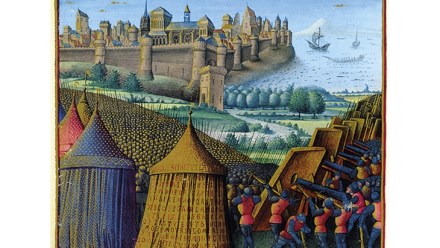
From the kitchen of her apartment on the Quai de la Tournelle in Paris, the journalist and broadcaster Agnès Poirier could see the bright yellow plumes of smoke rising into the sky. Notre-Dame de Paris was on fire, and suddenly, in that tourist-crowded, hyper-expensive ‘cradle of France’, nothing was certain — ‘democracy, peace and fraternity’ — any more. The following morning, children living on or near the Île de la Cité took to school little plastic bags filled with blackened bits of roof picked up from balconies and pavements (as well as probably quite a lot of lead dust) which ‘dated back to the Crusades’.

At last, a novel about the art world that rings true: Annalena Mcfee’s Nightshade reviewed

More from Books

On a winter’s night an artist of moderately exalted reputation and in lateish middle age journeys across London, away from the stuccoed comforts of what was until recently home towards a studio in the East End, where a much younger lover lies waiting. Observations, generally of a caustic nature, about the comédie humaine encountered along the way and the state of the wider world jostle in the artist’s febrile mind with an apologia for the previous nine months’ events.The artist is a woman, Eve Laing, but the tropes past which Nightshade flits like an Underground train are strikingly, almost mundanely, male — the ageing, status-anxious creative, the mid-life crisis, the much younger lover, even the caustic observations.

Annie Ernaux looks back at her teenage self – and sees a stranger

More from Books

How can you recover the teenage girl you were? Not just recall the memories and recount the events — this dress worn at that party, the taste of that alcohol on this boy’s mouth — but restore the world in which these things took place, and the self who acted and was acted upon. Is it possible to be your own Orpheus and yank the Eurydice of your former self from the underworld of forgetting? This is the problem that Annie Ernaux sets herself in this slim, transfixing memoir of young adulthood and first sexual experience. It’s 2014 and Ernaux is looking at a picture. The picture was taken in 1958 and the girl in it is 17. The girl is Ernaux, and also she isn’t.