David Wootton

Alchemy – the ultimate fool’s errand

From our UK edition

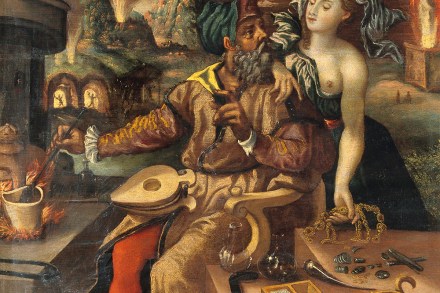
Alchemy, astrology and medicine (before the triumph of germ theory): three worthless intellectual systems which provided a good living for many into the 18th century and even beyond. Alchemy turned into chemistry; astrology was divorced by astronomy; and medicine (which might have become Pasteurism or Listerism) somehow kept its old name while abandoning all its old therapies. There have always been people with the good sense to say that alchemists and astrologers were charlatans, and doctors were more likely to kill you than cure you, but few listened. After all, all three could claim to be ancient, respectable forms of learning. And all three were too good to be true. Who does not want wealth, foresight and good health?
The age-old debate continues: are science and religion compatible?

From our UK edition

According to the census, there are more Christians in the UK than there are atheists and agnostics – yet the churches are empty. These Christians, it seems, don’t take their faith too seriously. Nor, I fear, does Nicholas Spencer, who has written a big book arguing that science and religion are fundamentally compatible. He’s wrong; but, surprisingly, he is more wrong about religion than he is about science. The great assault on Christian faith came not from science, not from a denial of creation, but from history Let me start by laying my cards on the table. I’m the son of a missionary. My father’s parents were atheists and scientists. He, in adolescent rebellion, became a Christian; I, ditto, became an atheist.

Why has medicine been so slow to improve over the centuries?

From our UK edition

Medicine was founded by Hippocrates in the 5th century BC. Doctors continued to study the Hippocratic texts into the 19th century, and many of the therapies, such as bleeding, purgatives and enemas, continued to be practised into the 20th. The standard Hippocratic account of disease was that it resulted from an imbalance of humours within the body. But this failed to explain how some diseases spread through populations at particular times. Among the earliest Hippocratic texts, Epidemics and On Airs, Waters, Places sought to explain this phenomenon. In 1850 the London Epidemiological Society was formed.

An English 17th-century double portrait holds many clues to its meaning

From our UK edition

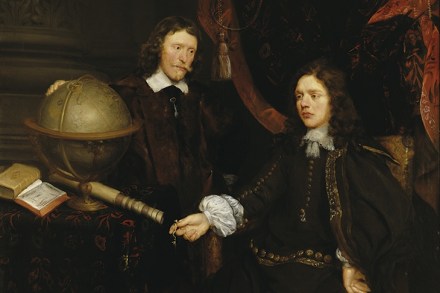
This is a big book about a minor painting — a double portrait of John Bankes, aged about 16 (the son of the Chief Justice of the Common Pleas, Sir John Bankes), and his tutor, Dr Maurice Williams. It was done in Oxford in 1643-4 by Francis Cleyn, a court painter. At the time, Oxford was the headquarters of the royalist army, and painters were busy recording for their loved ones Cavaliers who would soon be dead. In the left corner of the painting there is a copy of Galileo’s Dialogues Concerning the Two Chief World Systems, in its Latin translation, open at the frontispiece, along with a globe and a telescope. Young John holds out a drawing compass into the centre of the image, and looks out into empty space. J.L.

How far can we trust the men in lab coats?

From our UK edition

A month ago the Lancet and the New England Journal of Medicine each retracted a major study on Covid-19 drug therapies. One article had been up for more than a month, the other for less than two weeks. Both were based on faked data. That the rush to publish on Covid-19 led established researchers, reviewers and journals to skip elementary checks is deplorable, if not entirely surprising. But is there a more deep-seated crisis in scientific research? Stuart Ritchie claims an epidemic of ‘fraud, bias, negligence, and hype’. Alas, he overhypes his own argument. In 2011 this book would have been a wonderful path-breaker.

The pursuit of happiness | 16 June 2016

From our UK edition

There is a wonderful portrait of Kenelm Digby by Van Dyke. He is dressed in black. His hand is on his heart. Behind him is a vast, wilting sunflower. The sunflower is a symbol of constancy — it follows the sun. When his wife Venetia died in 1633, when Kenelm was 29, he went into a profound mourning that lasted for the rest of his life — another 30 years. The sun had gone out of his life. From the moment he discovered her dead body, seemingly asleep in her bed, his behaviour was, to say the least, a little odd. He took plaster casts of her hands, feet and face. He had Van Dyke paint a portrait of her in death. He commissioned a phalanx of poets, led by Ben Jonson (who was summoned to the deathbed so that he would be inspired by the sight), to write poems in her praise.

A clash of two cultures

From our UK edition

‘They fuck you up, your mum and dad.’ Philip Larkin’s most famous line has appeared in the Spectator repeatedly, and there has even been a competition devoted to its refutation. Steve Jones, though, thinks it too coarse to be quoted in what he himself describes as a popular science book. This is just one of many indications of the way in which this book is haunted by C.P. Snow’s two cultures. I was a bit shocked to see Jones describe his book as popular science because I had been under the impression that he thought it was, in part at least, a history book. As a popular science book, it’s quite good. As history, not. Jones begins by looking out over Paris from the Eiffel Tower and identifying places where important science was done.