Culture

Culture

The good, the bad and the ugly in books, exhibitions, cinema, TV, dance, music, podcasts and theatre.

The National Gallery’s Veronese is the exhibition of a lifetime

Arts feature

Paolo Veronese (1528–1588) is one of the great painters of the Venetian School, often joined in an unholy trinity with Titian and Tintoretto. But he was not Venetian, and only arrived in the city when he was well into his twenties. His formative years were spent in Verona, hence his popular name (he was also known as Paolo Caliari, and before that as Paolo Spezapreda, in reference to his early training as a stonecutter, following his father and grandfather), which suggests a very different background from his two most famous confrères. He has also been categorised as a Mannerist, but this is more art-historical pigeonholing than useful elucidation.

Our first kills of spring

More from life

The arrival of spring is not an unmitigated joy. The warmth is nice, of course, as are the fresh leaves on the trees and the general sense of rebirth and renewal after a dismal, soaking winter. And maybe, if you live in London, there is very little to complain about. There are delightful parks and squares, lovingly tended by others, in which to lie semi-naked in the sun or otherwise disport yourself. Nature in its wantonness is held at bay without any effort on your part. But here in the countryside of Northamptonshire, spring has its dark and menacing side. The daffodils have been splendid, as were the snowdrops before them; but they are over now, and the nettles are rapidly taking over.

Preset Image Valentine

Poems

Intimacy these days discomforts. More our style is the park or the pub, or three-minded chess with young Kasparov. A bracket-dash-colon smile implies we have no longings to confess. Always, though, I’ll text a bunch of preset flowers on the eve of her six-month scan. ‘Thank you, dear heart, for remembering.’ Then come the hours of worry (agony for her) before the all-clear. Valentine’s the patron saint of squirm for us both, love’s wafer on the tongue a poisoned biscuit. The troubadour-lover worth his sugar composes a romantic effusion of the kind she’d be loath to wipe her derrière with. Dare I risk it? I text her a preset pint pot, foaming with roses.

The Amazing Spider-Man 2: Too much bang-bang, not enough kiss-kiss

Cinema

Have you seen that pizza with a cheeseburger crust? If not, just imagine a normal pizza, except where the pizza ought to end — and civilised society begin — there’s a ring of about ten miniature burgers, all encased in dough. On top of each of those burgers is a greasy discharge of cheese. There’s also an option to add bacon. I mention this because the opening of The Amazing Spider-Man 2 feels much the same. It serves up pizza: a pre-credits flashback in which the parents of Peter Parker, aka Spider-Man, struggle to upload data to YouTube, or wherever, while battling a gunman on board an exploding plane.

Without a strong woman in charge, bees are doomed — just like us

Television

God bless the BBC. And I’m not being entirely sarcastic here. There are some things the BBC does very well and one of them, sadly, was The Review Show, its monthly critical round-up of theatre, film, books and new art exhibitions, that it has now, in its wisdom, decided to scrap. Presumably, the decision was made because the ratings had plummeted — a fact perhaps not unconnected with the programme’s move from BBC2 to the ghetto of BBC4. Yes, being highbrow and involving critics who talked in long sentences, it definitely counted as minority viewing.

Modern dance vs Shakespeare

More from Arts

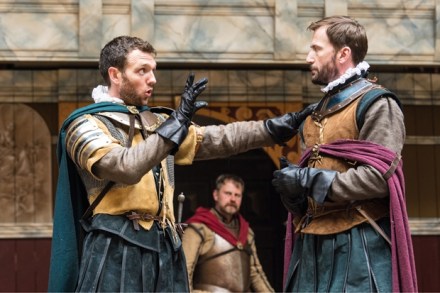
In a dance world that has chosen to dispense with stylistic and semantic subtleties, ‘narrative ballet’ and ‘story ballet’ are often used as synonymous. Yet there are differences — and major ones at that. In a ‘narrative ballet’ it is the choreography that carries the story. Each movement idea is thus conceived in relation to the dramatic demands of the thread and charged with meaning. This is, at least, what the genre’s forefathers recommended back in the 18th century, and what most major dance-makers through history strive to do. A story ballet, on the other hand, mirrors and tackles the basic needs of an immediate, directly accessible and even naive story-telling that is at the core of today’s culture.

Brains on a lithographic slab

More from Arts

The Blyth Gallery is situated in the Sherfield Building, deep in the South Kensington campus of Imperial College London. The Sherfield Building is a labyrinth of concrete, linoleum and glass. Its atmosphere is oppressively institutional. You walk around to the percussion of slamming fire doors and the click-clock of unseen footsteps. The air carries the faint scent of yesterday’s boiled vegetables. It’s an unprepossessing place. The gallery is up on the fifth floor, in an anteroom between the lobby outside the central lifts and the Seminar and Learning Centre. There is no natural light. The floor is bare. The walls are white. A partition splits the room in half.

Ferdinand Kingsley interview: ‘Yeah, but mum’s dad was totally bald too!’

More from Arts

The day before I’m due to meet Ferdinand Kingsley, actor son of Sir Ben, he sends me a message to introduce himself via Twitter. ‘I’ll try not to be a complete a***hole!’ he quips merrily, for absolutely no reason at all since I hadn’t actually imagined that he would be. Does he normally behave badly during interviews, I query, suddenly hoping rather mean-spiritedly that he does. I can see the ‘thespian heir acts up’ headline already. ‘Oh, yeah, I’m a total moron.’ Sadly, Ferdy Kingsley, 26, is, in this regard, a disappointment.

BBC radio gets Easter right

Radio

Given the decline of Christian belief in the UK, it’s surprising to discover there’s quite so much about the Easter story on the airwaves this week. You might have assumed that no space would have been found in the schedules for a retelling of the central but yet most difficult Christian narrative. Christmas is easy to sell and to dwell on, with its baby, its joyous arrival, its exotic gifts, but Easter? Who hasn’t as a child in a Christian household bewailed the gloom and doom of Good Friday? Who hasn’t at some point given up on attempting to understand the great paradox of the Passion as it takes us from the triumphant glory of Palm Sunday when Jesus entered Jerusalem to the horrific events of Good Friday fewer than seven days later?

Bryn Terfel lords it over ‘Faust’ magnificently

Opera

There’s a great deal to disapprove of in Gounod’s Faust. It breaks down a pillar of western literature and whisks up what remains into a flouncy French fancy. It turns the hero’s famous striving into mere lust — for a virginal heroine who is cursed by one and all (‘Marguerite! Sois maudite!’, runs the rather-too-catchy refrain), then saved, in a mawkish, tacked-on finale, by celestial powers. It has a ballet, set pieces, jolly choruses and all the unfashionable niceties that Parisian opera in the mid-19th century required.

Game of Thrones: lucky we just get to watch this programme – the North Koreans are living it

Spoiler alert: this is a review of last night's episode Anyone watching Game of Thrones for the first time last night would not have been dissuaded of Peter Hitchens’ argument that the show is cruel and will promote cruelty. It opened with Lord Bolton’s bastard Ramsay Snow, who in the last series did that thing with Theon Greyjoy we shall not talk about, chasing and torturing some poor woman before showing off his new eunuch – now called Reek – to his sinister father.

Sajid Javid’s first task is to recognise that the price of a cultural asset lies in its value as art

The suggestion, made by the poet Michael Rosen and others, that Sajid Javid is not sufficiently cultured to be Culture Secretary is as ludicrous as it is pompous. The secretary of state does not write poetry – even bad poetry. He decides how best to make the arts flourish, both as a source of spiritual value and revenue. Therein is a challenge – one that his predecessors have failed to meet. The nadir of Maria Miller’s lamentable ministerial career was not her recent non-apology or even the episode which saw her advisor appear to threaten a newspaper. No, it was the speech on culture in the age of austerity she gave last summer.

William Kent was an ideas man – the Damien Hirst of the 18th century

Exhibitions

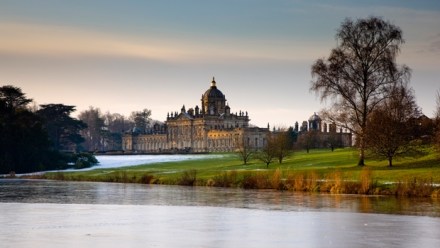
How important is William Kent (1685–1748)? He’s not exactly a household name and yet this English painter and architect, apprenticed to a Hull coach-painter before he was sent to Italy (as a kind of cultural finishing school) by a group of patrons who recognised his abilities, became the chief architectural impresario and interior decorator to the early Georgian nobility. His Italian studies made him a devoted Palladian, and in partnership with his principal collaborator Lord Burlington he set about transplanting the architectural principles and beliefs of Andrea Palladio to the English countryside. He was probably a better ideas man than artist (the Damien Hirst of his day, perhaps?), but he had access to the finest craftsmen, who could execute his plans to great effect.

When Britain’s avant-garde weren’t so shouty

Arts feature

When the New York art dealer David Zwirner opened his London gallery in October 2012, observers expected him to make a statement of intent. Zwirner, who the magazine Art Review placed at number two in its 2013 Art Power 100 survey, is one of the art world’s most important three gallerists (the others are Larry Gagosian and Iwan Wirth). After a year of settling in, Zwirner made a newsworthy announcement: he had signed up the 27-year-old Colombian-born, London-based artist Oscar Murillo. For a twenty-something, he had just had a remarkable set of auction results at Christie’s last June, with a work going for £253,875 against an estimate of £20,000 to £30,000.

Single Mum

Poems

Scarborough 1939 Mum’s slipping on her see-through dress. Outside our council house a chauffered Rolls is waiting. It’s a beautiful summer. There’s been so much yearning. At the Floral Hall violins are fainting and the black-and-white minstrels have ripe red lips. I’ve won third prize for my Bluebird sand- carving. Soldiers are wrapping barbed-wire round the beach. Mum’s smoothing down her new silk stockings. This time, she says, love will be for keeps.

Gas gangrene, shell shock and flinty women: BBC One’s new Sunday night offering is no soother

Television

Sunday nights. What are they for? Eggs. Tea. Toast. Nerves about the week ahead. Something comforting on TV.  But comfort comes in many forms. For some, it’s twee life at Downton Abbey. For others, it’s the thrill of Homeland. With the BBC’s latest Sunday-night offering, comfort takes on a new guise: one that includes gas gangrene, shell shock, flinty women and war-damaged men. It won’t rock you to sleep. The Crimson Field, BBC1’s latest six-part drama, took us to the support system that existed behind the front line during the first world war. It’s 1915, and young women from Britain’s upper and middle classes have been drafted in as VADs — Voluntary Aid Detachments — to nurse casualties from the trenches.

Pop has become a conservative art form and an old man’s game

Music

It is coming to something when relatively young pop stars die not of drugs or misadventure but, essentially, of old age and decay. Frankie Knuckles, the house DJ and producer, breathed his last recently at the age of just 59, and several ageing ex-clubbers of my acquaintance told me that it was the end of an era. But it always seems to be the end of an era these days, and very rarely the beginning of one. We read that the New Musical Express, that inky irritant to generations of music lovers who bought it every week even if they disagreed with every word it printed, now sells about three copies a week and is in danger of going under.

From egg, to caterpillar, to chrysalis, to butterfly

More from Arts

South Kensington is teeming with butterflies at the moment, or at least the specially constructed tropical enclosure at the Natural History Museum is. Sensational Butterflies (until 14 September) takes you on a journey through the life cycle of, you guessed it, the butterfly: from egg, to caterpillar, to chrysalis, to butterfly. Butterflies had a good time of it last year, because of the warm sunny weather — the best for seven years — but the year before had been one of the worst ever for these insects (and for us), with their numbers crashing. The outlook is good for this summer. Fingers crossed.

Police and miners clash again over Orgreave on Radio 4’s The Reunion

Radio

Four could have been dubbed the Frank Radio network this week as the sharp skills of Sue MacGregor, Alan Dein and Fi Glover teased out some stark opinions and revelations. MacGregor was back on Sunday morning with a new series of The Reunion, daring to bring together round the same table in an enclosed studio five people who were closely involved in the miners’ strike of 1984–5. And not just any five people, but five people who at the time were on fiercely opposing sides of the crisis: a Tory cabinet minister, a policeman, a union official who later became a Labour minister, and a white-collar member of the NUM. Thirty years later the gulf between the politicians and the workers, with the police playing piggy in the middle, was as deep and tetchy and irreconcilable as ever.

In Winwick Churchyard

More from Books

The gravestones are laughing. They tilt at each other’s shoulders, droll tears of lichen blotching their honourable faces. Seated in uneven rows in their auditorium they note church-goers squinch the gravel path to the embossed door. Some lean backwards in mock amazement, others forward, study the half-mown grass or slap their thighs, whisper behind their hands — only one stares in vertical — at man that is born of woman, a joke they refuse to explain. But the upright rectangle between the medlar and the lych-gate, marbled in its twenty-first century is excluded from the pleasantries, is bullied after lights-out by the listing seniors, its jar of wilting pansies the butt of scorn. A much missed mum and nan? Don’t make them lurch. Get real: become obscure.

Let’s not stop at Maria Miller. Let’s get rid of the Department of Culture completely

The arts world will not shed a tear at the news that Maria Miller has resigned. Though it was Jeremy Hunt who wielded the axe to the arts budget, it was Maria Miller who spearheaded a shift in philosophy in the Department of Culture, Media and Sport that arguably annoyed the luvvies even more than the cuts had done. Breaking the only rule that the arts world still deem sacred, Miller demanded, in her only keynote arts speech last April, that culture ditched the art-for-art's-sake argument for its existence and replace it with an art-for-the-economy's-sake argument. 'When times are tough and money is tight, our focus must be on culture's economic impact,' she said.

House music is great music – or can be

When Chicago DJ Frankie Knuckles died last week, a novelty number by a Brylcreemed Aussie pop punk group had just reached number one. It displaced Duke Dumont & Jax Jones’s I Got U and ended a three week-run of house singles at the top of the charts. I suspect the following statement may piss off dance nerds, but it’s fair to say that Knuckles had as much claim as anyone to having ‘invented’ house music thirty odd years ago. Essentially, he took the kitsch out of disco and turned it into a synthesiser-heavy global brand. Was it worth the effort, though? Frankie Knuckles and the other Chicago house pioneers made some genuinely great music.

BBC1’s The Crimson Field: manipulative, saccharine, shallow – and addictive

Thanks to BBC1’s new World War One drama The Crimson Field, I know now how to fake the symptoms of syphilis. All you need is a red hot needle, to create a genital blister, and some condensed milk, for realistic-looking discharge. You had to do this if you wanted to get sent home from the front, because the horrible public school officers didn’t believe in namby-pamby mental illnesses like shell-shock, and had absolutely no sympathy for the poor privates who wept when they listened to Madame Butterfly. Is it possible to make a WWI drama without resorting to cliché? Yes, actually: the BBC’s adaptation of Parade's End managed it a couple of years ago. Still, they at least had a book to go on.

Game of Thrones: ‘Our Island Story’ for the HBO generation

When I was a boy I used to love the stories of the old kings of England, devouring book after book on the subject until I could rather involuntarily memorise all the dates (which has stuck with me, useless though this knowledge is, and stretches back before the Conquest, although once we get to the Edwys and Edwigs it gets a bit blurry). My fascination with this long, bloody tale was not just an early indicator that I was a massive social inadequate, although that may be part of it; I loved those stories because they were fantastic. And as Game of Thrones starts tonight I’m comforted by the fact that I am not alone - for Thrones is essentially the Our Island Story for the HBO generation.

Our infatuation with high-rise housing has been catastrophic. Good riddance to the Red Road flats

‘If you meet anyone in a pub or at a party who says he is an architect,’ advised Auberon Waugh, ‘punch him in the face.’ Typically, the late, great Spectator columnist articulated an important truth: modern architects have scarred our cityscapes with some truly horrendous buildings, none more so than Glasgow’s notorious Red Road flats. What better way to mark the opening of this summer’s Commonwealth Games than to blow them up? Five of the six blocks will be blown up on 23 July. These five are already empty. The sixth, which currently houses asylum seekers, is due for demolition at a later date.

The curator brain drain

Arts feature

In 1857, the National Gallery’s pioneering director Sir Charles Eastlake bought one of Veronese’s most sumptuous paintings, ‘The Family of Darius before Alexander’. The purchase was met with strident and very personal opposition from a Tory, Lord Elcho, in the House of Commons, but his objections were swatted aside by Lord Palmerston and we were spared the irony of fighting to defend the Indian empire while rejecting the opportunity to buy the finest painted celebration of imperial conquest. ‘The Family of Darius before Alexander’ is the centrepiece of the first monographic show in this country dedicated to Veronese (until 15 June). This is the sort of triumphant exhibition that the National Gallery does so well.