Anna Baddeley

Strictly Come Dancing review: seriously, who are the 11 million people who enjoy this stuff?

From our UK edition

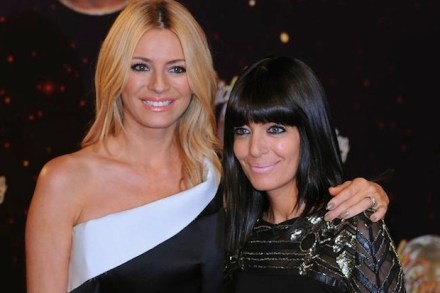
There's a Radio 4 programme, presented by the smug moraliser Marcus Brigstocke, called I've Never Seen Star Wars, which gets famous people to do things they've never done before, like watch Star Wars. I'm not famous, but before last night I'd never seen Strictly. The very idea of it bored me. I don't like ballroom dancing, I don't like sequins or kitsch or seventies nostalgia, I don't like programmes starring celebrities I've never heard of doing silly things because they desperately need the money. I don't get the semi-ironic personality cult around 'Brucie', a man without any obvious charm or talent, apart from being the only 20th-century light entertainer who's not dead or behind bars. I do however quite like his replacement Claudia Winklemann.
21 Up is intelligent and sensitive – and makes me crave for sex, vomit and immaturity

From our UK edition

At 9 o'clock last night, I sat down with my take-away curry, flippedback the lid of my MacBook and went to the iPlayer website to catchthe first episode of 21 Up: New Generation, taking care to click thebutton that says 'Yes, I do have a TV licence.' One small problem: 21Up wasn't on. Not until 10.35 p.m., aka time for Newsnight.Surely, I wondered, my small prawn karahi rapidly decreasing intemperature as I hunted for something rubbish to watch on 4oD, thelatest instalment of the 21st century remake of Michael Apted's bold,immensely flawed sociological experiment, 7 Up, deserves a prime-timeslot?The reason why it had been denied one became apparent halfway throughthe episode. This new Up series has been intelligently and sensitivelydirected by Julian Farino.

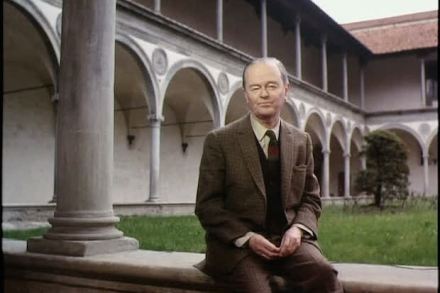
Civilisation doesn’t need a woman presenter – and it doesn’t need to be remade!

From our UK edition

I was pleased to see that June Sarpong had added her weight to Kathy Lette's petition to get a woman to present the BBC's remake of Civilisation. I've often wondered what became of her after Five Go Dating, a show I used to watch religiously, and one which - if you're listening, Channel 4 - equally deserves to be resurrected. Lette's letter is in yesterday's Times. She complains that Kenneth Clark's original had little to say about women (true) and that because of this, a 'female historian' should take the reins this time. 'A female presenter', argues the Australian novelist, 'would ensure that the series is not just about History but also Herstory. It’s imperative that women also have a voice in the story of our world.

BBC1’s The Crimson Field: manipulative, saccharine, shallow – and addictive

From our UK edition

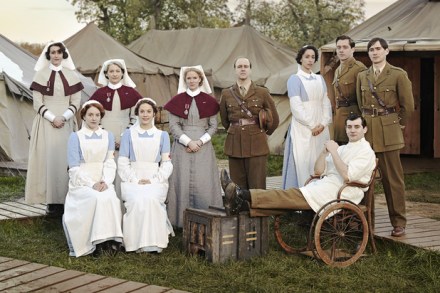
Thanks to BBC1’s new World War One drama The Crimson Field, I know now how to fake the symptoms of syphilis. All you need is a red hot needle, to create a genital blister, and some condensed milk, for realistic-looking discharge. You had to do this if you wanted to get sent home from the front, because the horrible public school officers didn’t believe in namby-pamby mental illnesses like shell-shock, and had absolutely no sympathy for the poor privates who wept when they listened to Madame Butterfly. Is it possible to make a WWI drama without resorting to cliché? Yes, actually: the BBC’s adaptation of Parade's End managed it a couple of years ago. Still, they at least had a book to go on.

Under the Skin: one second of tits to every three minutes of glen

From our UK edition

‘I thought it was supposed to go on for another half hour!’ said a man in the foyer on the way out. ‘When the alien got burnt to death I thought thank fuck for that.’ Before you get annoyed with me for giving away the ending, let me explain that this is one of those films where plot takes a back seat. More than that, it’s been tied up, gagged and locked in the boot. I can’t stand it when people give away the ends of films, which is why I never read reviews before going to the cinema. Too many reviewers have no respect for plot.

Across the literary pages: Ned Beauman

From our UK edition

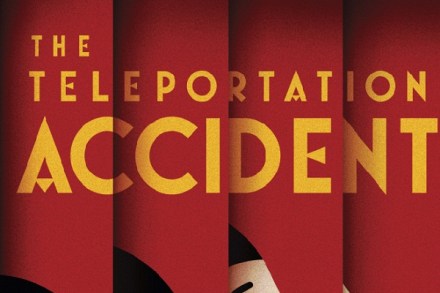
London doesn’t really have a literary hipster scene, but if it did, Ned Beauman would be centre stage. The 27-year-old novelist may look like he’s crawled out of an evolution of man diagram, but he’s very clever and very trendy and, despite having gone to Cambridge, knows a lot about ketamine. His show-offy but energetic first book, Boxer Beetle, came out in 2010 to deafening acclaim and earnt him a six-figure publishing deal, unheard of in these austere times unless you’re a dog who’s won a talent contest. After spending a couple of years hanging out with cool, arty people in Brooklyn and Berlin, Beauman is back in town to promote his new book, The Teleportation Accident.

Across the soft-porn pages

From our UK edition

Hearing that rope sales were going through the roof in New York, many of us naively assumed it was bored housewives wanting to recreate scenes from 50 Shades of Grey. Now, after another weekend of wall-to-wall broadsheet analysis of the least sexiest bonkbuster of all time, you have to wonder whether it might have been bought for another purpose.   The Guardian dedicated their usually reliably highbrow Review section to the phenomenon, persuading some hilariously unexpected writers (Will Self! Jeanette Winterson! Lol!) to have a go at their own sex scenes. I couldn’t face reading them, but you can here. And if you’re really into masochism, here’s an angry blogpost Alastair Campbell wrote about how ‘crap Guardian editing’ ruined his own effort.

The Spectrum – the week in books | 6 July 2012

From our UK edition

UP: SHAKESPEARE IN LOVE Faber’s new Shakespeare’s Sonnets app is rated 12+ on account of its ‘Infrequent/Mild Sexual Content or Nudity’. After watching Andrew Motion’s  come-to-bed reading of Sonnet 142 we’re surprised it escaped an X-certificate. Who needs 50 Shades when you’ve got the third sexiest poet laureate (after Ben Jonson and Ted Hughes) wearing nothing but polka-dot pyjamas and braces? ‘Love is my sin’ indeed!     UP: 60s SUMMER READS Now's the time of year when literary pages replace serious stuff like reviews with drivel about what famous people are reading on their holidays.

Across the literary pages: Alastair Campbell’s Burden of Power

From our UK edition

The publishing juggernaut that is Alastair Campbell’s diaries rumbles on, with the arrival of the fourth instalment, Burden of Power: The Countdown to Iraq. The 752-page volume covers the most tumultuous part of Blair’s premiership, taking readers from 9/11 to Campbell’s resignation two years later.   This is the sort of book whose reviews are so predictable, there’s not really any point in reading them.

The Spectrum – the week in books

From our UK edition

Up: BAD HABITS 500K to spare? Four pages of calfskin, 1,300 year old manuscript could be yours in the Sotheby’s summer sale next month. In De Laude Virginitatis [In Praise of Virginity], Anglo-Saxon cleric Aldhelm advises the nuns of Barking Abbey to avoid garments which might ‘set off’ the body and ‘nourish the fires of sexual anticipation.’ But call off the Slutwalk: given this is the first known text aimed exclusively at a female readership, the proto-feminist bishop is doing it for the sisters. Up: PUPPY LOVE Hands up who wants to see a video of Somerset Maugham cuddling puppies? The footage is especially poignant in light of the notorious dog-frisbeeing incident revealed in Selina Hastings’ 2009 biography.

The art of fiction: Jonathan Franzen, essayist

From our UK edition

Do great novelists make great essayists? Not in the case of Jonathan Franzen, at least according to Phillip Lopate, who reviewed Franzen’s new essay collection Farther Away for the New York Times. Lopate is a fan of Franzen’s but feels his non-fiction pieces – though entertaining and interesting – are ‘not nearly as strong as his novels’. He sets out some reasons why: ‘While his prose is always cogent, he is not that consistently stylish a sentence writer. Essays put a different kind of pressure on the sentence, calling for more aphoristic compression and wit. His novels work best through patient accumulation of social detail and character development. By contrast, the I-character in his essays is not as strongly developed, nor as vivid.

Across the literary pages: Post-Jubilee special

From our UK edition

Now we’ve all had our fill of bunting, bladders and BBC-bashing, it’s time to turn our minds to more high-minded pursuits, starting with a long overdue glance at the weekend’s book pages.   And you can’t get higher minded than a Nobel Laureate. 74-year-old Peruvian novelist, and ex-presidential candidate, Mario Vargas Llosa has a new book out. Called The Dream of the Celt, it’s about Sir Roger Casement, the Irish-born diplomat who was executed for treason in 1916.   When the Telegraph’s Nicholas Shakespeare asked Llosa to explain his motive for writing, he replied: ‘In my case, literature is a kind of revenge.

Women in need of a man or two

From our UK edition

The Orange Prize longlist has just been announced, followed by the perennial hoo-ha over its right to exist. Is it sexist to have a prize just for women? Is sexism the reason why we need a prize just for women? Does anyone outside the comment boards on the Guardian website actually care? All it is, really, is a wheeze to sell more books, something it manages pretty well. One problem with the Orange Prize is that the quality is often not that great. The shortlist and the winner sometimes seem like they’ve been chosen by a group of book publicists thinking, “Ooh, the media’s going to love this author’s interesting backstory!” or “Wouldn’t this novel be fab for bookclubs?!

Giving up books for Lent

From our UK edition

More bad news for people who like their reading matter to come with a spine: January sales for printed books were down 16 per cent on last year's. There are lots of reasons for this — ebooks, better telly, a global pandemic of attention deficit disorder — but what’s often overlooked is modern publishing's tendency to value quantity over quality.   Over 150,000 books were published in the UK last year, an increase of nearly 50 per cent on a decade ago. Not all of this is down to the growth in self-publishing. The book industry appears to have taken trendy longtail theory — increase profits by selling less of more — and swallowed it the wrong way.

A cautionary tale…

From our UK edition

Every summer when the exam results come out, besides the obligatory photos of bouncing schoolgirls, there's a story about a five-year-old who's become the youngest person ever to pass a GCSE. Little Liam, his parents boast, has been doing sums since before he could talk and is now raking in the dosh from his million-selling iPhone app. His dream is to go to Oxford or, failing that, Cambridge. To stave off the nausea, you imagine Liam's future — the bullying, the drugs, the gender confusion — until you get to the part where it says what grade he got. Hang on a minute, you think, he only got a D! A foetus could get a D in GCSE Maths. What were his numskull parents trying to prove by making him do it early and get a rubbish grade?

The Pursuit of Love: Not just for girls

From our UK edition

After a lacklustre year of books programming, the low point being a serialisation of a middle-class family’s failed attempt to live without internet, Radio 4 has lately come into its own. Already this month we’ve been treated to Beware of Pity (which I wrote about here), the surprisingly enjoyable Gargantua and Pantagruel, Claire Tomalin’s biography of Dickens and Craig Taylor’s Londoners. This week it’s a Timberlake Wertenbaker adaptation of Possession and an early Christmas present, The Pusuit of Love by Nancy Mitford. Many of us will have a comfort book, something we return to in times of illness, romantic strife, double dip recession and so on.

Can we have an ode against greed, please?

From our UK edition

Is it possible to hold a literary award these days without igniting some sort of controversy? The latest storm in an inkwell surrounds the TS Eliot Prize, whose shortlist shrunk after two poets dropped out in protest at its sponsor, the hedgefund Aurum.   John Kinsella and Alice Oswald have boycotted the prize, explaining ‘the business of Aurum does not sit with my personal politics and ethics.’ The poetry world is holding its breath to see if any remaining shortlistees, which include heavyweights Carol Ann Duffy and John Burnside, will follow suit.   The news has been met with an inevitable online backlash. ‘Pagey’, a commenter on the Guardian website asked ‘How can someone who writes for profit be anti-capitalist?

Dauntless into the future

From our UK edition

Gentleman shopkeeper James Daunt has given a cringeworthy interview to the Independent where he calls Amazon ‘a ruthless, money-making devil, the consumer’s enemy’. I wouldn’t be surprised if the manger of “Quills ‘R’ Us” had said something similar about William Caxton in 1476. Poor James Daunt. He clearly had a certain degree of business acumen to set up his successful mini-chain of London bookshops, but since taking over Waterstone’s he has yet to prove he knows what he’s doing. His only real achievement so far is to get rid of that notorious three-for-two. If I were a Waterstone’s bookseller reading the Independent interview online, my next click would be straight onto Guardian Jobs.

Hatchet Jobs of the Month | 2 December 2011

From our UK edition

Eurozone crisis, what eurozone crisis? According to Spanish newspaper El País, the real global emergency is the state of literary criticism. British book pages, however, won’t need bailing out any time soon — at least if these splenetic offerings are anything to go by. Tibor Fischer on Parallel Stories by Peter Nadas, Guardian It's a great historical soup, with bits of this and that bobbing around, seemingly thrown in randomly by the chef — or, more succinctly, a mess. Hungary's literature had a puritanical 1950s, a sober 1960s, and they largely missed out on all the Henry Miller, Lady Chatterley, Jean Genet, William Burroughs jazz. It's almost as if Nádas is trying to catch up in one bound.

A lost classic brought back to life

From our UK edition

Full marks to Radio 4 for deciding to dramatise Stefan Zweig's masterpiece, Beware of Pity (listen on BBC iPlayer). This is a rare example of a "neglected classic" that actually lives up to the hype. Born in Austria in 1881, Zweig was one of the most famous writers of the twenties and thirties, his novellas and biographies translated into more languages than any other contemporary author. Despite being friends with Freud and living the rarefied life of a mittel-European intellectual, his style and subject matter were avowedly populist (a crime registered in this London Review of Books essay). Beware of Pity — his only full-length novel — was published just before the second world war.