Culture

Culture

The good, the bad and the ugly in books, exhibitions, cinema, TV, dance, music, podcasts and theatre.

This is Anfield

Poems

Living up to its fabled buzz, the Kop roared and rose even before kick-off. Down in the main stand I watched; John Barnes adjusting his captain’s band on the hallowed turf. Waves of red in rows and rows – a kid in that season’s kit, I swelled with a kind of borrowed pride, belonging without belonging; my dad and brother craning to see McManaman darting, how Fowler propelled strike after strike.                                 Half-time over, and a crashing header left the keeper without a chance … the place erupted.

The rise of the art fair – and the death of the small gallery

Notes on...

In 1967, two Cologne-based gallerists came up with the Cologne Art Market — a trade fair where German galleries could set up temporary gallery-style spaces for a few days to showcase their stock. The following year, three dealers in Basel copied the idea but opened up their event to international galleries. For years these two art fairs were discrete yearly shows which were in the background to far more visible gallery exhibitions, museum shows and biennials. Today there are hundreds of art fairs, with an explosion of these in the last few years. Last December 18 different art fairs took place in the same week in Miami alone. There are nine art fairs in New York this week. Next week there are art fairs in Hong Kong, San Francisco and Athens.

The general who scribbled and doodled his way around the British empire

More from Arts

Soldier scribes are rare, soldier artists rarer still, and soldiers who can write and draw rarest of all. General Henry Hope Crealock (1831–1891) was one such polymath. He scribbled and doodled as he fought his way around Victoria’s empire. He was a decorated veteran of the Siege of Sebastapol, the Second Opium War, India and the Anglo–French march on Peking in 1860. In the Anglo–Zulu War of 1879 (Rourke’s Drift and all that) Crealock commanded First Division and sent sketches of the campaign to the Illustrated London News. His work provides an invaluable account of the history he helped to forge. After retiring in 1884, Crealock spent his declining years stalking deer in the Highlands.

The best blues singer you’ve never heard of

Radio

A rustle of paper as the sleeve is removed. A clunk and click as the needle arm is swung across. The needle hits the vinyl, bringing it to life. At first there’s a lot of crackling in the ether. Then at last the music begins. A sultry saxophone. A few notes on the guitar, slow, low and relaxed. At last the voice enters. It’s not at all what you would expect from that swingband opening. The voice is strong, unmelodic, harsh almost, but so passionate you’re drawn in straight away. We’re told it’s Little Miss Cornshucks. She’s singing a version of ‘Try a little tenderness’ that sounds just as good, if not better, than Otis Redding’s amazing version from 1966. Who is she? You might well ask.

The humans in Godzilla are so bland and dull you may well find yourself rooting for the monster

Cinema

Godzilla is from the director Gareth Edwards, a Brit whose first film, Monsters, truly put him on the map, as it daringly played with the genre, and incorporated a plausible human love story, and the difference between that film and this may be summed up as follows: whereas Monsters was a clever and inventive film made for relatively little money ($500,000), this is a quite stupid film made for a lot of money ($160 million). Oh dear. It sounds like I’m wearing my disapproving hat again, although I don’t always. For example, I take it off for special occasions, and sometimes even in bed. (Sometimes yes, sometimes no; depends.) What’s it all about?

The Silver Tassie: a lavish, experimental muddle that slithers into a coma

Theatre

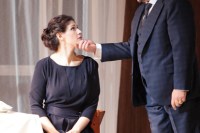
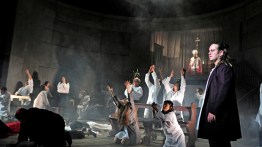
The Silver Tassie is the major opening at the Lyttelton this spring. Sean O’Casey’s rarely staged play introduces us to a group of Dublin sportsmen, and their womenfolk, as they prepare to volunteer for service on the Western Front. They parade the ‘silver tassie’, a newly won football trophy, mistakenly believing it to presage victory and good fortune. O’Casey’s characterisation is a little perfunctory. The men are boastful studs, quailing dolts, blarneying drunks or violent despots. The women aren’t much better: a weeping mum, a caustic shrew, a battered martyr, a snooty beauty. It may sound colourful but the storyline develops at the pace of tree rings.

You want a glitzy new cultural centre in Backofbeyondistan? Don’t call Shigeru Ban

More from Arts

Shigeru Ban is the celebrated architect who refuses to become a celebrity. Thus, at 57, his career has run opposite to the dominant trend in the profession. For a generation there has been a star system in architecture, as tacky and ludicrous and overblown as the Hollywood original. Ban, softly spoken but strictly principled, is outside it. New money — gas- and mineral-rich individuals and, indeed, whole nations — seeks prestige through stand-out buildings. The stage army of celebrity architects who once made their reputations through ingenious design have become willing collaborators in a vulgar conspiracy. Instead of selling ingenuity, or humbling themselves with notions of public utility, the starchitects have been doing slick promotional selfies as premium brands.

Why Gary Barlow should hang on to his OBE

Columns

‘Strip him of his knighthood!’ Or life peerage, or CBE, OBE — or whatever. The cry goes up with a kind of automaticity these days, and with increasing shrillness. As I write, elements in Fleet Street are hyperventilating about Gary Barlow’s OBE. Barlow and two other members of the band Take That are reported to have avoided paying tens of millions of pounds in tax by investing in the Icebreaker Management scheme, deemed by HMRC to be a vehicle for tax avoidance. Note ‘avoidance’. Steer clear of the word ‘evasion’ because there has been no suggestion of criminality: Mr Barlow and others in his band are threatened only with a hefty bill for unpaid tax. And a fat lot it will do my own media profile to defend him.

Michael Dobbs shuffles Cards in the House of Lords

Filming of season three of Netflix’s House of Cards will begin in four weeks’ time in Maryland, creator Michael Dobbs revealed at Norman Tebbit’s book launch last night. Lord Dobbs, who was an advisor to Thatcher, said that he had to ‘tone things down a little bit’ to make the plot ‘credible’, although he’s clearly proud of his work, telling Mr S: ‘Kevin [Spacey] is wicked. It’s like the West Wing for Werewolves’. When he’s not the toast of America’s TV, Dobbs sits on the Lords’ standards committee.

Michael Jackson’s back from the dead. Again.

Pop humpty-dumpty Michael Jackson has a new album out today. If that statement seems odd, you don’t know the half of it; five years after his death, Jackson is only on album number two. Compared to a trooper like Tupac – who still manages a couple of albums per year, despite having copped it in 1996 – his posthumous output is actually pretty sluggish. Record labels have always had a talent for cashing in on their dead charges. The zombie discs that result are generally made up of songs the 'artist' was too embarrassed to release when he recorded them. Michael Jackson's new one, Xscape goes one further. It’s a cut 'n' paste job of unused demos and vocal off-cuts remixed by some producers who were quite cool circa 2002.

Eurovision: It was the beard wot won it

I enjoyed Fraser’s preview of the Eurovision Song Contest; I had not known that he was such a fan. You work with someone for years, oblivious to their dark secrets, their strange peccadilloes. It was typically brave of him to come out, in public. I watched the thing, again. I thought the entry from The Netherlands was the best song I have ever heard at a Eurovision Song Contest, and by some margin. But that may be because Europop makes me feel ill, and their song definitely wasn’t Europop. It’s the first time I’ve heard a pedal steel in this competition. That being said, the Dutch have form as purveyors of catchy, country-lite, soft rock – anyone remember “Mississippi” by Pussycat?

We watched Eurovision – so you didn’t have to

I like Europe, even if this may not be the place to admit it, and I like this moment, when our brothers are forced to make fools of themselves in a language none bar the Irish can speak convincingly. Sauf les Français, obviously. ‘Ukraine will win. Europe has solidarity. You’ll see,' says my European flatmate. But after the first batch of votes, it becomes clear that either Ukraine’s entry wasn’t very good, or Putin actually takes the competition seriously. Having missed both Maria Yaremchuk’s Tick-Tock and the inner machinations of the Kremlin’s ministry of culture, my guess is one or both of those things. Many horrors were committed in the process of the panels’ announcements. Azerbaijan begging approval from mother Russia.

Exclusive poll: Brits think we’re doomed in Eurovision (and blame the BBC)

Seven million of us will be tuning in at 8pm tomorrow night for the Eurovision final, rising to nine million when the UK number is played. But what do we expect to see, and do we think it’s rigged? The Spectator's Culture House Daily blog, in conjunction with YouGov, is able to give you an exclusive poll of 1,860 Brits, seeing what the nation thinks about world’s most-watched cultural event. Seventeen years of hurt has led Britain to think that we just can’t win this thing anymore. A pitiful 1 per cent of those polled think Molly’s Children of the Universe will take the crown tomorrow night, a low figure given that the bookies have her at 8-1. Just over half of us think she’ll finish bottom of the table.

The hidden, overlooked and undervalued: Andrew Lambirth’s spring roundup

Exhibitions

Jankel Adler (1895–1949), a Polish Jew who arrived in Glasgow in 1941, was invalided out of the Polish army, and moved to London two years later. A distinguished artist in his own right, he turns out to have been a hidden presence on the English art scene, a secret influence on indigenous artists. He is usually cited as a crucial inspiration for Robert Colquhoun, but as his work grows more familiar, it becomes clear that a whole host of other artists must have been aware of him, from S.W. Hayter to Cecil Collins.

Robin Ticciati interview: ‘Glyndebourne is a festival where the established and the fresh exist together’

Arts feature

Glyndebourne, the great Sussex opera house, celebrates its 80th anniversary this summer. Hurrah! There is a new music director, too, 31-year-old Robin Ticciati. Hurrah! And he opens the season next week with a new production of Der Rosenkavalier directed by Richard Jones. Hurrah! Summer has begun. There are few finer plots of land to be on a summer evening in England than Glyndebourne, one of those rare places where the frame matches the picture. In a way Glyndebourne defines England, and summer, and the way the English take their pleasures. Certainly there is no place like it anywhere else. People at other festivals may love music just as much, and swank even more, but Glyndebourne, with or without black tie, is a world apart.

Henri Le Sidaner: the artist who fell between two schools

Exhibitions

Like other species, artists club together in movements not just for purposes of identification but for longevity. Individuals who don’t belong to schools take longer establishing reputations during their lifetimes, and tend to lose them sooner after their deaths. Henri Le Sidaner (1862–1939) was one such individual: a contemporary of the Post-Impressionists who painted in dots but was not a Pointillist; revelled in complementary colours but was not a Fauve; and drew a veil of dreams over reality but was not a Symbolist, or only briefly. He was, as his friend the critic Gabriel Mourey described him, ‘a sort of mystic who has no faith’. When asked what school he belonged to, his own reply was: ‘None.

Everyone should see this pious anti-war monologue – seriously

Theatre

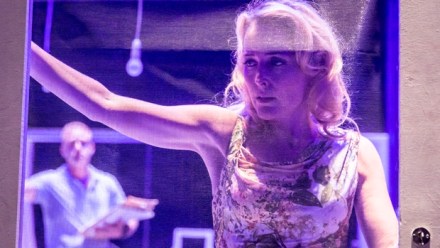
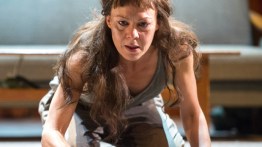
Off to the Gate for a special treat: a pious anti-war monologue from the prize-winning American George Brant. Curtain up. And within seconds all my preachy prejudices have fallen apart. The speaker is a female pilot in a jump suit sealed within a see-through cage. Slaying men is her vocation. Interesting! The story moves with amazing deftness and clarity. She flies missions over Iraq. Loves it. The speed, the jeopardy, the power, the solitude. ‘The blue’ is her term for her intoxicating and deadly haven in the skies. Home on leave, she hits the bars. A one-night stand. She likes the guy. Back in Iraq, she’s pregnant. Skypes him. He weeps with joy. She’s honourably discharged. Back home, they marry. A daughter arrives. She’s settled and fulfilled.

More woe for Oedipus

Opera

I had high hopes for Julian Anderson’s first opera, Thebans. Premièred at the Coliseum last Saturday, it promised to mark a departure from the trendiness of ENO’s recent commissions, Nico Muhly’s Two Boys, for example, or the dreadful Sunken Garden — in fact, ENO’s next season seems to reflect a company at last a little less enamoured of innovation for its own sake. Thebans, the advance publicity suggested, was to be a serious, grown-up work, closer in spirit, perhaps, to Detlev Glanert’s Caligula, of which ENO gave the UK première two years ago. The company had put a lot of faith in Anderson, currently composer-in-residence at Wigmore Hall and a master of orchestral colour and texture.

‘Sometimes audiences applauded Frank; sometimes they threw stuff at him’

Cinema

Frank is a music biopic, but only of sorts, as it is not at all like your average music biopic. It’s not that processional march we have come to expect; that chronological story of tough beginnings, the moment of discovery, tour montages, calendar dates flying, and finally making it big. In fact, this is about a musician for whom making it big would be the death of him, and very nearly is. Also, it stars Michael Fassbender wearing bad knitwear and a giant paper-mâché head. So it is not Walk the Line or Dreamgirls or The Karen Carpenter Story, is what I’m saying, and it is profoundly more interesting and affecting for it.

Nothing beats Book at Bedtime

Radio

There I was trapped in the bathroom at 10.55 p.m., unable to leave for fear of missing anything. The time it would have taken me to get to the bedroom, touch the screen of the digital radio, encouraging it to dawdle its way into life, was just too long, too risky. Vital information in the story might have been lost. The tension, created by that single voice holding me on a thread, would have been dissipated. It came as a surprise. Book at Bedtime (Radio 4, Monday to Friday evenings) is often such a disappointment these days that the radio gets switched off at 10.51 (after six minutes you know for sure that whatever is being read is not going to get any better).

Fifties domestic harmony

More from Arts

Our love affair with the 1950s has been going on for years and shows no sign of abating. Pangolin London, the city arm of the Gloucestershire foundry, has cleverly used the visceral appeal of Fifties design — if ever a period merited the term gay in its original sense, this one does — to show how sculpture can be incorporated into a domestic setting (until 17 May). All too often works of sculpture, whatever their size, are put on pedestals or instinctively relegated outdoors or to public spaces.

Let’s call the Turner Prize what it really is – an uninspiring ode to a multimedia world

The Turner Prize shortlist has been announced, and includes a video artist who uses YouTube clips, an artist who pairs spoken word with slide shows and photography, and a historical documentary about African art. Among the four nominees for the most ‘prestigious and provocative’ contemporary art prize, not one of them is a traditional painter or sculptor. In short, the Turner Prize seems to have morphed into a film and photography prize. The Tate seem to be aware of this. The nomination announcement said the four artists' methods ‘suggest the impact of the internet, cinema, TV and mobile technologies on a new generation of artists’. Of course, there’s no reason why a piece of sculpture or a painting can’t respond to the onslaught of multimedia too.

‘When HBO want a gritty, hard-bitten, authentic American, they think: Old Etonian’

You don't expect to find a slice of Eton College in deepest Dalston, but tonight a distinctly posh Waiting for Godot opens at the Arcola Theatre. The Beckett play is being directed by Eton's former head of theatre, Simon Dormandy, and his Vladimir and Estragon are Tom Palmer and Tom Stourton, two of his past pupils. Together Palmer and Stourton (son of BBC's Ed) are sketch comedy duo Totally Tom – perfect casting for Dormandy's 'reimagined' production of the play, with its frequent references to music hall, the artform Beckett so loved.

The Eurovision Song Contest is starting – and for once, Britain is in with a chance

There are those to whom the word ‘volare’ means nothing. But for  us Eurovision enthusiasts, it’s all starting with the opening ceremony tonight. Two semi-finals this week, then the big one on Saturday. It’s transmitting live in China, New Zealand and Canada this year – making Eurovision the most-watched non-sporting television event on the planet. The annual, spectacular clash of nations, cultures and politics is also becoming a major betting event. A friend of mine in Sweden (where Eurovision is not seen as a massive gay pride festival) usually makes a killing getting it right. To do so requires pretty good knowledge of music, European politics, trends in trading relationships, and popular (as opposed to governmental) opinion.

The problems at Tate Britain go beyond the director

Last week, Tate Britain was one of six museums across the UK to be nominated for the Art Fund’s Museum of the Year award, an annual prize in which the winner receives the not inconsiderable sum of £100,000. A couple of weeks earlier, Waldemar Januszczak, the Sunday Times’s ‘cor blimey’ art critic (don’t get me wrong, he has a winning shoot-from-the-hip style) was calling for the head of Penelope Curtis, Tate Britain’s director since 2010. Despite approving of the chronological rehang of the permanent collection which she oversaw last year – in fact, he proclaimed it a ‘miracle’ – Januszczak still insisted Curtis must go.

The very best of Broadway – a director’s cut

Arts feature

‘America,’ said John Updike, ‘is a vast conspiracy for making you happy.’ If that’s true, there have been few more successful conspiracies than the Broadway musical — that is, the ‘book’ (meaning ‘play’) musical — a dramatic form that blends drama of character and narrative with song and dance. ‘Words make you think thoughts, music makes you feel a feeling, a song makes you feel a thought,’ said the songwriter Yip Harburg. The best musicals have a thrilling seamlessness and a cumulative emotional charge; the worst are chunks of dialogue interleaved with musical interludes. The first ‘book’ musical was John Gay’s The Beggar’s Opera, written in 1728.