Culture

Culture

The good, the bad and the ugly in books, exhibitions, cinema, TV, dance, music, podcasts and theatre.

The tubular joys of Fernand Léger

Exhibitions

In 1914 Fernand Léger gave a lecture about modern art. By then recognised as a leading Cubist artist, he had the year before signed up with the dealer Daniel-Henry Kahnweiler, who already represented Picasso and Braque. ‘If pictorial expression has changed, it is because modern life has necessitated it,’ Léger argued. ‘The existence of modern creative people is much more intense and more complex than that of people in earlier centuries...The view through the window of the railway carriage or the motorcar windshield, combined with the speed, has altered the customary look of things. A modern man registers a hundred times more sensory impressions than an 18th-century artist.

A Short Attachment

Poems

I was in love for a whole week after Episode One: Your voice so tender, so knowledgeable, your slender hands and feet. In Episode Two, doubts crept in. Were you hogging the camera or was it just that the camera loved your profile, your man-of-the-people T shirts, your breeze-ruffled hair? Episode Three opens with you on a hill top, gesturing. Sighing with relief, I know it’s over, because you now remind me of that Irishman I met in Soho, and we know how that turned out.

Lives captured in transit

Radio

It’s such a simple idea. Take a tape recorder. Hang around at the entrance to a railway station or in the departure lounge of an airport. Look for an intriguing face, an unusual couple, a dashing outfit. Rush up to them (having remembered to switch on the recorder) and ask, ‘Where are you going?’ As Catherine Carr said at the beginning of her programme for the Freedom 2014 series on the BBC World Service at the weekend, ‘Every interrupted journey is a portal into somebody’s life.’ Of course, in Where are you going? (produced by Jo Coombs) we only got to hear from the travellers who had something interesting to tell us, but even so this was an hour of pure radio, with so many vivid snapshots, such compelling stories.

Eton vs snobbery

Television

One of the stranger things about Eton is its near-total lack of class snobbery. Yes, all right, you still get the occasional away match where their supporters will chant at the opposition ‘You’ll be working for our Dads’ but that’s just badinage, not animus. I doubt it was always thus. Probably there was a time when every Etonian was acutely aware of which of his housemates was in line for a dukedom and which a mere baronetcy. But, as far as I can tell from my own experiences as an Eton parent, those days are gone. Today Eton is quite ruthlessly meritocratic and if you’re good enough you’re good enough, regardless of whether your Dad owns a Chinese takeaway in Leigh-on-Sea or he’s a jumped-up blogger from Brum.

A gaggle of husbands and a pair of piglets

Theatre

Here’s a great idea for a play. Turn the polygamy principle upside-down and you get a female egoist presiding over a harem of warring husbands. Sharmila Chauhan’s drama, The Husbands, introduces us to a pioneering sex maniac, Aya, who founds a commune in India where women take as many spouses as they fancy. Aya herself has three blokes on the go and is about to get married again.  Curtain up and we meet her pre-existing husbands, Sem and Omar, who get along together very nicely. Both are childishly besotted with Aya. Which is also nice. Anticipating the arrival of husband number three, the hubbies quietly vacate the bedroom and start preparing a wedding feast. Lovely. For the characters, at least.

The dancers who said ‘no’ to postmodernism

More from Arts

It all started in 1971, when a group of physically and artistically talented youngsters decided to create a dance company and call it Pilobolus, after a fungus. Not unlike this barnyard micro-organism, which ‘propels its spores with extraordinary speed and accuracy’, the company was soon propelled to international success. But it was not an easy time to make ‘new dance’ in the US. On the one hand, living monuments such as Martha Graham, Merce Cunningham and Paul Taylor were still in full creative mode and dominated modern dance. On the other hand, the innovators of postmodern dance had given new meanings and directions to the art. Pilobolus took something from both.

The Royal Opera House’s Die Frau ohne Schatten – a dream solution to Strauss’s problem opera?

Opera

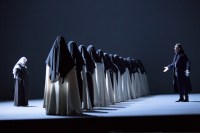
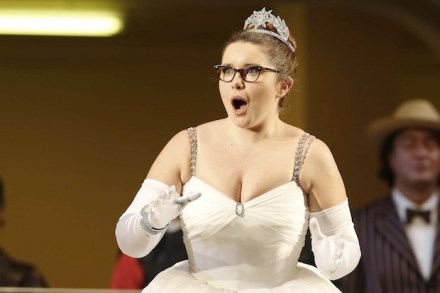
If ever an opera was weighed down by its creators’ joint ambition, it is Die Frau ohne Schatten. Richard Strauss and his librettist Hugo von Hofmannsthal quickly began to imagine their third true collaboration, produced during the 1910s but not premièred until 1919, as their masterpiece. But it turned into a complex and unwieldy embarrassment of riches, albeit a glorious one. The charge that this enormous fairy tale represents the librettist and composer at their most pretentious and overblown is difficult to refute, and such charges are compounded by the fact that the surface message of its plot — in which a shadowless and infertile spirit Empress learns compassion and gains humanity, a shadow and fecundity — can be read as a kind of pro-procreation parable.

Menuhin is the world’s toughest violin competition. Why is it packed with Asians, and no Brits?

Music

‘The truth is,’ says Gordon Back, lowering his voice, ‘that if the violin finalists from the BBC Young Musician of the Year were to enter the Menuhin Competition, they wouldn’t make it to the first round.’ Not through the first round, note, but to the first round: they wouldn’t be good enough to compete. Back is artistic director of the Menuhin, held every two years in a different country. In effect, it’s a search for the next Yehudi Menuhin, who recorded the Elgar concerto with the composer at the age of 15. Some critics think Menuhin never quite fulfilled that astonishing early promise — but I wouldn’t dare suggest that to Gordon Back.

So now we know – the BBC is more scared of offending Muslims than gay people

Columns

Are there enough black and minority ethnic people on our television screens? The comedian Lenny Henry thinks not and has proposed targets to ensure better representation. Lenny means stuff like Midsomer Murders, I think, which famously avoided using people of colour for a very long time in its absurd but strangely comforting dramas. I think this was to cater for people like me who enjoy watching affluent white people bludgeon each other with candlesticks in the library. In fairness, even Midsomer Murders once had some gypsies play a pivotal role in one episode — they lived in a gaily painted horse-drawn caravan, and were scrupulously tidy and probably filed their income tax returns ahead of schedule. But in general, Lenny has a point, I suppose.

Småland

More from Books

Småland’s wooden cottages with sunflowers lack nothing. Brightly-painted, small in the distance like stories, they call the eye on and on. Their painted wood is clean as thought, as the clean-cut hearts let into their shutters.

Under the Skin: one second of tits to every three minutes of glen

‘I thought it was supposed to go on for another half hour!’ said a man in the foyer on the way out. ‘When the alien got burnt to death I thought thank fuck for that.’ Before you get annoyed with me for giving away the ending, let me explain that this is one of those films where plot takes a back seat. More than that, it’s been tied up, gagged and locked in the boot. I can’t stand it when people give away the ends of films, which is why I never read reviews before going to the cinema. Too many reviewers have no respect for plot.

The Picasso muse who became an artist

With her long blonde hair tied in a ponytail, Sylvette David is familiar from many of Picasso’s paintings. She met the artist in the South of France as a teenager and became one of his models – his muse but never his mistress — during the spring of 1954 (Picasso’s relationship with Françoise Gilot had ended and he hadn’t yet met Jacqueline Roque). A collection of drawings, paintings, metal sculptures and ceramics documenting their relationship can now be seen in the Kunsthalle Bremen’s exhibition Sylvette, Sylvette, Sylvette: Picasso and the Model (until 22 June).

Rome, Open City still shocks

More from Arts

Roberto Rossellini shot his neorealist landmark Rome, Open City while the war still raged and rubble littered the freshly liberated capital. Based on real experiences from the ten-month German occupation, the film follows ordinary Romans, some active dissenters, some just trying to get by, as the Nazis and the Italian fascist authorities mount a search for a Resistance fighter freshly arrived from outside the city. Actress Anna Magnani established her screen persona as the indomitable battler from the streets, and renowned stage comedian Aldo Fabrizi (above) turned in a performance as great as any in cinema as Don Pietro, the priest whose faith in God and his fellow man never wavers, even in the face of death.

The sound of growing rhubarb

Radio

When the BBC proposed to do away with 6 Music a few years ago, the media-savvy fans of the station created such a fuss on Twitter and Facebook that the Corporation caved in. Threat of closure was exactly what the station needed to grow its listener-base, now almost as big as Radio 3, and growing (up to 1.96 million per week in the latest Rajar figures, as opposed to Radio 3’s 1.99 million). The Asian Network, too, has flourished after suggestions that it would also have to be shut down if the BBC was to survive financially in the new digital age. But what’s good for them has now spelt doom for BBC3 (at least as a ‘linear’ channel) and further cuts are forecast. Which station will face the chop next time?

If you’re going to adapt a bestseller, don’t choose the A-Z

Theatre

What’s the quickest way to create a hit musical? Base it on a bestselling book. The writers of The A-Z of Mrs P have done just that. But they’ve chosen the wrong book. You twits. You need to pick a popular novel, not the London street directory. The main character, Phyllis Pearsall, spent years trudging the pavements of the capital creating her catalogue of 23,000 streets. In this show, the character of Mrs P, a posh and self-contained bumpkin, proves dramatically inert. The writers seem to have twigged that she’s a dud, so they’ve turned their attention to her uppity Hungarian father and his sozzled Irish wife. But these two yield no rewards either. He’s a shouty nuisance and she’s a whimpering wreck.

Richard Deacon – from Meccano into art

Exhibitions

When I visited the Richard Deacon exhibition at Tate Millbank, there were quite a lot of single men of a certain age studying the exhibits with rapt attention — some even making notes. (I realise I’ve just described myself...) This is perhaps because the show is all about the glories of construction, and reminiscent of hobbies on an industrial scale. The exhibits are made of bent wood, looping metal, other materials cut or sewn or carved, exoskeletons of imaginary, or rather invented, things. Much of the early work in this fascinating survey is linear, the structures resolutely open, but the emphasis gradually becomes more volumetric and involved with three-dimensional plasticity. Richard Deacon (born 1949) is an object-maker of intriguing presence and diversity.

Opera’s fallen women

Opera

Opera’s grim fascination with ‘fallen women’ — as Welsh National Opera has called its latest mini-season — lies largely in the spectacle of the fall itself. But in Hans Werner Henze’s Boulevard Solitude, the composer’s 1952 operatic debut, the heroine — a tart denied even a heart — starts off near the bottom; her fall is less precipitous than those in the other two operas the company has chosen for its theme, Puccini’s Manon Lescaut and Verdi’s La traviata. Like Puccini’s opera (and Massenet’s Manon), Henze’s is based on an 18th-century novel by the Abbé Prévost.

Bare and authentic or full and fake? The dilemma of preserving writers’ houses

More from Arts

Every year, tens of thousands of visitors flock to the Mark Twain House in Hartford, Connecticut, in order to see where he lived and wrote. Many famous writers’ homes are preserved for visitors, some of whom are devoted readers (and some who know they are supposed to read his or her books). Twain, we can imagine, sat in that chair while writing Huckleberry Finn. However, only a small portion of the objects one sees were actually there when the writer lived in the house. Most of the original pieces were either sold off or dispersed to family members. The cost of building this 1874 house and furnishing it, in fact, was too much for Twain, and he and his family needed to sell most of it and move abroad in 1891.

Ivan Vasiliev and Roberto Bolle: interview with ballet royalty

Arts feature

In 1845, the theatre impresario Benjamin Lumley made history by inviting the four greatest ballerinas of the day to appeartogether on the stage of Her Majesty’s Theatre in London. It is fitting, therefore, that next week, 169 years later, Sergei Danilian’s internationally acclaimed project Kings of the Dance should reach the London Coliseum. After all, the project, which had its world première in 2006, is a modern adaptation of an old idea, even though it is an all-male event this time round, and more than just an exploitation of trite balletomania, which is probably what Lumley went for.

Disposable dance-pop at its best and a Lennon-lite yawnfest. Kylie and George Michael’s new albums reviewed

George Michael and Kylie Minogue have albums out this week. And while they might both be distinctly second-division these days, they’re both still rather remarkable. George Michael got famous for not being Andrew Ridgeley, and has since redefined the status of adult-oriented pop. He has also written the only Christmas song in history worth playing all year round and made the Hampstead branch of Snappy Snaps a tourist destination. I like him a lot. Minogue, meanwhile, is cheesy, knowing and resolutely budget in the international diva stakes. As Aldi is to Waitrose, so Kylie is to Beyoncé. But she’s made some terrific records – have you given up pretending you don’t like Can’t Get You Out of My Head yet?

It was all going so well till the fishnet tights. A Classicist reviews 300: Rise of an Empire…

It is 490 BC and it is raining. Themistocles, the Athenian general, is at Marathon, preparing to shoot an arrow at the great Persian King Darius I. Xerxes, Darius’ son, is there to witness the barb as it flies and strikes a blow that will be fatal and, presumably, deeply humiliating. The Persians prided themselves on their superiority at archery. The opening scenes of 300: Rise of an Empire are the most strained, and bizarre, in the whole film.

Lapwing

Poems

Lapwing leans against the wind, First hint of changing season Come to turn the soil to stone And bring the blanket snow. Until the gentle snowdrops show In the hedgerows, And the fields grow green again, In the warm summer days.

Culture House Pick of the Week: Minogue, Mahler, Strauss and Johansson

FILM: Under the Skin (dir. Jonathan Glazer)  Critics who saw it at the Venice Film Festival thought it either ‘laughably bad’ or a ‘masterpiece’. This week you get the chance to decide whether Jonathan Glazer’s Under the Skin, in which Scarlett Johansson plays a kind of alien butcher on the hunt for human meat to ferry back to a group of extraterrestrial gourmands, is in the mould of Glazer's Oscar-nominated Sexy Beast or, like his Birth, will sink without trace. OPERA: Die Frau ohne Schatten, Royal Opera House Richard Strauss’ barmy opera about a part-human, part-gazelle Empress whose husband will turn to stone unless she can find a shadow for herself (and you thought you had problems) opens this Friday at the Royal Opera House.

New play forgets that rape is not just an Indian problem

A play about the 2012 Delhi rape was never going to be easy viewing and unsurprisingly Yael Farber’s Nirbhaya is painful to watch. It’s easy to close a newspaper when details are too graphic or flick a TV channel when the news becomes unbearable. But this performance is painful because it confronts the most difficult of truths in the most gritty detail. And we, as the audience in the stifling intimacy of the Southbank’s Purcell Room, were unable to look away. Conceived by Indian actress Poorna Jagannathan and scripted by South African playwright Yael Farber, Nirbhaya is currently being performed in London as part of the Women of the Word festival at the Southbank Centre.

Carry On El Comandante. Does the world need a Hugo Chavez exhibition?

The other day I got an invitation to a do called ‘For Now and Forever – a reception and photo exhibition celebrating the life of Hugo Chávez’, with speeches by various left-wing notables, including the one and only Len McCluskey. It’s been a year since Venezuela’s cuddly comandante passed away, and supporters of his Bolivarian revolution want you to know it. Attracted by the prospect of a free glass of wine and the comedy value of hearing somebody say ‘¡Hasta la Victoria Siempre!’ unironically, it was a no-brainer. And so I found myself in Fitzrovia’s Bolívar Hall, surrounded by the most 70s crowd this side of a Van der Graaf Generator revival.

Behind the scenes at Spitting Image

More from Arts

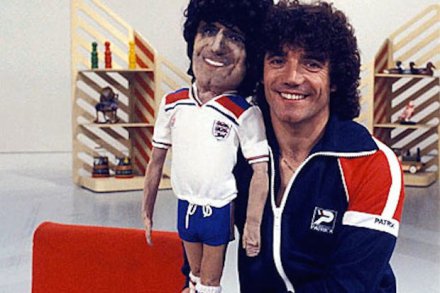
If Margaret Thatcher is remembered by many more as a caricature than as her actual self, then blame Spitting Image. The show, which ran from 1984 to 1996, portrayed her variously as a cross-dresser, a fascist and a bully but, to her credit, she never complained. Or, if she did, there’s no record of it. Of course it wasn’t just politicians who were targeted; anyone in the public eye was also ripe for a takedown, from Kylie to the Queen. Deference — what’s that? To mark the programme’s 30th anniversary, BBC4 has created an Arena documentary that takes viewers behind the scenes of the Spitting Image process; introducing us to the people who made the programme come to life, and the hellish hours they worked keeping the show on the road.

Listening to genocide – and what came next

Radio

It doesn’t take long for an international event of historic importance to fall off the news agenda. Ukraine is still there, making headlines, but soon it will be forgotten as the political drama in Kiev, Sebastopol, the Crimea is overtaken by an unfolding crisis elsewhere. We who live beyond and outwith the situation are encouraged to move on, gawping instead at another horrifying outpouring of human cruelty and misery. But for those forced to stay on and endure it’s not so easy. For them the terror will linger on long after our sympathies have been translated to another scene, another situation.