Culture

Culture

The good, the bad and the ugly in books, exhibitions, cinema, TV, dance, music, podcasts and theatre.

Painted, sculpted and stuffed: a history of the bird in art

Exhibitions

These days, as the sparrows and starlings so common in my youth are growing scarce, there’s less need for a rarity like the osprey or butcher bird (the red-backed shrike) to raise awareness of the plight of birds, and with Radio 4’s Tweet of the Day you might say that birds are in (or on) the air — but then they would be. The flightless varieties, such as the dodo, have always been in greater danger, unless they could run very fast. Birds are synonymous with flight, and as such are a potent symbol and embodiment of many of humanity’s hopes and dreams. They connote both the human and the divine spirit through their soaring freedom of movement, and their linking of earth and sky (often also water).

Three cheers for being miserable

I prefer the music and lyrics of Pharrell Williams’s Happy to Morrisey’s Heaven Knows I’m Miserable Now (because I loathe the smug insincerity of Morrisey more than anything else) but - in case you haven't noticed - I'm still a miserabilist. Being a glass-half-full-and-cracked-and-laced-with-poison type of gal, I can't abide the influx of positivists that appear to have popped up in recent years. A positive attitude is supposed to cure cancer, bring about world peace and end starvation. Being negative, as I am (by way of avoiding chronic, daily disappointment), is treated with distain, disgust and derision. I'm blamed anytime I get ill by fake gurus for bringing it about myself as a result of not actively healing through positive thinking.

A miracle: a three-hour film that flies by

Cinema

Richard Linklater’s observational chronicle, Boyhood, was 12 years in the making and is 166 minutes long — that’s nearly three hours, in real money — and I wasn’t bored for a single moment. Isn’t that miraculous? Have you ever heard the like? Me, who is generally bored at the drop of a hat? Me, who is generally bored before the hat even hits the ground? But those 166 minutes (still nearly three hours, in real money) just flew by, as can happen, when you are utterly engrossed. Who knew? This is the story of a family, as told through the eyes of a boy, Mason (Ellar Coltrane), who ages from six to 18, in real time.

The sweating, dust-glazed saints at the Hampstead Theatre tells us nothing new about the miners’ strike

Theatre

Hampstead’s new play about the 1984 miners’ strike was nearly defeated by technical glitches. Centre stage in Ed Hall’s production there’s a clanking great iron chute that stubbornly refused to go up and down when ordered. A bit like the miners. The writer, Beth Steel, is a collier’s daughter and she romanticises the pit workers to the point where they seem like an exotic species of humming bird. Brave, high-minded and selfless, these noble sons of toil go marching off to the pithead every day to hack and burrow their way through the depths of hell. Into the elevator they trudge, their shovels resting on their shoulders, their voices uplifted in song.

The next new presenter of Woman’s Hour should be a man

Radio

It seems incredible now but when the BBC’s youth station, Radio 1, was launched in 1967 there were no female presenters. That’s right. Not a single woman’s voice to leaven the mix of Fluff, Blackburn and co. One-half of the young people the Corporation was hoping would stay tuned beyond Listen with Mother and Children’s Hour were burning their bras and demanding the pill. Yet the world presented to them by Auntie was strictly male-only. It took three years before Annie Nightingale was allowed behind the mike, and several more before she had company.

How do you like your pop: clean, dirty or downright soap-shy?

Music

I am still listening to the new Coldplay album, and liking it more and more, and not just because everyone keeps telling me how terrible it is. There is perversity in all enthusiasm, for sure, but the unanimity of critical disapproval in this case seems to have mixed with popular ennui to create a bracing cocktail of contempt and contumely. It just makes me want to play the damn thing even louder. Ghost Stories (Parlophone) is the Millwall of break-up albums. If you don’t like it, it doesn’t care. Maybe it’s because break-up albums are supposed to be dogged, downbeat affairs, recorded in one take in some grotty old studio with a 1950s mixing desk and the door hanging off its hinges. But this one is luscious, expensively recorded and clear as a bell.

Ryedale Festival: a beacon of survival without subsidy

More from Arts

There are festivals of everything, everywhere. So why get excited about the Ryedale Festival (11–27 July) apart from the fact that it happens on my Yorkshire home ground — and I used to be its chairman? Every summer music festival proclaims the richness and variety of its menu. Ryedale, under the artistic directorship of Christopher Glynn, competes with the best, from its opening Monteverdi Vespers in Ampleforth Abbey to its Royal Northern Sinfonia finale at Hovingham Hall. But what’s really special about this one is the opportunity to pass an extended fortnight tootling across what I truly believe is England’s loveliest landscape, picnicking en route.

Royal Opera’s Maria Stuarda: pathos and nobility from Joyce DiDonato, lazy nonsense from the directors

Opera

London is lucky to have heard Joyce DiDonato at the height of her powers in two consecutive seasons. The American mezzo has arguably done less well out of the arrangement, however, finding herself at the centre of two disappointing new productions. Last year it was Rossini’s La Donna del Lago, an intractable non-drama which John Fulljames’s staging (sponsored by Harris Tweed) turned into an unconvincing treatise on constructions of Scottish nationalism. This season it’s Donizetti’s Maria Stuarda — similarly, if even more obliquely, concerned with Anglo–Scottish relations.

Perfect dancing but boringly beautiful

More from Arts

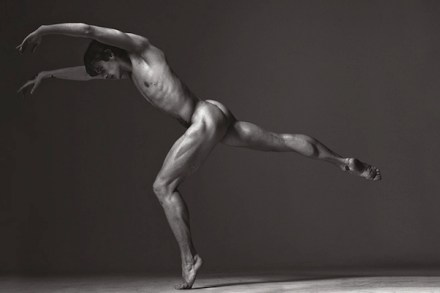
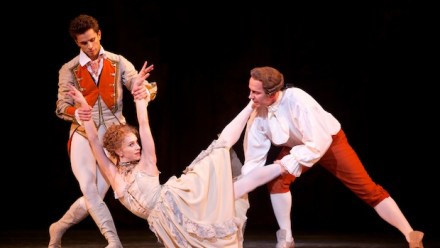
Aesthetically speaking, last week’s performance by the Nederlands Dans Theater 1 was one by the slickest of the season. Fashionably engineered juxtapositions of black and white, sets that stun on account of their elegant simplicity and mechanical complexity, chic costumes that de-gender dancers, scores decadently à la mode and clockwork dancing came together seamlessly to make a powerful visual impact. Beauty can be boring, though. Created by Paul Lightfoot and Sol León, who are the driving force behind Nederlands Dans Theater 1, Sehnsucht (‘longing’) and Schmetterling (‘butterfly’) came across as perfectly structured concoctions of derivative formulae, though they lacked any spark.

Isn’t it time we asked the National Theatre to support itself?

More from Arts

[audioplayer src="http://traffic.libsyn.com/spectator/TheViewFrom22_10_July_2014_v4.mp3" title="Lloyd Evans and Kate Maltby discuss the National Theatre's funding" startat=1261] Listen [/audioplayer]Two glorious playhouses grace the south bank of the Thames. Shakespeare’s Globe and the National Theatre stage the finest shows available anywhere in the world. Both are kept in business by the play-going public who last year helped the Globe to turn over £21 million, with a surplus of £3.7 million. Audiences also flocked in record numbers to the NT and it notched up nearly 1.5 million paid attendances, with its three houses playing to over 90 per cent capacity. But there’s a massive difference between the two.

My Grandmother Said

More from Books

It was the First World War. Her husband was away. So she knew fear, but also found new freedom in the day. On Thursdays, with the farmer’s wife, old basket in her lap, by butter slabs, she rode to Brigg, shawled, in the pony trap. Oh how I envied her! I whined to Brigg by bus, for school, no pony’s dancing knees, first sun in elder bush. She would have crossed the Ancholme, seen the canal glint wide. She could buy apples and white thread, jog home, to new moon’s rise. ‘But I was frozen, to my bones, all winter.’ Was that all? My grandfather took up the reins. She settled in her shawl.

Why Eric Gill would have enjoyed the 3D-printed dildo as much in principle as in practice

'At the Sign of the Cross in St James’s Street, When next you go thither to make yourselves sweet By buying of powder, gloves, essence, or so, You may chance to get a sight of Signior Dildo.' So wrote John Wilmot, Earl of Rochester, in 1673. But the era of having to go to St James’s Street to buy dildos appears to be drawing to a close: the Daily Mail reports that owners of 3D printers can now design and make their own, thanks to a website that lets users 'create different shapes and adjust the height, curviness, colour and angle of the toys to make a 3D model'. With a suitable printer, they can then produce their own silicon sex toys, 'the likes of which may not be on offer at places such as Ann Summers'.

Kanye West is a sanctimonious prat – which is exactly why he’s so great

What’s the difference between Kanye West and the space cadets of Speakers’ Corner? Without having access to their bank statements, the biggest distinction between the two parties is that when Mr West (‘Yeezus’ to his friends) played a gig in London on Friday, he was standing on a state-of-the-art stage set rather than a stolen classroom chair. Otherwise, it’s pretty hard to make a distinction. You won’t find many differences in their public speech, that’s for sure. ‘I am Shakespeare in the flesh!’ he once declared, before dropping the false humility and admitting that he was in fact ‘God’s vessel.

Why I love Tracey Emin’s bed

My Bed, one of the works that failed to win Tracey Emin the Turner Prize (she lost to Steve McQueen in 1999), made £2.2m at Christie’s this week, going to an anonymous buyer. Charles Saatchi, who put it up for auction, had bought it for £150,000 in 2000. It has apparently lost none of its controversy since it first went on display at Tate Britain 15 years ago. And by ‘controversy’ I simply mean that many people - and that includes art critics - don’t think much of it at all. And note, I only use the term 'controversy' – and in scare quotes – because many sections of the media are rather wedded to it when it comes to anything do with Tracey Emin.

Hacking Trial: the movie

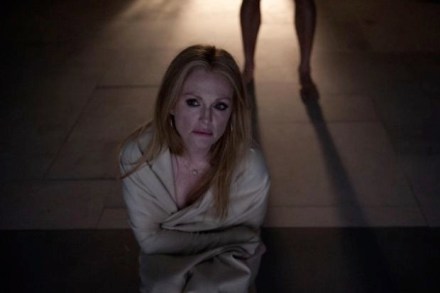
We may have had the verdicts and the sentences in the hacking trial, but the biggest question remains unanswered: who’s going to play everyone in the movie? There’s one clear and obvious frontrunner for the part of Rebekah Brooks: Bonnie Langford. Sadly, however, Ms Langford has heavy panto commitments and cannot be released for filming. So we’ll have to make do with a B-list purveyor of ginge instead – Nicole Kidman, perhaps, or Julianne Moore. (Cate Blanchett might have got a look-in if we’d avoided the temptation to base everything on the hair, but Brooks herself never did so why should we?) Andy Coulson should be played by Ewan McGregor, though only if he promises not to repeat his God-awful ‘estuary’ accent from The Ghost.

‘I would find myself forging my own work’: Quentin Blake on how he came to found the House of Illustration

Arts feature

The illustrator Quentin Blake is uncannily like one of his own creations: tousled, bright-eyed, quizzical, and apologetic about his summer cold. He greeted me warmly and conducted me down a dimly lit hallway into his lair, a studio giving on to a leafy London square, piled high with the tools of his trade: papers teetering on plan chests, jars of brushes, palettes of paints, toppling books — all the shambolic clutter of a busy artist’s life and work. I was there to find out about the eagerly anticipated House of Illustration, which opened this week in the old railwaymen’s house on Granary Square, that ineffably cool destination north of King’s Cross, home to Central St Martins College of Art and just over Regent’s Canal from Kings Place.

Charles Hadcock – taking on the age of speculation with sculpture in the City

Exhibitions

As the boundary between auction house and art dealer blurs yet further, with auctioneers acting increasingly by private treaty as well as taking over commercial galleries, and as West End gallery space becomes ever more expensive, alternative exhibiting venues are being sought with growing urgency. One solution is to move further into corporate territory, and Charles Hadcock (born 1965) is currently doing just that with an exhibition of his latest sculptures in the foyer of 60 Threadneedle Street in the City.

Shot at Dawn: an emotionally charged WWI musical

A court-martial — followed by an execution: not exactly promising ingredients for a musical. But Ross Clark’s new music drama Shot at Dawn turns out to be unexpectedly moving. On the outbreak of the first world war, Adam, a farm labourer, enlists in the army, despite being underage, and is later shot for cowardice; his sister Georgina fights to clear his name.  That’s the plot in short. With a minimum of props and a piano, nine actors manage to captivate and draw in the audience. How? Through the emotional charge generated by the words and music. It’s an evening that leaves you surreptitiously reaching for a handkerchief. Highly recommended....

Seeing London afresh, one bridge at a time

More from Arts

Bridges aren’t necessarily something you think of as being beautiful, particularly if you consider them primarily as the means to cross a river, rather than as works of art. London, however, has always been famous for its bridges, many of which are architectural marvels. From medieval London Bridge, piled high with shops and houses, to the gothic beauty of Tower Bridge, their variety is one of their most interesting assets. The capital has built itself up around the river over thousands of years, and its bridges offer contrasting viewpoints of the city. This is all emphasised in Bridge at the Museum of London Docklands (until 2 November).

The Honourable Woman could have done with some help from an overpaid executive in a suit

Television

BBC2’s The Honourable Woman (Thursday) began with a rather portentous voice-over bringing us the unsurprising news that ‘We all have secrets. We all tell lies just to keep them from each other and ...pause to indicate psychological profundity ...from ourselves.’ Luckily for the viewer, this was accompanied by the sight of man in a restaurant being stabbed to death by a waiter in front of his young son and daughter. As it turned out, this would set the tone for much of what followed — an hour of drama that combined memorable set-pieces with slightly too transparent an insistence on its own significance.

A Glastonbury adventure with Led Zeppelin, Lana del Rey, drug dealers – and my son

Music

‘Charlie. E. Powder,’ said the friendly, helpful man working his way through the crowd during the mindblowing Friday-night headline set by the American dubstep DJ Skrillex. I looked wistfully at his man-bag of chemical  enhancers. Skrillex was good. Maybe the best electronic act I’ve seen in 24 years of Glastonburies. (‘Slivers of mutant dancehall, booty house, Daft Punk arpeggios and big pop choruses, all mangled into oblivion with his signature sub-bass wobbles,’ as the Guardian’s critic so rightly put it.) But imagine just how much more trippy that Transformers light show would look if...‘Dad?’ said Boy, next to me. ‘I’m really tired. Can we go soon?’ Yes.

Opera North’s Götterdämerung is astounding (nearly)

Opera

It seems a very short time since I interviewed Richard Farnes about Opera North’s planned Ring cycle, the dramas to be done one a year, semi-staged in an idiosyncratic way. In fact, it is four years, and now the complete cycle has been performed to universal acclaim, with the loudest cheers going to the conducting and the stupendous playing by the orchestra of Opera North, with some reinforcements — all six harps, and so on. Farnes explained to me in the interview that he was studying the Ring, with which he had previously had no professional connection.

Fashion Victim – the Musical!: daft camp with a warm heart

Theatre

Fashion Victim — the Musical!. There’s a title that’s been waiting to be used for ages. The Cinema Museum is a frumpy warehouse, tucked away in a Kennington backwater, crammed with big-screen memorabilia. A cobwebby salon fitted with a catwalk serves as the theatre. Charmingly camp Carl Mullaney kicks things off by introducing the cast as if they’re already Hollywood legends. Which they are. In their heads. The storyline is eccentric and a little out of step with the world it seeks to mock. A Canadian wannabe, Mimi Steel, descends on London determined to become a superstar. She seduces a Parisian hunk, Cedric Chevalier, whose list of contacts is sufficiently high-powered to confer success on anyone.

Glastonbury: a middle-aged mudbath for those who failed to misspend their youth

In 2010, Brendan O'Neill suggested that Glastonbury had become an authoritarian, corporate pigpen. From the looks of things this year, nothing has changed. Here's Brendan's piece: Most people, when they hear the word Glastonbury, think of mud, drugs, drunkenness, moshing, free love, the lighting up of spliffs, and generally harmless experimentation in a field. Well, they’re right about the mud. Yet far from being a site of hippyish self-exploration, the Glastonbury music festival has become a tightly regimented gathering of middle-class masochists who don’t mind being bossed around by nosey cops and kill-joy greens for three long days.

John Bishop interview: ‘My dream was to be Steven Gerrard, but he got there first’

Arts feature

John Bishop doesn’t just tell funny stories. He also tells the sort of life story that makes you sit up and listen. He grew up on a council estate outside Liverpool and, at the age of six, visited his father in prison. By the time he was in his mid-thirties he was working in middle management at a pharmaceutical company, had three children and was going through a divorce. Today he sells out 15,000-seat arenas, is still married to his wife and no longer works in middle management. It was a Monday night and Bishop was looking for something to do. His friends were tired of him ‘crying into his beer’ about his divorce. So, aged 34, he decided to visit a comedy club for only the third time in his life.

Oceans and forests in kaleidoscopic flow – discovering Keith Grant

Exhibitions

For decades I’ve been aware of the work of Keith Grant (born 1930), but it is only in recent years that I have come to know it at all well. During that time both the style and the subject of his paintings have undergone a series of remarkable revolutions, as he determined not to rest on his laurels, but to explore the fundamentals of his approach and interests. You don’t often see an artist doing this, particularly one over the age of 80, when an ‘everything goes’ Old Age Style is a more common development.

A comic drawn by Bob Monkhouse in which a superhero battles giant penises? Yes, it’s all here

Exhibitions

Fwoooosh! That, were someone to write a strip about it, would be the sound of a thousand comic books going up in flames. They used to do that, you know; burn comics. It was mostly in America, in the late 1940s, after these DayGlo fictions, with their monsters and superheroes and suggestive curves, were declared bad for children’s health. But it spread to Britain too. Parents and teachers would search drawers and desks. Any comics they found would be gathered in small piles outside. A responsible adult would pull out some matches. And then, like I said: fwoooosh! Of course, comics are now treated with greater respect.