Culture

Culture

The good, the bad and the ugly in books, exhibitions, cinema, TV, dance, music, podcasts and theatre.

Has any band of the past 20 years been as consistently irritating as Coldplay?

Music

It’s a long time, a very, very long time, since I bought a Coldplay album. Has any band of the past 20 years been so consistently irritating? Oasis were aggressively annoying, which isn’t the same thing. I quite liked the first Coldplay album, particularly ‘Trouble’, and A Rush of Blood to the Head was a fine record, full of the sense of an ambitious young band finding out what they were capable of. After that, though, they made the fatal Faustian decision to become the biggest band in the world. Although I have made it my business to hear subsequent albums, partly out of curiosity and partly to confirm my prejudices, actual folding money has not been involved.

New wonders among old shelves at the London Library

More from Arts

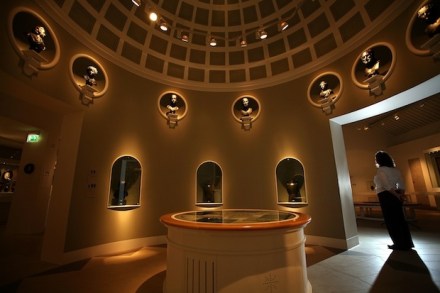
The Royal Court Theatre, the Young Vic Theatre and the London Library (above) are buildings of varied character and rich history. What they have in common is that each has been unpicked and reassembled by the architects Haworth Tompkins, recently announced as winners of the RIBA London Architect of the Year. This firm, founded in 1991, often gets chosen to make practical improvements to existing institutions and manages to make them work with a panache that allows the original building to retain its character. In an architectural world where severe contrast between old and new confronts the alternative of invisible and seamless extension, they have always managed to get somewhere in between.

Belle has everything going for it – except for a decent soundtrack or script or plot or acting

Cinema

Belle is based on the true story of Dido Elizabeth Belle, the illegitimate, mixed-race daughter of a sea captain and his African slave mistress, who was brought up as a free gentlewoman by her great uncle, Lord Mansfield, at Kenwood House, Hampstead, in the 18th century. How fascinating, you might think. You just can’t mess up with a story like this, you might also think. It has everything going for it; a costume drama fulfilling all our beloved Jane Austen tropes (class, gender, etc.) with the added charge of race. How could it go wrong? Alas, all too easily. This is disappointingly lifeless, and shallow, and the soundtrack! So many violins, you’ll leave feeling as if you’ve been quite violently smacked around the head with one. Repeatedly.

Shorthand

More from Books

Might you not have found him a little exhausting, though? If, for example, you were his mother, not given to innovative thinking yourself, and had this youth (in 1920 the word teenager was not current), forever coming up with a new interpretation of Genesis or sketching plans for a contraption that must be at least electrical, if not dangerous. And now this: a small ad in the Auckland Star – SHORTHAND in three hours. New system, easily learned. Send 5/- for course. C. Adcock, Te Rau-a-moa. That was in June; but on reflection three hours may have struck him as less than five shillings’ worth. So in December: SHORTHAND in three days. Write C. Adcock regarding the Veasy system… Oh, yes, ha ha – Veasy: v. easy. Did you make any money, Cyril?

When The Spectator helped butcher Richard Strauss

To be honest I'm not certain that Michael Nyman, The Spectator's music critic in the late 60s, was one of the performers on this infamous (and in my opinion greatest) recording of Richard Strauss's Also Sprach Zarathustra. But what is certain is that Nyman (alongside Brian Eno and Gavin Bryars) did become an enthusiastic member of the Portsmouth Sinfonia and had been a fan ever since he first witnessed one of their deliberately execrable concerts: 'I sat through the first half... and I was so moved and entertained and excited by the music that I went up to Gavin [Bryars] in the interval and said, 'Is there a spare instrument? I'd like to join.' They had a spare cello, so suddenly I was playing In the Hall of the Mountain King in the second half.

It’s not the job of the arts industry to get more ethnic minorities through its doors

You’ve got to feel sorry for the arts world. Decades of self-imposed diversity drives and community outreach schemes and still – still! – they’re told they’re not being inclusive enough. 'Even from the cheapest seats in the [Royal Opera] house,' Harriet Harman said yesterday, ‘I couldn't see in the audience anyone who wasn't like myself: white, metropolitan and middle class.’ Tory culture minister Sajid Javid had the same message last week, noting how few people from black and ethnic backgrounds are given grants from the Arts Council. Before this Jeremy Paxman was banging on about how poetry needed to engage with ordinary people. It reminds me of another age.

TV snobs hate the telly because it’s watched by those born on the wrong side of the tracks

Growing up in the 1970s I watched as much TV as humanly possible. When we had important visitors to the house my mum would merely turn down the volume, and by the time we went to bed you could have fried an egg on the screen. Now that I am a middle-aged, middle-class professional the only thing that has changed is I watch even more of it. I have a TV in my bedroom, in the kitchen, lounge, and access to it on my phone, iPad and laptop. But all my adult life, since I began mixing with educated, privileged people, I have been plagued by TV snobs. You know the type: if you admit to watching Coronation Street, or Eastenders, you are treated as though you walked straight off Jeremy Kyle.

Was Kenneth Clark wrong not to ‘understand’ the value of abstract art?

Kenneth Clark's view of culture may by now be 'outmoded', but I was surprised to read that it was also 'narrow'. An exhibition at Tate Britain about Clark’s influence, Looking for Civilisation, and the BBC's threatening to remake the Civilisation TV series, have given rise to some depressing comment. Much mention is made of Clark's 'stiff' presenting style; he mostly stood in front of the camera, rather than walking to and from it as one must now. I assume we are being encouraged to take this as the sign of regrettably rigid thinking. But Clark knew where he stood. And that is at the root of the problem. 'I believe that order is better than chaos, creation is better than destruction. I prefer gentleness to violence.

Nicola Benedetti interview: Bruch, boyfriends and Scottish independence

Arts feature

On  18 September, the Scots will decide whether they want to become independent. But it is only a coincidence that Scotland’s most celebrated violinist is launching an album that brings together Scottish folk music, the tunes of Robert Burns and Max Bruch’s Scottish Fantasy. Nonetheless, I want to know where Nicola Benedetti stands on the most fundamental question the Scots have asked of themselves since the Act of Union in 1707. I’m  sitting opposite her in the west London flat she shares with her German cellist boyfriend Leonard Elschenbroich. The late morning light from the window is catching her rich brown hair and turning it blonde. Is she, I ask, excited about the Referendum? ‘No. Terrified. I’m terrified either way.

It took 11 years to bring Bill Viola to St Paul’s Cathedral – but it was worth it

Exhibitions

Deans are a strange breed. Growing up in the Church of England, I met a wide range, their cultural tastes embracing everything from Chagall to In Bed with Madonna. In 2003, I didn’t know what appealed to the then Dean of St Paul’s Cathedral, John Moses, but in April of that year it suddenly became crucial. I was proposing that St Paul’s commission the artist Bill Viola — dubbed by some the Rembrandt of the video age — to create a work for the cathedral. Since Moses had never heard of Viola and I didn’t work in the visual-arts world, it seemed a far-fetched proposition. Yet I was in no doubt that it should happen.

Kenneth Clark wasn’t happy simply popularising art, he liked to collect it and shape it too

Exhibitions

Earlier this year, I sat down and watched Kenneth Clark’s groundbreaking TV series Civilisation. I vaguely remember when it was first screened in 1969, but was too young to appreciate it properly. This time around it made splendid Sunday afternoon viewing: Clark’s distinctive blend of authority and humour, his ability to convey information and enthusiasm without the slightest trace of condescension, coupled with effective camerawork and good editing, make a rich and stimulating brew of word, image and music. The series, which was commissioned by David Attenborough and brilliantly directed by Michael Gill, established a model for all subsequent arts documentaries. Not only did I learn a lot from its 13 episodes, I also enjoyed it enormously as entertainment.

Uncovering a Royal treasure trove

More from Arts

It’s rare for the public to be given access to the Royal Archives. They are housed in the forbidding Round Tower at Windsor Castle, and direct contact with them is normally reserved for erudite academics adept at buttering up the Keeper. With about two million documents relating to 700 years of the British monarchy, it is quite the trove. To celebrate the centenary of the creation of the archive, a few pieces have been put on display. Treasures from the Royal Archives (until 25 January 2015) is a bijou blend of the cheerful and the solemn. A young Princess Elizabeth captures her parents’ coronation in 1937, writing that she thought it ‘very, very wonderful’ and that she expected ‘the Abbey did too’.

When the big-boobed whisky monster met the upper-class snoot

Theatre

Lionel is a king of the New York art scene. An internationally renowned connoisseur, he travels the world creating and destroying fortunes. He anoints a masterpiece, here. He defenestrates a forgery, there. He visits the Californian city of Bakersfield (code in America for Nowheresville) to determine the authenticity of a Jackson Pollock bought for three bucks in a garage sale by an unemployed drunk named Maude. This is a great set-up. Power meets destitution. Sophistication frowns at simplicity. Wealth hits the dirt-heap. It’s enormous fun, too. As the impeccably tailored Lionel walks into Maude’s cluttered hovel, he’s attacked by two ravening Alsatians. She offers him a whisky ‘to take the edge off’. ‘I’d rather keep the edge on.

Dance games from Anne Teresa de Keersmaeker at Sadler’s Wells

More from Arts

Forget the pedantic classifications of genres, styles and schools. When it comes to dance performances, it all boils down to two kinds: those that make one think and those that entertain. Anne Teresa de Keersmaeker is a veteran of the first category. Since 1983, the year she founded her company Rosas, she has used the choreographic idiom to explore and question other areas of culture and performance-making. Music and its multiple uses have always been her main sources of inspiration, and her thought-provoking, if not puzzling or purely irritating, challenges to music remain at the core of her creative process. Over the years, she has also fine-tuned her signature movement vocabulary: carefully thought out, austere, never gratuitously ornamental.

Dialogues des Carmélites brings out the best in Poulenc – and the Royal Opera House

Opera

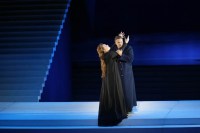
Poulenc’s Dialogues des Carmélites is an audacious work, much more so than many others that advertise their audacity. It deals with Love and Death, the central topics of opera, but the love is that of God; and death, rather than being a romantic consummation or a stirring tragedy, is something to be terrified of. The central character, Blanche de la Force, is terrified of life too, and her determination to enter a convent is seen initially as an attempt to escape, so that in the powerful second scene of the opera, after being given a hard time by her father and brother, she is subjected to searching questions by the Old Prioress, herself very ill and shortly to face death.

Grace of Monaco: a big, glistening, strutting, irresistible turkey

Cinema

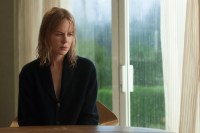
Grace of Monaco, the Grace Kelly biopic starring Nicole Kidman, is an absolute joy, and I highly recommend it. Unless you live under a rock, which I think I might envy (dark, quiet, peaceful, but maybe dank?), you’ll know it was savaged at Cannes, but don’t let that put you off, as this isn’t just some middling turkey; this is a big, glistening, strutting turkey. This is one of those turkeys so jaw-dropping it achieves grandeur of the kind I find quite irresistible. Also, as a reviewer, sensationally bad films are always a pleasure because they are easy to write about — I plan to knock this off in under ten minutes — and you can take any number of cheap shots.

Why it’s good to remember that Bach could be a tedious old windbag

Music

When I was first learning about classical music, 50 years ago, the scene was more streamlined than it is now. Beethoven was king, with Brahms and Mozart next in line, and Haydn slowly establishing himself. Mahler was the new kid on the block; Bruckner was largely unknown and mistrusted. If one wanted the full symphony orchestra experience in late romantic music, it was to Tchaikovsky that most promoters turned. Tchaikovsky cycles, Beethoven cycles, Haydn’s ‘London’ symphonies, Mozart’s last three symphonies were the way to guarantee a crowd, with general knowledge of all Beethoven’s music — string quartets, piano trios, Lieder — at an all-time high. Now Bach is king.

When the Rains Came

More from Books

When the rains continued the rivers rebelled, the swans moved inland and even the bank was sandbagged and we saw images of villages cut off and deserted schools and people being carried out of old folks homes and the cathedrals that somehow began to look like galleons; and as each day drenched we began to wonder how trees remained tethered by root systems and there were stories of people who refused to leave their cottages and a man and his dog got stuck in a chimney and from a distance the Malvern Hills began to look like an island.

Research Centre

More from Books

Beyond the measured stretch of lawns and hedges are cultivated rows where snug plastic tunnels creep. Indoors, the fantastic spores fluff up on jelly: fungus rages under glass and germination bristles. In a sealed hot-room, in tanks lined with foil predators quietly chew and scrat; aphids suck their fill of sap. A forest of corn in pots jostles in the breathless light of the glasshouse, each plant drip-fed, wired to dream on growth. This is calm towering work, where light is monastic, clean or flares briefly on a clear pane, a white coat. All builds, for the one to burst into the room with a bouquet, steal the studied scene.

Did we know TV was crap in the old days?

Here’s a question for those of you old enough to remember 1980s television: did we realise at the time how crap it was, or did we simply not know any better? I’ve been struggling with my own answer to this, ever since watching Danny Baker’s World Cup Brush Up on BBC4 the other night. Yet again the fabulous Baker boy proved that the ‘clip show’ doesn’t have to be an insult. Among the many choice morsels was an early-80s side-splitter from Blue Peter, in which Kevin Keegan was shown a 3D model of himself made by artist Silvia Gardner. (That’s a guessed spelling by the way – inexplicably Google doesn’t seem to have heard of her.

Sorry, Tara Erraught, but the age of the fat lady singing is over

More from life

London’s opera critics have been roundly condemned for suggesting that a female singer’s personal appearance could make her unsuitable for a role. The singer in question is Tara Erraught, a young Irish mezzo-soprano based in Germany, who has just made her British debut in the new Glyndebourne production of Richard Strauss’s Der Rosenkavalier. She takes the part of Octavian, who, although always played by a woman, is supposed in the plot to be an irresistibly attractive young man. The critics all admired Erraught’s voice, but took the view that she was too stocky, dumpy, chubby and unsightly (to use four of their adjectives) to be even remotely plausible as an object of sexual desire. Uproar followed, with other opera singers leaping to her defence.

Bill Forsyth interview: ‘If we hadn’t made a go of it, my plan was just to disappear.’

Arts feature

I watched the new DVD of Gregory’s Girl on the train from London up to Edinburgh. I hadn’t seen Bill Forsyth’s school-yard comedy in more than 30 years. Incredibly, it hasn’t dated in the slightest. When I saw it in the cinema, in 1981, as an acne-ridden adolescent, this tender romance was a revelation — for me, and millions like me. Funny yet heartfelt, it was that rare and precious thing — a rite of passage movie that was neither patronising nor pretentious. Half a lifetime later, Gregory’s Girl still rings true. A reticent, retiring man, Forsyth doesn’t do many interviews, but to promote this new DVD he’s agreed to meet amid the serene splendour of Edinburgh’s Museum of Modern Art.

Tracey Emin’s knickers – a short history of contemporary British art

Tracey Emin’s bed is to be sold at auction this summer with a guide price of £800,000 to £1.2 million, although the man who sold it to Charles Saatchi has said it’s priceless. Emin was part of the British art movement in the ‘90s that gave Richard Dorment trouble at dinner parties; this scene is an occupational hazard of being an art critic, he said. ‘The beautiful person I'm sitting next to has bluntly informed me that modern art is rubbish. We're only on the soup, and a long evening stretches ahead. Whether or not we round this dangerous corner depends on my neighbour's tone of voice, which can range from raw aggression to lively interest. If it is confrontation she is after, the rule is: change the subject as fast as possible.

The rights and wrongs of box-set viewing

Television

Admit it. Say it! ‘My name is Blah and I am a boxaholic.’ Life on hold, marriage in bits, job swinging from a rusty nail, the box-set fanatic grabs every available minute to feed an addiction. I mean, you can’t leave, can’t breathe until you find out whether Jesse and Walter make it up before someone else gets killed in Breaking Bad, or how on earth Jack can keep his daughter safe in 24. Box sets are not movies. They have a different time scale. What can you say in two hours that can’t be said better in 400? Relationships change, grow, collapse, move on. Fear is faster, immediate, for ever present. Plots range from incredible to intimate with the same intensity.

I suspected Maleficent would be terrible from the very first shot

Cinema

If a gang of knife-wielding toddlers ever presses you for the name of the best Disney film, Sleeping Beauty (1959) is a pretty good answer. It has everything you expect from those features animated during Walt’s life: a simple story translated from a fairy tale; beautifully painted castle and forest scenes; a baddie that you can really root against, and all that. But it also has more: widescreen; a wild and luminous colour palette; and a score borrowed from some bloke called Tchaikovsky. Today’s animators are given to cooing about its invention and daring. I’d join them if I had a switchblade raised to my knees. Even if I didn’t. Which brings us bloodlessly to the latest film from Walt Disney: Maleficent.

Harry and Paul’s Story of the Twos is just too funny for its own good

Television

On Harry and Paul’s Story of the Twos (BBC 2, Sunday), there was a particularly cruel sketch in which Paul Whitehouse gave Harry Enfield a Paxman-style grilling as to whether he felt bitter that his comedy series had never won a Bafta award whereas its big rival The Fast Show (featuring, inter alia, one Paul Whitehouse) had won lots and lots and lots. The more Enfield tried to deny that it had bothered him, the more Whitehouse pressed him to admit that it had. But the real victim of the joke, as it would turn out this week, was not Enfield but The Fast Show. Its first episode in years — revived as part of BBC2’s 50th anniversary celebrations — was so embarrassingly bad that it made you wonder why any awards committee might ever have considered it worthy of notice.