Culture

Culture

The good, the bad and the ugly in books, exhibitions, cinema, TV, dance, music, podcasts and theatre.

Let’s face it, Greek tragedy is often earnest, obscure or boring. Not this Medea

Theatre

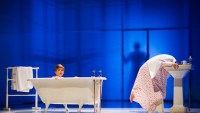
Carrie Cracknell’s new version of Medea strikes with overwhelming and rather puzzling force. The royal palace has been done up to resemble a clapped-out Spanish villa that seems to date from about 1983 if the kennel-sized TV set is anything to go by. (Weren’t TVs massive then? And always brown.) The villa’s peeling wallpaper and suppurating marble edifices form a balcony that straddles an eerie little copse, which manages to look both indoors and outdoors at once. These warring effects — villa and forest — do little to elucidate the play’s simple story: jilted Medea avenges herself on love rat Jason by murdering their two sons and bumping off his new sex-bunny.

In Norwich, a director is caught trying to murder Wagner’s Tannhäuser

Opera

Seventeen years ago the Norwegian National Opera staged two cycles of the Ring in Norwich’s Theatre Royal, performances that have remained vividly in the minds of anyone who saw them. Now Theater Freiburg has visited Norwich with two performances each of Parsifal and Tannhäuser. I was hoping to see both, but transport problems meant that I was only able to go to the second performance of Tannhäuser. I shall have quite a few criticisms to make, but all told it was a triumph, and was warmly received by a far from capacity audience. There aren’t many chances to see this problem child of Wagner’s, and this was the finest account I have seen in several decades, much more moving than the Royal Opera’s production of nearly four years ago.

Was Elgar’s The Kingdom an attempt to write a religious Ring Cycle?

Music

To go from the second day of the England v. India Test match at Lord’s to the Albert Hall for the opening night of the Proms was to make a journey that a chosen few might find enviable. Nonetheless, different though the two activities are, there were some similarities. For example, the arena at the Albert Hall, where the Promenaders stand, fills up more or less to capacity before the seats around it attract a single occupant, these seats being taken at the last possible minute before the start of the concert. Exactly the same thing happens at Lord’s: the pavilion is filled while the rest of the ground remains empty until seconds before the start of play.

Rosa Wedding Day

More from Books

More than a thousand buds have arrived in the garden. Yesterday I looked and there were none. Tangled into a slump of sullen green and bursting with sap they’ve over-run the armandii buddleia jasmine vine and cluster by cluster flick their swollen thumbs or sit on their fingers waiting to open, point their beaks up at the little sun. Their copper thorns will not be soft for long and something like a feather in a lung unfurls its spine inside their inside skin. A feeling wonders what it might become and daylight budges up, slips in between as if there were enough for every one. Rain or shine they will be flowers soon and by their own extravagant over-production lost in a scented commotion of white then gone: hips where their heads were, this year’s growing done.

Cultural boycotts are ineffective and wrong

Scotland’s national poet Liz Lochhead has been at it again. Two years ago she was petitioning against a dance company from Tel Aviv, this year it’s an Israeli theatre company that’s set to play the Edinburgh Fringe. Both companies are 'guilty' of being in receipt of state funding. So, we have another letter and another long list of high-profile signatories calling for boycott. However, we all know – as Lochhead must know – that a boycott won’t, of course, happen (it’s about being seen to take a 'principled stand', d’oh). The nature of Incubator Theatre’s production is irrelevant – I gather it’s some 'film noir-type hip-hop musical'.

Malevich: Are Tate visitors ready for this master of modernism?

Exhibitions

Kazimir Malevich (1879–1935) is one of the founding fathers of Modernism, and as such entirely deserves the in-depth treatment with which this massive new Tate show honours him. But it should be recognised from the start that this is a difficult exhibition, making serious intellectual and emotional demands on visitors, as art enters the realm of pure thought, utterly divorced from the comforting world of appearances. Malevich was one of the first great revolutionary practitioners of abstract art, a pioneer who made work of singular beauty and resonance, but his path is not always easy to follow. Perhaps with this in mind, the exhibition starts with a room of early, mostly figurative work, in which Malevich is shown experimenting with different ways of depicting.

Natalia Osipova interview: ‘I’m not interested in diamond tiaras on stage’

Arts feature

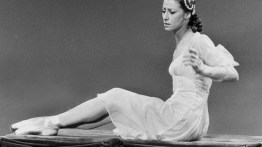
‘I am not interested in sporting diamond tiaras on stage, or having my point shoes cooked and eaten by my fans,’ muses Natalia Osipova, referring to two old ballet anecdotes. ‘Ballet has evolved and the ballerina figure with it. The world around us offers new challenges, new stimuli and new opportunities, and I believe that it is the responsibility of every artist to be constantly ready to respond to these. There is simply no reason, nor time, to perpetuate century-old clichés, such as the remote, semi-divine figure of the 19th-century ballet star.’ Osipova, now a Royal Ballet principal, is still remembered by many as the Bolshoi Ballet’s soloist, who, only a few years ago,  dazzled dance-goers all over the world.

How conductors keep getting better at 90

Arts feature

‘It’s a bad week. I gather we’ve lost one.’ Sir Neville Marriner, himself a huge name, is talking about the death of one of the world’s top conductors. Lorin Maazel, who died at home in Virginia at the age of 84, had led orchestras including the New York Philharmonic. He was still conducting this year. Last month, the Spanish conductor Rafael Frühbeck de Burgos died in Pamplona at the age of 80. Only a week earlier he had announced he had cancer and would have to retire. Conductors, it is no secret, enjoy long working lives — some have even passed away mid-performance. But what’s their secret? This summer’s BBC Proms are celebrating four ‘birthday batonists’.

Has Morrissey finally recorded a decent album?

Time was when the former Smiths singer surfaced only once every five years or so to do the Carry On Morrissey routine. But the more you ignore him, the closer he gets. Barely half a year after he colonised the books pages, he’s back. Is that a collective groan I hear? The release of a new Morrissey record really shouldn’t be a big deal. Since the mid-90s, his albums have worked to a formula that bolted sanctimonious, self-pitying lyrics to sub-Oasis guitar fluff. In his Autobiography, he repeatedly blames conspiratorial suits for keeping him from the top of the charts. This is sweet, but just not true. The problem, alas, was that the songs stunk. But hang about.

My Future

Poems

I am your memories. They are not me. So it feels strange to be remembered by These relics of my personality. Although you mourn me, is it really me You mourn, or thoughts of me that make you cry? I am your memories. They are not me. Ridiculous, such immortality! To live like this, to hope they might not die, These relics of my personality. To be inside your head, where things you see Are seen the way I saw them. Where I sigh: ‘I am your memories. They are not me.’ They are not me and so can’t ever be Other than what they are, much as they try, These relics of my personality. I have no future any more, you see, Except in you. And that’s the reason why I am your memories. They are not me, These relics of my personality.

When Mr and Mrs Clever-Nasty-and-Rich met Mr and Mrs Thick-Sweet-and-Poor

Theatre

Torben Betts, head boy at Alan Ayckbourn’s unofficial school of apprentices, has written at least a dozen plays I’ve never seen. Invincible, my first encounter with the heir apparent, is a sitcom that pitches London snobs against northern slobs. The script is fascinating because it demonstrates, in concentrated form, the limitations of the Ayckbourn method and the narrowness of his psychological palette. The characters are emanations of tribal prejudices rather than flesh-and-blood human beings. The plot begins with two earnest Islington prigs moving ‘up north’ after losing money in the recession. Where exactly ‘up north’ is unclear but the accents suggest Blackburn. The pair could win prizes for ghastliness. He’s a stammering emotional eunuch.

I can’t see the point of Glyndebourne’s La traviata

Opera

One of the highlights of last year’s Glyndebourne Festival was the revival of Richard Jones’s Falstaff, spruced up and invigorated by Mark Elder’s conducting of the Orchestra of the Age of Enlightenment and a beautifully balanced cast. Elder is also in charge again for the festival’s third new production of this year, Tom Cairns’s La traviata, although with the London Philharmonic this time. His conducting is extremely fine once more, managing to be lucid and intelligent, thrillingly dramatic and lovingly shaped. The playing of the LPO is of supremely high quality throughout, while the cast features a genuinely exciting leading couple.

The problem with Believe is you simply won’t believe any of it – unless you’re a child

Cinema

The trouble with Believe is that, unless you are ten years old or under, which I’m assuming you are not, you won’t believe. Not for a second. Not for a minute. Not a word of it. This doesn’t see itself as a children’s film and isn’t being marketed as a children’s film, which means I can’t be kind and generous about it, as I might be about an actual children’s film, if I were in a charitable mood. (Rare, but it can happen. Or at least I think it did happen, once.) The film had been ‘inspired by actual events’, or so I’d read, and follows Sir Matt Busby, the legendary Manchester United manager, coming out of retirement to coach a group of young working-class lads.

In which James Delingpole gets down with the kids, finds they’re sex-obsessed…

Television

If there’s one thing everyone knows about BBC comedy it’s that it’s going downhill. According to Danny Cohen, now Director of BBC Television, it’s too white and middle class; according to producer John ‘Blackadder’ Lloyd, it’s run by idiots like the bureaucrats in the BBC satire W1A who don’t understand what comedy is; according to the gag-inducingly PC Dara O’Briain, it’s too gag-inducingly PC (he means the quota system they’re trying to introduce whereby every comedy panel show must have a token female); according to John Cleese, it’s never been the same since John Cleese left; etc. Probably they’re all right.

Does Radio 3 need a new controller?

Radio

Where next for Radio 3? Last Friday was the First Night of this year’s Proms season but it was the last night at the Proms for Roger Wright, who for 15 years has masterminded the station and for seven of those 15 the summer concert programme as well. Rather surprisingly, and you might think ominously, no successor has so far been named to steer this most elegant yet vulnerable station into the digital challenges of 2015 and beyond. Could this be anything to do with the fact that earlier in the year a new post — Head of BBC Music — was created? Will Wright’s tenure be the last time the station has a dedicated Controller, looking exclusively after the BBC’s classical music (and jazz) output?

Alexander Pope, inventor of celebrity

More from Arts

‘The Picture of the Prime Minister hangs above the Chimney of his own Closet, but I have seen that of Mr Pope in twenty Noblemen’s Houses,’ wrote Voltaire in 1733. Alexander Pope’s start in life was not promising. A crippled hunchback, suffering chronic ill-health, he was, as a Catholic, excluded from Court, allowed to live no closer to Westminster than Chiswick. His ‘Rape of the Lock’, a mock epic satirically inflating a ludicrously minor incident in polite society, became the first bestseller after the 1710 Copyright Act, but brought him a mere £22.15s. Yet the poet who, according to Samuel Johnson, ‘never drank tea without a stratagem’, knew how to exploit his work’s succès de scandale.

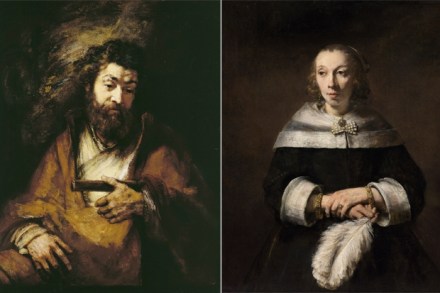
The home of Holland’s celebrity paintings gets a makeover

Arts feature

If things had turned out differently for Brazil — I don’t mean in the World Cup — Recife might now be known as Mauritsstad. But when the Portuguese expelled the Dutch in 1654, the name of the new capital of Pernambuco built by governor Johan Maurits van Nassau-Siegen was lost to history. Today Johan Maurits is remembered for a house, not a city: the splendid private mansion he had built for himself in The Hague right next to the Dutch parliament in the Binnenhof. Designed by the architect Jacob van Campen, the Mauritshuis is a Dutch Classicist doll’s house of a palace that took 11 years to build and was only lived in by its owner for three after his return from Brazil in 1644.

Had Hollywood not lured him away, Dennis Hopper could have made his name as a photographer

Exhibitions

In an age when photographs have swollen out of all proportion to their significance, and are mounted on wall-sized light boxes the better to show off their high-resolution colour, it’s a relief to see an exhibition of small photographic prints in good old black and white. Dennis Hopper (1936–2010) is best known as an actor and hell-raiser, but he was also an artist who worked in various media. ‘I am an Abstract Expressionist and an Action Painter by nature,’ he insisted, but in the Sixties he took thousands of photographs, a group of 400 of which are now on display in the Academy’s Burlington Gardens galleries. Because they are relatively small, they are arranged in blocks on the walls of these spacious rooms.

Gilbert and George have lost their bottom over the burka

Let’s brood, shall we, on the following report in the Evening Standard about an exciting new departure by the winsome duo, Gilbert and George, on the back of their new exhibition, called ‘Scapegoating Pictures’ for London which opens tomorrow at the Bermondsey White Cube Gallery: ‘The artists Gilbert and George feature women in burkas in their new exhibition reflecting the changing face of the East End, their home for decades.  The veiled figures feature in giant photomontages demonstrating the artists’ long-standing hostility to all religions which they believe “terrorise” people.

A celebration of Scottish artistic success over the past 25 years

More from Arts

Since spring this year, art venues across Scotland have been dedicating themselves to a gigantic project called Generation. Involving more than 100 artists and 60 venues, the programme is a celebration of Scottish artistic success over the past 25 years, a multifaceted retrospective that recreates lauded exhibitions of yore and puts together new ones by old faces. The scale and ambition are impressive. There are fine artists involved and a clutch of Turner champions, too. But this is an event that demonstrates there’s more to Scottish art than the ‘Glasgow Miracle’ and lays out its case all across the country.

The quest for the perfect guitar riff is a noble one – if not quite the key to unlocking the mysteries of the universe

Television

A few weeks ago, my eight-year-old son, who’s taken up the guitar, announced that he’d learned something new. He then played a sequence of chords — approximately, Duh-duh-duuh, Duh-duh-da-duuh — that I’ve been hearing from all guitarists since I was about eight myself. ‘It’s called “Smoke on the Water”,’ he informed me, unnecessarily. Of course, any sign that the world hasn’t changed as much as we thought is always welcome to the middle-aged man. Yet when I showed him Deep Purple performing the whole track on YouTube, he was both slightly bored and rather mystified. Not only had he no idea that ‘Smoke on the Water’ came with a song attached, but he couldn’t understand why it needed one.

How did a New York nanny become one of the great photographers of the 20th century?

Cinema

Finding Vivian Maier is a documentary about the American nanny who led a wholly secretive life as a photographer and who, posthumously, has been described as ‘one of the greatest photographers of the 20th century’. It’s a good story, which is well told here, and told breezily (83 minutes), which we like. But I’m not convinced the quote from Michael Moore on the poster — ‘Amazing...this should be seen with other people, in the dark, on a big screen’ — is necessarily true. Ms Maier has already been the subject of Alan Yentob’s Imagine strand on the BBC, and this film could just as happily be viewed on TV as in the cinema, I think.

Richard Bean doesn’t believe in humans – just weasels, snakes, rats and vultures

Theatre

Mr Bean, one of our greatest comic exports, has an alter ego. The second Mr Bean, forename Richard, is the author of One Man, Two Guvnors, which thrilled audiences on both sides of the Atlantic. His latest play, Great Britain, dissects the corruption of power in parliament and beyond. The inevitable comparisons with The Duck House, which mocked the expenses scandal, are a little unfair, since the temperament and the intention of the two shows are vastly different. The Duck House was a delicious slice of theatrical levity about a Home Counties couple drawn into criminality by the culture of parliament. And being a family comedy, it had reserves of emotional warmth that Mr Bean’s scabrous blast of satire entirely lacks.

‘Artmaking is a drug’ – interview with poet Paul Muldoon

More from Arts

A fellow festival-goer at the recent Calabash literary festival in Treasure Beach, Jamaica, enjoyed chatting to a gentle Irish poet called Paul. He told her he ‘dabbled’ in poetry, and she was seconds from asking if he was planning on reading any of his work at the open-mike session. When Paul Muldoon, the poet in question, came to give his reading, it was soon quite clear that he is, in fact, a famous poet. He opened with ‘Comeback’, a poem about a washed-up rock band for ever on the brink of their next great hit: ‘We’d pay in cash/For a kilo of Khartoum/And come back to trash/Another hotel room/And make a comeback baby/A comeback don’t you see?/It’s time to make a comeback baby/Come back baby to me.

Buxton Festival sticks its neck out with two rarities by Dvorak and Gluck

Opera

Dvorak’s The Jacobin and Gluck’s Orfeo ed Euridice, the two operas that opened this year’s Buxton Festival, are both relative rarities today, but their creators’ fortunes tell an interesting story. Dvorak’s operas — or at least Rusalka — joined the repertoire around the same time, during the 1980s, that Gluck’s arguably starting slipping from the stage, to the extent that now means the UK’s main companies are all but ignoring the composer’s 300th anniversary this year. Both works, in their different ways, also explore the power of music.

Is Handel’s Messiah anti-Semitic?

Music

The Hallelujah Chorus crops up in the most unexpected places, says Michael Marissen in his new book about Handel’s Messiah. For example, it’s used in a TV ad ‘depicting frantic bears’ ecstatic relief in chancing upon Charmin toilet paper in the woods’. That’s an amusing detail: it lingers in the mind. But, as you can work out from the title, Tainted Glory in Handel’s Messiah isn’t intended to be a fun read. Marissen, an American specialist in baroque music, has been taking a long, hard look at the oratorio’s libretto, adapted from the Old and New Testaments by Charles Jennens, a gentleman scholar.

Indiscretions from two veteran producers

Arts feature

Stars, playwrights and even set designers are constantly being lionised in the papers. But why not producers? They, after all, are the ones who choose the plays, the stars, and then make it all happen. Duncan Weldon and Paul Elliott are two veteran cigar chompers who’ve been in the business for 45 years. They’ve made and lost a packet, over and over again. They never seem to learn. Like all producers, they love their wives almost as much as they love a hit. Over lunch in the West End, I discussed the knack of being and staying a producer. Great exponents such as Cameron Mackintosh and Bill Kenwright have always had loyal teams. But Elliott and Weldon are in a way the true odd couple. They shared an office on the Aldwych (Ivor Novello’s old suite of rooms) for 37 years.