Fisun Güner

Dumbed-down ‘accessible’ writing is just as bad as obscurantist art-speak

From our UK edition

When the art critic Robert Hughes died in 2012, someone from the Times turned up on Channel 4 News to sing his praises. The journalist burbled on for a few flailing, hapless minutes and you were left wondering whether she’d actually ever read him. The great critic’s strength was apparently his, wait for it, 'accessibility'. Eschewing obscurantist art-speak – the desiccated argot of the art establishment – it seemed Hughes’ critical gifts lay in not being difficult to read. But who familiar with Hughes’ robust and sinuous prose would ever call it 'accessible'? It wasn’t. His facility with language was underpinned by a ferocious intellect, and it showed. Acuity and insight made him a tremendously exciting critic, not accessibility.
On the trail of Piero

From our UK edition

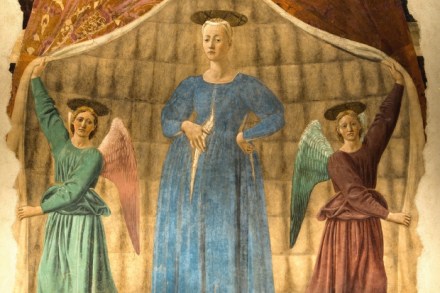
Piero della Francesca is today acknowledged as one of the foundational artists of the Renaissance. Aldous Huxley thought his ‘Resurrection’ ‘the best painting in the world’. His compositions marry art and science with cool precision and a sophisticated grasp of perspective — he was, after all, a mathematician. But he was only rediscovered in the mid-19th century after centuries of relative obscurity. Following his death in 1492, his artistic achievements faded in the memory and he became known chiefly as a geometer (his numerous writings include an innovative treatise on solid geometry and perspective). This is not wholly surprising.

We are not all in this together

From our UK edition

Not so long ago I stumbled into a little pop-up in Hoxton: a delightful tearoom hardly bigger than a walk-in wardrobe, all 1940s home-craft ‘boutique’ style. Nice table linen, a ‘make-do-and-mend’ tea service with artfully mix-matched china, victoria sponge slices, and the strains of some popular bygone tune in the background. I’m not sure I got much change out of a crisp new tenner, but retro heaven, right? Before I’d even got my hands on Owen Hatherley’s The Ministry of Nostalgia (nice austerity-era block-red dust jacket) I had the feeling — call it gut instinct — that this sort of austerity chic might not be quite the author’s thing.

How Rothko become the mythic superman of mystical abstraction

From our UK edition

Mark Rothko was an abstract artist who didn’t see himself as an abstract artist — or at least not in any ‘formalist’ sense. If a critic called him a ‘colourist’, he would bristle; if they admired his sense of composition, he would complain that this was not what he was about at all. His was an art of deep content, his subject an invocation of the religious, the tragic, the mythic. ‘The people who weep before my pictures are having the same religious experience I had when I painted them,’ he once famously said. ‘And if you, as you say, are moved only by their colour relationships, then you miss the point.

Cultural boycotts are ineffective and wrong

From our UK edition

Scotland’s national poet Liz Lochhead has been at it again. Two years ago she was petitioning against a dance company from Tel Aviv, this year it’s an Israeli theatre company that’s set to play the Edinburgh Fringe. Both companies are 'guilty' of being in receipt of state funding. So, we have another letter and another long list of high-profile signatories calling for boycott. However, we all know – as Lochhead must know – that a boycott won’t, of course, happen (it’s about being seen to take a 'principled stand', d’oh). The nature of Incubator Theatre’s production is irrelevant – I gather it’s some 'film noir-type hip-hop musical'.

Why I love Tracey Emin’s bed

From our UK edition

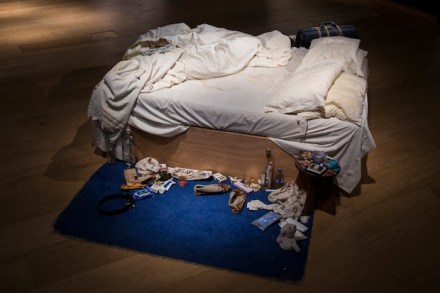
My Bed, one of the works that failed to win Tracey Emin the Turner Prize (she lost to Steve McQueen in 1999), made £2.2m at Christie’s this week, going to an anonymous buyer. Charles Saatchi, who put it up for auction, had bought it for £150,000 in 2000. It has apparently lost none of its controversy since it first went on display at Tate Britain 15 years ago. And by ‘controversy’ I simply mean that many people - and that includes art critics - don’t think much of it at all. And note, I only use the term 'controversy' – and in scare quotes – because many sections of the media are rather wedded to it when it comes to anything do with Tracey Emin.

What makes art art? And why gaming may not make the grade

From our UK edition

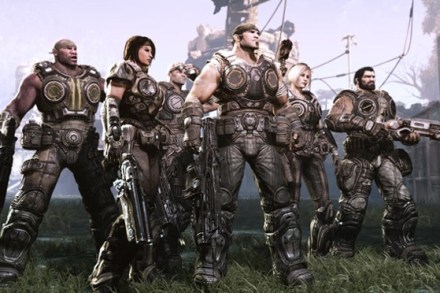
Every now and then, you’ll come across an article which puts a case for something or other being taken seriously as an 'art form'.  Designing computer games, cake-making, upholstery, you name it, sooner or later it’ll be up there with painting the Sistine Chapel. And the more elaborate or intricate the process of production, the more earnest the appeals of the writer seeking artistic validation. And sometimes the article will even come right out and say it: ‘This [insert the thing being promoted as a Serious Artistic Endeavour] is art. It’s as much art as Turner’s late paintings, which were once dismissed as "soap suds and whitewash” by the sneering cock-eyed art critics of the day.

The problems at Tate Britain go beyond the director

From our UK edition

Last week, Tate Britain was one of six museums across the UK to be nominated for the Art Fund’s Museum of the Year award, an annual prize in which the winner receives the not inconsiderable sum of £100,000. A couple of weeks earlier, Waldemar Januszczak, the Sunday Times’s ‘cor blimey’ art critic (don’t get me wrong, he has a winning shoot-from-the-hip style) was calling for the head of Penelope Curtis, Tate Britain’s director since 2010. Despite approving of the chronological rehang of the permanent collection which she oversaw last year – in fact, he proclaimed it a ‘miracle’ – Januszczak still insisted Curtis must go.

Why do people always assume critics are male?

From our UK edition

I offer you a riddle. It’s worthy of the Sphinx guarding Thebes, but if you’ve got half the brain of Oedipus you might get it. A father and his son are travelling in a car. The father loses control of the steering and the car crashes. The father dies at the scene but his son survives. The son is rushed to hospital. Severely injured, the boy is sent down for surgery. The surgeon looks down at the boy and says, slowly. “I can’t operate. This is my son.” How, you will ask, is this possible? This riddle did the rounds about 35 years ago. It was probably old even then.

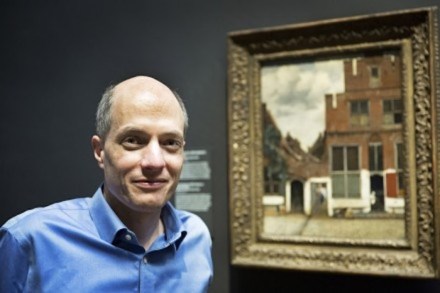
Why Alain de Botton is a moron

From our UK edition

It’s become too easy of late to be rude about Alain de Botton. His banal aphoristic “insights” and homilies on Twitter, his efforts to turn the media away from “meanness” (news should provide moral uplift and teach us how to be better people), his plea for museums to emulate churches by replacing their “bland captions” with a set of moral “commands”, thereby using the art in their collections to make us “good and wise and kind”, have all begun to pall somewhat. When did the playful essayist become so cloyingly dumb? And please, before I say another word, do let’s stop calling him a philosopher.