Nicholas Mayes

From the Tate to Palmyra: to preserve great art, let it decay and regenerate

From our UK edition

Strolling around Tate Modern’s recent Alexander Calder exhibition, something bothered me. Calder is best known for creating mobile, rather than static, sculptures; most of his pieces were intended to move, but some were now sitting lifelessly by the gallery’s white walls. It’s hard to appreciate how radical Calder’s kinetic art was in its time. Hergé, who owned one of Calder’s sculptures, put it best: 'I don’t know if you are familiar with his "mobiles". They consist of elements of light metal, assembled by thin wires. When hung from the ceiling, the slightest draught will make them move. They are graceful, light and extraordinarily poetic.' They sure are, or were.


There’s only one way to save the crumbling Houses of Parliament. Turn them into a theme park

From our UK edition

The Houses of Parliament are falling down. According to the Independent Options Appraisal of the Palace of Westminster Restoration and Renewal Programme - a group of engineers and project managers commissioned to have a butcher’s - the Palace of Westminster is 'partly sinking, contains asbestos and has outdated cabling', is 'infested with rats and mice and in an advanced state of disrepair' and will take £5.7 billion and 32 years to put right, unless MPs and Lords shuffle off somewhere else for a bit, in which case it’ll be £3.5 billion over six years. Without such repairs, 'major, irreversible damage' looms.

Why Bombay airport is the greatest 21st century building – and what we can learn from it

From our UK edition

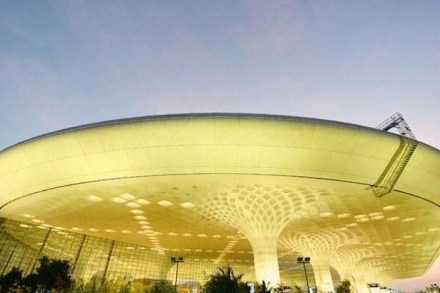
'If I had to say which was telling the truth about society, a speech by a minister of housing or the actual buildings put up in his time, I should believe the buildings.' So said Kenneth Clark in his unsurpassed Civilisation. I haven’t listened to any speeches by India’s or Maharashtra state’s ministers of housing, but I hope the new terminal at Bombay’s international airport is telling the truth about their country. Opened in February, it is a triumph: not just the greatest airport building in the world, but a strong contender for the greatest of all buildings of the 21st century so far. I’ve done quite a bit of travelling in the past few months, and have been inside my share of airports.

Will Self is in no position to criticise George Orwell

From our UK edition

In The Mating Season, P.G. Wodehouse – perhaps George Orwell’s only rival as the century’s greatest English writer – puts this piece of advice into Bertie Wooster’s gormless gob: 'In dishing up this narrative for family consumption, it has been my constant aim throughout to get the right word in the right place and to avoid fobbing the customers off with something weak and inexpressive when they have a right to expect the telling phrase. It means a bit of extra work, but one has one's code.' Orwell, I think, would have approved of Bertie’s code.

Will we learn to love our ugly houses?

From our UK edition

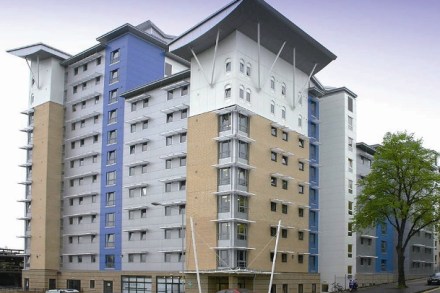
What are the root causes of Britain’s housing crisis? The Philosophers’ Mail – which has copied the format of MailOnline but I suspect is not aiming at quite the same demographic – recently offered an alternative to the usual explanations. That most people are opposed not to building more houses, but to building ugly houses, and that this accounts for most of what we dismiss as a nimbyism that prevents much-needed development. As they put it: 'Most of the large housing developments built in the South East of England in the last 25 years share one common and (in this context) generally undiscussed feature: they are very ugly. Or, to be more precise, they are far uglier than the countryside they have replaced.

Why Eric Gill would have enjoyed the 3D-printed dildo as much in principle as in practice

From our UK edition

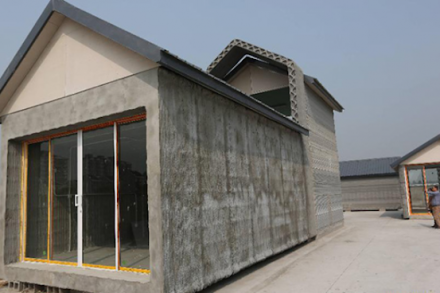
'At the Sign of the Cross in St James’s Street, When next you go thither to make yourselves sweet By buying of powder, gloves, essence, or so, You may chance to get a sight of Signior Dildo.' So wrote John Wilmot, Earl of Rochester, in 1673. But the era of having to go to St James’s Street to buy dildos appears to be drawing to a close: the Daily Mail reports that owners of 3D printers can now design and make their own, thanks to a website that lets users 'create different shapes and adjust the height, curviness, colour and angle of the toys to make a 3D model'. With a suitable printer, they can then produce their own silicon sex toys, 'the likes of which may not be on offer at places such as Ann Summers'.