Culture

Culture

The good, the bad and the ugly in books, exhibitions, cinema, TV, dance, music, podcasts and theatre.

Scoops, snark and jihad – this is Vice News’s war

Television

War can reshape the medium of television. The First Gulf War was a landmark moment in broadcasting: CNN had reporters in Baghdad when the first bombs fell, no one else did, America was riveted and the concept of 24-hour news (accompanied by thousands of graphics) suddenly took off. And now, just as a third conflict kicks off in Iraq, we have a new television insurgent: Vice News, which is shaking up war reporting with its extraordinary coverage of the jihadis tearing up Syria and Iraq. The idea of watching television made by a magazine seems bizarre — or, at least, it did this time last month. Vice started life as a provocative publication. It was dubbed the ‘hipster’s bible’, but underneath all the snark, Vice had big plans.

Less cuddly, more creepy: The Human Factor at the Hayward Gallery

More from Arts

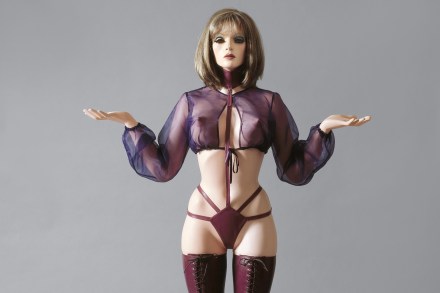
Jeff Koons’s ‘Bear and Policeman’ has been used to advertise the Hayward Gallery’s latest show The Human Factor (until 7 September). But don’t be fooled; this exploration of the human figure is neither cute nor cuddly. It includes photos of rotting corpses, mannequins made from animal guts and live bees. It’s more creepy than kitsch. The show sets out to survey how artists over the past 25 years have reinvented figurative sculpture. Within the concrete rooms, the curators have installed a mix of diverse pieces. The effect is part morgue, part Madame Tussauds.

The best of the Edinburgh Fringe

Theatre

Rain whimpers from Edinburgh’s skies. The sodden tourists look like aliens in their steamed-up ponchos as they scurry and rustle across the gleaming cobblestones. Performers touting for business chirrup their overtures with desperate gaiety. Thousands of them are here. Tens of thousands. Vanity’s refugees hunkering on the wrong side of fame and hoping to get through the ego-crisis alive. A familiar name forces its way through the anonymous wastes. Julie Burchill: Absolute Cult (Gilded Balloon) is a one-act play by Tim Fountain. We’re at home with the Queen of Spleen as she cracks open a litre of vodka. It’s mid-morning. ‘I’m a hideous parody of myself,’ she tinkles in her soft-core Cider With Rosie accent.

One Afternoon

More from Books

In Aljezur we took a walk And paused above the river where, Among the rushes, swifts and fish, We saw a water-snake drink the air Before the reptile rippled back And watched until an azure flash Flew from the bridge to walnut tree, A kingfisher in sudden flight, A memorised epiphany Almost before it came and went, Electric blue and heaven-sent, To fish and feed downriver where The sailing vessels once had moved Beside the town of Aljezur. And then we climbed the cobbled hill Past bees and flowers in summer heat And entered by the castle gate To read about the ancient site: A Moorish cistern now caught rain Where silos once had stored the grain. We heard the cowbells on the wind And then imagined in the sound The medieval settlement.

Lauren Bacall — a true great

As so often, no one put it better than Papa. Here is Ernest Hemingway talking of all the movies made from his novels and short stories: ‘The only two I could sit through were The Killers and To Have and Have Not — I guess Ava Gardner and Lauren Bacall had a lot to do with it.’ Mr S can’t say fairer than that of Lauren Bacall, who has died at the age of 89. Bacall was, however, rather more than a husky voice and a sultry look. In 1981 she starred in The Fan, in which she played a middle-aged film star idolised by a demented fan (played by Douglas Breem) who mutilates or kills those close to the object of his desire. But the ageing star’s beauty has faded, and bears only passing resemblance to the youthful image that captivates the fan.

3,000 masochists descend on Edinburgh

And they’re off. The mighty caravan of romantic desperadoes, radical egoists, stadium wannabes, struggling superstars and vanity crackheads is on its way to Edinburgh. This year’s Fringe sponsor is Virgin Money, which must be some kind of in-joke because most performers spend August watching their life savings being ritually despoiled by landlords, press agents and venue owners. Five years back the Fringe was ready for a gastric band when it grew to more than 2,000 productions. This year it glides past the 3,000 mark and it seems determined to maintain its place as the most cluttered congregation of twits and pipe-dreamers on the planet.

The great David Ekserdjian deserves a museum of his own

Ever since Mr Blair’s New Dawn of 1997, the dominant idea in public policy towards public collections has been ‘access’. The doctrine is more than half-right: art, antiquities etc paid for by the public are not doing their work unless we can see them. But it has promoted the heresy that the person chosen to run every museum must be a communicator rather than a scholar. Actually, both is best. True, some learned persons are interested only in objects and cannot communicate with the human race, but the best evangelisers for a museum or gallery are the people who really know its contents. The best-known current example is Neil Macgregor, at the British Museum.

‘They took me in like I was their son’: Wynton Marsalis on jazz’s great tradition

Arts feature

At the end of his performance at the Barbican with the Jazz at Lincoln Center Orchestra, Wynton Marsalis made a little speech. The next piece, he announced, was a number that Art Blakey’s Jazz Messengers used to play. Marsalis then recalled how he himself had played with the Jazz Messengers as an 18-year-old trumpet prodigy. He described how much he had learned from the drummer, who was then approaching 60, and especially about ‘the sacrifices you have to make to play this music’. Then the band roared into ‘Free for All’ by Wayne Shorter. A couple of days before, I had met Marsalis for a chat — it wasn’t precisely an interview because I’ve interviewed him so many times over the years we’ve turned into friends.

A lost opportunity to show John Nash at his best

Exhibitions

John Northcote Nash (1893–1977) was the younger brother of Paul Nash (1889–1946), and has been long overshadowed by Paul, though they started their careers on a relatively even footing. The crucible of WW1 changed them: afterwards Paul became an art-world figure, cultivating possible patrons, quietly forceful and ambitious, deeply involved in the theory and practice of Modernism. John retreated into his love of nature (in particular gardening and fishing) but continued to paint with an almost classical refinement and orderliness. His art stayed close to nature yet stood back from it, while the Romantic Paul was consciously experimental, adopting a poetic approach that was unexpectedly graphic until the great paintings of his final years.

3,000 acts and no quality control – why the Edinburgh Fringe is the greatest (and patchiest) arts festival in the world

More from Arts

And they’re off. The mighty caravan of romantic desperadoes, radical egoists, stadium wannabes, struggling superstars and vanity crackheads is on its way to Edinburgh. This year’s Fringe sponsor is Virgin Money, which must be some kind of in-joke because most performers spend August watching their life savings being ritually despoiled by landlords, press agents and venue owners. Five years back the Fringe was ready for a gastric band when it grew to more than 2,000 productions. This year it glides past the 3,000 mark and it seems determined to maintain its place as the most cluttered congregation of twits and pipe-dreamers on the planet.

Gomorrah is gangsters without glamour – but it’s still not as scary as Dance Moms

Television

Gomorrah (Sky Atlantic, Monday), the new, must-see Mafioso series, started promisingly. We met two hoods — one young, shaven-headed, good-looking; one weary, brow-beaten, middle-aged — filling up at a petrol station in Naples, an unfamiliar (to me anyway) setting that looks promisingly like a cross between Vegas and downtown Gaza. Clearly they were up to no good. Meanwhile, in a decrepit apartment block, an elderly mamma was preparing her beloved, twentysomething son a rather delicious-looking pasta dinner. She chastised him for smoking at the dinner table. The son tried explaining, to no avail, that this was an E-cigarette, not a real one. Mamma wasn’t having it. She said grace and her nicely brought up if wayward boy crossed himself piously.

Romeo and Juliet: a Mariinsky masterclass

More from Arts

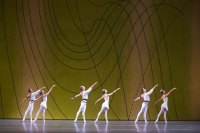
According to some textbooks, one thing the fathers of Soviet choreography hastened to remove from ballet was that awkward-looking language of gestures generally referred to as ‘ballet mime’. Which explains why most Russian versions of Swan Lake lack familiar mime dialogues. And when it came to creating new ballets that required silent acting, such as Lavrosky’s 1940 Romeo and Juliet, the early Soviet dance-makers opted for a more naturalistic form of expressive gestural solutions. Yet, as is often the case with theatre practices, what was once innovative and naturalistic now looks as trite as 19th-century pantomime.

Allergic to blockbusters? See Wakolda

Cinema

Wakolda is not a sunny film for a sunny day, just so you’re aware, but as there is so little else around — August is a hopeless month for films; August is a dumping ground for the sub-par — you are going to have to take that on the chin, bear it as best you can, and while this is not sunny it is, at least, masterfully made. Set in Argentina in 1960, it’s a fictional imagining of how a German doctor insinuates himself on a family, and how that doctor turns out to be Josef Mengele, the ‘Angel of Death’ from the Nazi concentration camps. It’s not a thriller exactly. Instead, it is an unsettling, atmospheric, mood-driven piece, which, I should add, just so you’re aware, also features creepy dolls. That’s how un-sunny it is.

Jonas Kaufmann’s illness, a muddled production – nothing can stop Bavarian State Opera’s La forza del destino

Opera

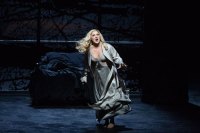
Rather than brave the boos and the first reprise of Frank Castorf’s half-hearted Ring at Bayreuth, I decided to pay a visit to Munich and catch the last two days of its annual opera festival. Less of a festival, as one usually understands the term, than a ramping-up of activity in the final month or so of its regular season, it mixes new stagings with starrily cast revivals. I caught one of each: a new production of Monteverdi’s L’Orfeo, with Christian Gerhaher in the title role, and a revival of La forza del destino that was rendered a little less starry by the last-minute illness of Jonas Kaufmann — that’s destino for you, I suppose.

My daughter wants to know why you haven’t heard of the Jayhawks

Music

One of the many delightful aspects of having children is that you can get them to do things you are too old, lazy or important to do yourself. My disinclination to attend any sort of music festival, owing to a distaste for tents, chemical lavatories, mud and other people, has happily not passed down to my daughter, aged 15. Last month she went with a group of like-minded 15-year-olds, and large quantities of cider, to Latitude, which everyone says is much nicer than Glastonbury, if only because it doesn’t sprawl across several counties like a giant upper-middle-class shantytown. (The Guardian published an aerial photo of Glastonbury this year. It looked like Mexico City, only with a higher incidence of red trousers.

Two Roads

More from Books

There are the fast people who check their emails hourly, engage with Twitter and multi- task their way through the day. And there are the slow ones who never reply even to your third request, and almost miss meetings and prefer pencil. The first — the fast — will be up to advise the worm, to value the cup, to out-tweet all competitors, whatever. The last (the least hurried), nevertheless, and surprisingly it has to be said, will, as in fact it turns out, succeed just as well, catching what the others were moving so quickly they missed: the prize deep-feeders.

I take my kids to galleries to demonstrate my cultural superiority over the masses

Jake Chapman, one half of the YBA duo the Chapman Brothers, has been rude about taking children to art galleries. He told the Independent that 'it's as moronic as a child' to expect a child to understand complex modern artists like Jackson Pollock and Mark Rothko as 'children are not human yet'. His forthright views have elicited a predictable response. Stephen Deuchar, the director of the Art Fund (who seems to be angry on a regular basis about some latest insult to the noble visual arts), countered on the Today programme that children can indeed appreciate a work of art deeply. Anthony Gormley told the Times that art is there to be experienced not understood.

Home Front: Radio 4’s first world war drama will fight out the full four years

Arts feature

In a studio in Birmingham, there’s an air of excitement. Jessica Dromgoole and her team are recording new scenes for Home Front, Radio 4’s specially commissioned drama commemorating the first world war. They know that they’re about to launch on to the airwaves the boldest, most creative and enterprising venture yet heard on the station. The years of planning, of making endless decisions about how to do it, what to focus on, where to set it, which real stories to fictionalise, which to abandon, have paid off. A random scene between a volunteer at a makeshift hospital and a wounded soldier is being recorded. There’s no preamble, no explanation, just two people having a conversation.

Why did it take so long to recognise the worth of British folk art?

Exhibitions

British folk art has been shamefully neglected in the land of its origin, as if the popular handiwork of past generations is an embarrassment to our cultural gurus and the kind of supposedly hip commentators who sneer at morris dancing. Last May I reviewed the archive display at the Whitechapel Gallery of Black Eyes and Lemonade, which re-visited the 1951 Whitechapel exhibition of the same name, a survey of vernacular art in Britain curated by the artist Barbara Jones; but that show, more than 60 years ago now, was probably the only specifically folk art exhibition in a major museum or public gallery to take place in recent years.

I think I’ve found the new Maria Callas

Arts feature

Some of my most enjoyable evenings, when I reviewed opera weekly for The Spectator, were spent at the Royal College of Music, in the tiny but elegant and comfortable Britten Theatre. The performers, onstage and in the pit, are mostly current students of the RCM, led by one or another expert but puzzlingly little-known conductor. Repertoire is reasonably adventurous, but Handel, Mozart, Britten are perhaps the backbone. One of the pleasures of those performances is spotting the singers that one is sure will go on to big operatic careers, if they choose to. I spent a lot of time doing that, and almost always got it wrong. You have to remember that voices that sound well there may not prosper in Covent Garden or other theatres of comparable proportions.

Want to be a neglectful parent? Come to a festival and learn

More from life

I spent last weekend at Port Eliot in Cornwall. This is supposed to be a literary and music festival and my reason for being there was to talk about my new book What Every Parent Needs to Know. In reality, though, it’s just an excuse to go camping with old friends, drink plenty of alcohol and stay up late. You’d think this would be difficult with four children in tow, particularly children as young as mine, but Port Eliot is an object lesson in benign neglect. By the end of the three days I had been taught more about parenting by the festival--goers than I’d managed to teach them. Caroline and I are quite relaxed with our kids — at least, that’s what I used to think.

Making

Poems

On these long, fruitful days, the Rioja which captures the sun of other Julys, is relaxing us, as is the summer, into this unwinding and earthy wine, into sex on the hoof, on the sofa, the Persian rug on the sitting room floor, in the hall, the kitchen by the cooker, up against the fridge, by the cupboard door, so I turn down the steaks as they sizzle and prevent potatoes boiling over, just as we turn up the heat, then simmer, get down to some sugar-icing drizzle, as if the baby we’re trying to make were spontaneous as a lemon cake.

A history of remembrance

More from Arts

One fight that seems to have been won is that spearheaded by the War Memorials Trust to preserve the thousands of memorials — monuments, statues, plinths, tablets — erected across the country to honour our war dead. Through conservation grants and hard graft, and a clampdown on the scrap-metal trade, many decaying and vandalised memorials have been rescued. Inventories are being compiled, guides published, and now English Heritage is staging an exhibition atop Wellington Arch (until 30 November) that explores the history of six London memorials in its keeping. Two are visible from the arch: Jagger’s Royal Artillery masterpiece (above) and Derwent Wood’s more controversial David, commemorating the Suicide Club, aka the Machine Gun Corps.

Glasgow and the Commonwealth go back a long way; Radio 4 explores a murky past

Radio

What’s been missing from the schedules during the Commonwealth Games has been a straightforward reminder about who makes up the roster of nations and why. When, for instance, did it suddenly become OK to talk about the Commonwealth without that frisson of embarrassment about its origins in empire? How come there are now 53 independent member states (although for some strange reason the Glasgow Games are boasting athletes from 71 nations and territories)? Surely there were never that many colonies flying the British flag? It’s a bit of a missed opportunity because this could be the good news story we’ve all been looking for in these weeks of relentlessly bad and worsening news.

Barbie dolls? This girl aims for the head

Television

Channel 4’s Kids and Guns (Thursday) began with an American TV advert in which a young boy’s eyes shone with gratitude when his parents gave him a large gun, proudly marketed as ‘My First Rifle’. And just in case that seemed a bit macho, the ad also pointed out that My First Rifle is available in pink. Next, we met the real-life Gia, who at the age of nine already has quite an arsenal — thanks to her dad Spyder, a firm believer in the old Texan motto that ‘If you know how many guns you have, you don’t have enough’. ‘Wouldn’t it be more usual to buy her Barbie dolls?’ asked what couldn’t help but sound like a rather prissy British off-screen voice.

Moon Indigo: an all-you-can-eat buffet for the eyes – but your brain will feel famished

Cinema

Your enjoyment of Michel Gondry’s Mood Indigo may entirely depend on how much visual whimsy you can take, what your threshold might be, whether you can go with it or whether it wears you out and brings you to your knees. There’s animated food and little mice that zip around in cars and eels wriggling out of taps and rubbery human limbs that elongate and doorbells that scuttle like frenzied cockroaches — sit on that, Wes Anderson! You too, Terry Gilliam! — but it may be whimsy at the expense of coherence, feeling, story. My threshold is not that high, I now know.