Book review

Riding high

How’s this for a heartwarming set-up­­? Forty-something recovering alcoholic and aspiring artist Ginger copes with the disappointment of being unable to have children of her own by signing up to an organisation that sends underprivileged inner-city kids to the homes of middle-class couples in the countryside. When she is introduced to 11-year-old Dominican girl Velvet, the two bond over horses, with Ginger offering the girl a freedom denied to her by her domineering mother. It sounds perfect for book clubs, soon to be a life-affirming movie, and of little literary interest. But The Mare has much more merit than the synopsis suggests.

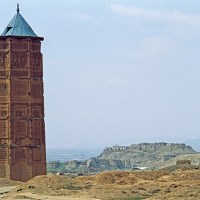
In the steppes of the Golden Horde

When I first visited the complex of Buddhist cave grottoes, dating from the fifth to the 14th century, at Bezekilk in Xinjiang province, China, I was struck by the destruction wreaked on them by Muslims whose religion proscribes figurative images of human beings. Eyes had been gouged out and figures lacerated with knives. When and by whom had the vandalism of these exquisite and colourful portraits been done? I later learnt that the Buddhist Uyghurs of the Kingdom of Qocho and Turfan, in which Bezekilk was situated, were converted to Islam by conquest during a holy war at the hands of the Muslim Chagatai Khizr Khwaja. Not easy information to assimilate. The activities of Genghis Khan and the Mongol hordes are widely known but not always in detail.

Death in Greenwich

With the current political saga running in our heads, trumping all other stories, it has been hard to concentrate on the bedside book over the last few weeks. When, in this true Victorian murder mystery, I came to the sentence, ‘Ebeneezer Pook, however, had no intention of succumbing to the crowd’s pressure’, all I could see in my head was Jeremy Corbyn emerging from his house, ducking under the prickly rosebush and refusing to stand down. And when I came to this complicated passage: Mrs Thomas’s story buttressed the account that William Sparshott had given and would dovetail with the account Olivia Cavell was about to give.

Stiffen the sinews

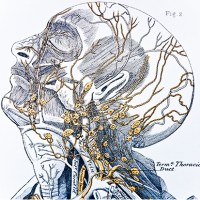
It’s not unreasonable to expect that the anatomy syllabus for a medical degree should include breasts. Last year I performed full-body dissection as part of my training to become a doctor. After timid first incisions to the arm, we students were entrusted with opening the chest cavity. Two obstacles blocked the way. I looked in the course manual for directions about how to cut — through? around? underneath? But there was no mention of these pleasure-giving, milk-yielding, cancer-visited organs. One justification for the vast expense of cadaveric dissection is to develop a clinical understanding of the body in its supposed entirety.

The great sulker

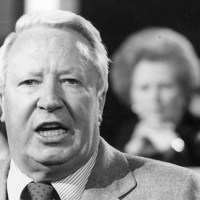
Ted ‘Grocer’ Heath, as he will always be for me, was chosen by his fellow MPs to be their leader in 1965 as the Tory answer to Harold Wilson. After two Old Etonian patricians, Macmillan and Douglas-Home, the Grocer was a grammar-school boy, a meritocrat who would spearhead a new-look, classless Conservative party. He was a clever, hard-working man, totally devoted to his political career. Unfortunately, with his wooden stance and curious ‘neow-neow’ voice, he lacked charisma, a failing he would never have admitted, as Michael Gove did recently. I remember Heath presenting the awards at the annual What the Papers Say lunch in 1968 and you could see journalists furtively looking at their watches after only a few minutes of his speech.

Russia’s dumping ground

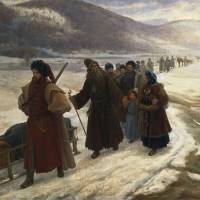
Almost as soon as Siberia was first colonised by Cossack conquistadors in the 17th century, it became a place of banishment and punishment. As early as the 1690s the Russian state began to use Siberia as a dumping ground for its criminals, as though its vastness could quarantine evil. Katorga — from the Greek word for galley — was the judicial term for a penal sentence where inmates performed hard labour in the service of the state. The sentence was commonly imposed in place of death from the reign of Peter the Great onwards. And in many ways Siberia truly was a House of the Dead — as Daniel Beer, who borrows the title of Fyodor Dostoevsky’s prison novel for his masterful new study, recounts in horrific and gripping detail.

A choice of crime novels | 30 June 2016

Pascal Garnier’s novella Too Close to the Edge (Gallic, £7.99, translated by Emily Boyce) deals with the boredom of middle age and how passion and violence can take on the guise of salvation. Éliette has moved to the French countryside following her husband’s death. She seeks an ‘atom of madness to stop herself sliding into reason’, and finds it in the form of Étienne, a man who helps her when her car breaks down. She invites him into her lonely home, and her life. When her neighbour’s son is killed in a road accident, it becomes obvious that her new lover is linked to this tragedy in some way, and yet Éliette reacts strangely: she welcomes the criminal behaviour, and in fact becomes criminalised herself.

The road to catastrophe

France’s problems today should lessen the condescension of posterity towards Louis XVI. Presidents of the Republic have proved just as incapable as the King of reforming privileged corporations — stemming the flight of skills and capital — and winning popular confidence. Louis XVI’s failure to manage France after 1789 is easier to understand after reading John Hardman’s complex , well-researched, gripping 500-page biography . Louis XVI’s greatest problem was the French national debt. It had reached four billion livres — accumulated over many wars — and there was an annual deficit of 100 million livres. As a result, Hardman points out, in the 1780s, whereas the British government could borrow at 3.

The food of love | 30 June 2016

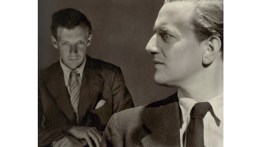
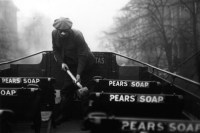
‘You are the most adorable man and artist, intelligent, gifted, simple, loving and noble… I am really very, very lucky to be alive with you around....’ The relationship between the tenor Peter Pears and the composer Benjamin Britten is part of our cultural and national furniture. A partnership spanning nearly 40 years drove each artist to the peak of his creative and expressive powers, producing works like Peter Grimes, Winter Words and the War Requiem, as well as their definitive recordings. But music is only half of the Britten-Pears story. Before his death in 1976, Britten asked his friend and publisher Donald Mitchell to ‘tell the truth about Peter and me’.

Ce n’est pas la guerre

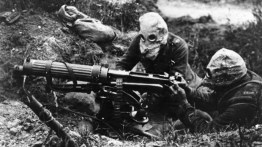
On 1 July 1916, along a frontage of 18 miles, 100,000 British infantrymen — considerably more than the entire strength of the British army today — climbed out of the trenches to begin the great offensive that would become known as the Battle of the Somme. By nightfall there were 60,000 casualties, 20,000 dead or dying. No appreciable gains had been made, and there was no prospect of the breakthrough for which the commander-in-chief, General Sir Douglas Haig, had assembled three cavalry divisions, some 30,000 horses. No one very senior would be sacked; the scapegoats were regimental officers not judged to have pressed their attacks with sufficient determination in the face of machine guns and uncut barbed wire. It was inconceivable that the offensive be called off.

Escape into pop

‘How can you come into this room and ask me “What is the purpose of life?”,’ wails Massive Attack’s laconic DJ Mushroom after a typically searching interrogation by the veteran music journalist Sylvia Patterson. In this powerful, enjoyable memoir she fares better with Spike Milligan (‘I wake up every morning and think, “Thank God, another day” ’) and gleans further nuggets of wisdom from the likes of Bono, Diana Ross and David Attenborough. Patterson, primarily an interviewer rather than a critic, isn’t interested in the mechanics of music-making or the record industry but in the fundamental question of why people do what they do. In her hands, music journalism becomes a philosophical investigation, with jokes. Always jokes.

Of microbes and men

Which disease are you most scared of catching: Ebola or influenza? Before I read this medical memoir, I would have said Ebola. Now, I’d say flu. As Dr Ali S. Khan points out, Ebola is fairly hard to catch; flu is fairly easy. And unlike wimpy man flu, proper flu can be a killer. You’ve heard of the Spanish flu, which killed 675,000 Americans a century ago. But did you know that influenza still kills up to 50,000 Americans every year? Most pandemics are more like flu than Ebola: they don’t sound that spooky until they get out of hand. Yet instead, we worry about killer bugs which we stand much less chance of catching. When I was a teenager, I was terrified of contracting HIV, though the risk I faced was minuscule.

Preacher and prosecutor

Craig Raine is a pugnacious figure in the fractious world of contemporary poetry. When his poem ‘Gatwick’ appeared in the LRB (2015), social media had one of its habitual spasms. Here was a piece which indulged the male gaze and celebrated lustful yearning — an older man for a younger woman. Hardly new ground one might have thought; but to be fair it’s actually rather more subtle than that, and Faber’s former poetry editor responded to the howls of protest by saying: ‘Of course the stupid are always with us.’ In fact Raine rather likes a scrap and My Grandmother’s Glass Eye, in which poets and critics are mauled routinely for their inability to read poems correctly, reminds us that the poet’s father was a boxer.

What did you do in the last war, Maman?

‘La France,’ as everyone knows, is female. Perhaps this is due to gendered assumptions about the beauty, cuisine and couture of the French capital, the symbolic revolutionary Marianne, or the patriarchal nature of language. Between 1940 and 1945, however, Paris was more literally female. Most of the capital’s men were serving with the Allied effort overseas, were POWs or forced workers in Germany. The women of Paris had stayed behind to keep the city running, put food on the table and care for their children, parents and in-laws. For some when France fell, Paris felt emasculated in another sense. Suddenly Parisian women found themselves having to decide how they were going to live alongside their almost entirely male Nazi conquerors and occupiers.

Two little boys, one little toy

Rose Tremain sets the true story of Police Captain Paul Grüninger, commander of the Swiss border force in Canton Saint Gallen, at the core of this powerful novel. Grüninger helped hundreds — some sources say thousands — of Austrian Jews fleeing the Nazis in 1938–1939 to enter Switzerland illegally. After a long trial he was dismissed in disgrace, deprived of his pension and forced to pay court fees. His family was destitute and treated as traitors. He died in 1972, penniless and forgotten. Tremain’s fictional Grüninger, Erich Perle, marries a simple peasant girl, who suffers a miscarriage and cannot forgive her husband for ruining her life for the Jews. He dies before the end of the war.

The child is father of the man

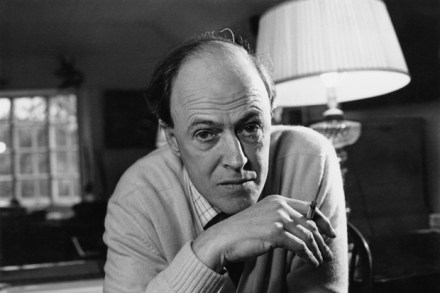
Are writers born or made? The answer, by the end of Love from Boy — a selection of Roald Dahl’s letters to his mother drawn from the 40 years of correspondence they kept up, lovingly edited and deftly commented upon by his biographer Donald Sturrock — is surely that they are both. Even as a 12-year-old, regaling her with tales of derring-do at Repton, the economy and vivid turn of phrase are evident that would characterise both his grand guignol short stories for adults and the children’s books for which he eventually became both loved and lauded. Out ice-skating, ‘I had eight chaps pulling me with a long rope at a terrific lick and I sat down in the middle of it. My bottom is all blue now.

The great depression

If it was not yet ‘The Age of Anxiety’ in 1947, when Auden published his long poem of the same name, now it most certainly is, given the manifold global uncertainties that keep any sane person awake with worry. Nearly 20 per cent of adult Americans have been diagnosed with a general anxiety disorder, while the pharmaceutical industry has produced a legion of drugs that promise to combat the effects of such conditions. In Adam Haslett’s beautiful new novel, Imagine Me Gone, mental illness rips through one New England family over the course of four decades. Told in alternating first-person chapters by the parents and their three children, it is a captivating portrait of the ways depression and anxiety mark both the afflicted and everyone who loves them.

The artist as lover

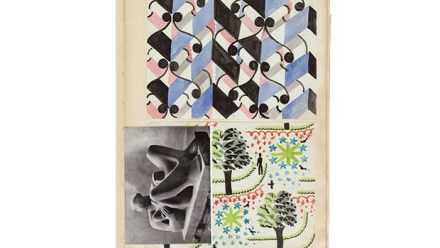
Roland Penrose (1900–84) was a Surrealist painter and object-maker, a collector and art world grandee, a writer and organiser of exhibitions, co-founder of the Institute of Contemporary Arts (ICA) and biographer of Picasso. He amply illustrates Goethe’s dictum that we are rich at the price of our contradictions. Born a wealthy Quaker, Penrose rebelled and became an artist. He was deeply involved with the revolutionary practice of Surrealism but was also an establishment figure: a substantial landowner who accepted a knighthood for services to the arts. His private life was equally divided. His first marriage, to the poet Valentine Boue, was never consummated. His second and more famous wife was the photographer Lee Miller.