Book review

The mystery of the waggle-dance

The Dancing Bees is a romantic title, evoking fantasy and fairy tale rather than scientific rigour, but actually this book is a story of fearsome determination. It is a biography of Karl von Frisch, who discovered the language of the honeybee, but Tania Munz’s account is much more besides, as it reveals the scientist’s struggle for survival under the Nazi regime. Although I kept bees for many years, I had no idea of the work which won Von Frisch a Nobel prize in 1973. I was first introduced to the waggle-dance, this marvel of the animal kingdom, in a laboratory at the University of Sussex. Francis Ratnieks, professor of apiculture, sat me in front of one of his observation hives where you could watch the colony of bees at work through a glass panel.


The blank on the map

‘Is Geoff Dyer someone on your radar?’ inquired the courtly literary editor, inviting me to review this book. What a question! Envy is the writer’s sin, as everyone knows, and to a nonagenarian writer of my kind the very conception of Geoff Dyer, aged 57 and perhaps the most brilliantly original practitioner of his generation, figures green and large on any screen. Has he not won countless awards around the world? Has his work not been published, his publicists say, in more than 20 languages? More than 20? More than 20! And White Sands, an elegant parade of his talents, tells me why. It is not quite like any other book, and frankly says so.

A merry guide

If you have legs, or a bicycle, or indeed both, you are going to love this book. Chaps, no matter how old or how fat or otherwise incapacitated you are, if you haven’t already received it for Father’s Day the chances are it’s coming your way this Christmas. Ladies: if you are a fell-runner, a hill-walker or a budding Victoria Pendleton, pop this into your backpack or saddlebag with your energy bars and your old Ordnance Survey. Graham Robb — yes, that Graham Robb, the biographer and historian of all persons and all things French, and also the author of an excellent history of homosexuality, Strangers: Homosexual Love in the 19th Century (2003) — has written a book about British and Irish cols and passes. But wait: British and Irish whats?

Misadventures in Libya

If photographs of ‘the deal in the desert’ made you queasy — you remember, Tony Blair and Muammar Gaddafi shaking hands for the cameras in 2004 — imagine how you would have felt if you were in exile in London and your father under torture in Gaddafi’s cells at the time. Now Blair is not looking forward to the Chilcot report, Gaddafi is dead and Hisham Matar, who was the helpless onlooker, has published The Return, a memoir about his father and about Libya which will attract many readers and prizes. It may also help focus our ideas about whom we protect, whom we betray, and how we deal with the devil. Gaddafi’s death might not have been a source of sorrow to Blair (and co).

The pursuit of happiness | 16 June 2016

There is a wonderful portrait of Kenelm Digby by Van Dyke. He is dressed in black. His hand is on his heart. Behind him is a vast, wilting sunflower. The sunflower is a symbol of constancy — it follows the sun. When his wife Venetia died in 1633, when Kenelm was 29, he went into a profound mourning that lasted for the rest of his life — another 30 years. The sun had gone out of his life. From the moment he discovered her dead body, seemingly asleep in her bed, his behaviour was, to say the least, a little odd. He took plaster casts of her hands, feet and face. He had Van Dyke paint a portrait of her in death. He commissioned a phalanx of poets, led by Ben Jonson (who was summoned to the deathbed so that he would be inspired by the sight), to write poems in her praise.

Time trials | 16 June 2016

What are ‘lost time accidents’, apart from something on building-site signs announcing hours lost to worker injuries? In this novel by the Austrian-American John Wray, the accidents represent time travel, or one family’s century-long, multi-generation, trans-Atlantic obsession and dark joke. ‘Time is our shared disorder,’ says the narrator’s aunt. Waldy Tolliver is that narrator, anxious and infatuated and trapped in a time-pocket from which he lobs the family history in long passages to Mrs Haven, his recent lover. His father Orson is a science fiction writer whose own father, Kaspar, fled occupied Europe for Buffalo, New York.

Manhattan transfer

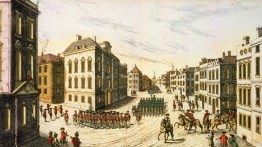
Good historical fiction takes more than research. Henry James once said that writers needed to shed everything that made them modern to feel their way into a completely alien world view — a near impossibility. But this ideal historical novel, bristling with ancient prejudice, would be rather heavy going for a general readership, and successful ones often come populated by dismaying modern stand-ins. Noted non-fiction writer Francis Spufford’s debut novel Golden Hill — an update of 18th-century adventure romps by the likes of Henry Fielding — is successful because it makes us feel entertained and uneasy with the past. In 1746, Englishman Richard Smith arrives at the office of a New York merchant with a bill for £1,000.

The folly of youth

Let’s start with arithmetic. Edmund White’s 11th novel is a book about age and ageing. The young man of the title is a French model called Guy. Like Dorian Gray, Guy never seems to grow old. By the middle of the novel he is nearly 40, but he can still convince people — crucially, a desirable 19-year-old called Kevin — that he’s 25. The other characters constantly comment on Guy’s age. Guy himself obsesses over it and goes to great lengths to hide the truth, pretending not to recognise cultural references from earlier decades. Subterfuge so successful, apparently, that not even Edmund White knows how old his hero is.

Strange sightings in Essex

I suspect some readers might be too cool for this lovely book, partly because, despite its gothic horror set-up, it sets out unashamedly to lift the spirits; and partly because historical novels are sometimes derided as escapist, as if they’re only a fallback for authors who can’t keep up with, say, immigration or the internet. It takes place over a single year in the 1890s, in an Essex village where — if the rumours are to be believed — a monstrous sea creature skulks in the estuary, blamed for horrors from disembowelled livestock to a man’s corpse washing up on the marsh, his neck snapped. Up from London amid this panic is Cora, a wealthy amateur naturalist, liberated by the death of her abusive husband.

The Redeemer

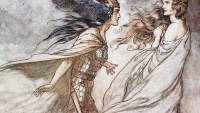
The political trigger for the Ring was the 1849 Dresden uprising, when the young freedom fighter Richard Wagner financed the hand grenades and debated ethics with his co-revolutionary Bakunin. According to Bernard Shaw, the Russian stood model for Siegfried, the Ring’s hero who would overthrow the old order and install a new realm of personal and political freedom. God was dying; nationalism killing Goethe’s enlightened neo-Hellenism. For Wagner, loss of faith in the divine and the divinely remote ancient Greeks demanded another route to meaning. He found it in pre-Christian Germanic texts, using them to shape the new cosmology of the post-Christian world.

Hacks and robbers

Readers of advanced years like me will almost certainly remember the bow-tied figure of Edgar Lustgarten, star of any number of ‘True Crime’ B movies which were an integral part of a visit to the cinema, or ‘flicks’, when we were young. Some of us also remember his catchphrase when describing the downfall of a murderer, if only because it was a favourite of The Spectator’s one-time political columnist Alan Watkins: ‘It was then that he made his first big mistake.’ As it happens The Spectator features in Lustgarten’s own story, one of many to be told in Duncan Campbell’s very entertaining new book about crime reporting past and present.

Park life

Petrichor. Coined as recently as 1964 but redolent of Eden onwards, the word appears in neither of these volumes but they are suffused with it. In denoting that tang which arises after rain has fallen upon dry ground, petrichor can make a stroll through park or hillside headier than any parfumier’s establishment. Down the centuries, as people moved into populous cities, such relish of open, green space has become all the more acute, with one man’s wild meadow another’s ‘development opportunity’. With a steadily lengthening shelf of books that are threnodies for seaside holidays, the Routemaster bus, vinyl records, the transplanted London Bridge and now public parks, Travis Elborough is becoming a latter-day Alan Bennett.

The clean and the unclean

In 1991, Moby folded the theme from Twin Peaks into a remix of his dance track ‘Go’ and a diminutive, teetotal, vegan Christian abruptly became the American rave scene’s first pop star. He was not the obvious candidate: one critic dubbed him ‘techno’s crazed youth minister’. As a showboating entertainer in a culture sceptical of stardom, and a somewhat sanctimonious puritan surrounded by hedonists, he put a lot of noses out of joint. On one early online rave forum the phrase ‘Go away Moby’ became a mantra. In his first memoir, Richard Melville Hall (nicknamed Moby due to his famous ancestor Herman) unpicks this paradox with an unusual degree of self-awareness and deadpan humour.

Missing in action

‘Missing in action is the worst state to which we can lose a human being,’ avers Commodore (Ret.) Ajith Boyagoda — and he should know. A not especially academic young chap from the hill country, Boyagoda joined the then Ceylonese navy for the glamour of it; progressed fair-to-middlingly; saw Southampton, Suez and South India; and, in September 1994, on his final voyage, found himself in command of the Sagarawardene, Sri Lanka’s biggest warship, on the night that it was sunk by the Liberation Tigers of Tamil Eelam.

Get over it!

As someone who managed to move from enfant terrible to grande dame without ever being a proper grown-up, I must say the menopause passed me by. I make a practise of having mostly much younger or male mates so I don’t have to hear old birds banging on about it, but occasionally my bezzie (who seems to have been undergoing the unfortunate process since the EU was the EC) will start feeling hot — then the next minute, she’s moaning about the British weather and pining to go somewhere warm. Women! My main thought as I pushed, tank-like, through mine was that as a broad who has lived her life in a bid to show that arch-bitch Mother Nature who’s the Daddy, defying her at every turn, I was damned if I was going to cry ‘Uncle!’ at the eleventh hour.

Cervantes the seer

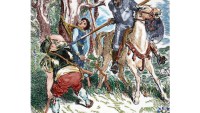
William Egginton opens his book with a novelistic reimagining: here’s Miguel de Cervantes, a toothless old geezer of nearly 60, on his way to the printers with his new manuscript. On a hot August day in 1604, a man walked through the dusty streets of Valladolid, Spain, clutching in his right hand a heavy package. In the absence of any authentic portraits, we must trust his own words to know that he was brown-haired and silver-bearded, with an aquiline (but well-proportioned, he adds) nose and cheerful eyes partly hidden behind a pair of smeared spectacles resembling, in the words of one of his literary rivals, badly fried eggs. By the time Cervantes published Don Quixote, he’d done a lot of living.

Win some — lose too many

In this centenary year of the Somme, it is refreshing to read a book about the Great War that is not yet another dreary recital of the tragic and over-familiar facts, but successfully gets to grips with the dilemmas facing the commanders and politicians mediating the gargantuan conflict. Historical debate about the war now boils down to two views. Either the conflict was conducted by bone-headed generals guzzling champagne in their chateaux while sending a generation to certain death against chattering machine guns and impenetrable barbed wire. Or the said generals have been much maligned, and eventually achieved a stunning victory after intelligently using tactics learned in a very hard but sadly necessary school of battles.