Book review

Lives of gay abandon

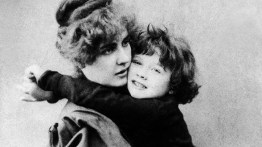
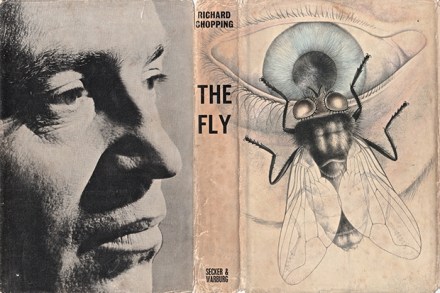
Somewhere I have a couple of neat letters from the artist Richard Chopping, politely declining my requests to interview him about Ian Fleming. ‘Dicky’ is best known for the trompe l’oeil dust jackets he painted for nine of Fleming’s James Bond novels. Because of this patronage, an accomplished second-division artist gained wider prominence, becoming at one stage, according to the New Yorker, the world’s highest paid book designer. It didn’t make him happy. He was involved in a long, bickering relationship with his fellow artist Denis Wirth-Miller, who was wilder and more experimental, but whose reputation, despite a close working association with Francis Bacon, has not endured so well.

She’s the top

This book is the latest in Yale’s series of Jewish Lives — though in this case Jewish Loves might be nearer the mark. Neal Gabler adores Barbra Streisand. He purports to have written a critical biography, but pretty much the only bad thing he has to say about Streisand’s 50-odd-year career (and counting — who would bet against her returning to the White House to carol the Clintons come next January?) is that Peter Bogdanovich’s picture What’s Up, Doc? is ‘junk’. Actually it’s a work of genius, with Streisand at the top of her considerable comic game – though that’s a judgment you mightn’t want to trust any more than Gabler’s. Because when it comes to movies and records I love Barbra too.

Tales of Mr Tod

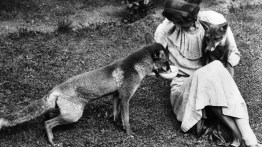
Have you ever considered tying a fox’s penis to your head? Well no, nor have I, but if you suffer from migraines, perhaps you might give it a shot. The fox, in fact, was thought to be a cure for any number of maladies in the 1600s. Fox ashes dunked in wine were recommended as a cure for asthma, their brains were thought to be useful in treating epilepsy, and making a necklace of fox testicles for a child was billed as a surefire cure for toothache. It sounds like quite the fashion statement. This book — Lucy Jones’s first — is a fascinating discussion of the history of our attitude to the fox, and if you want to know more about the red creature that wakes you at 3 a.m. with its baby-like screaming, then this volume is sure to keep you occupied for a while at least.

That glowing feeling

On the morning of 15 October 1927, a dim, autumn day, a group of men foregathered at the Rosedale cemetery in New Jersey and picked their way through the headstones to the grave of one Amelia — ‘Mollie’ — Maggia. An employee of the United States Radium Corporation (USRC), she had died five years earlier, aged 24. To the dismay of her friends and family the cause of death had been recorded as syphilis, but, as her coffin was exhumed and its lid levered open, Mollie’s corpse was seen to be aglow with a ‘soft luminescence’. Everyone present knew what that meant. ‘My beautiful radium’, Marie Curie called the element she discovered in 1898.

A terrible beauty | 9 June 2016

It was only when I left Western Australia for university in England that I understood how vast and dangerous my homeland is. In freshers’ week, a group of us had spent a happy afternoon at a waterside pub. As we traced the pollen-dusty river back to Oxford, my friend Anish was overcome with joy (some might say cider) and capered into a field of long dry grass. Summer left me. I yelled for him to stop — stand still now, or he would die. When my friends stopped laughing, they assured me that the only way to be harmed by English nature is if you put your face up to a consumptive badger and it sneezed. That this field, all fields, weren’t full of tiger snakes was a novel relief. And so I joined Anish, whooping in the grass. Western Australia is one of the last frontiers.

One country, two worlds

In October 1964, Charles de Gaulle visited Brazil. The country was six months into its military dictatorship. In April of that year, there had been a relatively bloodless coup against the sitting president, João Goulart, who one morning found a tank pointing its muzzle at his residence in Rio. The ensuing military regime lasted for two decades,and routinely tortured its dissidents. One of those tortured was a 22-year-old female member of a militant guerrilla group who was arrested in 1970 and subjected to paddle beatings and electric shocks to her ears, feet, breasts and thighs. Today, she is president. This is Brazil’s fairy tale.

Scarred by the past

In Indonesia in 1965–6 half a million communists and supposed communist sympathisers were murdered by a range of civilian and paramilitary organisations under the direction of the army. This is the setting for Louise Doughty’s grim, ambitious novel. John Harper is a young operative in Jakarta, working for a Dutch private intelligence operation, providing information for corporations and doing covert work for various governments, chiefly the American. The title refers to the polluted water of Jakarta’s canals, but also to the water of the country’s paddy fields. To the news-attentive reader there is also the echo of the Blackwater private security operation that got into trouble in Iraq.

So much for education, education, education

‘Your old man’s barking!’ I remember hissing indignantly at my then best friend Toby Young way back in the 1980s after his father, Michael, had spent the evening patiently explaining his famous 1958 essay, The Rise of the Meritocracy, over ‘supper’ at the somewhat grand family home in, of course, Islington. I’d obviously been thinking about something more pressing all those times we’d discussed the classic text in GCSE Sociology — probably about which order I’d ‘do’ Pan’s People in, should the opportunity arrive in suburban 1970s Bristol — but of course I’d presumed that ‘Lord’ Young (dead giveaway) would have favoured the rise of a meritocracy, being a man of humble origin himself.

The sport of kings

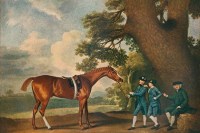
Queen Victoria disapproved heartily of the racing set and of her son Bertie’s involvement in the sport. But she must have noted a dinner conversation with Bismarck reported to her by Disraeli. The German Chancellor had asked if racing was still encouraged in England. Never more so, said Disraeli, to which Bismarck responded: There will never be socialism in England. You are safe so long as the people are devoted to racing. Here a gentleman cannot ride down the street without 20 persons saying to each other, ’Why has that fellow a horse and I have not one?’ In England the more horses a nobleman has, the more popular he is.

Far from ideal

There were few subjects which escaped Oscar Wilde’s barbed wit: dentists, cynics, Americans, literary critics, democracy, the working classes, the middle classes, the upper classes and Bernard Shaw were all prey for his cutting paradoxes. Family, however, got off lightly. Not for Wilde the sinister or cruel depictions of relations which permeate the novels of Evelyn Waugh and find their dysfunctional climax in Brideshead. On the contrary, family is an affectionate theme running through most of Wilde’s work and is at the very heart of his masterpiece, The Importance of Being Earnest — a play whose plot rests on the fact that the leading protagonist has lost his parents. This does not mean that Wilde was always dutiful towards his family.

El Sid

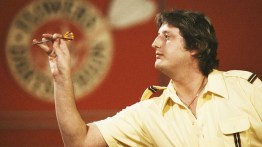
Was there life before darts? I am old enough, just about, to remember such a time. One minute, in or around 1978, there was no darts on TV. Next minute, there was nothing else, and Eric Bristow, if he had felt inclined to stand, would have been elected prime minister by a landslide. As with snooker, the glory years of mass popularity were but brief, but once established as the chosen sporting endeavour of people who don’t like moving too quickly, darts retained a substantial fan base, and continues to thrive even in these slimmer and more austere times.

The man who changed the world

On 31 October 1517, as every child once knew, an obscure German monk nailed his 95 theses to the door of Wittenberg’s castle church and so began the Reformation. It would seem that there is no firm evidence that this ever actually happened as myth would have it, but whether Martin Luther nailed his theses to the door or glued them or merely posted them to Germany’s leading churchmen, the Christian world would never be the same again. Martin Luther: Renegade and Prophet is an exploration of a man’s interior life and development and not, as Lyndal Roper insists, either a general history of the Reformation or even of the Lutheran revolution in Wittenberg.

The wicked old Paris of the Orient

Here’s the Mandarin for ooh-la-la! As Taras Grescoe, a respected Canadian writer of nonfiction, shows in this marvellous, microscopically descriptive history of what is now one of the most populous and smoggiest megalopolises on earth, Shanghai in the 1930s was internationally notorious as ‘the wicked old Paris of the Orient’, with ‘as vivid a cast of chancers, schemers, exhibitionists, double-dealers and self-made villains as had ever been assembled in one place’. Grescoe lavishly keeps the promise of his book’s subtitle. In its heyday, the city was both glamorous and squalid, extremely rich and poor, unscrupulous and tough: to shanghai in the lower case means to force people to do what they don’t want to do.

The people’s prince

In Pepys’s famous words, James, Duke of Monmouth was ‘the most skittish, leaping gallant that ever I saw, always in action, vaulting, or leaping or clambering’. Reading Anna Keay’s biography of the adored illegitimate son of Charles II, this image of his energy appears paramount — as Monmouth seems to live his life at speed several times over before his death, by order of his uncle James II, at the age of 36, in a horribly botched execution on Tower Hill. Born only months after the regicide of Charles I, he was the product of his father’s brief liaison with Lucy Walter, infamous for loose morals and for having reputedly planned to murder her maid by stabbing a large upholstery needle into her ear as she slept.

Nostalgia and nihilism

‘Gilded doorknobs,’ spits a Party diehard as she contemplates the blessings of the Soviet Union’s collapse. ‘Is this freedom?’ Dozens of witnesses from the ‘lost generation’ in Russia who had ‘a communist upbringing and a capitalist life’ share Elena S’s disgust and bewilderment as they contribute to this epic fresco of an empire’s bitter aftermath. Some adjust smartly to the post-Soviet disorder, although a 35-year-old advertising manager reflects that ‘I never dreamed of being fucked in stairwells or saunas in exchange for expensive dinners.’ The few winners and many losers agree: ‘You can’t buy democracy with oil and gas… You need free people, and we didn’t have them.

Beyond the looking-glass

Children’s fantasy literature has never been just one thing. Animal fables, folk and fairy tales were not originally intended for a child audience, while the relatively recent phenomenon that is entertaining (rather than principally didactic) children’s literature has many origins that are not fantastic at all. Michael Levy and Farah Mendlesohn draw a line — well, many lines — from these assorted beginnings to today’s world, in which fantasy specifically aimed at young readers is a large and noisy part of the publishing market, but still very far from a single coherent one.

Bohemian life Down Under

Here’s a pair of little books — one even littler than the other — by Robin Dalton (née Eakin), a celebrated Australian literary agent and film producer, now aged 92, who has lived in London for the past 70 years. As she explains in a prefatory note, Aunts Up the Cross was written as ‘a diary for my children should I, too, die young’, her husband having died at 33. Years later, when the publisher Anthony Blond complained that she never sent him anything, she reluctantly gave him the 22,000-word manuscript, telling him it was by a mad schoolfriend of hers.

A force for good

When I saw this book, a biography of Huw Wheldon, who was managing director of BBC Television between 1968 and 1975, I thought ‘Aha!’ Inevitably, my mind was filled with images -of Jimmy Savile and Stuart Hall, of the Led Zeppelin guitar riff at the start of Top of the Pops, of the men in charge who had no idea what was going on. Might Wheldon have been one of the guys who had no idea what was going on? I tried to put this thought to one side. The book is by Wheldon’s son, Wynn. It’s a very moving account of a son’s love and regard for his father. Wynn is telling the story of a man he reveres and misses. He thinks Huw was a wonderful person — charming and brilliant, a huge life force.