Richard Ingrams

Spectator Books of the Year: A political scandal that trumps all others

From our UK edition

The death of Jeremy Thorpe aged 85 in 2014 finally made it possible to tell his extraordinary story without fear of the libel laws. John Preston has seized the opportunity in his gripping account A Very English Scandal (Penguin/Viking, £16.99). The leader of a political party involved in a murder plot easily trumps any other political scandal of our times; but the fact that in the event it was only a dog that died gives the story an air of farce. Apart from Thorpe himself, vain and intensely ambitious, Preston handles with great skill a cast of astonishing characters.
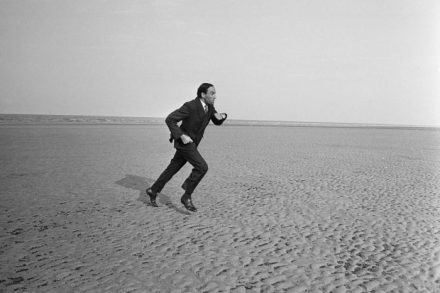
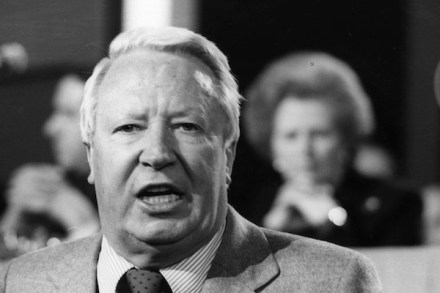
Ted Heath: still a surly man of mystery

From our UK edition

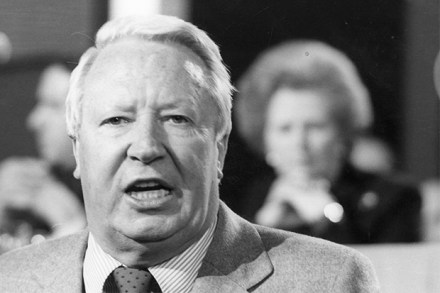
Ted ‘Grocer’ Heath, as he will always be for me, was chosen by his fellow MPs to be their leader in 1965 as the Tory answer to Harold Wilson. After two Old Etonian patricians, Macmillan and Douglas-Home, the Grocer was a grammar-school boy, a meritocrat who would spearhead a new-look, classless Conservative party. He was a clever, hard-working man, totally devoted to his political career. Unfortunately, with his wooden stance and curious ‘neow-neow’ voice, he lacked charisma, a failing he would never have admitted, as Michael Gove did recently. I remember Heath presenting the awards at the annual What the Papers Say lunch in 1968 and you could see journalists furtively looking at their watches after only a few minutes of his speech.

The great sulker

From our UK edition

Ted ‘Grocer’ Heath, as he will always be for me, was chosen by his fellow MPs to be their leader in 1965 as the Tory answer to Harold Wilson. After two Old Etonian patricians, Macmillan and Douglas-Home, the Grocer was a grammar-school boy, a meritocrat who would spearhead a new-look, classless Conservative party. He was a clever, hard-working man, totally devoted to his political career. Unfortunately, with his wooden stance and curious ‘neow-neow’ voice, he lacked charisma, a failing he would never have admitted, as Michael Gove did recently. I remember Heath presenting the awards at the annual What the Papers Say lunch in 1968 and you could see journalists furtively looking at their watches after only a few minutes of his speech.

Hacks and robbers

From our UK edition

Readers of advanced years like me will almost certainly remember the bow-tied figure of Edgar Lustgarten, star of any number of ‘True Crime’ B movies which were an integral part of a visit to the cinema, or ‘flicks’, when we were young. Some of us also remember his catchphrase when describing the downfall of a murderer, if only because it was a favourite of The Spectator’s one-time political columnist Alan Watkins: ‘It was then that he made his first big mistake.’ As it happens The Spectator features in Lustgarten’s own story, one of many to be told in Duncan Campbell’s very entertaining new book about crime reporting past and present.

Super man of legend

From our UK edition

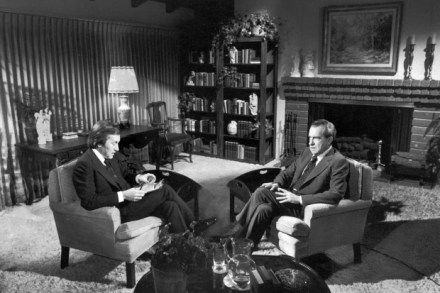
On 13 March 2014 a congregation of 2,000 people, including many of the great and the good, gathered in Westminster Abbey for a memorial service for David Frost, who had died suddenly six months previously while travelling on the Queen Mary to America. During the service a select band, led by the Dean of Westminster, John Hall, retired to Poets’ Corner, sacred to the memory of Keats, Shelley and others of the immortals, where the Prince of Wales laid flowers on a tablet in the floor bearing the illustrious name of Frost. Given that in only a few years’ time Frost’s name, along with many of today’s celebrities, was likely to be forgotten, it might have been better to dedicate the tablet ‘To the Unknown Television Personality’.

Ancients on oldies: tips on ageing from the Romans are all Greek to Richard Ingrams

From our UK edition

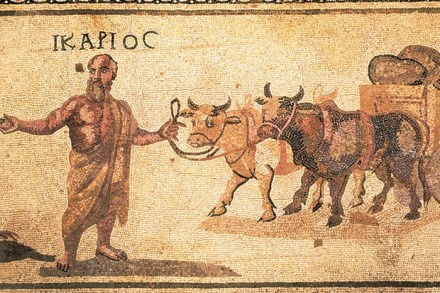
A few months ago I went to a lunch at Univ, my old college in Oxford, to celebrate the 95th birthday of my Ancient History tutor George Cawkwell. There were toasts and speeches, including one from George himself and my fellow student Robin (now Lord) Butler, who did a brilliant imitation of George getting all excited when describing the battle of Marathon and reverting, temporarily, to his native New Zealand accent. In the company of such men, not forgetting another fine speechmaker, Edward Enfield, also one of George’s pupils, I felt ill at ease. There they were, overflowing with classical allusions, and there was I, wondering how I could have forgotten almost everything I had known about the ancient world including the battle of Marathon.

Memories and inspirations

From our UK edition

I had never come across commonplace books until I met up with my school friend Paul Foot in Oxford in 1958. The idea, he explained, was that you kept a notebook in which you transcribed anything interesting you came across in the course of your reading. I started doing it the following year. The first two of the following quotes are from D. H. Lawrence, then my favourite writer: Horace is already a bit of a mellow varsity man who never quite forgot Oxford. No old world tumbles except when a young one shoves it over. And why should one howl when one’s grandfather is pushed over a cliff? Goodbye, grandfather, now it’s my turn. Justice must not only be done, it must be seen to be believed. (Beachcomber) Wherewould we be without a sense of humour? (Very slight pause) Germany!