Book review

Weird and wonderful

The Un-Discovered Islands could not be more different in substance — though it is similar in style — to Malachy Tallack’s debut, Sixty Degrees North. In that he book he took a revealing pilgrimage around the places which lay, like his home of Shetland, on the 60th parallel, and found a range of concerns about ecology, land ownership, both solitude and community, and what it means to be considered peripheral. This book is an account of 24 non-existent islands, yet is suffused with the same elegiac frostiness as before. Tallack’s style is precise without being perjink, and the overwhelming feeling is of something lost, or disappearing. It’s just this time, what is lost never was.

Soldiers of the Queen

It’s not immediately obvious, but the silhouette on the dust jacket — soldiers advancing in single file, on foot (‘boots on the ground’) isn’t one squad, but five soldiers from different campaigns. From left to right, first comes the British infantryman of the second world war; next is a ‘jock’ from (I think) the Korean war; then a jungle fighter from the Malayan Emergency or the Borneo ‘Confrontation’; then, unmistakably, the long-suffering foot soldier of Operation Banner, the 38-year counter-insurgency (or police action, no one ever quite knew which) in Northern Ireland; and finally, the technology-festooned warrior of Iraq and Afghanistan.

Fine silks and fiery curries

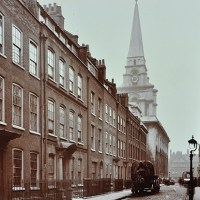
Genial, erudite and companionable over most of its 760 pages, this stout Georgian brick of a neighbourhood history at length flings itself in fury through a toff’s window. Much of Dan Cruickshank’s book has shown with learned charm how, in its tangle of ancient streets just east of the City of London, Spitalfields has always hosted the rough with the smooth, tumult beside elegance. The East End patch where he has lived for four decades — his own 1720s home, a finely embellished history of inner London in itself, gets 15 loving pages — has ‘constantly embodied paradox: great wealth alongside appalling poverty, beauty juxtaposed with squalor’. As he nears his finale, the twin streams of this urban microcosm join.

No one turned a hair

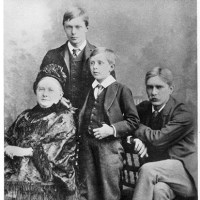
The Benson family was one of the most extraordinary of Victorian England, and they certainly made sure that we have enough evidence to dwell on them. Edward White Benson was a brilliantly clever clerical young man of 23 when he proposed to his 11-year-old cousin Minnie Sidgwick. He had been the effective head of his family since his father’s death nine years earlier; Minnie, too, was fatherless. Despite doubts from Minnie’s mother, they agreed to marry when Minnie was 18. She, too, was clever — Gladstone famously described her as ‘the cleverest woman in Europe’ — but had no real attachment to Benson or to any other man. Her romantic passions were always directed towards women.

The milk of human kindness

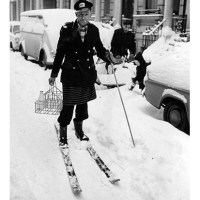
One of David Cameron’s choices on Desert Island Discs, this book reminds us, was ‘Ernie (The Fastest Milkman in the West)’. The book does not, however, explain why Cameron chose the Benny Hill ditty. Consulting the online archive, I found the then leader of the opposition explaining that ‘when you’re asked to sing a song’, ‘Ernie’ was the only one to which he could remember all the words. Sue Lawley tested him, and Cameron responded: ‘You can hear the hoof beats pound as they race across the ground, the clatter of the wheels as they span round and round’. It’s a miracle the Notting Hill Set was ever seen as smart.And yet I know what Cameron means. For our generation milkmen are an exercise in nostalgia.

Surreal parables

There is a common assumption that experimental writing — for want of a better term — is obscure, joyless and arid. Or worse: that it is fake (or ‘pseudy’), a deception practised upon either the deluded or gullible reader. So I wonder what people who hold such assumptions would make of this. It constitutes the final paragraph of ‘Specialist’, one of the stories in this collection. The story itself is, not untypically for this book, less than a page long: The cyclist hit me, and it’s vile after my life ends in the afterlife. Lots of incense, resin, apes and giraffe-tails — all acquired tastes. I don’t like that kind of thing. Several things may strike you.

Divinely decadent

‘Oh the Mediterranean addiction, how we fall for it!’ So sighed Sybille Bedford, who spent the 1920s and 1930s in Sanary-sur-Mer. Aldous Huxley settled in the same fishing village in 1930, writing to his sister-in-law: ‘Here all is exquisitely lovely. Sun, roses, fruit, warmth. We bathe and bask.’ James Lees-Milne perched further along the coast at Roquebrune from 1950–61. In a reverie, he later recalled the smells of brioche, coffee, pine needles, ‘the senses heightened, expectant of lovely future days without end’.

Intimations of immortality

A preoccupation with death is felt from the start of Margaret Drabble’s new novel, which opens with Francesca Stubbs, in her seventies, considering whether her last words will be ‘you bloody old fool’ or ‘you fucking idiot’. Fran is central to the web of characters that populate the book, linked by varying degrees of friendship and kinship, but tied more firmly together by the approach of death. Drabble squares up to old age with pragmatism: she shows us its terrible physical pain, loneliness and expense, but lightens what could threaten to be a grim read with observational humour, delighting in her characters’ eccentric pleasures.

Magnetic and repellent

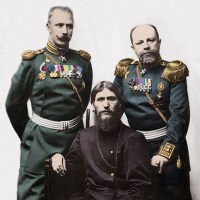
When he first came to public notice, Rasputin was described in a Russian newspaper as ‘a symbol. He is not a real person. He is a characteristic product of our strange times.’ With his hypnotic eyes, long hair and peasant simplicity, Rasputin was as mesmerisingly attractive to upper-class and royal women in his 47 years of life, as, in afterlife he would be for biographers. Who can resist the story of the Siberian peasant, leaving his wife and nippers to wander the roads of Russia, imbibing, and then dispensing, a mixture of spiritual truths and claptrap, and worming his way first into the salons of gullible St Petersburg ladies and finally to the court itself?

Blithe spirit

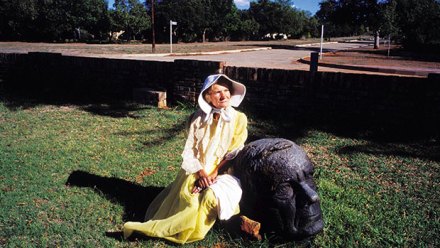
Lady Anne Barnard is a name that means almost nothing today, but her story is a remarkable one. She defied all the expectations governing the behaviour of upper-class women in 18th-century society, yet she made a success of her life. She died leaving six volumes of unpublished autobiography with a stern injunction that her papers were never to be published. For 200 years her memoirs have languished in the family archive, and Stephen Taylor is the first biographer to reveal her secrets. Anne was the daughter of a threadbare Scottish peer, Lord Balcarres, and she grew up the eldest of 11 children in a prisonlike tower house in Fife. Pushed by her mother to contract a conventional arranged marriage, trading her breeding for newly-gained wealth, Anne dug in her toes.

Deadlier than the male | 3 November 2016

Teenage girls all over the world have suddenly developed electro-magnetic powers that can be unleashed on anybody who bugs them. The effect of these electrical jolts ranges from a tingly sensation to scarring, shock, pain, permanent disability, dismemberment and sometimes death. So girls have all the ‘power’ now. Older women soon start zapping too, and thereby move into high office and make millions. It is the end of patriarchy as we know it: almost overnight, women’s tolerance of bullying and sexual harassment sinks to zero, and men start dropping like flies. They now become the world’s cowering victims, servants, slaves and playthings. Men have to adapt swiftly to their new lowly status, and to kinky, often catastrophic, types of sex.

When the music changes

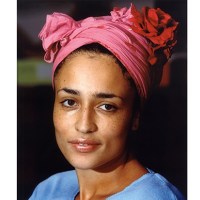
In 2011 the New York Times’s chief dance critic, Alastair Macaulay, asked: How should we react today to ‘Bojangles of Harlem’, the extended solo in the 1936 film Swing Time in which Fred Astaire, then at the height of his fame, wears blackface to evoke the African-American dancer Bill Robinson? No pat answer occurs. Zadie Smith’s fifth novel is a brilliant address to that question. In the prologue the unnamed narrator, who has recently lost her job as assistant to a Madonna-like star, goes to the Royal Festival Hall to hear an Australian director ‘in conversation’ and sees a clip from Swing Time — ‘a film I know very well, I watched it over and over as a child’.

Tormented genius

Married as I am to an antiquarian book dealer, and living in a house infested with books and manuscripts, I’m constantly having to edit my own little library so as to be able to breathe. But three volumes have survived successive culls — Pax Britannica, Heaven’s Command and Farewell the Trumpets — Jan (or James as she was when these books were written) Morris’s trilogy about the British empire. It is, Morris says, ‘the intellectual and artistic centrepiece of my life’, and it opens on the morning of 22 June 1897 with Queen Victoria visiting the telegraph room at Buckingham Palace on the occasion of her Diamond Jubilee.

A tale of two prisons

The Marshalsea was the best and worst place for a debtor to be imprisoned. From 1438 until its closure in 1842, there was dishonour in its name, contagion in its air and cruelty in its very premise: once detained, debtors could take no action to improve their lot. Instead, imprisonment was meant to serve to ‘rally friends and family’. Where none were forthcoming, many inmates died of starvation. The ancient barbarity of the system was redressed in 1729 when an inquiry revealed that medieval instruments of restraint were still in use — as well as a 3ft-long whip that terrified the debtors, fashioned out of ‘a bull’s pizzle, dried as hard as teak’. Even after the prison’s reform it was a death sentence to be on the ‘common side’.

A big beast in Hush Puppies

It always used to be said that, if it had been up to Guardian readers, Ken Clarke would certainly have been leader of the Conservative party. It might have gone beyond that. Some politicians are much loved by the general public, who never have to meet them, and loathed by their colleagues and unfortunate underlings — one thinks of Greville Janner or Alf Morris, who once pushed his fist into my face when I was refusing to do his bidding. That doesn’t seem to be true of Clarke, who is popular pretty much across the board, his instincts for decency and sceptical intelligence ensuring that. Although his Europhile commitments effectively barred him from the party leadership on the occasions when he might have stood a chance, his qualities have always been recognised.

TB or not to be

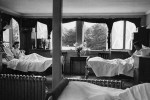
If you are 70-plus, the shadow of TB will have hung over your childhood and youth, as it did mine, and Linda Grant’s new novel strikes many a chord. My maternal aunt had the disease, and spent months in a sanatorium like the one described in The Dark Circle, but finally had a thoracotomy (removal of a lung and seven ribs). She was also given the ‘new’ wonder drug Streptomycin and together with the operation, it cured her to live until she was 86. From the sanatorium, she sent me drawings of herself lying under a blanket on the freezing terrace halfway up a mountain.

Shiver me timbers

Brrrrr, this is a chilly book. Each time a character put on his sealskin kamiks, muskrat hat, wolfskin mittens and otter pelt coat I buttoned another cardigan toggle and shivered. It’s a book that gets you down to the marrow. The compass of Ed O’Loughlin’s Minds of Winter points north by northnorth. Up and up it goes, drawn by husky dogs towards the North Pole, chillier and chillier by degrees, frostbitten, snow-blind but determined.